- Company Articles
- Products and Technology
- Application Cases
- Aluminum Workbench D in Warehousing Logistics: Organizing Tools and Materials Efficiently

Aluminum Workbench D in Warehousing Logistics: Organizing Tools and Materials Efficiently
Related Product
Aluminum Workbench D
Aluminum tube workbench is more flexible and durable, compared with traditional PE/ABS coated steel tube. It is easy to assemble, anti corrosion, rust protection, and recycle use after disassemble.
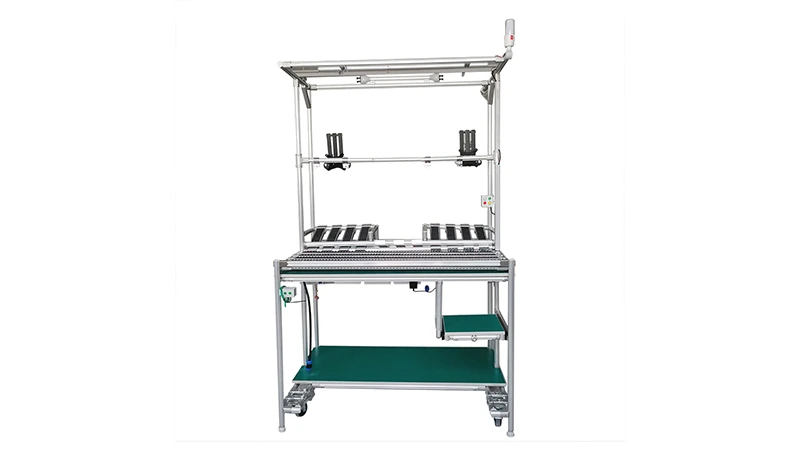
Walk into any busy warehouse, and you'll likely witness a flurry of activity: workers rushing to pick orders, forklifts navigating narrow aisles, and stacks of materials waiting to be processed. Amidst this chaos, one thing becomes clear quickly: disorganization is the enemy of efficiency. Tools get misplaced, materials pile up on cluttered workspaces, and precious time is wasted searching for the right equipment. For logistics managers, this isn't just a daily hassle—it's a drain on productivity, profits, and employee morale. But what if there was a solution that could transform these chaotic workstations into models of order and efficiency? Enter the Aluminum Workbench D, a modular, durable, and highly customizable workbench designed to streamline warehousing operations. In this article, we'll explore how Aluminum Workbench D, built from robust aluminum extrusion profiles and paired with versatile aluminum profile accessories, is revolutionizing the way warehouses organize tools and materials—one workstation at a time.
What is Aluminum Workbench D?
At its core, Aluminum Workbench D is more than just a table—it's a purpose-built, industrial-grade workstation engineered for the demands of modern warehousing and logistics. Part of the broader family of aluminum profile-based equipment, it's constructed using aluminum extrusion profiles, a material celebrated for its unique blend of strength, lightweight design, and flexibility. Unlike generic workbenches cobbled together from wood or basic steel, Aluminum Workbench D is a product of lean manufacturing principles, designed to adapt to the specific needs of your warehouse while promoting organization, ergonomics, and long-term durability.
So, what sets it apart? Let's start with the basics: the frame. Aluminum Workbench D's skeleton is crafted from aluminum extrusion profiles—hollow, elongated pieces of aluminum shaped through a process called extrusion, which forces heated aluminum billets through a die to create consistent, precise cross-sections. These profiles often feature T-slots, grooves running along their length that allow accessories like brackets, shelves, and tool holders to be attached without drilling or welding. This modularity is key: it means the workbench can be customized, reconfigured, and expanded as your warehouse's needs change—no need to replace the entire unit when your workflow evolves.
But Aluminum Workbench D isn't just about the frame. It's a complete system, often paired with aluminum profile accessories like end caps (to smooth rough edges and prevent snags), corner brackets (for sturdy joins), and adjustable feet (to level the workbench on uneven warehouse floors). Some models even include add-ons like pegboards, drawer units, or roller tracks for easy material movement—all designed to integrate seamlessly with the aluminum extrusion profile frame. Whether you're assembling electronics components, packing orders, or maintaining equipment, Aluminum Workbench D serves as the central hub where tools, materials, and processes come together.
Key Features of Aluminum Workbench D: Built for Warehousing Demands
To understand why Aluminum Workbench D is becoming a staple in modern warehouses, let's break down its most critical features—each designed to address the unique challenges of logistics environments.
1. Aluminum Extrusion Profile: The Backbone of Durability and Flexibility
The star of the show is undoubtedly the aluminum extrusion profile. Aluminum itself is a material with a lot to offer: it's 30% lighter than steel but boasts impressive strength-to-weight ratios, making it easy to move (when needed) without sacrificing load capacity. In warehouses, where heavy tools, bulk materials, and constant use are the norm, this balance is crucial. A typical Aluminum Workbench D can support 500–1000 pounds, depending on the profile thickness and frame design—more than enough for power tools, bins of fasteners, or even small equipment like label printers.
But aluminum's benefits don't stop at strength. It's naturally resistant to corrosion, thanks to a thin oxide layer that forms on its surface, protecting it from moisture, chemicals, and humidity—common culprits in warehouses where spills or temperature fluctuations are par for the course. Unlike steel, which can rust if not regularly painted or coated, aluminum maintains its integrity with minimal maintenance. And unlike wood, which warps, cracks, or harbors mold in damp conditions, aluminum extrusion profiles stay stable and clean, even after years of heavy use.
The T-slot design of these profiles is another game-changer. Imagine being able to attach a shelf above the workbench on Monday, add a tool rail on Wednesday, and mount a power strip on Friday—all without drilling a single hole. That's the power of T-slots. Using simple bolts, nuts, and aluminum profile accessories like end caps and corner brackets, workers can customize the workbench on the fly, adapting it to new tasks or seasonal demands. For example, during peak shipping seasons, you might add extra shelving to hold overflow packaging materials; during slower periods, you can remove them to free up space. This flexibility ensures Aluminum Workbench D grows with your warehouse, rather than becoming obsolete as needs change.
2. Customization: Tailored to Your Warehouse's Unique Needs
No two warehouses are the same. A small e-commerce fulfillment center might need workbenches optimized for packing small parcels, while a automotive parts distributor requires stations to organize heavy tools and bulky components. Aluminum Workbench D thrives on this diversity, offering near-limitless customization options to suit any workflow. Let's explore some of the most popular configurations:
- Adjustable Height: Many models feature legs with telescopic sections or adjustable feet (another type of aluminum profile accessory), allowing workers to set the bench height anywhere from 30 to 42 inches. This is a game-changer for ergonomics, as it lets tall and short employees alike work comfortably—reducing strain on backs, shoulders, and wrists.
- Storage Add-Ons: Need a place to store small parts? Add stackable bins on a lower shelf. Tools slipping off the edge? Mount a tool rail with hooks for wrenches, tape measures, and pliers. For larger equipment, like drills or scales, a sturdy upper shelf keeps them within reach but out of the way of the main workspace.
- Material Handling Integration: For warehouses that process high volumes of goods, Aluminum Workbench D can be paired with roller tracks (yes, another customizable feature!) to create a smooth surface for sliding boxes or components from one station to the next. This minimizes manual lifting and speeds up material flow—key for meeting tight order deadlines.
- Power and Lighting: Some configurations include pre-drilled holes or T-slot-mounted power strips, ensuring tools like label printers or barcode scanners stay plugged in and ready to use. LED task lights can also be attached to the frame, illuminating the workspace and reducing eye strain during evening or early-morning shifts.
The best part? These customizations aren't permanent. If your warehouse switches from packing apparel to electronics, you can swap out the bins for ESD-safe trays (though ESD features are a separate category, Aluminum Workbench D's modularity makes adaptation simple). This adaptability is why logistics managers love it: instead of buying new workbenches every time workflows change, they can repurpose existing ones—saving time, money, and resources.
3. Durability: Built to Withstand the Rigors of Warehouse Life
Warehouses are tough environments. Workbenches get banged by forklift tines, splashed with cleaning chemicals, and loaded with heavy tools day in and day out. A flimsy workstation won't last six months in this setting—but Aluminum Workbench D is built to endure. Let's break down its durability features:
Scratch and Dent Resistance: Aluminum extrusion profiles are surprisingly tough. While they can scratch (like any material), they're far more resistant to dents than wood or thin steel. A dropped wrench might leave a small mark, but it won't warp the frame or compromise the bench's structural integrity.
Corrosion Resistance: As mentioned earlier, aluminum's natural oxide layer protects it from rust and corrosion. This is especially valuable in warehouses near coastal areas (where salt air accelerates rust) or those with high humidity (like food storage facilities). Unlike steel workbenches, which require regular painting or powder-coating to stay rust-free, Aluminum Workbench D needs nothing more than an occasional wipe-down to look and perform like new.
Long Lifespan: With proper care, an Aluminum Workbench D can last 10–15 years—far longer than wooden workbenches (which typically need replacement every 3–7 years) or cheap steel models (prone to rust and bending). This longevity translates to lower long-term costs: while the initial price tag might be higher than wood, you'll save money by avoiding frequent replacements.

The Benefits of Aluminum Workbench D in Warehousing Logistics
Now that we understand what Aluminum Workbench D is and how it's built, let's dive into the real-world benefits it brings to warehouses and logistics operations. From boosting efficiency to improving worker satisfaction, the impact is both tangible and far-reaching.
1. Efficiency: Time Saved, Productivity Boosted
In warehousing, time is money—and nowhere is this truer than at the workbench. A cluttered, disorganized station forces workers to spend precious minutes searching for tools, digging through piles of materials, or walking to a separate storage area to retrieve supplies. According to a 2023 study by the Material Handling Industry (MHI), the average warehouse worker spends 15–20% of their shift searching for tools or materials—equating to nearly 2 hours per day for a full-time employee. Aluminum Workbench D slashes this wasted time by keeping everything workers need within arm's reach.
Imagine a packing station equipped with Aluminum Workbench D: the main surface holds the current order and a scale, a lower shelf has labeled bins for tape, bubble wrap, and packing peanuts, and a tool rail above holds scissors, box cutters, and a label printer. When a new order comes in, the worker doesn't have to hunt for supplies—they're all right there. What once took 10 minutes now takes 5, and over a full shift, that adds up to hours of saved time. Multiply this across 50 workers, and the productivity gains are staggering: 50 workers × 1 hour saved daily = 50 hours saved per day, or 250 hours per week. At an average labor cost of $25 per hour, that's $6,250 saved weekly—over $300,000 annually. For logistics managers, this isn't just a nice perk; it's a critical competitive advantage.
2. Organization: From Chaos to Clarity
A messy workbench isn't just inefficient—it's a safety hazard. Loose tools can cause trips and falls, while piles of materials obscure hazards like spilled liquids or sharp edges. Aluminum Workbench D turns chaos into clarity by enforcing organization through design. Every tool has a designated spot, every material has a bin, and every surface is kept clear of clutter. This isn't just about aesthetics; it's about creating a workspace where workers can focus on the task at hand, not on navigating obstacles.
Consider a maintenance workstation in a large warehouse. Mechanics here need access to wrenches, screwdrivers, lubricants, and replacement parts—all of which can easily get jumbled together. With Aluminum Workbench D, they might have a pegboard on one side for hanging tools (each with a labeled outline, so missing tools are immediately noticeable), a set of drawers below for small parts (sorted by size or type), and a shelf above for larger equipment like drills or impact drivers. This level of organization doesn't just save time—it reduces errors, too. When tools are in their proper places, workers are less likely to grab the wrong size wrench or use the wrong lubricant, leading to fewer mistakes and rework.
3. Ergonomics: Happy Workers, Healthier Bottom Line
Warehouse work is physically demanding. Repetitive motions, heavy lifting, and awkward postures can lead to chronic injuries like carpal tunnel syndrome or lower back pain—costing companies billions annually in workers' compensation claims and lost productivity. Aluminum Workbench D addresses this by prioritizing ergonomics, ensuring workers can perform their tasks comfortably and safely.
Adjustable height is perhaps the most impactful ergonomic feature. By allowing workers to set the bench to elbow height (the ideal position for most tasks), Aluminum Workbench D reduces strain on the shoulders and back when lifting or manipulating objects. For example, a worker packing boxes at a bench that's too low will hunch over, straining their neck and upper back; over time, this leads to fatigue and increased risk of injury. With an adjustable-height Aluminum Workbench D, they can raise the bench to a comfortable level, standing upright and working without strain. Studies by the Occupational Safety and Health Administration (OSHA) show that ergonomic workstations reduce injury rates by up to 35% and increase productivity by 12–15%—a win-win for workers and employers.
Other ergonomic touches include rounded edges (to prevent bumps and scrapes), non-slip work surfaces (to keep tools from sliding), and optional footrests for workers who stand for long periods. Together, these features create a workspace that feels less like a chore and more like a well-designed tool—one that supports workers, not the other way around.

Aluminum Workbench D vs. Traditional Workbenches: A Comparison
To truly appreciate Aluminum Workbench D's value, it helps to compare it to the workbenches it's replacing: wooden, basic steel, and generic plastic models. Let's break down how they stack up across key metrics like material, weight, customization, durability, and cost.
| Feature | Aluminum Workbench D | Wooden Workbench | Basic Steel Workbench | Plastic Workbench |
|---|---|---|---|---|
| Material | Aluminum Extrusion Profile | Solid Wood/Particle Board | Mild Steel Tubing/Sheet Metal | HDPE or Polypropylene |
| Weight | 50–80 lbs (lightweight, easy to move) | 100–150 lbs (heavy, hard to reposition) | 150–200+ lbs (very heavy, often fixed in place) | 30–50 lbs (light but less stable) |
| Customization | High (T-slots allow adding shelves, tools, etc.) | Low (fixed design; modifications require drilling/sawing) | Moderate (welding required for major changes) | Very Low (no T-slots; limited accessory options) |
| Durability | High (corrosion-resistant, scratch/dent-resistant; 10–15 year lifespan) | Low (prone to warping, water damage, and scratches; 3–7 year lifespan) | Moderate (prone to rust if uncoated; 5–10 year lifespan) | Low (can crack under heavy weight; 2–5 year lifespan) |
| Maintenance | Low (wipe clean; no painting or refinishing needed) | High (sand, paint, or seal yearly to prevent damage) | Moderate (check for rust; repaint every 2–3 years) | Low (wipe clean, but prone to staining) |
| Initial Cost | Moderate ($300–$800) | Low ($150–$400) | High ($500–$1,200) | Low ($100–$300) |
| Long-Term Value | High (low maintenance + long lifespan = lowest total cost of ownership) | Low (frequent replacement offsets low initial cost) | Moderate (high initial cost + maintenance costs) | Very Low (short lifespan requires frequent replacement) |
As the table shows, Aluminum Workbench D strikes a balance that traditional workbenches can't match. Wooden benches are cheap upfront but wear out quickly; steel is durable but heavy and hard to customize; plastic is lightweight but flimsy. Aluminum Workbench D, with its aluminum extrusion profile frame and modular design, offers the best of all worlds: strength without the weight, customization without the hassle, and durability without the high maintenance costs. For warehouses focused on long-term efficiency and cost savings, it's the clear choice.
Case Study: How GreenWave Logistics Boosted Productivity with Aluminum Workbench D
To see Aluminum Workbench D in action, let's look at GreenWave Logistics, a regional warehousing company with a 100,000-square-foot facility in the Midwest. Before 2022, GreenWave's packing stations were a hodgepodge of old wooden workbenches, rickety metal shelves, and plastic bins stacked haphazardly. Workers complained about tools sliding off uneven wooden surfaces, and the benches were so heavy they couldn't be moved when the warehouse rearranged its layout to accommodate new automated sorting systems. Turnover was high, and order processing times were lagging behind industry benchmarks.
In early 2022, GreenWave's operations manager, James Carter, decided to invest in new workstations. After researching options, he chose Aluminum Workbench D from a local Aluminum Profile Supplier, drawn to its modular design and durability. The company ordered 30 units, each customized with:
- Adjustable legs to accommodate workers of different heights
- Upper shelves for packing materials (tape, bubble wrap, labels)
- Tool rails with hooks for scissors, box cutters, and tape dispensers
- Lower shelves for stacking empty boxes
The results were immediate. "Within the first week, I noticed a difference," says Maria Gonzalez, a picker-packer with GreenWave for 5 years. "Before, I'd spend 10 minutes every morning just finding my tape gun and counting scale. Now, everything's right where I need it. The bench is at the perfect height, so my back doesn't ache by lunchtime, and the shelves keep the floor clear—no more tripping over boxes."
By the end of the first quarter, GreenWave tracked impressive improvements: order processing time dropped by 22%, tool loss decreased by 35%, and employee complaints about discomfort fell by 40%. Most notably, turnover rates stabilized, with new hires citing the "clean, organized workstations" as a reason they chose to stay. "We expected efficiency gains, but the impact on morale was a pleasant surprise," Carter says. "Workers feel valued when their workspace is designed for them, not against them. And happy workers are productive workers." Today, GreenWave has expanded to 50 Aluminum Workbench D units and is planning to roll them out to its second facility next year.
How to Choose the Right Aluminum Workbench D for Your Warehouse
Investing in Aluminum Workbench D is a smart move, but to maximize its benefits, you need to choose the right model for your warehouse's unique needs. Here's a step-by-step guide to help you make the best decision:
1. Assess Your Workspace and Workflow
Start by mapping out your warehouse's layout and identifying where workbenches will be placed. Measure the available space, including ceiling height (for upper shelves) and clearance for walkways or equipment like forklifts. Next, analyze the workflow: What tasks will be performed at the bench? Packing? Assembly? Maintenance? Each task has different requirements—for example, assembly might need a larger surface area, while packing could benefit from integrated roller tracks.
Also, consider future growth. If you're planning to expand your warehouse or add new product lines, choose a workbench that can be reconfigured or expanded with additional aluminum extrusion profiles and accessories. Modularity is key here—you don't want to outgrow your workbench in a year.
2. Determine Weight Capacity Needs
Aluminum Workbench D comes in various weight capacities, typically ranging from 500 to 1000 lbs. To find the right one, calculate the maximum weight it will need to support. This includes the tools, materials, and any equipment placed on it. For example, a bench used for packing lightweight apparel might only need a 500-lb capacity, while one used for automotive parts could require 1000 lbs. Check the Aluminum Profile Supplier's specifications to ensure the model you choose meets or exceeds this weight.
3. Prioritize Ergonomics
Don't overlook the human element. Survey your workers to find the average height range, and choose a workbench with adjustable legs if possible. If workers alternate between sitting and standing, consider a height-adjustable model with a hand crank or electric lift. Also, look for features like rounded edges (to prevent injuries) and non-slip surfaces (to keep tools from sliding). Remember: an ergonomic workbench isn't a luxury—it's an investment in your team's health and productivity.
4. Choose a Reputable Aluminum Profile Supplier
Not all Aluminum Workbench D models are created equal. The quality of the aluminum extrusion profiles, the durability of the accessories, and the level of customer support can vary widely between suppliers. Look for an Aluminum Profile Supplier with a proven track record in industrial equipment, positive customer reviews, and a warranty on their products. Ask about their customization options—can they add specific accessories like roller tracks or power strips? Do they offer assembly support or training? A good supplier will work with you to design a workbench that fits your needs, not just sell you a one-size-fits-all product.
5. Budget for Long-Term Value
While Aluminum Workbench D has a higher initial cost than wooden or plastic models, remember to factor in long-term savings. A $500 aluminum bench that lasts 15 years costs less over time than a $200 wooden bench that needs replacement every 5 years ($500/15 = $33/year vs. $200/5 = $40/year). Plus, the productivity gains from reduced search time and fewer injuries will far outweigh the upfront investment. Think of it as buying efficiency—not just a workbench.
Conclusion: Aluminum Workbench D—More Than a Workbench, a Catalyst for Change
In the fast-paced world of warehousing and logistics, every second counts. Disorganization, inefficiency, and poor ergonomics don't just slow down operations—they hold your business back. Aluminum Workbench D, with its robust aluminum extrusion profile frame, versatile aluminum profile accessories, and modular design, is more than just a place to work—it's a tool that transforms how your warehouse operates. By keeping tools organized, materials accessible, and workers comfortable, it turns chaos into clarity, wasted time into productivity, and frustrated employees into engaged, motivated team members.
Whether you're running a small e-commerce fulfillment center or a large-scale manufacturing warehouse, Aluminum Workbench D adapts to your needs, grows with your business, and delivers results that impact your bottom line. It's not just an upgrade to your workstations—it's an investment in the future of your logistics operations. So, the next time you walk through your warehouse and see a cluttered, inefficient workbench, remember: there's a better way. Aluminum Workbench D is here to help you build a warehouse that's organized, efficient, and ready to tackle whatever the future throws its way.