- Company Articles
- Products and Technology
- Product knowledge
- Aluminum Workbench D Material Benefits: Why Aluminum Stands Out for Industrial Workbenches

Aluminum Workbench D Material Benefits: Why Aluminum Stands Out for Industrial Workbenches
Related Product
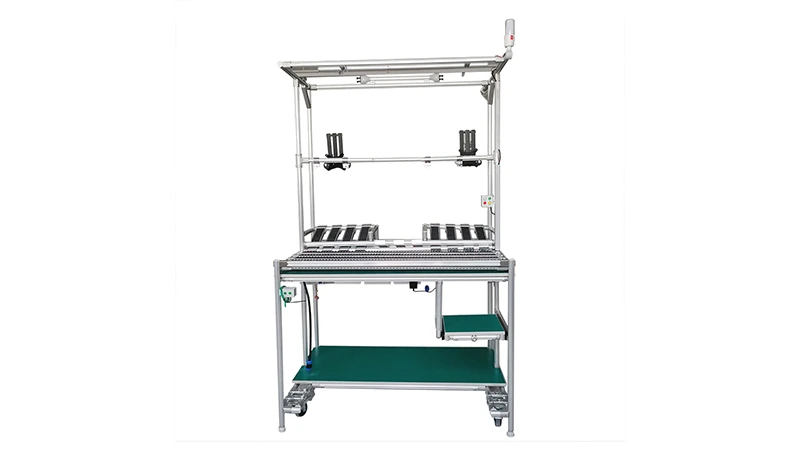
Aluminum Workbench D
Aluminum tube workbench is more flexible and durable, compared with traditional PE/ABS coated steel tube. It is easy to assemble, anti corrosion, rust protection, and recycle use after disassemble.
The Unsung Hero of Your Workspace: Why Your Workbench's Material Matters More Than You Think
Walk into any factory, workshop, or lab, and you'll notice a quiet workhorse holding everything together: the workbench. It's where products are assembled, tools are organized, and ideas turn into tangible results. But here's the thing—most people don't give their workbench a second thought until it starts to wobble, rust, or fail under the weight of daily tasks. That's when the material it's made of suddenly becomes the star of the show.
Imagine this: A mechanic in a busy auto shop leans on their workbench while tightening a bolt, only to hear a creak as the wooden surface warps under pressure. A lab technician in a pharmaceutical plant watches helplessly as a steel workbench near a sink starts to corrode, risking contamination. These aren't just minor inconveniences—they're productivity killers, safety hazards, and hidden costs in the long run. The truth is, the material of your workbench isn't just about durability; it's about efficiency, adaptability, and even the morale of your team.
So, what's the best material for an industrial workbench? Let's cut to the chase: aluminum has been quietly revolutionizing workspaces for years, and for good reason. And when it comes to aluminum workbenches, models like the Aluminum Workbench D are setting a new standard. In this article, we'll dive into why aluminum is the unsung hero of industrial workbenches, how aluminum extrusion profile and aluminum profile accessories make these workbenches so versatile, and why Aluminum Workbench D might just be the upgrade your workspace has been waiting for.
Aluminum 101: Why This Metal Isn't Just for Soda Cans Anymore
When you hear "aluminum," you might think of lightweight soda cans or flimsy foil. But industrial aluminum is a whole different beast. It's strong, resilient, and engineered to handle the rough-and-tumble of daily industrial use. Let's break down why aluminum stands head and shoulders above other materials when it comes to workbenches.
Strength Without the Bulk: The Perfect Strength-to-Weight Ratio
Steel is strong, no doubt—but it's heavy. A steel workbench might handle heavy loads, but moving it? That's a two-person job (or a forklift). Aluminum, on the other hand, offers impressive strength at a fraction of the weight. For example, Aluminum Workbench D, built with high-grade aluminum, can easily support 500+ pounds of tools and materials without feeling like a permanent fixture bolted to the floor. This lightweight nature makes it easy to reconfigure your workspace—whether you need to shift production lines or create more room for a new project. No more struggling with steel benches or worrying about floor damage from excessive weight.
Corrosion Resistance: Say Goodbye to Rust and Maintenance Headaches
Industrial environments are tough on materials. Spills, humidity, chemicals, and even just daily exposure to the elements can turn a steel workbench into a rusty eyesore in months. Aluminum? It's naturally resistant to corrosion thanks to a thin oxide layer that forms on its surface, acting like a built-in shield. This means Aluminum Workbench D can hold up in garages with oil spills, labs with cleaning agents, or warehouses with high humidity—all without a single spot of rust. Compare that to wood, which warps with moisture, or untreated steel, which needs constant painting or coating to stay intact. With aluminum, maintenance is as simple as wiping it down with a damp cloth. No sanding, no repainting, no replacing parts every year.
Thermal Stability: Consistent Performance in Any Environment
Ever touched a steel workbench on a hot summer day? It's scorching. On a cold winter morning? It's icy enough to stick to your gloves. Aluminum, though, has better thermal conductivity, which means it doesn't absorb extreme temperatures as easily. That might not sound like a big deal, but ask anyone who's had to handle delicate electronics on a freezing steel surface or work with heat-sensitive materials on a sweltering bench—it makes a world of difference. Aluminum Workbench D stays cool in the summer and warm in the winter, keeping both your materials and your hands comfortable, no matter the season.

Aluminum Extrusion Profile: The Secret Sauce Behind Customizable, Built-to-Last Workbenches
Now, let's talk about what makes aluminum workbenches like Aluminum Workbench D truly special: aluminum extrusion profile . If you're not familiar with extrusion, think of it as "3D printing for metal"—but on a larger scale. Aluminum is heated and pushed through a die (a custom-shaped mold) to create long, uniform pieces with specific cross-sections. This process allows manufacturers to design profiles that are strong, lightweight, and tailored to exact needs—like the frame of Aluminum Workbench D.
Why does this matter for your workbench? For starters, extrusion ensures consistency. Every piece of aluminum profile used in Aluminum Workbench D is identical, so the bench is stable and balanced, with no weak spots. Unlike welded steel, which can have uneven joints, or wooden benches with varying plank densities, extruded aluminum profiles lock together seamlessly, creating a rock-solid surface you can trust.
But the real magic is in the customization. Aluminum extrusion profiles come in endless shapes and sizes—from T-slots that let you attach accessories to hollow cores that reduce weight without sacrificing strength. This is where aluminum profile accessories come into play. Want to add a tool rack above your bench? Screw it into the T-slot. Need a shelf for extra storage? Slide on a bracket and lock it in place. Cable management getting messy? Use a channel profile to route wires neatly under the bench. Aluminum Workbench D isn't just a static table—it's a blank canvas. And because the accessories are standardized, you can mix and match parts to adapt as your needs change. Today, it's an assembly station; tomorrow, add a vice and it's a repair bench. The possibilities are endless, and that flexibility is gold in fast-paced industrial settings.
Let's take a closer look at how this works in practice. Aluminum Workbench D's frame is built using 40x40mm aluminum extrusion profiles—wide enough to provide stability but slim enough to keep the bench from feeling bulky. The top surface, a single deck (similar to the "workbench e" design but optimized for D), is made from a thicker aluminum sheet, reinforced with cross-bracing profiles underneath to prevent sagging. The T-slots along the edges and legs mean you can add everything from LED task lights to pneumatic tool holders without drilling holes or damaging the bench. It's this modularity that makes aluminum extrusion profile the backbone of modern industrial workspaces.

Aluminum Workbench D: A Case Study in Smart Design
Enough about the material—let's zoom in on Aluminum Workbench D itself. What makes this specific model a standout choice for so many industries? Let's break down its key features and how aluminum's properties make them possible.
Sturdy Yet Lightweight: The Best of Both Worlds
Aluminum Workbench D weighs in at around 75 pounds (without accessories), which is light enough for two people to move, but its aluminum extrusion profile frame can support up to 600 pounds of evenly distributed weight. That means you can load it up with power tools, heavy machinery parts, or stacks of inventory without worrying about it buckling. Compare that to a steel bench of the same size, which might weigh 200+ pounds and be nearly impossible to reposition. For small workshops or facilities where space is tight, this balance of strength and portability is a game-changer.
Clean, Modern Aesthetics: More Than Just a Tool—It's Part of Your Brand
Let's not overlook the visual appeal. Aluminum has a sleek, modern look that instantly upgrades any workspace. Unlike chipped wooden benches or rusted steel tables, Aluminum Workbench D has a smooth, matte finish that resists fingerprints and scratches, keeping it looking new for years. This might seem trivial, but first impressions matter—whether you're showing clients around your facility or trying to boost team morale. A clean, organized workspace with attractive, functional tools like Aluminum Workbench D sends a message: "We care about quality, and we invest in the best."
ESD-Safe Options: Protecting Sensitive Electronics
For industries like electronics manufacturing or lab work, static electricity is a silent killer. A single static discharge can fry circuit boards or ruin delicate components. While Aluminum Workbench D isn't inherently ESD-safe, aluminum's conductivity makes it easy to add ESD coatings or accessories (like grounding straps) to meet safety standards. This adaptability means it can transition from a general-purpose assembly bench to a specialized ESD workstation with minimal upgrades—another win for aluminum's versatility.
Aluminum vs. the Competition: How It Stacks Up Against Steel, Wood, and Plastic
Still not convinced aluminum is the way to go? Let's put it head-to-head with other common workbench materials. The table below compares Aluminum Workbench D with steel, wood, and plastic benches across key factors that matter most in industrial settings.
| Factor | Aluminum (Aluminum Workbench D) | Steel | Wood | Plastic |
|---|---|---|---|---|
| Weight | Light (75-100 lbs for a standard model) | Heavy (200+ lbs) | Medium (150-200 lbs, depending on wood type) | Light (50-70 lbs) |
| Durability | High (resists dents, scratches, and corrosion; 10+ year lifespan) | High (but prone to rust; 5-8 years with maintenance) | Low (warps, chips, and rots; 2-3 years in industrial use) | Low (bends under heavy loads; 1-2 years) |
| Corrosion Resistance | Excellent (naturally resistant to moisture, chemicals, and rust) | Poor (requires coating/painting; rusts easily in wet environments) | Poor (absorbs moisture, leading to warping and mold) | Good (resists moisture but stains easily from chemicals) |
| Customization | Excellent (T-slots and aluminum profile accessories allow endless upgrades) | Limited (welding or drilling required for modifications) | Moderate (can be drilled but prone to splitting; limited accessory options) | Very Limited (no built-in attachment points; accessories often don't fit) |
| Long-Term Cost | Low (minimal maintenance; lasts 10+ years; no replacement costs) | Medium (high initial cost; ongoing maintenance for rust/coating) | High (needs frequent replacement; warping/rot leads to early failure) | Very High (needs replacement every 1-2 years; not cost-effective) |
As you can see, aluminum pulls ahead in almost every category. It's lighter than steel, more durable than wood and plastic, and infinitely more customizable than any other material. And while aluminum workbenches like Aluminum Workbench D might have a slightly higher initial cost than wood or plastic, their 10+ year lifespan and minimal maintenance make them the most cost-effective choice in the long run. Think of it as an investment—not an expense.
Real-World Applications: Where Aluminum Workbench D Shines Brightest
Aluminum Workbench D isn't a one-trick pony. Its versatility makes it a star in a wide range of industries. Let's take a look at a few examples:
Manufacturing and Assembly Lines
In manufacturing, time is money. Assembly lines need to be efficient, and workbenches need to keep up. Aluminum Workbench D's lightweight design means it can be moved to accommodate new production layouts, while its T-slots let workers add tool holders, bins, and conveyor attachments (hello,
roller track
accessories!) to keep parts flowing smoothly. Its corrosion resistance also stands up to the lubricants and coolants often used in manufacturing, ensuring it stays looking and performing like new.
Electronics and Tech Workshops
Delicate electronics require precision and cleanliness. Aluminum Workbench D's smooth surface is easy to sanitize, and its ability to be upgraded with ESD-safe features makes it ideal for assembling circuit boards, testing devices, or repairing gadgets. The lightweight frame also reduces vibration, which is crucial when working with tiny components that can be knocked out of place by a shaky bench.
Laboratories and Medical Facilities
Labs deal with harsh chemicals, frequent cleaning, and strict safety standards. Aluminum Workbench D's corrosion resistance means it can handle spills of acids, solvents, or disinfectants without degrading. Its modular design also allows for easy integration of sinks, fume hoods, or specialized equipment, making it a flexible choice for research labs, medical device manufacturing, or pharmaceutical facilities.
Garages and Auto Shops
Oil, grease, and heavy tools are par for the course in auto shops. Aluminum Workbench D's durability means it won't warp or stain from oil spills, and its strength supports heavy engine parts without bending. Add a vice and some tool hooks via the T-slots, and you've got a dedicated repair station that can keep up with even the busiest mechanics.
Debunking Myths: Is Aluminum Really "Too Soft" for Industrial Use?
We've heard the skepticism: "Aluminum is just too soft for heavy industrial work, right?" It's a common misconception, but let's set the record straight. While pure aluminum is indeed softer than steel, industrial aluminum workbenches like Aluminum Workbench D use high-grade aluminum alloys (often with magnesium or silicon added) that significantly boost strength and hardness. These alloys are engineered to withstand the rigors of daily use—think dropping tools, clamping heavy materials, or leaning on the bench for leverage. In fact, aluminum alloys used in workbenches have a tensile strength of 30,000-60,000 psi, which is more than enough for most industrial tasks.
Another myth? "Aluminum dents too easily." Again, this comes from confusing thin aluminum foil or soda cans with the thick, extruded profiles used in workbenches. Aluminum Workbench D's top surface is typically 0.25-0.5 inches thick, and the frame uses robust extrusion profiles with reinforced corners. Try denting that with a hammer—you'll likely end up with a damaged hammer before the bench shows a mark. The truth is, aluminum's combination of strength, flexibility, and impact resistance makes it more durable than many people give it credit for.
Final Thoughts: Why Aluminum Workbench D is More Than Just a Workbench—It's a Workspace Upgrade
At the end of the day, your workbench is more than just a table. It's the foundation of your productivity, the center of your workflow, and a reflection of how much you value your team and your work. Choosing the right material isn't just about checking a box—it's about investing in a tool that will grow with you, adapt to your needs, and stand the test of time.
Aluminum Workbench D, with its aluminum extrusion profile frame, aluminum profile accessories , and unmatched combination of strength, lightweight design, and customization, checks all these boxes and more. It's why so many industries are making the switch from steel, wood, and plastic to aluminum—and never looking back.
So, the next time you're in the market for a new workbench, don't just settle for the first option you see. Ask yourself: Will this material keep up with my daily grind? Can it adapt as my business grows? Will it still look and perform like new in 5 years? If the answer is yes, chances are you're looking at an aluminum workbench. And if it's Aluminum Workbench D? Even better—you've found a partner that will help you build, create, and innovate for years to come.