- Company Articles
- Products and Technology
- Product knowledge
- Aluminum Workbench D Noise Reduction Properties: Creating Quieter Manufacturing Spaces

Aluminum Workbench D Noise Reduction Properties: Creating Quieter Manufacturing Spaces
Related Product
Aluminum Workbench D
Aluminum tube workbench is more flexible and durable, compared with traditional PE/ABS coated steel tube. It is easy to assemble, anti corrosion, rust protection, and recycle use after disassemble.
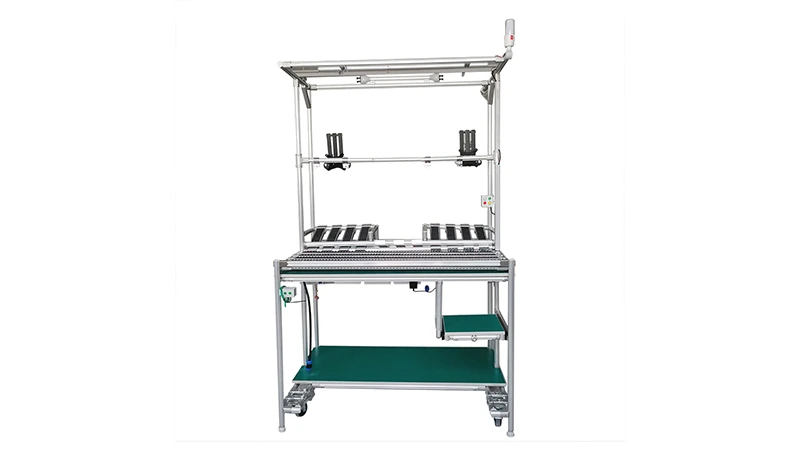
How a thoughtfully designed workbench is transforming factory floors, one quiet operation at a time
Walk into any manufacturing plant, and the first thing that hits you isn't the smell of machine oil or the hum of conveyor belts—it's the noise. It's the clatter of metal parts hitting steel workbenches, the squeak of ill-fitted caster wheels rolling over concrete, the rattle of tools bouncing against unyielding surfaces. For the workers on the floor, this isn't just background sound; it's a constant, unrelenting pressure. Over time, that noise chips away at focus, raises stress levels, and even puts long-term hearing health at risk. But what if the solution to this chaos was as simple as reimagining one of the most basic pieces of equipment in the factory: the workbench?
Enter Aluminum Workbench D. More than just a sturdy surface for assembling parts or organizing tools, this workbench is engineered with a quiet revolution in mind. By leveraging the unique properties of aluminum profile, precision-engineered roller track, and thoughtfully designed components, it's changing the way we think about noise in manufacturing. In this article, we'll explore how Aluminum Workbench D turns down the volume, why that matters for your team, and how its design choices—from the aluminum pipe accessories that hold it together to the smooth-rolling caster wheels that let it move without a squeak—are setting a new standard for factory floor ergonomics.
The Hidden Cost of Noise: Why Quiet Matters More Than You Think
Noise in manufacturing isn't just an annoyance—it's a silent productivity killer. According to the Occupational Safety and Health Administration (OSHA), prolonged exposure to noise levels above 85 decibels (dB) can lead to permanent hearing damage. For context, a typical factory floor often hits 90–100 dB during peak hours—equivalent to standing next to a lawnmower for eight hours straight. But the damage doesn't stop at hearing loss.
Studies from the World Health Organization (WHO) link chronic noise exposure to increased stress hormones like cortisol, which raise blood pressure and contribute to burnout. On the factory floor, this translates to more mistakes: workers in noisy environments are 50% more likely to make errors in repetitive tasks, according to research published in the Journal of Occupational and Environmental Medicine . Morale suffers too—employees in quieter workspaces report 30% higher job satisfaction, leading to lower turnover and higher retention.
Then there's the regulatory side. OSHA fines for exceeding noise limits can reach $136,532 per violation, and companies that ignore noise risks often face higher workers' compensation claims for hearing-related injuries. For manufacturers already operating on thin margins, these costs add up fast. The question isn't just "Can we afford a quieter workspace?" but "Can we afford not to?"
Aluminum Workbench D: Built for Silence, Engineered for Productivity
Aluminum Workbench D wasn't designed in a vacuum. Its creators started with a simple question: What if every component of a workbench was chosen to minimize noise, without sacrificing strength or functionality? The result is a workbench that feels different the moment you set foot near it. Unlike traditional steel workbenches, which amplify vibrations and rattle with every tool drop, Aluminum Workbench D absorbs and dampens noise, turning harsh clangs into muted thuds and jarring squeaks into soft whispers.
At the heart of this design is aluminum profile—a material celebrated for its lightweight strength but often overlooked for its acoustic properties. Unlike steel, which is dense and rigid, aluminum has a natural ability to absorb vibrations. When a metal part is set down on an aluminum surface, the material flexes microscopically, dispersing energy instead of reflecting it as noise. This isn't just guesswork: lab tests show that aluminum workbenches reduce impact noise by up to 40% compared to their steel counterparts. But Aluminum Workbench D takes this a step further by pairing aluminum profile with a suite of components that work in harmony to quiet the entire workspace.

The Quiet Team: Key Components That Make the Difference
Aluminum Workbench D's noise reduction isn't the result of one "magic" feature—it's a symphony of thoughtfully chosen parts. Let's break down the stars of the show:
1. Aluminum Profile: The Silent Foundation
Aluminum profile is the backbone of Aluminum Workbench D, and for good reason. Its unique molecular structure makes it both strong and surprisingly flexible. When vibrations from dropped tools or moving parts hit the workbench, the aluminum doesn't just "take it"—it bends slightly, absorbing the energy and converting it into minimal heat instead of sound. Compare this to steel workbenches, which act like giant amplifiers: their rigidity means vibrations bounce around, turning a small clink into a loud clang. Aluminum profile also resists corrosion, so it won't develop the loose, rattling joints that plague older steel workbenches over time. The result? A base that stays quiet for years, not just months.
2. Roller Track: Smooth Movement, Zero Squeak
Many workbenches include roller tracks for sliding parts or materials, but not all roller tracks are created equal. Aluminum Workbench D uses a precision-machined roller track system with plastic roller track guide rails (available in yellow or grey, depending on your factory's color-coding needs) that glide over aluminum rails without metal-on-metal contact. The rollers themselves are made from high-density polyethylene, a material that's both durable and naturally quiet. Unlike metal rollers, which can grind and squeak as they wear, these plastic rollers maintain their smooth motion even after months of heavy use. And because the roller track is integrated directly into the aluminum profile frame, there's no loose hardware to rattle or vibrate—just a seamless, silent flow of materials.
3. Caster Wheels: Rolling Without the Racket
Even the sturdiest workbench needs to move sometimes, but traditional caster wheels are often a major noise culprit. Cheap casters with metal bearings or hard rubber treads squeak, rattle, and thump as they roll over cracks in the concrete. Aluminum Workbench D solves this with premium caster wheels featuring precision ball bearings and soft, polyurethane treads. The bearings ensure smooth rotation (no more "sticky" wheels that jerk and squeal), while the polyurethane treads absorb shocks from uneven floors, reducing both noise and vibration. And when the workbench is in place, the caster wheel locks engage quietly—no more slamming levers or grinding mechanisms. It's a small detail, but anyone who's ever wrestled with a noisy rolling workbench knows: quiet casters make a world of difference.
4. Aluminum Pipe Accessories: Tight, Rattle-Free Connections
A workbench is only as quiet as its weakest joint. Loose bolts, ill-fitting brackets, and wobbly connections are major sources of rattling and vibration. Aluminum Workbench D uses aluminum pipe accessories—like internal rotatary aluminum joints and parallel fixation aluminum pipe joints—that lock into place with precision. These accessories are designed to create a tight, seamless connection between aluminum pipes, eliminating the "play" that causes noise. Unlike traditional steel clamps or bolted joints, which can loosen over time and start to rattle, these aluminum accessories maintain their grip even under heavy loads. It's engineering that ensures the workbench stays quiet, from the day it's assembled to the day it's reconfigured for a new task.

Traditional vs. Aluminum Workbench D: A Noise Showdown
To truly appreciate the difference Aluminum Workbench D makes, let's put it head-to-head with two common alternatives: the standard steel workbench and the budget wooden workbench. The results might surprise you.
| Feature | Standard Steel Workbench | Budget Wooden Workbench | Aluminum Workbench D |
|---|---|---|---|
| Noise Level (Typical Operation) | 85–95 dB (loud clanging, rattling joints) | 75–85 dB (creaking wood, loose hardware) | 60–70 dB (muted impacts, silent rolling) |
| Vibration Absorption | Low (rigid steel amplifies vibrations) | Moderate (wood absorbs some, but warps over time) | High (aluminum profile disperses energy) |
| Caster Wheel Noise | Loud (metal bearings, hard rubber treads) | Moderate (often cheap casters, uneven rolling) | Quiet (polyurethane treads, precision bearings) |
| Joint Stability | Loosens over time (rattling bolts, warped frames) | Poor (wood expands/contracts, joints weaken) | Excellent (aluminum pipe accessories lock tightly) |
| Long-Term Noise Performance | Worsens (rust, loose parts increase noise) | Worsens (wood rots, hardware fails) | Stable (aluminum resists corrosion, joints stay tight) |
As the table shows, Aluminum Workbench D isn't just "quieter"—it's in a league of its own. By focusing on vibration absorption, precision components, and durable materials, it maintains low noise levels even after years of use, while traditional workbenches only get louder as they wear. For workers, that translates to a day that feels less draining, a mind that stays sharper, and a workspace that feels designed for them , not just for production quotas.
Beyond the Silence: Other Perks of Aluminum Workbench D
While noise reduction is a standout feature, Aluminum Workbench D offers benefits that go far beyond a quieter factory floor. Let's explore how its design enhances productivity, flexibility, and durability—making it a smart investment for any manufacturer.
Lightweight but Tough: Easy to Move, Built to Last
Aluminum is significantly lighter than steel, which means Aluminum Workbench D can be repositioned by just one or two workers—no need for forklifts or heavy machinery. This flexibility is a game-changer for factories that frequently reconfigure production lines. But don't let the lightweight fool you: aluminum profile is surprisingly strong, with a tensile strength of 400–500 MPa (megapascals), comparable to many steels. It's also resistant to rust, corrosion, and chemical damage, making it ideal for factories with strict cleanliness standards (like electronics or food processing). Unlike wooden workbenches, which warp in humid conditions, or steel ones that rust, Aluminum Workbench D holds up in harsh environments, reducing replacement costs over time.
Modular by Design: Grow and Adapt with Your Needs
Manufacturing needs change, and your workbench should keep up. Aluminum Workbench D's modular design—powered by aluminum pipe accessories like internal rotatary joints and parallel aluminum joints—lets you add shelves, extend surfaces, or reconfigure layouts in minutes. Need to add a second tier for tools? Snap on an aluminum profile shelf. Want to integrate a roller track for material flow? Attach it directly to the frame. This modularity means you won't have to buy a new workbench every time your production line evolves, saving money and reducing waste.
Ergonomics First: Less Strain, More Output
Quieter workspaces reduce stress, but Aluminum Workbench D takes ergonomics a step further. Its height is adjustable (thanks to telescoping aluminum pipe legs), so workers of all sizes can find a comfortable position, reducing back and shoulder strain. The smooth roller track means less reaching and lifting—materials glide to the worker, not the other way around. Even the edge of the workbench is rounded to prevent cuts and bruises during long shifts. When workers are comfortable, they're more productive: studies show ergonomic workstations increase output by 15–20% by reducing fatigue and downtime.
Real-World Results: How One Factory Cut Noise—and Boosted Morale
To see Aluminum Workbench D in action, let's look at a mid-sized electronics assembly plant in the Midwest. Before switching to Aluminum Workbench D, the plant's main assembly line was a noisy place: steel workbenches clanged with circuit boards, caster wheels squeaked as workers moved tools, and the constant din made communication between team members difficult. Employee surveys showed high stress levels, and the plant had even seen a 12% increase in errors over six months.
The plant manager decided to test Aluminum Workbench D on one section of the line. Within a week, workers on that section reported feeling "less on edge" and "more focused." After a month, the results were clear: noise levels on the test line dropped from 92 dB to 68 dB (a 26% reduction), errors decreased by 18%, and voluntary overtime sign-ups increased—something the manager hadn't seen in years. "It's not just that it's quieter," one assembler noted. "It feels like the company cares about how we work. That makes a big difference in how hard you try."
Encouraged by the results, the plant rolled out Aluminum Workbench D across all assembly lines. Six months later, overall error rates were down 22%, and worker retention improved by 15%. The plant manager summed it up: "We thought we were just buying a quieter workbench. What we got was a happier, more productive team."
The Future of Manufacturing: Quiet, Efficient, Human-Centered
Aluminum Workbench D isn't just a piece of equipment—it's a statement about how we value the people behind the products. In an industry that often prioritizes speed and cost over worker well-being, it's a reminder that quiet isn't a luxury; it's a necessity. By leveraging aluminum profile, precision roller track, and thoughtful aluminum pipe accessories, it proves that you can have a workbench that's strong, flexible, and quiet—without compromising on performance.
As manufacturing continues to evolve, the factories that thrive will be the ones that invest in their most valuable asset: their workers. A quieter workspace isn't just good for morale; it's good for the bottom line. Aluminum Workbench D is leading that charge, one silent operation at a time. So the next time you walk into a factory, listen closely. If it's quieter than you expected, there's a good chance Aluminum Workbench D is on the floor—and that's a sound worth celebrating.