- Company Articles
- Products and Technology
- Product knowledge
- Aluminum Workbench D vs Fixed Workstations: The Advantages of Modular Flexibility

Aluminum Workbench D vs Fixed Workstations: The Advantages of Modular Flexibility
Related Product
Aluminum Workbench D
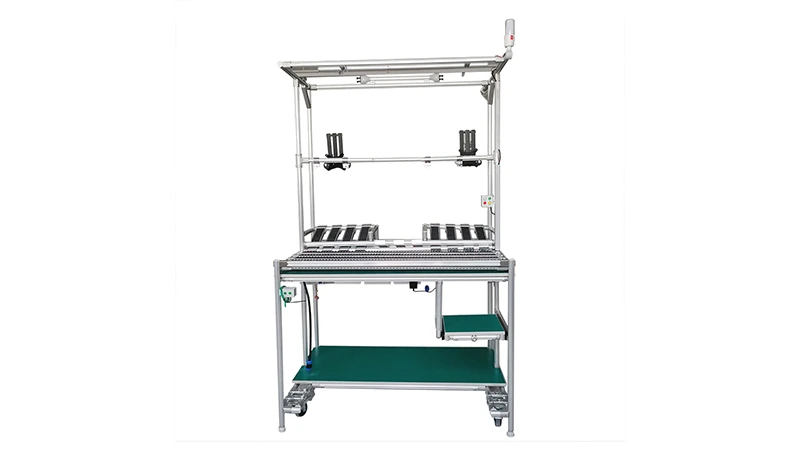
Aluminum tube workbench is more flexible and durable, compared with traditional PE/ABS coated steel tube. It is easy to assemble, anti corrosion, rust protection, and recycle use after disassemble.
Picture this: You walk into a small manufacturing workshop on a Tuesday morning. The air hums with the low buzz of machinery, and teams huddle around workstations, heads down, focused on assembling small electronic components. But there's a quiet tension in the air. The team lead, Maria, is stressed—last week, the client changed the product design, and now half the workstations are too narrow to fit the new circuit boards. The carpenter is scheduled to rebuild them next month, but until then, production is lagging, and deadlines are slipping. "If we could just adjust these tables," Maria mutters, "we wouldn't be stuck."
Sound familiar? For small businesses, startups, and even mid-sized teams, fixed workstations are often seen as a "set it and forget it" solution. But in reality, they're a silent bottleneck. Markets change, product lines evolve, and team sizes fluctuate—and a workstation that worked perfectly six months ago might now be holding you back. That's where modular solutions like the Aluminum Workbench D come in. Designed with flexibility in mind, it's not just a table; it's a tool that grows, adapts, and evolves with your business. Let's dive into why choosing modular over fixed could be the best decision you make for your workflow.
What Even Is Aluminum Workbench D, Anyway?
Before we compare, let's get clear on what we're talking about. Aluminum Workbench D is part of a modern family of modular workstations built around the idea that "one size fits none." Unlike traditional fixed workstations—think heavy wooden tables or welded steel frames that are bolted to the floor—it's constructed using lightweight, durable aluminum profile and a range of aluminum pipe accessories. This isn't just a "workbench" in the old sense; it's a system. You start with a base frame, then add shelves, tool holders, lighting, casters (or skip them, like the "Workbench E (single deck-without caster)" model), and other components to fit your specific needs. It's like building with high-quality, industrial-grade Legos—only instead of plastic bricks, you're using corrosion-resistant aluminum and precision-engineered joints.
The "D" in its name? That's just its model designation, but what makes it stand out is its focus on adaptability. Whether you're assembling smartphones, packaging small parts, or testing prototypes, Aluminum Workbench D can be tweaked to match the task at hand. And because it's built with aluminum profile, it's sturdy enough to handle daily wear and tear but light enough that two people can reposition it in minutes—no carpenter, no power tools, no headaches.
Fixed vs. Modular: A Side-by-Side Breakdown
To really understand the difference, let's put fixed workstations and Aluminum Workbench D head-to-head. The table below breaks down key features, so you can see why modular flexibility matters in the long run:
| Feature | Traditional Fixed Workstations | Aluminum Workbench D (Modular) |
|---|---|---|
| Material | Typically wood, particleboard, or welded steel—heavy and rigid. | Lightweight aluminum profile with aluminum pipe accessories—strong but easy to maneuver. |
| Assembly Time | Hours to days (requires tools, carpentry, or professional installation). | 30–60 minutes (no special tools; uses simple bolts and joints). |
| Customization Options | Limited to what's built in (e.g., a fixed shelf height, no add-ons). | Virtually endless: Add tool rails, monitor mounts, drawer units, or even ESD (electrostatic discharge) mats for sensitive electronics. |
| Scalability | None. If you need more space, you buy a whole new workstation. | Highly scalable: Add extensions, stack shelves, or link multiple Workbench D units together as your team grows. |
| Cost Over Time | Low upfront, high long-term. Replacing or modifying costs time and money. | Slightly higher upfront, but lower over time. Reconfigure instead of replacing—saves on labor and materials. |
| Ergonomic Adjustments | Minimal to none (fixed height, fixed layout). | Easy: Adjust leg height, add anti-fatigue mats, or tilt work surfaces to reduce strain. |
| Maintenance | Prone to scratches, dents, or warping (wood/particleboard) or rust (uncoated steel). | Aluminum resists corrosion; wipe clean with a damp cloth. replace individual parts (e.g., a worn caster) instead of the whole unit. |
At first glance, fixed workstations might seem cheaper or "simpler." But as your business changes, those "simple" workstations become anchors—weighing you down with their inability to adapt. Aluminum Workbench D, on the other hand, is built to move with you.

The Hidden Superpower: Modular Flexibility in Action
Let's talk about why flexibility matters—not just in theory, but in the day-to-day grind of running a business. Here are five ways Aluminum Workbench D's modular design solves real problems fixed workstations can't touch:
1. Customization: Build It for Your Team, Not the Other Way Around
No two teams work the same way. Your assembly line might need a tool rack on the left, while your packaging station needs a bin for scrap materials on the right. Fixed workstations force you to adapt your workflow to their design; modular workstations let you design the workflow first, then build the workstation around it.
Take aluminum pipe accessories, for example. These small but mighty components—think brackets, clamps, and shelving connectors—let you add exactly what you need, when you need it. Want to mount a magnetic tool strip above the work surface? Screw in a bracket. Need a shelf for extra parts bins? Snap on an aluminum profile shelf. Even better, if your process changes next month, you can unscrew those accessories and rearrange them—no need to buy a new workstation.
Real-Life Example: A small electronics repair shop in Texas recently switched to Aluminum Workbench D. Their old fixed workbench had a single shelf that was too high for most technicians to reach comfortably. With modular accessories, they added a lower shelf at waist height for frequently used tools and a magnetic strip for screwdrivers. "Now, no one's stretching or climbing on chairs to grab parts," the shop owner said. "Repair times dropped by 15% just because the workstation finally worked with us."
2. Scalability: Grow Without Starting Over
Startups and small businesses rarely stay small forever. Maybe you hire three new team members next quarter, or land a big client that doubles your production needs. With fixed workstations, scaling means buying new units—each with the same limitations as the old ones. With Aluminum Workbench D, you can start with one or two units and expand incrementally.
Need more workspace? Link two Workbench D units together using aluminum profile connectors. Running out of storage? Add a "Material Rack B (3 row and 3 floor)" beside the workstation for extra parts. Even better, if you downsize temporarily (say, during a slow season), you can disassemble unused components and store them—no need to sell off old workstations for pennies on the dollar. It's growth without the waste.
3. Cost-Effectiveness: Spend Smart, Not Just Less
Fixed workstations often have a lower upfront cost, but that's a trick of the short term. Let's say you buy a $300 wooden workbench. Six months later, you need to add a shelf—you hire a carpenter for $150. A year after that, you expand your team and need two more workstations: $600. Total after 18 months: $1,050. Now, compare that to Aluminum Workbench D, which might cost $600 upfront. Adding a shelf? $20 for aluminum pipe accessories. Expanding? $400 for a second unit (since you can reuse some parts from the first). Total after 18 months: $1,020. The modular option costs less in the long run—and that's not even counting the productivity gains from a workstation that fits your needs.
Plus, aluminum profile is built to last. While a wooden workstation might start showing wear after a year, Aluminum Workbench D can handle a decade of use with minimal maintenance. It's an investment, not an expense.
4. Adaptability: Pivot Fast When Markets Change
Remember Maria from the introduction? Her team's product design changed, and their fixed workstations couldn't keep up. With Aluminum Workbench D, that scenario would play out differently. The new circuit boards need more space? Remove the side shelf to widen the work surface. Need to add a light for detailed assembly? Clip on an LED strip using aluminum pipe accessories. The whole process takes an hour, not a month. Production stays on track, deadlines are met, and Maria can focus on leading her team instead of stressing about workstations.
This adaptability is especially critical in industries with seasonal demand or frequent product updates. A toy manufacturer, for example, might reconfigure their workstations in Q4 to handle holiday rush packaging, then switch back to assembly mode in Q1. With fixed workstations, that would mean storing extra tables (wasting space) or working around clunky, ill-fitting setups. With modular workstations, it's a matter of rearranging components.
5. Ergonomics: Keep Your Team Healthy and Happy
Ergonomics isn't just a buzzword—it's about keeping your team healthy, productive, and engaged. Fixed workstations often have a single height, which means tall team members hunch over and shorter ones strain to reach. Over time, that leads to back pain, carpal tunnel, and missed workdays.
Aluminum Workbench D solves this with adjustable legs and customizable heights. Need a standing desk option? Swap out the fixed legs for adjustable ones. Prefer a seated setup? Lower it to knee height. You can even add anti-fatigue mats or footrests using—you guessed it—aluminum pipe accessories. When your team is comfortable, they're more focused, more efficient, and less likely to call in sick. It's a win-win.

Why Aluminum? The Material That Makes It All Possible
You might be wondering: Why aluminum? Why not steel or wood? The answer lies in aluminum's unique combination of strength, weight, and durability. Steel is strong but heavy—repositioning a steel workstation is a two-person job (and a backache waiting to happen). Wood is cheap but prone to warping, scratches, and water damage. Aluminum profile, on the other hand, hits the sweet spot:
- Lightweight but Strong: Aluminum is about 1/3 the weight of steel, so workstations are easy to move, but it's still strong enough to support heavy tools and materials.
- Corrosion-Resistant: Unlike steel, aluminum doesn't rust. That's a big deal in humid environments or workshops where spills happen.
- Easy to Clean: Wipe it down with a damp cloth, and it looks brand new. No sanding, painting, or refinishing required.
- Aesthetically Pleasing: Let's be honest—workspaces matter. Aluminum's sleek, modern look makes your shop or factory feel more professional, which can boost team morale and impress clients.
Aluminum profile also pairs perfectly with other materials, like ESD mats for electronics work or wooden work surfaces for a warmer feel. It's versatile, which is why it's the backbone of so many lean system setups—systems designed to minimize waste and maximize efficiency.
Who Should Invest in Aluminum Workbench D?
If you're still on the fence, ask yourself: Does my business ever change? Do my team's needs evolve? Do I want to save time, money, and frustration in the long run? If you answered "yes" to any of these, modular workstations like Aluminum Workbench D are worth considering. They're especially valuable for:
- Startups and Small Businesses: You need to maximize every dollar and adapt quickly as you grow.
- Manufacturing and Assembly Teams: Your workflow changes with product updates, and you need workstations that keep up.
- Repair Shops and Labs: Precision work demands a workstation tailored to your tools and tasks.
- Any Team Tired of "Making Do": If your current workstations are holding you back, it's time for an upgrade.
Final Thoughts: Flexibility Isn't a Luxury—It's a Necessity
In a world where markets move fast and businesses need to pivot on a dime, fixed workstations are a relic of the past. They're expensive, inflexible, and designed for a time when workflows rarely changed. Aluminum Workbench D, with its modular design, aluminum profile construction, and endless customization options, is built for today's dynamic teams.
It's not just about buying a workstation—it's about investing in a system that grows with you, adapts to your needs, and empowers your team to do their best work. So, the next time you look at your current workstations, ask: Are they helping you move forward, or holding you back? If it's the latter, maybe it's time to go modular.
After all, your business isn't fixed—why should your workstations be?