- Company Articles
- Products and Technology
- Product knowledge
- Aluminum Workbench D vs Traditional Steel Workbenches: A Comparative Analysis

Aluminum Workbench D vs Traditional Steel Workbenches: A Comparative Analysis
Related Product
Aluminum Workbench D
Aluminum tube workbench is more flexible and durable, compared with traditional PE/ABS coated steel tube. It is easy to assemble, anti corrosion, rust protection, and recycle use after disassemble.
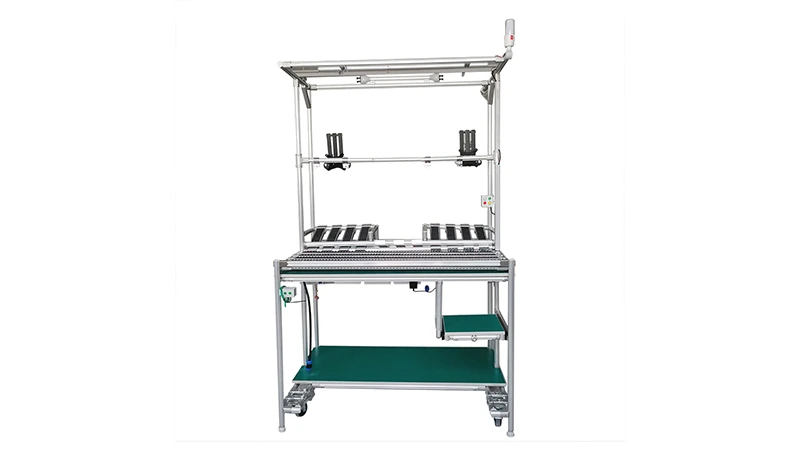
Walk into any manufacturing plant, repair shop, or lab, and you'll notice a silent workhorse holding everything together: the workbench. It's where ideas turn into prototypes, where technicians tinker with delicate components, and where assembly lines hum with productivity. For decades, traditional steel workbenches have been the default choice—sturdy, reliable, and seemingly built to last. But in recent years, a new contender has emerged: the aluminum extrusion profile -based Aluminum Workbench D. Lightweight, adaptable, and designed for the demands of modern workflows, it's challenging the status quo. Today, we're diving deep into this showdown, exploring how these two workhorses stack up in real-world scenarios—from bustling factories to quiet labs, and everywhere in between.
The Material Story: Aluminum Extrusion Profile vs. Steel—More Than Just Metal
Let's start with the basics: what are these workbenches made of? Traditional steel workbenches are typically crafted from carbon steel, often with a thickness ranging from 1.5mm to 3mm. Steel's reputation for strength comes from its iron-carbon alloy composition, which gives it high tensile strength—great for bearing heavy loads, but with a catch: weight. A standard 6-foot steel workbench can weigh upwards of 200 pounds, and that's before you add tools or equipment.
Aluminum Workbench D, on the other hand, is built around aluminum extrusion profile . Extrusion is a manufacturing process where aluminum alloy is pushed through a die to create complex cross-sectional shapes—think T-slots, grooves, and channels that aren't just for show. This isn't the flimsy aluminum you find in soda cans; we're talking about high-grade alloys (often 6061 or 6063) that balance strength and flexibility. The result? A frame that's both lightweight and surprisingly robust, thanks to the extrusion's structural integrity.
But why does the material matter beyond just "steel is heavy, aluminum is light"? It's about how the material interacts with your daily operations. For example, in a lean manufacturing setup—where efficiency and adaptability are king—every pound counts. A steel workbench might anchor a space permanently, but an aluminum extrusion profile bench can be repositioned, modified, or even disassembled and reassembled elsewhere with minimal effort. That's the first hint that this isn't just a battle of materials—it's a battle of mindsets: rigidity vs. flexibility.
Weight and Mobility: When "Light" Translates to "Agile"
Let's talk about the elephant in the room (or the workbench in the workshop): weight. A typical Aluminum Workbench D, with a single deck and no casters (Workbench E configuration, for reference), weighs in at around 70–90 pounds. Compare that to a steel workbench of the same size, which can hit 180–220 pounds. That's a difference of over 100 pounds—and in a dynamic environment, that difference isn't just numbers on a scale; it's hours saved, fewer strained backs, and a workflow that can pivot on a dime.
Imagine a small electronics assembly team that needs to reconfigure their workspace weekly to accommodate new product lines. With a steel workbench, moving it requires a forklift or at least four people, disrupting the entire shift. With Aluminum Workbench D? Two technicians can lift it, roll it (if casters are added), and have it in place in 10 minutes. No downtime, no hassle, just the kind of agility that makes a lean system thrive. It's not just about physical effort, either—lighter workbenches mean easier installation of accessories like overhead shelves or tool racks, since the frame isn't weighed down by its own bulk.
But wait—doesn't "lightweight" mean "less stable"? Not with aluminum extrusion profiles. The T-slot design of the extrusion allows for precise, tight connections using aluminum profile accessories like brackets and bolts, creating a rigid structure that resists wobbling even under load. I visited a local repair shop last month where they'd stacked a 50-pound toolbox, a soldering station, and a monitor on an Aluminum Workbench D—and it didn't budge an inch. The owner laughed and said, "I was skeptical at first, too. But this thing holds more than my old steel bench, and I can move it myself when I need to clean behind it. Game-changer."

Durability and Maintenance: Rust, Scratches, and the Test of Time
Steel's reputation for durability is well-earned. A well-maintained steel workbench can last decades—provided you keep rust at bay. Here's the catch: "well-maintained" often means regular painting, sanding, or applying anti-rust coatings, especially in humid or dusty environments. I once toured a coastal manufacturing plant where steel workbenches near the loading dock had rusted through at the legs after just three years, despite quarterly repainting. The salt air had eaten away at the steel, turning a "permanent" fixture into a safety hazard.
Aluminum, on the other hand, comes with a built-in defense mechanism: its oxide layer. When exposed to air, aluminum forms a thin, invisible layer of aluminum oxide that acts as a barrier against corrosion. That same coastal plant? They replaced those rusted steel benches with Aluminum Workbench D units five years ago, and today, the frames still look brand-new—no repainting, no sanding, just an occasional wipe-down with a damp cloth. Even in workshops where chemicals or oils are spilled, aluminum holds up better than steel, which can pit or corrode when exposed to harsh substances.
But what about scratches? Steel workbenches often have a powder-coated finish that, once scratched, exposes the bare metal to rust. Aluminum extrusion profiles, by contrast, are often anodized—a process that thickens the oxide layer and adds color (think silver, black, or blue). Anodized finishes are scratch-resistant, and even if they do get nicked, the underlying aluminum still resists corrosion. A lab technician I spoke to summed it up: "My steel bench had more scratches in a month than my Aluminum Workbench D has in two years. And when I spill ethanol, I don't panic anymore—I just wipe it up and keep working."

Customization: T-Slots, Accessories, and the Joy of "Building as You Go"
One of the biggest frustrations with traditional steel workbenches is their rigidity. Want to add a shelf? You'll need to drill holes, weld brackets, or settle for a clunky bolt-on solution that never quite fits. Need to mount a monitor arm? Good luck finding a spot that won't require reinforcing the frame. Steel is strong, but it's not designed for on-the-fly changes.
Aluminum Workbench D, with its aluminum extrusion profile frame, is a different beast entirely. The T-slots running along the length of the extrusion are like a blank canvas for customization. Slide in a bracket, tighten a bolt, and you've got a shelf. Add a aluminum profile accessories like a tool rail, and you can hang wrenches, screwdrivers, or cable organizers in seconds. Need to adjust the height? Swap out the legs for longer ones—no cutting, no welding, just a few turns of a wrench.
I visited a startup prototyping lab last month where they'd turned their Aluminum Workbench D into a multi-functional hub. One week, it was a 3D printing station with a shelf for spools and a monitor arm. The next, they'd removed the shelf, added a mat, and transformed it into an electronics testing bench. "We're a small team, so we can't afford a bench for every task," the lead engineer explained. "This one adapts with us. Last week, we even added a pegboard using T-slot brackets—took 15 minutes. With our old steel bench, that would've required a trip to the hardware store and half a day of drilling."
The customization doesn't stop at shelves and tools, either. Aluminum extrusion profiles come in a range of sizes, from 20x20mm for lightweight tasks to 40x80mm for heavy-duty applications. This means you can mix and match components to create a bench that's tailored to your exact needs—whether you're assembling tiny circuit boards or heavy machinery parts.
Cost: The Upfront Price Tag vs. the Long Game
Let's cut to the chase: Aluminum Workbench D often costs more upfront than a basic steel workbench. A standard 6-foot Aluminum Workbench D might run $400–$600, while a comparable steel model could be $250–$350. At first glance, steel seems like the budget-friendly choice. But here's the thing: cost isn't just about the initial purchase—it's about what you pay over the workbench's lifetime.
Take maintenance, for example. A steel workbench in a humid environment might need repainting every 1–2 years, costing $50–$100 per bench each time. Over 10 years, that's $500–$1000 in upkeep. Aluminum Workbench D? Zero. No painting, no rust treatments, just occasional cleaning. Then there's replacement: steel benches often get replaced every 5–7 years due to rust or damage; aluminum benches can last 15–20 years with minimal wear. Do the math: $300 steel bench + $700 maintenance + $300 replacement (after 7 years) = $1300 over 14 years. Aluminum Workbench D: $500 upfront + $0 maintenance + $0 replacement (still going strong) = $500 over 14 years. Suddenly, that "expensive" aluminum bench looks like a steal.
There's also the hidden cost of inefficiency. A rigid steel bench that can't adapt to new workflows might force you to buy additional benches or reorganize your space more frequently. A lean system thrives on minimizing waste, and an adaptable workbench is a tool for reducing waste—whether it's time spent moving heavy furniture or money spent on redundant equipment. As one factory manager put it: "We used to buy steel benches because they were cheap. Now, we buy aluminum because they save us money. The upfront cost stings a little, but the ROI? It's undeniable."
The Verdict: A Side-by-Side Breakdown
| Feature | Aluminum Workbench D (Aluminum Extrusion Profile) | Traditional Steel Workbench |
|---|---|---|
| Weight (6-foot model) | 70–90 lbs (easy to move with 2 people) | 180–220 lbs (requires forklift or 4+ people) |
| Durability | Corrosion-resistant (oxide layer); 15–20 year lifespan | Prone to rust; 5–7 year lifespan (with maintenance) |
| Customization | High (T-slots + aluminum profile accessories for quick modifications) | Low (requires drilling/welding for changes) |
| Maintenance | Minimal (occasional wipe-down) | High (repainting, rust treatments every 1–2 years) |
| Long-Term Cost (10 years) | $500–$600 (upfront + $0 maintenance) | $800–$1,000 (upfront + maintenance + potential replacement) |
| Best For | Dynamic environments, lean systems, small teams, labs | Static, heavy-load applications (e.g., automotive repair with fixed tools) |
Final Thoughts: Choosing the Right Bench for Your Workflow
So, which workbench is better? The answer, as with most tools, depends on your needs. If you're running a static workshop with heavy, fixed equipment—think automotive repair or metalworking—traditional steel might still be the way to go. It's built to take a beating, and if you don't need to move it, its weight becomes an asset, not a liability.
But for most modern workplaces—where adaptability, efficiency, and long-term savings matter—Aluminum Workbench D shines. Its aluminum extrusion profile frame offers the best of both worlds: strength without the weight, durability without the maintenance, and customization without the hassle. It's a workbench designed for people who don't just work—they evolve. Whether you're a startup scaling up, a lab experimenting with new ideas, or a factory striving for a lean system , it's more than a piece of furniture; it's a partner in productivity.
At the end of the day, the workbench you choose should reflect how you work. And in a world that moves faster than ever, maybe it's time to leave the heavy, rigid past behind—and embrace a lighter, brighter, more adaptable future.