- Company Articles
- Products and Technology
- Product knowledge
- Aluminum Workbench D vs Wooden Workbenches: Durability and Cost Comparison

Aluminum Workbench D vs Wooden Workbenches: Durability and Cost Comparison
Related Product
Aluminum Workbench D
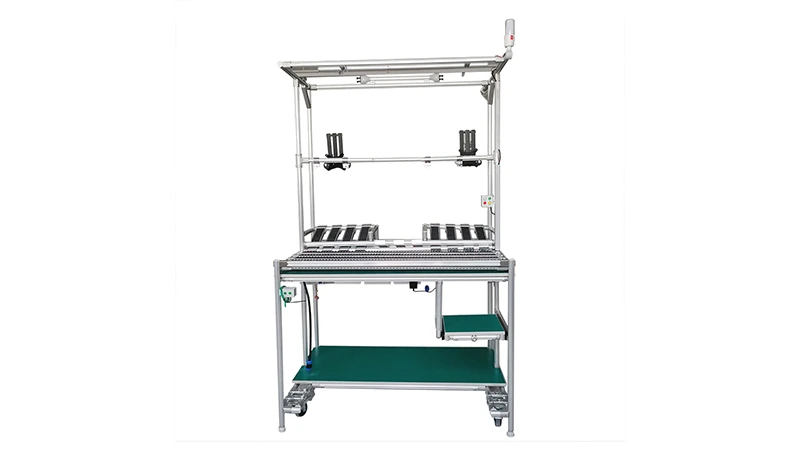
Aluminum tube workbench is more flexible and durable, compared with traditional PE/ABS coated steel tube. It is easy to assemble, anti corrosion, rust protection, and recycle use after disassemble.
Every workshop, garage, or manufacturing floor has one unsung hero: the workbench. It's where ideas take shape, tools find their home, and projects move from concept to completion. But not all workbenches are created equal. If you've ever stood in front of a row of options, debating between the warm, classic look of wood and the sleek, modern appeal of aluminum, you know the decision isn't just about aesthetics—it's about performance, longevity, and value. Today, we're diving deep into two popular choices: the Aluminum Workbench D (a staple in modular and lean system setups) and traditional wooden workbenches. By the end, you'll have a clear picture of which one deserves a spot in your workspace.
The Case for Wood: Nostalgia and Initial Affordability
Wooden workbenches have been around for centuries, and it's easy to see why. There's a certain charm to a well-worn wooden top—scratches tell stories of projects past, and the natural grain adds warmth to any space. For hobbyists or small-scale makers, wood often feels approachable. Pine, oak, and maple are common choices, each with its own perks: pine is lightweight and budget-friendly, oak is dense and sturdy, and maple offers a smooth surface ideal for detailed work.
Upfront cost is another draw. A basic wooden workbench can be built at home with a few planks and screws, or bought pre-made for a fraction of the price of a high-end aluminum model. For someone just starting out, or with a tight budget, wood seems like the practical choice. But here's the catch: practicality isn't just about the first price tag. It's about how that workbench holds up over time, especially in real-world conditions.
Upfront cost is another draw. A basic wooden workbench can be built at home with a few planks and screws, or bought pre-made for a fraction of the price of a high-end aluminum model. For someone just starting out, or with a tight budget, wood seems like the practical choice. But here's the catch: practicality isn't just about the first price tag. It's about how that workbench holds up over time, especially in real-world conditions.
Aluminum Workbench D: Engineered for the Long Haul
Enter the Aluminum Workbench D. Unlike its wooden counterpart, this isn't just a slab of material on legs. It's a product of modern engineering, designed with modularity and durability in mind. Made from high-grade aluminum profile (think: the same robust material used in aerospace and automotive parts), it's built to withstand the chaos of daily use—whether you're hammering metal, assembling electronics, or organizing tools in a lean system setup.
What sets Aluminum Workbench D apart? Let's start with its construction. The frame uses lightweight yet strong aluminum extrusion profiles, often paired with internal rotary aluminum joints for stability. The top is typically a single deck (without casters, though casters can be added later for mobility), made from aluminum honeycomb panel or a solid aluminum sheet—both resistant to dents, scratches, and warping. Unlike wood, aluminum doesn't care about humidity, temperature swings, or spills. Leave a water bottle on it overnight? No warping. Wipe up oil or paint? No stains. This is a workbench that stays flat, stable, and functional, day in and day out.
What sets Aluminum Workbench D apart? Let's start with its construction. The frame uses lightweight yet strong aluminum extrusion profiles, often paired with internal rotary aluminum joints for stability. The top is typically a single deck (without casters, though casters can be added later for mobility), made from aluminum honeycomb panel or a solid aluminum sheet—both resistant to dents, scratches, and warping. Unlike wood, aluminum doesn't care about humidity, temperature swings, or spills. Leave a water bottle on it overnight? No warping. Wipe up oil or paint? No stains. This is a workbench that stays flat, stable, and functional, day in and day out.

Durability Showdown: How They Stack Up
Let's cut to the chase: durability is where the rubber meets the road (or the hammer meets the workbench). To truly compare, we need to look at how each material handles the stresses of a typical workspace.
Moisture and Humidity: Wood is a natural material, and like all natural materials, it absorbs water. Even treated wood can warp or swell in humid environments—think garages in summer or workshops near the coast. A rainy day with an open window, or a spilled drink left unattended, can leave permanent marks. Aluminum? It's naturally resistant to corrosion and moisture. Aluminum Workbench D's surface won't swell, crack, or develop mold, even in damp conditions.
Impact Resistance: drop a wrench on a wooden workbench, and you'll likely end up with a dent or a chip. Do the same on Aluminum Workbench D, and the aluminum top might show a small scratch at worst. Aluminum's inherent strength (especially when reinforced with aluminum profile accessories like side guards) means it can take repeated impacts without losing structural integrity.
Wear and Tear: Over time, wooden tops become uneven. Knife cuts, saw marks, and clamp indentations add up, making the surface less reliable for precision work. You can sand it down, but that means removing layers of wood—and eventually, you'll run out of material. Aluminum Workbench D's surface is non-porous and hard-wearing. Even after years of use, it remains flat and smooth, requiring minimal upkeep.
ESD Compatibility: For workshops dealing with electronics, static electricity is a silent enemy. Wooden workbenches can build up static, risking damage to sensitive components. Many aluminum workbenches, including some variants of Aluminum Workbench D, are designed as ESD workstations. The aluminum surface conducts static away, protecting circuit boards, microchips, and other delicate parts—a feature wood simply can't match without expensive add-ons.
Moisture and Humidity: Wood is a natural material, and like all natural materials, it absorbs water. Even treated wood can warp or swell in humid environments—think garages in summer or workshops near the coast. A rainy day with an open window, or a spilled drink left unattended, can leave permanent marks. Aluminum? It's naturally resistant to corrosion and moisture. Aluminum Workbench D's surface won't swell, crack, or develop mold, even in damp conditions.
Impact Resistance: drop a wrench on a wooden workbench, and you'll likely end up with a dent or a chip. Do the same on Aluminum Workbench D, and the aluminum top might show a small scratch at worst. Aluminum's inherent strength (especially when reinforced with aluminum profile accessories like side guards) means it can take repeated impacts without losing structural integrity.
Wear and Tear: Over time, wooden tops become uneven. Knife cuts, saw marks, and clamp indentations add up, making the surface less reliable for precision work. You can sand it down, but that means removing layers of wood—and eventually, you'll run out of material. Aluminum Workbench D's surface is non-porous and hard-wearing. Even after years of use, it remains flat and smooth, requiring minimal upkeep.
ESD Compatibility: For workshops dealing with electronics, static electricity is a silent enemy. Wooden workbenches can build up static, risking damage to sensitive components. Many aluminum workbenches, including some variants of Aluminum Workbench D, are designed as ESD workstations. The aluminum surface conducts static away, protecting circuit boards, microchips, and other delicate parts—a feature wood simply can't match without expensive add-ons.

Cost: The Upfront vs. Long-Term Debate
Let's talk numbers. At first glance, wood seems cheaper. A basic pine workbench might cost $150–$300, while a solid oak model could run $500–$800. Aluminum Workbench D, on the other hand, starts around $800–$1,200 for a standard single-deck model (without casters). That's a big difference upfront. But here's where the story changes: lifespan and maintenance costs.
A wooden workbench, even a well-made one, has a lifespan of 5–10 years with regular use. After that, it may need refinishing (sanding, staining, sealing) every 1–2 years, costing $50–$150 per treatment. If it warps or cracks beyond repair, you'll need to replace it entirely.
Aluminum Workbench D, by contrast, can last 15–20 years or more with minimal maintenance. Its aluminum profile frame and top don't require sealing, staining, or refinishing. A quick wipe with a damp cloth is all it takes to keep it clean. Even if a part wears out—say, a caster or a joint—its modular design means you can replace just that component, not the entire bench. When you factor in replacement and maintenance costs over time, aluminum often comes out ahead.
To make this concrete, let's look at a 10-year cost breakdown:
A wooden workbench, even a well-made one, has a lifespan of 5–10 years with regular use. After that, it may need refinishing (sanding, staining, sealing) every 1–2 years, costing $50–$150 per treatment. If it warps or cracks beyond repair, you'll need to replace it entirely.
Aluminum Workbench D, by contrast, can last 15–20 years or more with minimal maintenance. Its aluminum profile frame and top don't require sealing, staining, or refinishing. A quick wipe with a damp cloth is all it takes to keep it clean. Even if a part wears out—say, a caster or a joint—its modular design means you can replace just that component, not the entire bench. When you factor in replacement and maintenance costs over time, aluminum often comes out ahead.
To make this concrete, let's look at a 10-year cost breakdown:
| Cost Factor | Wooden Workbench (Oak) | Aluminum Workbench D |
|---|---|---|
| Initial Purchase | $600 | $1,000 |
| Maintenance (10 years) | $500 (5 refinishes at $100 each) | $50 (occasional cleaning supplies) |
| Replacement (if needed) | $600 (after 7 years) | $0 (still functional after 10 years) |
| Total 10-Year Cost | $1,700 | $1,050 |
The numbers speak for themselves: over a decade, Aluminum Workbench D saves you nearly $650. And that's not even accounting for the productivity losses from a warped or unstable wooden workbench—like misaligned cuts or damaged tools due to an uneven surface.
Functionality: Beyond the Surface
A workbench isn't just a table; it's a tool for organization and efficiency. Here's where Aluminum Workbench D really shines, thanks to its integration with lean system principles and modular design.
Modularity: Wooden workbenches are static. Once built, their height, storage, and layout are fixed. Aluminum Workbench D, however, is part of a larger ecosystem. Its aluminum profile frame is compatible with a range of accessories: shelves, tool hooks, monitor mounts, and even roller tracks for material flow. Need to add a drawer unit? Screw it into the t-slot aluminum pipe frame. Want to raise the height for standing work? Swap out the legs for longer ones. This flexibility makes it easy to adapt as your needs change—something wood simply can't match.
Lean System Integration: For small businesses or manufacturing facilities, lean system practices (like 5S or continuous flow) are critical for efficiency. Aluminum Workbench D fits seamlessly into these setups. Its clean, uncluttered design reduces waste, and accessories like flow racks or roller tracks can be attached to keep materials within arm's reach. Unlike wood, which can become a catch-all for clutter, aluminum's sleek surface encourages organization—no more hiding tools in cracks or under piles of sawdust.
Weight and Mobility: Wood is heavy. A solid oak workbench can weigh 300+ pounds, making it nearly impossible to move. Aluminum Workbench D, despite its strength, is lightweight (thanks to aluminum's high strength-to-weight ratio). Add casters, and you can roll it across the shop to where it's needed most—perfect for dynamic workspaces or collaborative projects.
Modularity: Wooden workbenches are static. Once built, their height, storage, and layout are fixed. Aluminum Workbench D, however, is part of a larger ecosystem. Its aluminum profile frame is compatible with a range of accessories: shelves, tool hooks, monitor mounts, and even roller tracks for material flow. Need to add a drawer unit? Screw it into the t-slot aluminum pipe frame. Want to raise the height for standing work? Swap out the legs for longer ones. This flexibility makes it easy to adapt as your needs change—something wood simply can't match.
Lean System Integration: For small businesses or manufacturing facilities, lean system practices (like 5S or continuous flow) are critical for efficiency. Aluminum Workbench D fits seamlessly into these setups. Its clean, uncluttered design reduces waste, and accessories like flow racks or roller tracks can be attached to keep materials within arm's reach. Unlike wood, which can become a catch-all for clutter, aluminum's sleek surface encourages organization—no more hiding tools in cracks or under piles of sawdust.
Weight and Mobility: Wood is heavy. A solid oak workbench can weigh 300+ pounds, making it nearly impossible to move. Aluminum Workbench D, despite its strength, is lightweight (thanks to aluminum's high strength-to-weight ratio). Add casters, and you can roll it across the shop to where it's needed most—perfect for dynamic workspaces or collaborative projects.
Real-World Story: A Small Manufacturer's Switch
Let's hear from Mike, who runs a small electronics assembly shop. "We used wooden workbenches for years," he says. "They looked nice, but after six months, the tops were warped from solder fumes and spills. We were sanding and refinishing them every quarter, and the static electricity was ruining circuit boards. We switched to Aluminum Workbench D last year, and it's been a game-changer. The ESD surface protects our parts, we haven't done any maintenance, and we added roller tracks to feed components right to the bench. Productivity is up, and we're not wasting time fixing workbenches anymore."
When Wood Still Makes Sense
To be fair, aluminum isn't the right fit for everyone. If you're a hobbyist with a small workspace, work primarily with hand tools, and prioritize aesthetics over long-term durability, a wooden workbench might still work. It's also a good choice if you need a temporary solution or plan to move frequently (though even then, aluminum's portability is a plus).
Another scenario: artistic projects. Wood's natural texture can be an asset for tasks like leatherworking or pottery, where a softer surface won't damage tools. But for most industrial, commercial, or high-use home workshops, aluminum's benefits far outweigh wood's nostalgia.
Another scenario: artistic projects. Wood's natural texture can be an asset for tasks like leatherworking or pottery, where a softer surface won't damage tools. But for most industrial, commercial, or high-use home workshops, aluminum's benefits far outweigh wood's nostalgia.
The Verdict: Aluminum Workbench D for Durability and Value
At the end of the day, choosing a workbench is about investing in your workspace's future. Wooden workbenches offer charm and initial savings, but they come with hidden costs: maintenance, replacement, and lost productivity. Aluminum Workbench D, with its aluminum profile construction, lean system compatibility, and ESD workstation capabilities, is built to grow with you. It's not just a purchase—it's a long-term partner in your projects.
So, if you want a workbench that won't let you down, that adapts to your needs, and that actually saves you money over time, the choice is clear. Aluminum Workbench D isn't just modern—it's smart. And in the world of workshops, smart wins.
So, if you want a workbench that won't let you down, that adapts to your needs, and that actually saves you money over time, the choice is clear. Aluminum Workbench D isn't just modern—it's smart. And in the world of workshops, smart wins.