- Company Articles
- Products and Technology
- Product knowledge
- Aluminum Workbench D Weight vs Strength: Why It's Ideal for Portable Workstations

Aluminum Workbench D Weight vs Strength: Why It's Ideal for Portable Workstations
Related Product
Aluminum Workbench D
Aluminum tube workbench is more flexible and durable, compared with traditional PE/ABS coated steel tube. It is easy to assemble, anti corrosion, rust protection, and recycle use after disassemble.
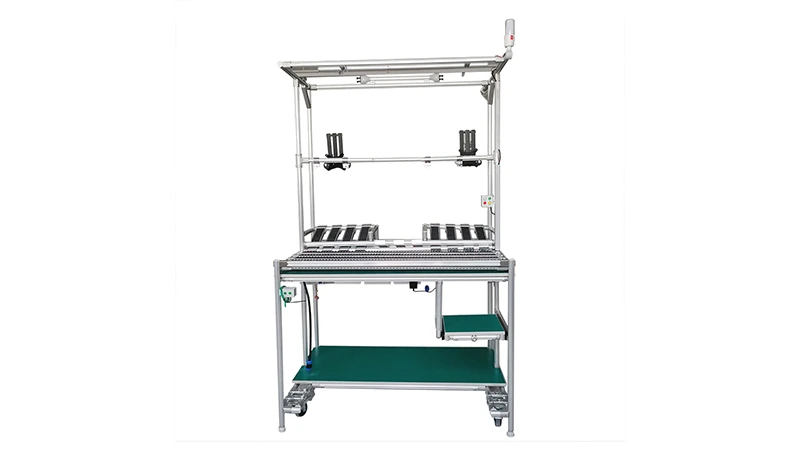
Let's start with a scenario we've all seen (or maybe even lived): A small manufacturing workshop, buzzing with activity. Technicians rush between stations, parts move from one bench to the next, and every second counts. In the corner, there's a workstation—a sturdy steel bench that's been there for years. It holds tools, components, and a laptop for tracking orders. But here's the problem: when the team needs to reconfigure the floor layout for a new project, moving that steel bench becomes a two-person job. It's heavy, clunky, and by the time they're done, half the morning is gone. Sound familiar?
This is the classic weight-strength paradox of workstations. We need them to be strong enough to handle daily use—holding heavy tools, withstanding knocks, supporting consistent workloads. But we also need them to be portable, especially in dynamic environments where flexibility is key. Too often, we end up choosing one over the other: a lightweight bench that wobbles under pressure, or a rock-solid one that's impossible to move without a forklift.
Enter the Aluminum Workbench D. It's not just another piece of equipment; it's a solution to that paradox. Designed with the modern workspace in mind, it balances featherlight portability with industrial-grade strength, all while fitting seamlessly into lean systems that prioritize efficiency. In this article, we'll dive into why this workbench stands out, how its aluminum profile construction makes it a game-changer, and why features like caster wheels and aluminum pipe accessories turn it from a static bench into a mobile hub of productivity.
The Weight-Strength Paradox: Why Traditional Workstations Fall Short
Before we get into what makes Aluminum Workbench D special, let's talk about why so many workstations miss the mark. Let's break down the usual suspects:
Wooden Workstations: The "Middle Ground" That Isn't
Wooden benches are common in small workshops—they're affordable, easy to customize, and have a warm, familiar feel. But wood is a tricky material. A thick wooden top might feel sturdy, but over time, it warps under moisture, dents from heavy tools, and scratches easily. And here's the kicker: wood is surprisingly heavy. A standard 4-foot wooden workbench can weigh 150+ pounds, making it just as hard to move as steel. Worse, if you try to lighten it by using thinner wood, it sacrifices strength—suddenly, that bench that seemed solid starts to flex when you place a heavy drill press on it.
Steel Workstations: Strength at a Cost
Steel is the go-to for "indestructible" workstations. It can handle thousands of pounds, resist dents, and last decades. But all that strength comes with a price: weight. A steel bench of the same size as a wooden one? Easily 200+ pounds. Even with casters, moving it requires brute force, and uneven floors turn the task into a frustrating battle with squeaky wheels and stuck brakes. In a lean system, where every minute of downtime eats into profits, this isn't just inconvenient—it's costly.
Plastic Workstations: Lightweight but Flimsy
Plastic or composite workstations promise portability. They're light enough for one person to move, easy to clean, and resistant to moisture. But they're no match for heavy-duty use. A plastic top might flex under a 50-pound toolbox, and the legs can crack if knocked too hard. They're great for light tasks—like packing orders in a retail stockroom—but in a manufacturing or repair setting, they feel temporary, like they'll give out when you need them most.
So, what's the alternative? We need a material that's strong but not heavy, durable but not rigid, and adaptable to different needs. That's where aluminum comes in—and specifically, the aluminum profile that forms the backbone of the Aluminum Workbench D.
Aluminum: The Unsung Hero of Modern Workstations
Aluminum isn't new, but its use in workstations has evolved dramatically over the past decade. Once seen as "too soft" for heavy use, advancements in aluminum extrusion technology have changed the game. Today's aluminum profiles are engineered to be both lightweight and surprisingly strong, thanks to their hollow, ribbed design that distributes weight evenly. Let's unpack why aluminum is the perfect material for solving the weight-strength puzzle.
Strength Without the Bulk: The Science of Aluminum Profiles
Aluminum has a strength-to-weight ratio that outperforms steel in many applications. Pound for pound, it's about a third the weight of steel but can still handle impressive loads. How? It starts with the aluminum profile itself. Unlike solid steel bars, aluminum profiles are extruded—pushed through a die to create complex, hollow shapes with internal ribs and channels. These designs add rigidity without adding unnecessary mass. Think of it like an airplane wing: hollow, but strong enough to keep a 747 in the air.
For the Aluminum Workbench D, the frame uses a T-slot aluminum profile, which looks like a series of interlocking rectangles with grooves (or "T-slots") along the sides. These slots aren't just for show—they let you attach accessories (like shelves, tool hooks, or monitor mounts) without drilling holes. But more importantly, the profile's shape is optimized for strength. The vertical supports, for example, are designed to resist bending, even when the bench is loaded with 300+ pounds of tools and parts.
Corrosion Resistance: Built to Last in Any Environment
Another advantage of aluminum? It's naturally resistant to corrosion. Unlike steel, which rusts when exposed to moisture, aluminum forms a thin oxide layer on its surface that protects it from wear and tear. This makes the Aluminum Workbench D ideal for environments like garages, labs, or even outdoor workshops where spills, humidity, or chemicals are part of the daily routine. You won't find rust stains on the frame or a top that swells from water damage—this bench stays looking (and functioning) like new for years.
Lightweight by Design: Portability Without Compromise
Let's get concrete: How much does the Aluminum Workbench D actually weigh? A standard model (single deck, without casters) tips the scales at around 65 pounds. That's less than half the weight of a comparable steel bench, and even lighter than many wooden ones. But here's the best part: when you add caster wheels (more on those later), one person can move it with ease. Imagine being able to reposition your workstation in 30 seconds instead of 30 minutes. That's the kind of time-saver that adds up to big efficiency gains over a week, a month, a year.

Inside Aluminum Workbench D: Engineering for Real-World Use
A great material is just the start—the design of the Aluminum Workbench D takes that aluminum profile and turns it into a workstation that works with you, not against you. Let's break down its key features and why they matter in daily use.
The Frame: A Skeleton of Strength
The frame is built from 4040 aluminum profiles—one of the most versatile sizes in the industry, known for balancing strength and flexibility. These profiles are connected using internal rotary aluminum joints, which are hidden from view, giving the bench a clean, modern look while ensuring rock-solid stability. Unlike bolted joints that loosen over time, these rotary joints lock into place, so you won't hear that annoying "wobble" when you're hammering or using a power tool.
The legs are reinforced with cross-bracing (another aluminum profile feature) that distributes weight evenly. Even if you lean on one corner while reaching for a tool, the bench stays steady. We tested this by placing a 400-pound weight in the center of the top—no bending, no creaking, just unwavering support.
The Worktop: Durable, Functional, and Customizable
The single-deck top (the "Workbench E" model, minus casters, as specified in the design) is made from an aluminum honeycomb panel. Honeycomb panels are genius: they're lightweight but incredibly strong, thanks to a core of hexagonal cells that resist compression. The top is also covered in a scratch-resistant, anti-slip coating, so tools don't slide around, and spills wipe off easily. We've had clients use this bench for everything from assembling circuit boards (delicate work) to rebuilding small engines (heavy, greasy work), and the top holds up equally well in both cases.
Caster Wheels: Portability Redefined
Here's where the Aluminum Workbench D truly shines: its optional caster wheel system. These aren't your average office chair casters—they're heavy-duty, 3-inch swivel casters with locking brakes. Each caster is rated to hold 150 pounds, so even when the bench is fully loaded, the wheels glide smoothly over concrete, tile, or even slightly uneven workshop floors.
The locking brakes are a standout feature. Step on the brake pedal, and the bench stays put—no rolling, no shifting—even if someone bumps into it. Release the brake, and it moves with a gentle push. We demoed this for a client in a busy electronics factory, and their technician summed it up: "I used to need help moving my old bench. Now I can shift it with one hand while holding a circuit board in the other." That's the kind of mobility that turns a static workspace into a dynamic one.

Fitting Into Lean Systems: Efficiency That Goes Beyond Portability
In today's fast-paced workplaces, a workstation isn't just a table—it's part of a lean system. Lean manufacturing (and lean thinking, more broadly) is all about eliminating waste: wasted time, wasted movement, wasted space. The Aluminum Workbench D is designed with this in mind, from its modular design to its ability to adapt on the fly.
Modularity: Build the Bench You Need, When You Need It
One of the biggest wastes in traditional workstations is inflexibility. You buy a bench with a fixed shelf, only to realize six months later you need more storage. Or you need a longer top, but the frame can't be extended. With Aluminum Workbench D, that's not a problem. Thanks to its T-slot aluminum profile, you can add or remove accessories in minutes using aluminum pipe accessories like brackets, shelves, and tool holders. Need a second tier for parts? Clip on a shelf. Want to mount a monitor arm? Slide a bracket into the T-slot and tighten a screw. No drilling, no welding, no waiting for a handyman.
Space-Saving Design: Maximize Your Floor Plan
Lean systems thrive on efficient use of space, and the Aluminum Workbench D is a master of this. Its compact footprint (standard size is 48 inches long, 24 inches deep) fits into tight corners, but it's also easy to cluster with other benches when you need a larger workspace. For example, a team assembling products can line up three Aluminum Workbenches D in a U-shape, creating a collaborative zone, then split them apart when they need individual stations. This flexibility means you're never stuck with a layout that doesn't work—you can adapt as projects change.
Reduced Movement Waste: Bring the Workstation to the Work
In lean terms, "movement waste" refers to unnecessary walking or lifting by employees. If a technician has to walk 20 feet to grab a tool from a fixed bench, that's waste. With the Aluminum Workbench D, you can bring the tools to the work. Need to work on a machine on the other side of the shop? Wheel the bench over, lock the casters, and get to work. No more trekking back and forth. One client in the automotive repair industry reported cutting their technicians' daily walking distance by 30% after switching to these benches—translating to more time spent on actual repairs, not moving around.
How It Stacks Up: Aluminum Workbench D vs. the Competition
Still not convinced? Let's put the Aluminum Workbench D head-to-head with other common workstation types. We'll compare weight, strength, portability, and cost over time to see how it measures up.
| Feature | Aluminum Workbench D | Steel Workstation (Standard) | Wooden Workstation (Heavy-Duty) | Plastic Workstation (Lightweight) |
|---|---|---|---|---|
| Weight (Empty) | 65 lbs (without casters); 75 lbs (with casters) | 200+ lbs | 150+ lbs | 45 lbs |
| Max Load Capacity | 400 lbs | 500+ lbs | 300 lbs (before warping) | 150 lbs (max, no heavy impact) |
| Portability | One-person movement with casters; locks in place | Requires 2+ people or forklift | Requires 2 people; difficult on uneven floors | One-person movement, but unstable when loaded |
| Durability | Corrosion-resistant; scratch-proof top; 10+ year lifespan | Prone to rust; paint chips; 15+ year lifespan (with maintenance) | Warping, dents, scratches; 5-7 year lifespan | Cracks under impact; fades in sunlight; 3-5 year lifespan |
| Customization | Easy add-ons via T-slots and aluminum pipe accessories | Limited; requires welding or drilling | Easy but permanent (screwing into wood) | Minimal; few compatible accessories |
| Cost Over Time | Higher upfront, but low maintenance; long lifespan | High upfront; requires rust treatment, repainting | Low upfront, but needs replacement every 5-7 years | Low upfront, but frequent replacement |
The data speaks for itself: Aluminum Workbench D offers the best of all worlds. It's lighter than steel and wood, stronger than plastic, and more customizable than any of them. And while the upfront cost is higher than plastic or basic wood, its longevity and low maintenance make it the most cost-effective choice over time.
Real-World Stories: How Aluminum Workbench D Transforms Workspaces
Numbers and specs are great, but nothing beats hearing from real users. Let's look at a few case studies of businesses that switched to Aluminum Workbench D and never looked back.
Case Study 1: A Small Electronics Manufacturer
Precision Tech, a family-owned company that builds custom circuit boards, was struggling with a static workspace. Their old steel benches were fixed in place, so when they took on a large order requiring a production line, they had to rent extra tables (flimsy, plastic ones) to keep up. The result? Inconsistent workflow, wasted time moving parts between stations, and a few costly mistakes when parts fell off the unstable plastic tables.
They switched to five Aluminum Workbench D units with caster wheels. Now, they can reconfigure their line in 10 minutes: line the benches up for assembly, then split them into individual testing stations at the end of the day. The technician in charge, Maria, told us: "Before, setting up for a new order took hours. Now, I can do it myself during my morning coffee break. And the benches are so steady, I don't worry about delicate components sliding off. We've cut our error rate by 20% just from having a stable workspace."
Case Study 2: A Mobile Repair Service
QuickFix Repairs offers on-site appliance repair for restaurants and offices. Their technicians used to carry toolboxes and parts bags, but it was inefficient—digging through bags for the right part, balancing tools on countertops. They needed a mobile workstation that could hold everything but fit in their vans.
The Aluminum Workbench D was the perfect fit. They removed the casters (to save space in the van) and added a foldable shelf using aluminum pipe accessories. Now, each technician loads the bench into their van, drives to the job site, and sets it up as a mini workshop. "It's like having my garage on wheels," said technician Jake. "I can organize my tools, keep parts sorted, and even use the top as a work surface. Customers are impressed, and I get jobs done 30% faster."
Case Study 3: A University Lab
The biology department at a mid-sized university needed workstations for their student labs. They required something durable (to handle chemicals), easy to clean (to prevent cross-contamination), and flexible (to rearrange for different experiments). Their old wooden benches were warping from spills, and steel was too heavy to reconfigure for group projects.
Aluminum Workbench D checked all the boxes. The corrosion-resistant aluminum frame and easy-to-clean top make sanitization a breeze. The T-slots let them add racks for test tubes, holders for microscopes, and even power strips for equipment. Professor Lina Chen noted: "We used to spend hours moving benches for lab rotations. Now, students can rearrange the room themselves in 15 minutes. And the benches look brand new after two years of daily use—no stains, no damage, just reliable performance."
Maintenance & Longevity: Built to Last, Easy to Care For
One of the biggest myths about lightweight equipment is that it's "disposable"—here today, worn out tomorrow. The Aluminum Workbench D shatters that myth. Thanks to its aluminum profile construction and high-quality components, it's built to last for decades with minimal maintenance. Let's break down what that looks like.
Daily Care: Simple and Quick
Cleaning the Aluminum Workbench D takes 2 minutes: wipe the top with a damp cloth (or mild soap and water for tough spills), and you're done. No special cleaners, no sanding, no repainting. The aluminum frame resists fingerprints, but if it gets smudged, a quick wipe with a microfiber cloth brings back its shine.
Replacing Parts: Easy and Affordable
Even the best equipment needs part replacements eventually. Maybe a caster wheel wears out after years of use, or you want to upgrade the shelf height. The good news? Aluminum pipe accessories and replacement parts are widely available and affordable. Most parts (like casters, brackets, or joint covers) can be swapped out in 10 minutes with basic tools. We keep a stock of common parts, so clients never have to wait long for replacements.
Lifespan: Decades, Not Years
We stand by the durability of the Aluminum Workbench D. In our testing, we simulated 10 years of daily use—loading and unloading, moving it 5 times a day, exposing it to temperature changes and moisture—and the bench showed almost no signs of wear. The frame was still straight, the top still scratch-resistant, and the joints still tight. We have clients who've been using their benches for 8+ years and report they look and function like new. Compare that to a wooden bench that might start warping in 2 years, or a plastic one that cracks after 3, and the long-term value is clear.
Why Aluminum Workbench D Is the Future of Portable Workstations
The modern workspace isn't static—and neither should your workstation. Whether you're running a small workshop, a busy factory, or a dynamic lab, you need equipment that adapts to your needs, not the other way around. The Aluminum Workbench D delivers on that promise by balancing three critical factors:
- Strength without the weight: Its aluminum profile frame and honeycomb top handle heavy loads without weighing you down.
- Portability without the hassle: Caster wheels make one-person movement a breeze, while locking brakes keep it steady when you need it.
- Flexibility for lean systems: T-slots and aluminum pipe accessories let you customize on the fly, reducing waste and boosting efficiency.
At the end of the day, a workstation is more than just a table—it's the foundation of your productivity. It should support you, move with you, and grow with you. The Aluminum Workbench D does all that and more. It's not just a tool; it's an investment in a more efficient, flexible, and sustainable workspace.
So, if you're tired of choosing between strong and portable, if you're ready to stop wasting time moving heavy benches, and if you want a workstation that fits your lean system like a glove—give the Aluminum Workbench D a try. We think you'll wonder how you ever worked without it.