- Company Articles
- Products and Technology
- Product knowledge
- Anodized vs. Powder-Coated: 40 Aluminum Roller Track Green Surface Treatments

Anodized vs. Powder-Coated: 40 Aluminum Roller Track Green Surface Treatments
Related Product
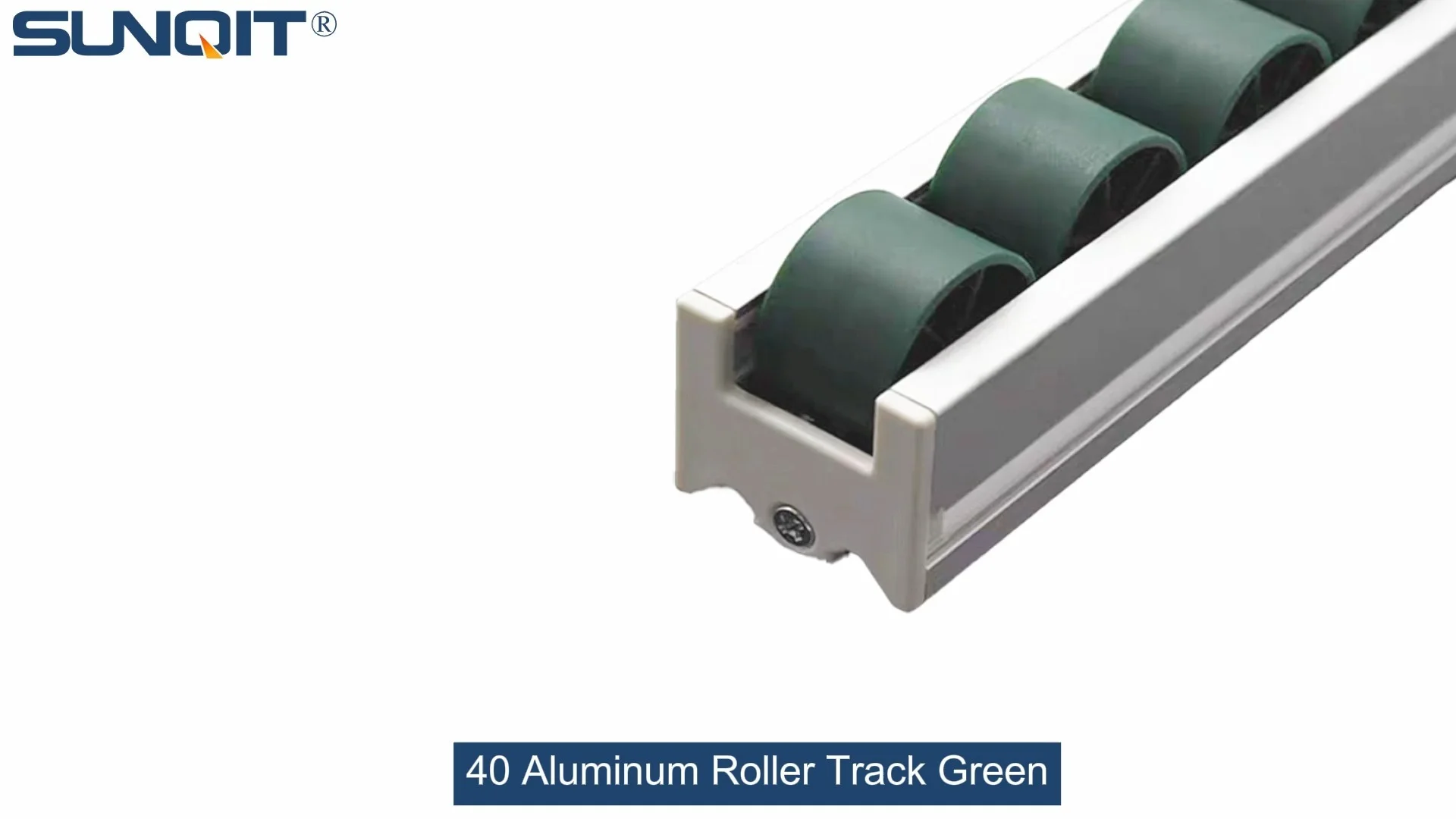
40 Aluminum Roller Track Green
Durable and smooth-running modular roller rails. The system is fully assembled. The roller rail profile contains plastic rollers mounted on steel axles. Aluminum frame with plastic wheel make it anti corrosion,and material convey more smooth.
Introduction
When you're building a lean system for your manufacturing or warehouse operations, every small component matters—especially something as ubiquitous as the 40 aluminum roller track green. This workhorse is a staple in flow racks, conveyors, and lean solutions across industries like 3C assembly, medical device manufacturing, and logistics. But have you ever stopped to think about the surface treatment on these roller tracks? The choice between anodized and powder-coated finishes isn't just about looks; it directly impacts durability, performance, and even cost over time. In this in-depth guide, we'll break down both surface treatments, compare their strengths and weaknesses, and help you decide which one is the perfect fit for your specific needs.
What is Anodized Surface Treatment?
Anodizing is an electrochemical process that transforms the surface of aluminum into a durable, protective oxide layer. Here's a step-by-step look at how it works: First, the 40 aluminum roller track green is thoroughly cleaned to remove any dirt or oil. Then, it's submerged in an acid electrolyte bath (usually sulfuric acid). An electric current is applied, with the aluminum track acting as the anode. This causes oxygen ions from the electrolyte to react with the aluminum, forming a thin, hard layer of aluminum oxide that bonds directly to the metal surface. The thickness of this layer can vary, but for industrial applications like roller tracks, it's typically between 5 and 25 microns.
Key Benefits of Anodized Finish
- Exceptional Durability: The anodized oxide layer is significantly harder than the base aluminum—hard enough to resist scratches from most everyday use. This makes it ideal for high-traffic areas where roller tracks are constantly in contact with boxes, parts, or other materials.
- Superior Corrosion Resistance: The oxide layer is non-porous (if sealed properly) and acts as a barrier against moisture, chemicals, and salt. This means anodized roller tracks hold up well in humid warehouses, outdoor storage areas, or manufacturing plants where cleaning agents are used regularly.
- Natural, Long-Lasting Color: The green color of our 40 aluminum roller track green is achieved by adding organic dyes to the electrolyte bath during the anodizing process. The dye penetrates the porous oxide layer, resulting in a color that's integrated into the surface rather than just coated on. This means the color won't chip, fade, or peel easily—even after years of use.
- ESD Compatibility: While standard anodized aluminum isn't inherently ESD-safe, there are specialized anodizing processes that can create an electrostatic discharge (ESD) protective layer. This makes anodized roller tracks a viable option for ESD-sensitive environments like 3C assembly lines where static electricity can damage electronic components.
Potential Drawbacks of Anodized Finish
- Higher Upfront Cost: Anodizing is a more complex and time-consuming process than powder coating, which translates to a higher price tag. For small businesses or projects with tight budgets, this might be a significant consideration.
- Limited Color Palette: While anodizing can produce a range of colors, the options are narrower compared to powder coating. If you need a very specific shade or a glossy finish, anodizing might not be able to deliver.
- Difficult Repairs: If the anodized layer gets damaged (e.g., a deep scratch or chip), repairing it is not straightforward. The only way to restore the protective layer is to re-anodize the entire component, which is costly and time-intensive.
- Thickness Constraints: The anodized layer adds a small amount of thickness to the roller track. While this is usually negligible, in applications where precise fit is critical (like in custom lean solutions), it might require adjustments to ensure components work together seamlessly.

What is Powder-Coated Surface Treatment?
Powder coating is a dry finishing process that uses electrostatically charged powder to coat aluminum surfaces. Here's how it works: The 40 aluminum roller track green is cleaned and pre-treated to remove any contaminants. Then, a fine powder (made of resin and pigment) is sprayed onto the track using a gun that applies an electric charge to the powder particles. The charged powder adheres to the grounded aluminum surface. Finally, the track is baked in an oven at high temperatures (usually between 350°F and 400°F), which melts the powder and forms a smooth, hard, and uniform coating.
Key Benefits of Powder-Coated Finish
- Vast Color and Finish Options: Powder coating offers an almost unlimited range of colors—including the exact green shade of our 40 aluminum roller track green. You can also choose from various finishes: glossy, matte, satin, textured, or even metallic. This makes it easy to match the roller tracks to your facility's branding or aesthetic requirements.
- Excellent Scratch and Impact Resistance: The powder coat layer is thicker than anodized (typically 20-100 microns) and more flexible, which means it can absorb impacts without chipping or cracking. This is perfect for roller tracks that handle heavy loads or are used in rough industrial environments.
- Cost-Effective: Powder coating is generally more affordable than anodizing, especially for large quantities. The process is also more efficient because oversprayed powder can be collected and reused, reducing waste and lowering material costs.
- Strong Corrosion Protection: The powder coat forms a seamless barrier that protects the aluminum from moisture and chemicals. This makes it suitable for outdoor use, humid warehouses, and manufacturing plants where corrosion is a concern.
- Easy Maintenance and Repairs: If a powder-coated surface gets scratched or chipped, touch-ups are relatively simple. You can apply a small amount of matching powder paint and bake it (or use a touch-up spray) to fix the damage. This is much more cost-effective than re-anodizing.
Potential Drawbacks of Powder-Coated Finish
- Thicker Coating: The thicker layer of powder coat can affect the dimensional accuracy of the roller track. For example, if the track needs to fit into a tight slot or work with precision components, the extra thickness might cause issues. This is something to consider for custom lean solutions that require exact measurements.
- Limited Temperature Resistance: Powder-coated surfaces can withstand temperatures up to about 300°F, but beyond that, the polymer coating may start to degrade, discolor, or melt. This makes it less suitable for applications where roller tracks are exposed to high heat (like near ovens or furnaces).
- Chipping Risk: While powder coat is resistant to impacts, it can chip if hit with a sharp or heavy object. Once chipped, the underlying aluminum is exposed, which can lead to corrosion if not repaired promptly.
- Less Natural Look: Powder coating gives a more "painted" appearance compared to anodizing, which has a natural metallic sheen. Some users prefer the more industrial, raw look of anodized aluminum over the smoother finish of powder coating.

Anodized vs. Powder-Coated: A Direct Comparison
To help you make an informed decision, let's compare the two surface treatments side by side across key factors:
| Factor | Anodized | Powder-Coated |
|---|---|---|
| Durability (Scratch Resistance) | Excellent—hard oxide layer resists most scratches | Very Good—thick, flexible layer resists impacts and scratches |
| Corrosion Resistance | Superior—sealed oxide layer is impermeable to moisture/chemicals | Excellent—seamless polymer layer provides strong protection |
| Color Options | Limited—organic dyes offer a range but not as wide as powder coat | Vast—unlimited colors and finishes (glossy, matte, textured) |
| Cost | Higher—complex process with longer lead times | Lower—efficient process with reusable overspray |
| Maintenance & Repair | Difficult—requires re-anodizing for major damage | Easy—simple touch-ups with matching powder or spray |
| Temperature Resistance | High—can withstand up to 500°F without degradation | Moderate—best below 300°F; may degrade at higher temps |
| ESD Compatibility | Possible—specialized anodizing processes can create ESD-safe layers | Possible—ESD-specific powder coatings are available |
| Aesthetic Appeal | Natural metallic sheen—integrated color that won't peel | Smooth, painted look—color is on the surface |
| Dimensional Accuracy | Better—thin layer adds minimal thickness | Worse—thicker layer may affect fit |

Real-World Applications in Lean Systems
Both anodized and powder-coated 40 aluminum roller track green are integral parts of lean systems, flow racks, conveyors, and other material handling solutions. Let's look at how they're used in different industries:
3C Assembly Lines
In 3C assembly (computers, communication devices, consumer electronics), precision and ESD safety are top priorities. Anodized roller tracks with ESD coatings are often preferred here because they offer the durability needed for high-volume production while protecting sensitive electronic components from static damage. The natural color of anodized aluminum also fits well with the clean, industrial aesthetic of most assembly lines.
Medical Device Manufacturing
Medical device manufacturing requires components that are corrosion-resistant, easy to clean, and meet strict hygiene standards. Both anodized and powder-coated roller tracks are suitable here, but powder coating is often chosen for its cost-effectiveness and ability to match specific color codes (e.g., green for sterile areas). The smooth surface of powder-coated tracks also makes them easy to sanitize, which is critical in medical environments.
Warehouse Logistics
In logistics warehouses, flow racks and conveyors are workhorses that handle thousands of packages daily. Powder-coated 40 aluminum roller track green is a popular choice here because it's durable, affordable, and available in bright colors that help organize different zones or product lines. The thick powder coat layer resists scratches from heavy boxes, and touch-ups are easy if damage occurs.
Automotive Manufacturing
Automotive plants have high-temperature areas (like near paint booths or engines) and require components that can withstand harsh conditions. Anodized roller tracks are often used here because of their superior temperature resistance and corrosion protection. The hard oxide layer also holds up well against oil, grease, and other automotive fluids.
Our lean solution offerings include both anodized and powder-coated roller tracks as part of flow racks, conveyors, and custom workstations. Whether you need a cost-effective option for a warehouse or a high-performance solution for a precision assembly line, we can help you choose the right surface treatment to meet your needs.
How to Choose the Right Surface Treatment for Your Needs
Deciding between anodized and powder-coated 40 aluminum roller track green depends on several factors. Here's a step-by-step guide to help you choose:
- Evaluate Your Environment: If your roller tracks will be exposed to high heat, chemicals, or outdoor conditions, anodized is the better choice. For humid warehouses or indoor use, powder coating is sufficient.
- Consider Your Budget: If cost is a major concern, powder coating is more affordable. If durability and long-term performance are worth the extra investment, go with anodized.
- Check for ESD Requirements: If you're working with ESD-sensitive components, look for anodized or powder-coated tracks that are specifically ESD-certified. Both treatments can be modified to meet ESD standards.
- Think About Aesthetics: Do you prefer a natural metallic look or a smooth, painted finish? Anodized offers the former, while powder coating offers the latter with more color options.
- Assess Maintenance Needs: If you need easy repairs and touch-ups, powder coating is the way to go. If you don't mind occasional re-anodizing for major damage, anodized is fine.
Remember, there's no one-size-fits-all answer. The best surface treatment depends on your specific application, budget, and priorities. Our team of experts can help you analyze your needs and recommend the perfect solution for your lean system.
Conclusion
The choice between anodized and powder-coated 40 aluminum roller track green is more than just a cosmetic decision—it's about selecting the treatment that will deliver the best performance, durability, and value for your application. Anodized tracks excel in high-heat, corrosive environments and offer a natural, long-lasting color. Powder-coated tracks are cost-effective, versatile in color, and easy to maintain. Both are integral parts of lean systems, flow racks, and conveyors across industries.
Whether you're setting up a new 3C assembly line, organizing a warehouse with flow racks, or designing a custom lean solution, understanding the differences between these two surface treatments will help you make an informed choice. Our goal is to provide you with components that not only look great but also stand the test of time, helping you achieve efficiency and sustainability in your operations.