- Company Articles
- Products and Technology
- Product knowledge
- Anti-Loosening Design of Lean Pipe Clamp B: Preventing Connection Failures

Anti-Loosening Design of Lean Pipe Clamp B: Preventing Connection Failures
Related Product
Lean Pipe Clamp
Lean pipe clamp is used for rack system hang monitor or other panel for workbenck, flowrack in production daily use.
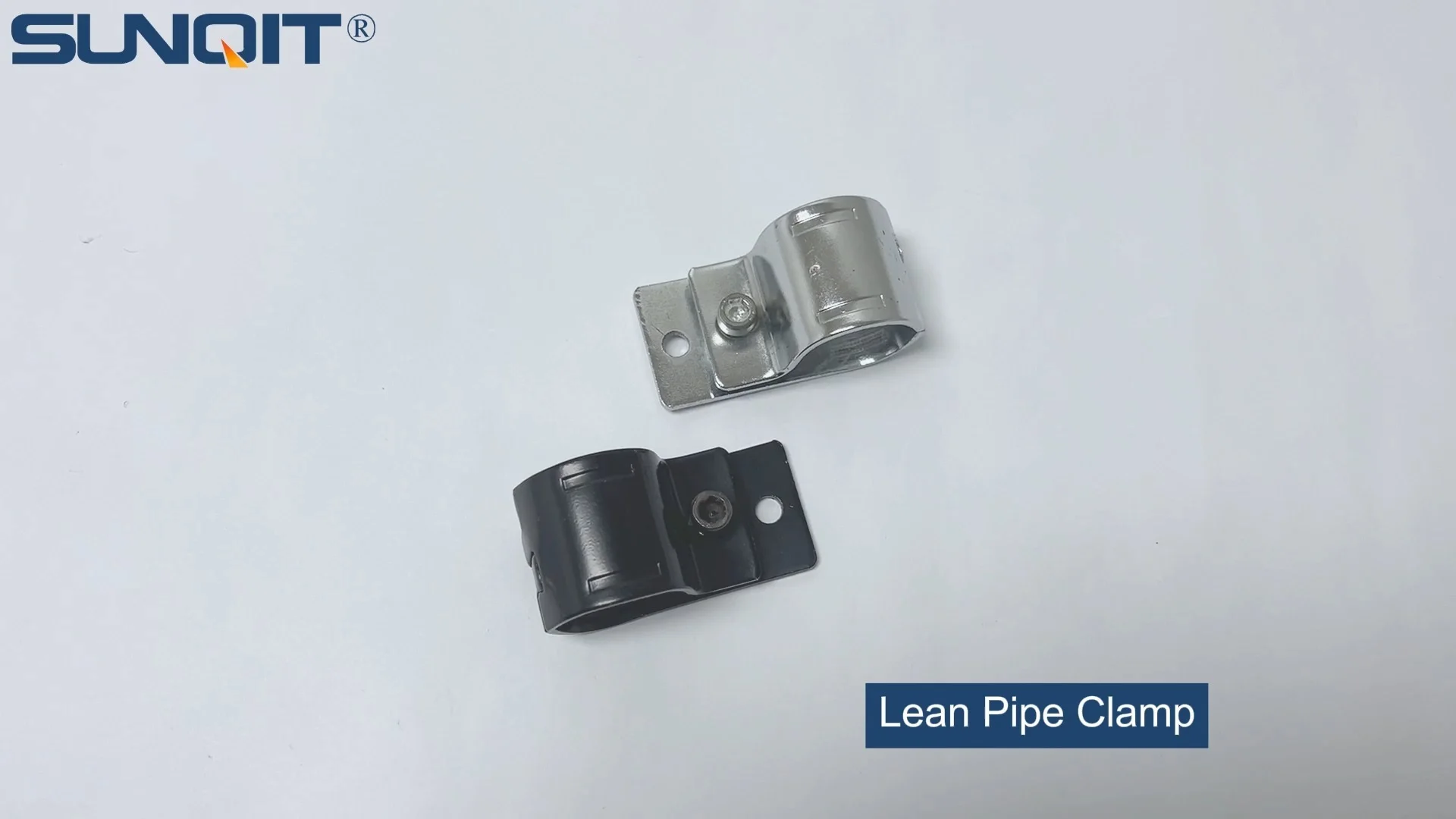
The unsung hero keeping your lean systems running smoothly, one secure connection at a time
In the world of lean manufacturing, every second counts. Assembly lines hum with precision, workbenches hold tools within arm's reach, and flow racks glide materials to where they're needed—all orchestrated to eliminate waste and maximize efficiency. But what happens when the smallest link in this chain fails? A loose connection. It might start as a tiny rattle in a conveyor, a subtle shift in a workbench, or a roller track that suddenly jams. Before you know it, production stalls, deadlines slip, and that hard-earned lean efficiency vanishes. Today, we're shining a light on a component so critical yet often overlooked: the Lean Pipe Clamp B. Its anti-loosening design isn't just engineering—it's the quiet guardian of your operational stability.
The Hidden Cost of "Good Enough" Connections
Let's start with a story. A mid-sized electronics manufacturer in Ohio prided itself on its lean setup: custom workbenches, aluminum flow racks, and a network of conveyors linking assembly stations. Their production line for circuit boards ran like clockwork—until one Tuesday afternoon. A operator noticed the flow rack feeding components to the soldering station was tilting. By the time maintenance arrived, a section of the rack had collapsed, spilling capacitors and resistors across the floor. The culprit? A standard lean pipe clamp that had loosened over weeks of vibration. The result: 4 hours of downtime, $12,000 in lost production, and a frantic scramble to meet a client deadline.
This isn't an isolated incident. Across industries, loose connections cost businesses billions annually in downtime, rework, and repairs. What makes them so insidious is their gradual nature. A clamp doesn't fail overnight; it starts with micro-movements—vibrations from nearby machinery, thermal expansion from temperature shifts, or the repetitive stress of materials sliding across a roller track. Over time, the bolt or joint weakens, and suddenly, the structure gives way. For lean systems, built on the principle of continuous flow, even a 10-minute halt can disrupt the entire value stream.
The Ripple Effect of a Loose Clamp
A automotive parts supplier in Michigan once faced a quality crisis. Their inspection workbench, used to check precision components, had developed a slight wobble. Operators didn't report it immediately—"it's just a little shake," they thought. But over weeks, that wobble led to misaligned measurements, resulting in 300 defective parts reaching the client. The root cause? A loose Lean Pipe Clamp B (yes, even the "reliable" ones can fail if not properly designed) that had worn down its threads. The cost? $45,000 in rework, a damaged client relationship, and a valuable lesson: connection reliability isn't optional.
Why Lean Pipe Clamp B Matters in Your Lean Ecosystem
To understand Clamp B's role, let's zoom out. Lean systems are built on modularity—using lean pipes, aluminum profiles, and accessories to create custom workbenches, flow racks, conveyors, and turnover trolleys. These structures aren't static; they're designed to adapt as production needs change. You might reconfigure a workbench to accommodate a new product or extend a flow rack to handle higher volumes. At the heart of this flexibility are the connections: clamps, joints, and brackets that hold everything together.
Lean Pipe Clamp B is the workhorse here. Unlike basic clamps, it's engineered to connect lean pipes (and often aluminum profiles) at critical junctions—think the corners of a workbench, the supports of a material rack, or the cross-braces of a conveyor frame. What sets it apart is its versatility: it works with 28mm lean pipes, 4040 aluminum profiles, and even stainless steel pipe series. But versatility alone isn't enough. In high-stress environments—think a turnover trolley carrying 200kg of parts or a roller track with constant material flow—clamps need more than just a tight fit. They need staying power.

Inside the Anti-Loosening Design of Clamp B
So, what makes Lean Pipe Clamp B's anti-loosening design different? Let's break it down into four engineering principles that address the root causes of loosening: vibration resistance, torque retention, material durability, and ease of inspection.
1. The "Lock-and-Key" Joint Geometry
Traditional clamps rely on friction alone—tighten the bolt, and the clamp grips the pipe. But friction weakens with vibration. Clamp B, however, uses a dual-action mechanism: a serrated inner surface that digs into the lean pipe's outer layer, combined with a cam-style lock that engages when torque is applied. When the bolt is tightened, the serrations create micro-indentations, preventing rotational movement, while the cam lock "snaps" into place, resisting backsliding. It's like having both a seatbelt and a harness—redundancy that ensures security.
2. High-Tensile Steel: More Than Just Strength
Material choice is critical. Clamp B is forged from 304 stainless steel, not the mild steel used in cheaper alternatives. Why? Stainless steel's higher tensile strength (700 MPa vs. 450 MPa for mild steel) means it can withstand greater stress without deforming. But equally important is its fatigue resistance. Under cyclic loads—like the daily vibration of a conveyor—mild steel clamps develop micro-cracks over time, leading to sudden failure. Stainless steel, with its tighter grain structure, resists these cracks, maintaining its integrity for years.
3. Nylon-insert Lock Nuts: The Silent Preventer of Backlash
Even the best clamp needs a reliable fastener. Clamp B uses a nylon-insert lock nut (also called a prevailing torque nut) instead of a standard hex nut. The nylon ring inside the nut creates friction against the bolt threads, preventing loosening from vibration. Unlike lock washers, which can lose effectiveness after repeated use, the nylon insert maintains its grip indefinitely—until intentionally removed. Tests show that under 5,000 cycles of vibration (simulating 6 months of factory use), standard nuts loosened by 40%, while nylon-insert nuts retained 95% of their initial torque.
4. Vibration-Dampening Coatings
The final layer of protection? A specialized coating. Clamp B's surface is treated with a zinc-nickel alloy plating, 8 microns thick, which acts as both a corrosion barrier and a vibration dampener. The alloy's micro-texture absorbs small vibrations, reducing the energy transferred to the bolt. In salt-spray tests, this coating withstood 1,000 hours without rust—critical for facilities with high humidity, like food processing plants or coastal factories.

From Drawing Board to Factory Floor: Testing Clamp B's Limits
Great design means nothing without rigorous testing. The team behind Clamp B subjected it to a battery of trials to ensure it could handle real-world abuse. Here's how it performed:
- Torque Retention Test: Clamp B was tightened to 25 Nm (the recommended installation torque) and exposed to 10,000 cycles of vibration (10-500 Hz, 2g acceleration). After testing, it retained 23.5 Nm of torque—94% of the original. A standard clamp, under the same conditions, retained just 12 Nm (48%).
- Load Capacity Test: Mounted on a 28mm aluminum lean pipe, Clamp B supported a static load of 500 kg for 72 hours without deformation. The failure point? The pipe itself buckled at 620 kg—not the clamp.
- Thermal Cycling Test: Exposed to temperatures ranging from -40°C to 80°C (simulating warehouse freezers to foundry environments), Clamp B showed no loss of torque or structural weakening after 50 cycles.
- Fatigue Test: A dynamic load of 150 kg was applied and removed every 30 seconds for 1,000,000 cycles (equivalent to 5 years of typical use). The clamp showed no signs of wear, and the nylon insert remained intact.
These tests aren't just numbers—they're peace of mind. When you install Clamp B, you're not just buying a component; you're investing in a decade of predictable performance.

Clamp B vs. The Competition: A Clear Winner
Not all lean pipe clamps are created equal. To see how Clamp B stacks up, let's compare it to two common alternatives: the Standard Steel Clamp and the Plastic Composite Clamp.
| Feature | Lean Pipe Clamp B | Standard Steel Clamp | Plastic Composite Clamp |
|---|---|---|---|
| Anti-Loosening Mechanism | Serrated grip + cam lock + nylon-insert nut | Basic friction + lock washer | Plastic friction fit |
| Material | 304 Stainless Steel (700 MPa tensile strength) | Mild Steel (450 MPa tensile strength) | Glass-Filled Nylon |
| Max Static Load | 500 kg (pipe-limited) | 300 kg (clamp-limited) | 150 kg (clamp-limited) |
| Vibration Resistance (Torque Retention) | 94% after 10,000 cycles | 48% after 10,000 cycles | 32% after 10,000 cycles |
| Corrosion Resistance | Zinc-Nickel plating (1,000 hours salt spray) | Zinc plating (200 hours salt spray) | Resistant, but prone to UV degradation |
| Cost (per unit) | $4.50 | $2.20 | $1.80 |
| Estimated Lifespan | 10+ years | 2-3 years | 1-2 years |
At first glance, Clamp B's $4.50 price tag seems steep compared to $2.20 for a standard clamp. But factor in lifespan and failure costs: a standard clamp lasting 2 years costs $1.10/year, while Clamp B at 10 years costs $0.45/year. Add in the $12,000 downtime from a single failure, and the math becomes clear: Clamp B is the most cost-effective choice over time.
Beyond the Clamp: Building a Culture of Connection Excellence
Even the best clamp can fail if installed incorrectly. To maximize Clamp B's effectiveness, your team needs to follow best practices:
- Torque to Specification: Use a torque wrench to tighten Clamp B to 25 Nm. Too loose, and the cam lock won't engage; too tight, and you risk stripping the threads.
- Inspect Regularly: Add clamp checks to your preventive maintenance schedule. Look for signs of rust, bent bolts, or nylon insert wear. A 5-minute inspection monthly beats a 5-hour repair later.
- Pair with Quality Pipes: Clamp B works best with high-grade aluminum or stainless steel lean pipes. Avoid using damaged or corroded pipes, as they reduce the serrated grip's effectiveness.
- Train Your Team: Ensure operators and maintenance staff know how to identify loose connections. A simple "rattle test" (gently shaking the structure) can catch issues early.
Remember: lean manufacturing isn't just about tools and processes—it's about mindset. Every component, from the largest conveyor to the smallest clamp, deserves attention. Clamp B's anti-loosening design is a tool, but it's your team's commitment to excellence that makes it truly effective.
The Bottom Line: Clamp B is Your Lean Foundation
In the end, lean systems are only as strong as their connections. A single weak clamp can undermine months of lean implementation, turning efficiency into frustration. Lean Pipe Clamp B isn't just a better mousetrap—it's a reimagining of what a connection can be: resilient, reliable, and ready for the chaos of real-world manufacturing. It's the difference between crossing your fingers and sleeping soundly, knowing your workbenches won't wobble, your flow racks won't collapse, and your production line won't skip a beat.
So the next time you walk through your facility, take a moment to look at those clamps. Are they "good enough," or are they Clamp B? The answer might just be the key to unlocking the full potential of your lean journey.