- Company Articles
- Products and Technology
- Product knowledge
- Anti-Slip Adjustable Leveling Feet: A Must-Have for Lean Tube Accessories

Anti-Slip Adjustable Leveling Feet: A Must-Have for Lean Tube Accessories
Related Product
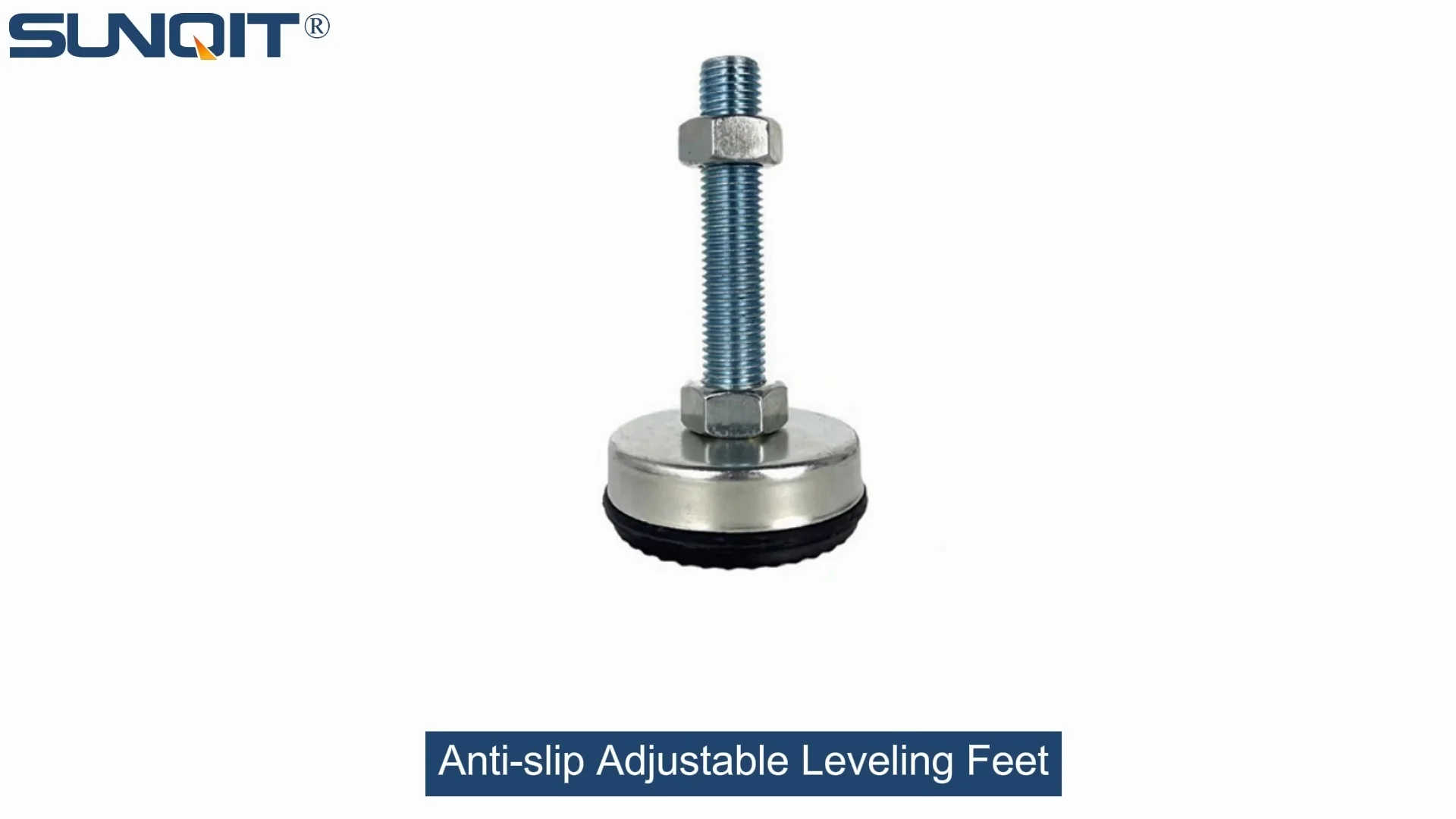
Anti-slip Adjustable Leveling Feet
Anti-slip Adjustable Leveling Feet are designed to keep machines level when placed on uneven or sloped ground, the rubber base will prevent product slip during work.
Walk into any thriving manufacturing facility, and you'll notice the buzz of activity: workers assembling components with precision, conveyors gliding materials across the floor, and workbenches holding tools and parts in perfect order. Behind this seamless flow lies a web of small, often overlooked components that keep everything running smoothly. Today, we're shining a light on one such unsung hero: the anti-slip adjustable leveling foot. These unassuming accessories might not grab headlines, but they're the silent backbone of stable, efficient, and safe lean systems—proving that sometimes, the smallest parts make the biggest difference.
In the world of lean manufacturing, where every second and every movement counts, instability is the enemy. A wobbling workbench can throw off assembly accuracy, a tilted material rack might cause parts to shift or fall, and uneven conveyors can slow down production to a crawl. That's where anti-slip adjustable leveling feet step in. Designed to adapt to imperfect floors, grip surfaces firmly, and keep equipment steady, they're more than just "feet"—they're the foundation of a reliable lean system. Let's dive into why these accessories deserve a spot at the top of your lean tube accessory list.
What Are Anti-Slip Adjustable Leveling Feet, Anyway?
At first glance, anti-slip adjustable leveling feet might seem simple—and in many ways, they are. But their simplicity is part of their genius. Let's break down their design:
The Base: Typically a flat, sturdy plate (often made of metal or heavy-duty plastic) that sits directly on the floor. The bottom of this plate is coated with a high-friction material—like rubber or textured plastic—to prevent slipping, even when the equipment is bumped or vibrated.
The Stem: A threaded rod that connects the base to the equipment (think workbench legs, material rack corners, or conveyor frames). The threading allows you to twist the stem up or down, raising or lowering the base to adjust the height of that corner of the equipment.
The Adjustment Mechanism: Usually a nut or a built-in tool (like a hex socket) that lets you lock the stem in place once you've found the perfect height. This ensures the foot won't loosen over time, even with constant use.
Put it all together, and you have a foot that can adapt to uneven floors, grip tightly to prevent movement, and keep your equipment perfectly level. It's a small package with a big job.
Why Lean Systems Can't Afford to Ignore Them
Lean manufacturing is all about eliminating waste, optimizing flow, and creating value. But none of that is possible if your equipment isn't stable. Let's connect the dots between anti-slip adjustable leveling feet and core lean principles:
1. Eliminating Waste (Muda)
Waste comes in many forms—rework, damaged materials, and even worker fatigue. A wobbly workbench, for example, can lead to misaligned parts during assembly, requiring time-consuming rework. A material rack that tilts might cause boxes to slide off, damaging inventory. Anti-slip adjustable leveling feet eliminate these wastes by keeping surfaces steady, ensuring parts stay in place, and reducing the need for corrections.
2. Ensuring Safety (Andon & Jidoka)
Lean isn't just about efficiency—it's about people. Unstable equipment is a safety hazard: a workbench that slides could trip a worker, or a material rack that tips might injure someone nearby. Anti-slip adjustable leveling feet prevent these risks by gripping the floor firmly, even in high-traffic areas. They support "Jidoka" (autonomation) by ensuring equipment operates safely, so workers can focus on their tasks without worrying about accidents.
3. Supporting Flexibility (Heijunka)
Lean systems thrive on adaptability—reconfiguring workstations, rearranging material racks, or adding new conveyors to meet changing production needs. But moving equipment often means placing it on new, uneven floor surfaces. Anti-slip adjustable leveling feet make flexibility possible: you can set up a workbench in a new location, twist the stems to adjust for dips or bumps in the floor, and trust that it will stay stable. No need for shims, plywood, or other temporary fixes that create more waste.

The Benefits That Hit Close to Home for Your Team
Numbers and principles aside, the real impact of anti-slip adjustable leveling feet is felt by the people on the factory floor every day. Let's look at the benefits that matter most to your team:
Stability That Boosts Confidence (and Accuracy)
Imagine trying to assemble a small electronic component on a workbench that rocks with every movement. Your hands tense up, your focus wavers, and the risk of mistakes skyrockets. Now, picture that same workbench, stabilized by anti-slip adjustable leveling feet: the surface is perfectly flat, it doesn't budge when you lean on it, and your hands move with precision. That stability isn't just physical—it's mental. Workers feel more confident, work faster, and produce higher-quality output when their tools and surfaces are steady.
Real-World Example: A automotive parts manufacturer recently upgraded their Workbench E (single deck, without casters) with anti-slip adjustable leveling feet. Previously, workers on the third shift had reported struggling with alignment issues on small engine components. After adjusting the feet to level the workbench, rework rates dropped by 22% in just two weeks. As one assembler put it: "It's like night and day. I don't have to fight the bench anymore—I just focus on the part."
Safety That Protects Your Team (and Your Bottom Line)
Slips, trips, and falls are among the most common workplace injuries in manufacturing. A workbench that slides when bumped, or a material rack that shifts under load, can turn a routine task into a disaster. Anti-slip adjustable leveling feet use high-friction pads to "grab" the floor, preventing movement even when equipment is jostled. In environments with oil, water, or dust (common in many factories), this grip is a lifesaver—literally. Fewer injuries mean fewer downtime, lower workers' compensation costs, and a team that feels valued and protected.
Adaptability for Imperfect Floors (Because No Factory is Perfect)
Let's be honest: factory floors are rarely flawless. Years of heavy equipment, dropped tools, and shifting concrete leave them uneven, cracked, or sloped. Fixed feet or basic casters can't handle this—they'll either wobble or get stuck. Anti-slip adjustable leveling feet, however, let you "tweak" each corner of your equipment. A quick twist of the stem raises or lowers that side, compensating for dips or bumps. This adaptability means you can place equipment anywhere—no need to hunt for the "perfect spot" on the floor. It's lean flexibility at its finest.
Durability That Saves You Money (Long-Term)
Investing in quality anti-slip adjustable leveling feet pays off over time. Made from robust materials like stainless steel, aluminum, or reinforced plastic, they're built to withstand the wear and tear of industrial environments—scratches, spills, and heavy loads won't faze them. Unlike temporary fixes (like wooden shims, which rot or compress), these feet last for years, reducing the need for replacements. When you factor in the cost of rework, damaged materials, and injuries prevented, they're not just an expense—they're an investment.

Where Do Anti-Slip Adjustable Leveling Feet Shine? Real-World Applications
Anti-slip adjustable leveling feet aren't a one-trick pony—they're versatile enough to support almost any lean system component. Here are a few key applications where they make the biggest impact:
Workbenches: The Heart of Assembly
Workbenches are where the magic happens—assembly, testing, packaging, and more. Whether you're using a basic aluminum workbench or a specialized ESD workstation, stability is non-negotiable. Anti-slip adjustable leveling feet ensure the work surface stays flat, so tools don't roll off, parts don't shift, and workers can maintain precision. For stationary workbenches like Workbench E (single deck-without caster), they're essential—since there are no casters to lock, the feet are the only thing keeping the bench in place.
Material Racks: Holding Heavy Loads Steady
Material racks, like the Material Rack B (3 row and 3 floor), are designed to hold hundreds of pounds of parts, boxes, or tools. When loaded unevenly, these racks can tip—unless their feet are adjusted to distribute weight evenly. Anti-slip adjustable leveling feet let you level each corner, ensuring the rack stands straight and stable, even when fully loaded. This prevents parts from falling, reduces strain on the rack's frame, and extends its lifespan.
Conveyors and Flow Racks: Keeping Production Moving
Conveyors and flow racks rely on gravity and momentum to move materials. If a conveyor section is tilted, parts might jam or slide too quickly; if a flow rack is uneven, items could get stuck. Anti-slip adjustable leveling feet keep these systems aligned, ensuring a smooth, consistent flow. For roller track conveyors (a staple in lean systems), even a tiny tilt can disrupt the movement of parts—leveling feet eliminate this risk, keeping production on track.

Why Not Just Use Fixed Feet or Casters? The Case for Specialization
You might be thinking: "Can't I just use regular fixed feet, or even casters with brakes?" It's a fair question—but the answer lies in the unique demands of lean systems. Let's compare:
| Accessory Type | Stability | Adaptability to Uneven Floors | Anti-Slip Grip | Best For |
|---|---|---|---|---|
| Fixed Feet | Low (can't adjust for uneven floors) | None (height is fixed) | Minimal (often smooth metal/plastic base) | Light, temporary setups on perfectly level floors |
| Casters with Brakes | Medium (brakes can slip under heavy loads) | Low (casters can sink into floor gaps) | Low (wheels are designed to roll, not grip) | Equipment that needs frequent movement |
| Anti-Slip Adjustable Leveling Feet | High (adjustable height + anti-slip grip) | High (twist to compensate for floor dips/bumps) | High (specialized friction pads) | Stationary lean equipment (workbenches, material racks, conveyors) |
The bottom line: fixed feet and casters have their uses, but they can't match the stability, adaptability, and grip of anti-slip adjustable leveling feet in stationary lean setups. When precision, safety, and efficiency are on the line, specialization matters.
Choosing the Right Anti-Slip Adjustable Leveling Feet: What to Look For
Not all leveling feet are created equal. To get the most out of your investment, keep these factors in mind:
Load Capacity: Match the Feet to the Job
First, calculate the maximum weight your equipment will hold. A small workbench might need feet rated for 200kg per corner, while a heavy-duty material rack could require 500kg or more. Always choose feet with a load capacity higher than your estimated needs—over-engineering here prevents failure down the line.
Floor Type: Grip Matters Most
Smooth concrete, rough asphalt, and oily floors all demand different grip levels. Look for feet with replaceable anti-slip pads—this lets you swap in materials optimized for your environment (e.g., rubber for concrete, oil-resistant pads for greasy areas). For ESD-sensitive workbenches, consider conductive pads to dissipate static electricity safely.
Material: Durability in Harsh Environments
Choose feet made from corrosion-resistant materials like stainless steel or aluminum if your facility has moisture, chemicals, or high humidity. For dry, clean environments, heavy-duty plastic might suffice—but metal is generally more durable for long-term industrial use.
Adjustment Range: Room to Adapt
Measure the worst-case unevenness of your floor (e.g., a 1-inch dip between corners). Choose feet with an adjustment range that exceeds this—you want to ensure you can level the equipment even on the bumpiest spots.
Maintaining Your Leveling Feet: Simple Steps for Longevity
Like any lean tool, anti-slip adjustable leveling feet need a little care to perform their best. Here's how to keep them in top shape:
- Clean the Pads Regularly: Dust, oil, and debris can reduce grip. Wipe the anti-slip pads with a damp cloth or mild cleaner monthly (more often in dirty environments).
- Check Tightness: Vibration from equipment can loosen the adjustment nut. Every few months, give each foot a gentle twist to ensure it's locked in place.
- replace Worn Pads: Over time, friction pads wear down. If you notice the feet slipping or the pad surface is smooth, replace them immediately—don't wait for an accident.
- Lubricate Threads (If Needed): If adjusting the height becomes stiff, apply a small amount of industrial lubricant to the stem threads (avoid getting it on the anti-slip pad).
The Future of Lean Accessories: Innovations in Leveling Feet
As lean systems evolve, so do the accessories that support them. Manufacturers are already experimenting with smart leveling feet that include built-in sensors to detect instability or pad wear, alerting maintenance teams before problems arise. Others are exploring eco-friendly materials, like recycled rubber for pads, to align with sustainability goals in lean (yes, lean and sustainability go hand-in-hand!). For aluminum lean pipe systems, lightweight yet strong aluminum leveling feet are emerging, reducing overall equipment weight without sacrificing durability.
No matter the innovation, the core mission remains the same: to keep lean systems stable, safe, and efficient. Anti-slip adjustable leveling feet will continue to be a cornerstone of this mission, adapting to new technologies while staying true to their purpose.
Final Thoughts: Small Parts, Big Impact
In the fast-paced world of lean manufacturing, it's easy to focus on the "big" components—conveyors, workbenches, and automated systems. But as we've explored, the smallest parts often have the biggest impact. Anti-slip adjustable leveling feet might not have the flash of a new robot or the speed of a high-tech conveyor, but they're the quiet force that keeps everything else stable, safe, and efficient.
Whether you're setting up a new Workbench E, organizing a Material Rack B, or upgrading your entire lean system, don't overlook these essential accessories. They're not just feet—they're the foundation of a lean system that works as hard as your team does. After all, in lean, success is in the details. And when it comes to details, anti-slip adjustable leveling feet deliver in spades.