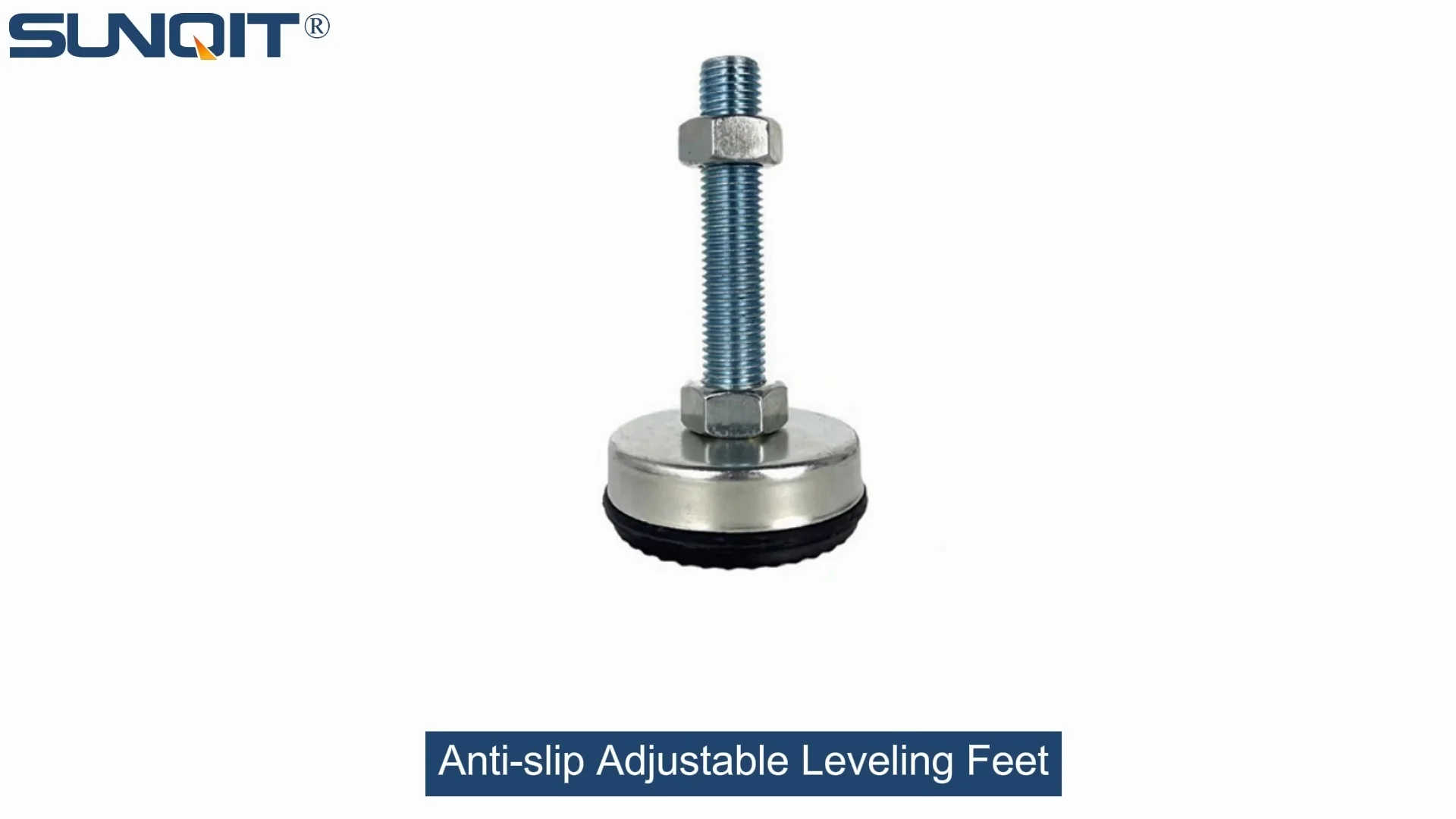
Okay, so they work well together in theory—but how does this play out in actual workspaces? Let's explore three common applications where anti-slip adjustable leveling feet and aluminum tube systems transform efficiency and safety.
1. Workbenches: The Heart of the Workshop
Workbenches are where the magic happens—assembly, repair, testing, packaging. But a wobbly workbench is a disaster waiting to happen. A technician soldering a circuit board needs a steady hand; a lab worker pipetting samples can't afford to spill; a mechanic torquing bolts needs the bench to stay put.
Aluminum tube workbenches (like the
aluminum workbench A
or
workbench E (single deck-without caster)
from many suppliers) are popular because they're customizable—you can add shelves, tool hooks, or lighting. But without leveling feet, even the best-designed workbench will struggle on uneven floors. By integrating anti-slip adjustable feet into the base, you ensure the work surface is level and stable, no matter the floor conditions.
At a medical device plant in Ohio, the quality control team upgraded their inspection workbenches to aluminum profiles with leveling feet. The result? A 30% reduction in measurement errors, because the surface stayed perfectly level. "We used to have to recheck every reading because we weren't sure if the wobble was affecting the results," said Tom, the QC supervisor. "Now, we trust the surface, and we're getting through inspections twice as fast."
2. Material Racks and Storage Systems
Material racks are the backbone of organized inventory. Whether you're storing raw materials, work-in-progress, or finished goods, racks need to be accessible, durable, and safe. Aluminum tube racks (like
material rack B (3 row and 3 floor)
) are ideal because they're lightweight, easy to reconfigure, and resistant to corrosion. But uneven racks lead to bins getting stuck, items falling, or even the rack collapsing under weight.
By adding leveling feet to the base of aluminum material racks, you ensure the rack is vertical, with each shelf level. This makes it easier to load and unload bins, reduces the risk of items slipping off, and extends the life of the rack (since uneven weight distribution can bend tubes over time). In a warehouse in Texas, a food distributor switched to aluminum racks with leveling feet and saw a 25% decrease in damaged goods—because bins no longer got stuck or tipped when being pulled out.
3. Turnover Trolleys and Mobile Carts
Turnover trolleys (used to move materials between stations) and mobile carts are essential for lean manufacturing, where reducing waste (including time spent walking) is key. Aluminum is the go-to material here because it's lightweight, making the trolleys easy to push. But mobility often comes at the cost of stability—until now.
Many aluminum trolley designs pair casters with leveling feet. When the trolley is moving, the casters do the work. When it's parked at a workstation, the leveling feet are extended to lift the casters slightly, stabilizing the trolley. This prevents rolling and ensures the trolley stays in place while materials are loaded or unloaded. For example, a
hand trolley A
with 4-inch casters and anti-slip leveling feet can be pushed easily across the floor, then locked into place with the feet when it reaches the assembly line. No more chasing runaway trolleys or propping them with blocks.