- Company Articles
- Products and Technology
- Product knowledge
- Anti-Slip Adjustable Leveling Feet and Flexible Production: Reusability Advantages

Anti-Slip Adjustable Leveling Feet and Flexible Production: Reusability Advantages
Related Product
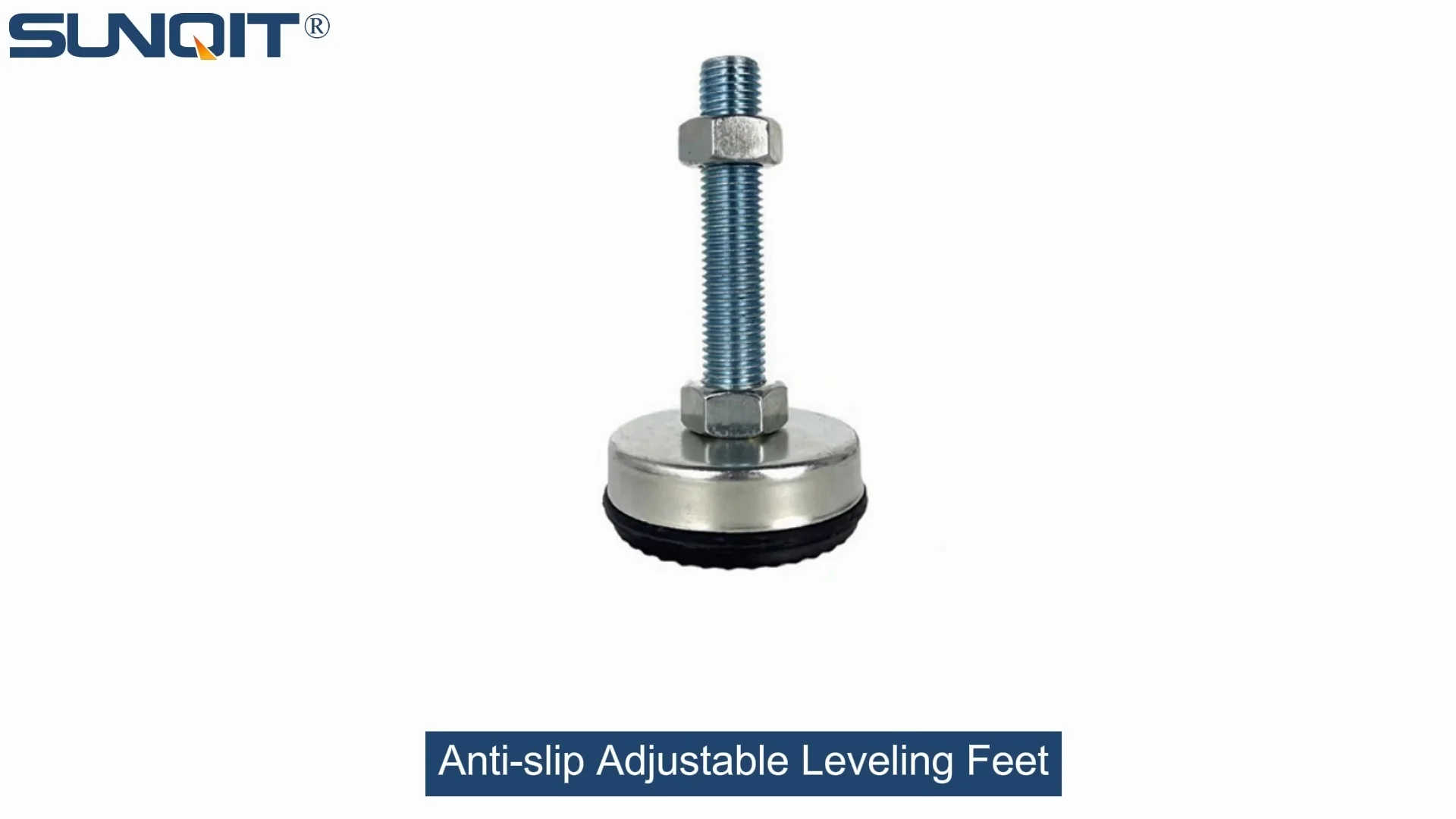
Anti-slip Adjustable Leveling Feet
Anti-slip Adjustable Leveling Feet are designed to keep machines level when placed on uneven or sloped ground, the rubber base will prevent product slip during work.
Walk into any modern factory, and you'll feel it immediately—the hum of activity, the rhythm of machines, and the quiet urgency of a space designed to adapt. In an era where consumer demands shift overnight and product lifecycles shrink by the month, rigidity is the enemy of success. Factories can no longer afford to be locked into fixed production lines or static workbenches; they need to pivot, reconfigure, and restart at a moment's notice. Yet, amid all the talk of high-tech automation and smart systems, it's often the smallest components that make the biggest difference. Enter the anti-slip adjustable leveling feet—unassuming, workhorse parts that quietly underpin the flexibility modern manufacturing relies on. Today, we're diving into how these unheralded components, paired with principles of the lean system and durable materials like aluminum profile, are transforming production floors by putting reusability at the core.
What is Flexible Production, and Why Does It Matter?
Flexible production isn't just a buzzword—it's the backbone of staying competitive in 2025. Imagine a factory that can switch from assembling smartwatches to fitness trackers in a single day, or reconfigure a workbench to accommodate a taller operator without calling in a team of engineers. That's flexibility in action. Traditional manufacturing setups, with their welded frames, fixed-height workbenches, and permanent conveyor lines, simply can't keep up. They're slow to adapt, expensive to modify, and prone to creating waste—whether that's time, materials, or labor. Flexible production, by contrast, is all about modularity: building systems that can be taken apart, rearranged, and repurposed as needs change. It's about making "change" feel less like a disruption and more like a natural part of the process.
But here's the thing: flexibility doesn't happen by accident. It requires intentional design—starting with the smallest building blocks of the production line. Every component, from the workbench to the conveyor, needs to be "change-ready." And that's where anti-slip adjustable leveling feet come into play. These tiny but critical parts might not grab headlines, but they're the unsung heroes that make modularity possible. Let's break down why.
The Unsung Hero: Anti-Slip Adjustable Leveling Feet
At first glance, leveling feet might seem trivial. After all, their primary job is simple: keep things stable. But in a flexible production environment, "stable" isn't enough. You need stability that can adapt. Let's start with the basics: what are anti-slip adjustable leveling feet? They're small, often threaded components attached to the bottom of workbenches, material racks, or machinery. They have two key features: adjustability (you can twist them to raise or lower the height of the equipment) and anti-slip bases (usually made of rubber or a high-friction material to prevent sliding). That might sound straightforward, but in practice, these features solve a mountain of problems.
Consider a typical factory floor. No matter how well-maintained, floors are rarely perfectly level. A workbench with fixed feet might wobble, leading to unstable work surfaces, damaged products, or even safety hazards. With adjustable leveling feet, a worker can simply twist the feet to compensate for uneven ground, ensuring the workbench sits rock-solid. Then there's height adjustment: not all operators are the same height, and not all tasks require the same work surface elevation. A assembly line worker might need a bench that's 36 inches high for one task, while a quality control inspector needs it at 40 inches for another. Adjustable feet let you tweak the height in minutes, no tools required (in some cases), making the workspace more ergonomic and efficient.
The anti-slip feature is equally critical. In a busy factory, equipment gets moved—whether it's a workbench being shifted to a new line or a material rack being repositioned to shorten a workflow. Without anti-slip bases, even a small bump could send a heavy rack sliding, risking injury or damage. Anti-slip leveling feet grip the floor, adding a layer of safety that's non-negotiable in fast-paced environments. But here's where their true value for flexibility shines: unlike fixed feet (which are often welded or glued in place), adjustable leveling feet are designed to be removed, reused, and repurposed. That reusability is the game-changer.

Reusability: The Core Advantage
In manufacturing, waste is the enemy. The lean system, a philosophy centered on eliminating waste ("muda") and maximizing value, has long taught us that every dollar spent on unnecessary materials or equipment is a dollar taken away from innovation and growth. Traditional fixed leveling feet are a classic example of waste in action. Think about it: if you have a workbench with welded-on feet and you need to reconfigure your production line, you have two choices: either keep the wobbly, ill-fitting workbench in place (sacrificing efficiency) or throw it away and buy a new one (wasting money and creating landfill waste). Neither option is good.
Adjustable leveling feet solve this by being reusable. Since they're typically screwed or bolted onto equipment, you can unscrew them when you no longer need the original workbench or rack. Then, you can attach them to a new piece of equipment—say, a different workbench, a material cart, or a conveyor support. Suddenly, you're not discarding perfectly good components; you're giving them a second, third, or fourth life. This isn't just about saving money (though it does that, too). It's about aligning with the lean system's core principle of eliminating waste. Reusability turns "disposal" into "recycling," and that adds up fast.
Let's do a quick thought experiment. Suppose a factory replaces 10 workbenches per year because they need to reconfigure their line. Each workbench has 4 fixed feet, which cost $5 each. That's 40 feet per year, or $200, going into the trash. With adjustable leveling feet, which might cost a bit more upfront—say $8 each—you can reuse those 40 feet on the new workbenches. Over five years, you've saved 200 feet, or $1,000 (not counting the cost of the workbenches themselves). And that's just for workbenches. Multiply that by material racks, conveyors, and other equipment, and the savings become significant. Plus, you're reducing your environmental footprint by keeping usable parts out of landfills—a win for both your bottom line and sustainability goals.

Materials Matter: Aluminum Profile and the Durability Factor
Of course, reusability only works if the leveling feet themselves are durable enough to withstand multiple uses. That's where materials come in. While some leveling feet are made of plastic or low-grade steel, the best ones are paired with high-quality materials like aluminum profile. Aluminum profile—extruded aluminum shapes with T-slots or other features—is a favorite in flexible manufacturing because it's lightweight, strong, and resistant to corrosion. When adjustable leveling feet are designed to work with aluminum profile components, they become even more versatile.
Here's why: aluminum profile workbenches and racks are inherently modular. They're built by connecting aluminum tubes or beams with brackets, making them easy to take apart and reassemble. If your leveling feet are designed to attach to aluminum profile (via T-slot nuts or compatible bolts), you can swap them between different aluminum-based equipment with zero hassle. For example, you might remove feet from an old aluminum profile workbench and attach them to a new aluminum material rack—no drilling, welding, or special tools needed. The aluminum profile acts as a universal "backbone," ensuring the feet (and other components) can move seamlessly between setups.
Aluminum also offers long-term durability. Unlike steel, it doesn't rust, so even if the feet get exposed to moisture (common in food processing or pharmaceutical factories), they'll hold up. This durability means the feet can be reused dozens of times over years, not just a few times before wearing out. When you combine the adjustability of the feet with the modularity of aluminum profile, you get a system that's almost infinitely reconfigurable. It's like building with Lego blocks for adults—each piece works with the others, and you can create something new whenever you need to.

In Action: A Workbench Reconfiguration Case Study
Let's put this all into context with a real-world example. Imagine a small electronics manufacturer, "TechFlex," that produces smartphone chargers. For years, they've used fixed workbenches with welded steel feet. When they needed to switch production to a new, smaller charger model, they ran into problems: the old workbenches were too low for the new assembly tools, and their fixed feet made them impossible to adjust. The factory manager had two options: buy all new workbenches (costing $5,000) or spend a week modifying the old ones (losing production time). Neither was ideal.
Then, TechFlex switched to aluminum profile workbenches with anti-slip adjustable leveling feet. A few months later, they landed a contract to produce wireless earbuds—a completely different product with different workflow needs. This time, reconfiguring was a breeze. The team disassembled the old charger assembly line workbenches, unscrewed the adjustable feet, and attached them to new aluminum profile frames designed for the earbud line. They adjusted the height of the new workbenches using the feet to match the ergonomic needs of the earbud assembly team. The entire process took two days instead of a week, and they reused 100% of the leveling feet from the old setup. They saved $3,000 on new workbenches and avoided losing a week of production—all because they invested in reusable, adjustable components.
To highlight the difference, let's compare traditional fixed feet with anti-slip adjustable leveling feet in a simple table:
| Feature | Traditional Fixed Leveling Feet | Anti-Slip Adjustable Leveling Feet |
|---|---|---|
| Reusability | Low—often welded or glued; must be discarded with equipment | High—screwed/bolted on; can be removed and reused on new equipment |
| Adjustment Range | None—fixed height; cannot compensate for uneven floors | High—height adjustable (typically 0.5–2 inches); adapts to uneven surfaces |
| Cost Over Time | Higher—requires buying new feet with each equipment replacement | Lower—one-time purchase; reused across multiple setups |
| Ergonomics | Poor—fixed height may not suit all operators or tasks | Excellent—height adjusts to fit operators and tasks, reducing strain |
| Environmental Impact | High—contributes to landfill waste from discarded feet | Low—reusability reduces waste; often made with recyclable materials like aluminum |
As the table shows, the advantages of adjustable, reusable feet are clear. They're not just a "nice-to-have"—they're a strategic investment that pays off in flexibility, cost savings, and sustainability.
Aligning with Lean System Principles
If you're familiar with the lean system, you'll recognize that reusability is more than just a cost-saving tactic—it's a core lean principle. Lean manufacturing, pioneered by Toyota, focuses on eliminating seven types of waste, or "muda": overproduction, waiting, transportation, defects, inventory, motion, and overprocessing. Adjustable leveling feet tackle several of these directly. By reusing components, you reduce "inventory waste" (you don't need to stockpile new feet) and "defects" (stable workbenches reduce product errors). They also cut down on "motion waste"—workers don't need to spend time searching for new feet or waiting for equipment modifications.
But lean is also about continuous improvement, or "kaizen." A factory that uses reusable components is more likely to experiment with new production layouts because the cost of change is lower. If you know you can reconfigure a workbench in a day and reuse the feet, you're more willing to try a new workflow to boost efficiency. That culture of experimentation is exactly what lean aims to foster. Over time, these small, iterative changes add up to big improvements in productivity and profitability.
Another lean principle is "respect for people." Adjustable leveling feet make workspaces more ergonomic, which shows workers that their comfort and safety matter. When employees don't have to struggle with wobbly workbenches or awkward heights, they're happier, more engaged, and less likely to suffer injuries. That's not just good for morale—it's good for retention and productivity. In short, anti-slip adjustable leveling feet aren't just tools for flexibility; they're tools for building a leaner, more people-centered factory.
Future-Proofing Your Factory: The Role of Reusable Components
Looking ahead, the demand for flexibility in manufacturing will only grow. As customization becomes the norm (think "mass personalization," where products are tailored to individual customers), factories will need to switch between production runs faster than ever. In this environment, fixed systems will become obsolete. The factories that thrive will be those that embrace modularity at every level—from the conveyor belts down to the leveling feet.
Anti-slip adjustable leveling feet are a perfect example of how "small" innovation drives big change. They're affordable, easy to implement, and deliver immediate benefits. But to maximize their impact, they need to be part of a larger modular ecosystem—paired with aluminum profile workbenches, quick-connect conveyors, and other reusable components. Together, these elements create a production line that can adapt to whatever the market throws at it.
So, if you're a factory manager or operator, here's the takeaway: don't overlook the small stuff. The next time you're setting up a workbench or reconfiguring a line, ask yourself: "Can this component be reused?" If the answer is no, it might be time to upgrade. Anti-slip adjustable leveling feet are a simple place to start, but they're just the beginning. They're a reminder that in manufacturing, the most powerful solutions often come from reimagining the basics.
Conclusion: Small Parts, Big Impact
In the grand scheme of manufacturing, anti-slip adjustable leveling feet might seem. But as we've explored, they're foundational to flexible production. Their ability to adjust, grip, and be reused transforms how factories operate—turning rigid setups into adaptable systems that can keep pace with change. When paired with materials like aluminum profile and aligned with lean system principles, they become even more powerful: reducing waste, cutting costs, and making workspaces safer and more ergonomic.
The future of manufacturing belongs to the flexible, the adaptable, and the reusable. It belongs to factories that see change not as a disruption, but as an opportunity. And it all starts with the right components—components like anti-slip adjustable leveling feet. So the next time you walk across a factory floor, take a moment to look down. You might just see the future of manufacturing, one small, adjustable foot at a time.