- Company Articles
- Products and Technology
- Product knowledge
- Anti-Slip Adjustable Leveling Feet for 3C Custom Assembly Solutions

Anti-Slip Adjustable Leveling Feet for 3C Custom Assembly Solutions
Related Product
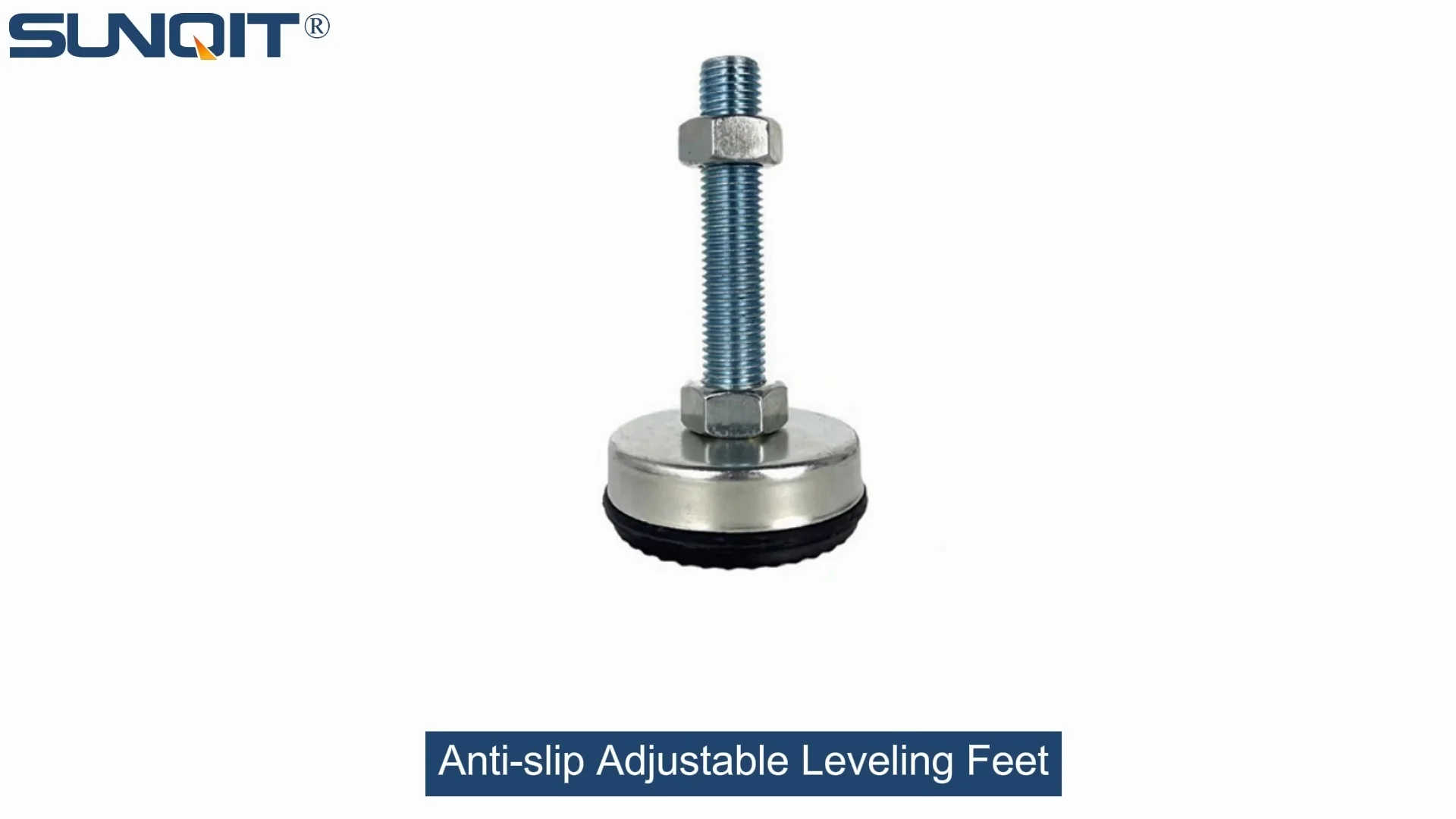
Anti-slip Adjustable Leveling Feet
Anti-slip Adjustable Leveling Feet are designed to keep machines level when placed on uneven or sloped ground, the rubber base will prevent product slip during work.
In the fast-paced world of 3C manufacturing—where precision is measured in millimeters and production lines hum with the rhythm of assembling smartphones, laptops, and smart devices—every detail matters. From the tiniest microchip to the sturdiest workstation, each component plays a role in ensuring efficiency, quality, and safety. Yet, one often-overlooked hero in this ecosystem is the foundation of the assembly process itself: the stability of workbenches and workstations. Imagine a technician carefully aligning a camera module onto a phone chassis, only for the workbench to wobble slightly, misaligning the part and causing a costly rework. Or a production line where uneven floors turn routine tasks into frustrating battles against instability. These scenarios are more common than you might think, and they underscore a critical need: reliable, adaptable solutions to keep workspaces steady. Enter anti-slip adjustable leveling feet—a small but mighty innovation that's transforming how 3C manufacturers approach assembly line stability, precision, and lean efficiency.
The Hidden Cost of Unstable Workstations in 3C Assembly
To understand why anti-slip adjustable leveling feet are game-changers, let's first unpack the challenges of unstable workstations in 3C manufacturing. 3C products demand microscopic precision; a misalignment of just 0.1mm can render a circuit board useless or a screen unresponsive. Yet, the floors in manufacturing facilities are rarely perfectly level. Years of heavy equipment movement, uneven concrete pouring, or even minor shifts in the building's foundation can create subtle slopes or bumps—imperfections that might go unnoticed until they disrupt production.
Consider a typical scenario: A lean pipe workbench, a staple in modern 3C assembly lines for its modularity and flexibility, is set up on a slightly uneven floor. Over time, the legs closest to the "low" side of the floor bear less weight, causing the workbench to tilt. At first, the tilt is barely perceptible, but it's enough to throw off measurements when a technician is soldering tiny components or aligning delicate connectors. The result? Increased rework rates, longer assembly times, and a higher risk of product defects. Worse, a wobbly workstation can compromise safety—tools might slide off, or operators might strain to compensate for the instability, leading to ergonomic injuries.
Traditional solutions, like shimming with metal washers or wooden blocks, are temporary fixes at best. They're time-consuming to install, prone to shifting, and can damage floors or workbench legs. For facilities aiming to adhere to lean manufacturing principles—where waste reduction and continuous improvement are paramount—these band-aids are antithetical to efficiency. What's needed is a solution that's adjustable, durable, and designed to integrate seamlessly with existing setups like lean pipe workbenches and ESD workstations.
Anti-Slip Adjustable Leveling Feet: More Than Just "Feet"
Anti-slip adjustable leveling feet are exactly what their name suggests: devices mounted to the bottom of workbenches, racks, or trolleys that allow users to adjust height individually, compensating for uneven floors, while their anti-slip bases prevent unwanted movement. But to call them "just feet" is to underestimate their engineering. These components are precision tools, engineered to address the unique demands of 3C manufacturing.
Core Features That Matter
- Height Adjustability: Most models offer a range of 30mm to 100mm, allowing fine-tuning to counteract even significant floor unevenness. This adjustability is typically achieved via a threaded stem that screws into a base, with a hex or flat head for easy turning—no special tools required.
- Anti-Slip Bases: The bottom of each foot is usually made from high-friction rubber or silicone, designed to grip floors firmly. Some models even feature textured surfaces or suction-cup-like designs for extra stability, critical in environments where workbenches might vibrate during operation.
- Load Capacity: 3C assembly workbenches often hold heavy equipment—soldering stations, testing tools, or bins of components. Quality leveling feet are rated for loads ranging from 300kg to 1,000kg per foot, ensuring they can support even the heaviest setups without bending or breaking.
- Corrosion Resistance: Manufacturing floors are prone to spills—coolant, cleaning agents, or lubricants. Many leveling feet use stainless steel or coated aluminum for the stem and base, preventing rust and ensuring longevity in harsh environments.
- ESD Compatibility: For ESD workstations, where static electricity can fry sensitive microchips, some feet feature conductive rubber bases that dissipate static charges to the ground, meeting strict standards like ANSI/ESD S20.20.
These features might sound technical, but their impact is tangible. A technician adjusting a leveling foot with a simple wrench, watching the workbench stabilize as the bubble in a spirit level centers, isn't just fixing a wobble—they're reclaiming time, reducing frustration, and ensuring the products rolling off the line meet the highest quality standards.

From Lean Pipe Workbenches to ESD Workstations: Seamless Integration
One of the greatest strengths of anti-slip adjustable leveling feet is their versatility. They're not one-size-fits-all; they're designed to work with the tools 3C manufacturers already use, from lean pipe workbenches to aluminum profile racks and ESD workstations. Let's break down how they integrate into these key setups.
Lean Pipe Workbenches: Flexibility Meets Stability
Lean pipe workbenches are beloved in 3C assembly for their modular design—using lightweight steel or aluminum pipes and joints, they can be reconfigured in minutes to adapt to new product lines or workflows. But this flexibility means the workbench's stability is only as good as its base. Anti-slip adjustable leveling feet complement this modularity perfectly. Since lean pipe workbenches are often moved or reconfigured, their feet need to be easy to adjust on the fly. A quick twist of the leveling foot's stem, and the workbench is stable again, even on a new part of the factory floor. Some manufacturers even design leveling feet with universal mounting plates, making them compatible with standard lean pipe joint sizes—no need for custom modifications.
ESD Workstations: Protecting Sensitive Components
3C components like microprocessors and memory chips are highly susceptible to electrostatic discharge (ESD). An ESD workstation is designed to prevent this by grounding static charges, but if the workstation itself is unstable, its grounding effectiveness can suffer. A wobbly workstation might loosen ground wires or create gaps in the ESD mat, allowing static to build up. Anti-slip adjustable leveling feet with conductive rubber bases solve this twofold: they stabilize the workstation and enhance grounding. The conductive rubber creates a direct path for static to flow from the workbench to the floor, ensuring compliance with ESD safety standards and reducing the risk of costly component damage.
Aluminum Profile Systems: Lightweight Strength
Aluminum profile systems are another staple in 3C manufacturing, prized for their lightweight yet rigid construction. They're used to build everything from material racks to custom workstations. When paired with aluminum profile accessories like brackets or end caps, anti-slip adjustable leveling feet become even more versatile. For example, aluminum profile mounting plates can be bolted to the bottom of aluminum extrusion profiles, allowing leveling feet to be attached securely. Since aluminum is corrosion-resistant, this combination is ideal for cleanrooms or facilities with strict hygiene standards—common in 3C production where dust or contaminants can ruin sensitive electronics.

The Ripple Effect: How Leveling Feet Boost Efficiency, Quality, and Safety
At first glance, anti-slip adjustable leveling feet might seem like a "nice-to-have" upgrade. But in reality, their impact ripples through every layer of the manufacturing process, delivering benefits that go far beyond stable workbenches. Let's quantify this impact:
Reduced Rework and Defects
Precision is everything in 3C assembly. A stable workstation ensures that tools like pick-and-place machines, soldering irons, and inspection cameras stay aligned, reducing the likelihood of misassembled components. In a case study with a major smartphone manufacturer, switching to anti-slip adjustable leveling feet on their lean pipe workbenches led to a 42% reduction in rework rates for circuit board assembly. The team attributed this to fewer alignment errors during component placement—errors that had previously cost the company $120,000 annually in wasted materials and labor.
Faster Changeovers and Leaner Operations
Lean manufacturing thrives on minimizing downtime, especially during changeovers—when production lines switch from one product model to another. Traditional workbench adjustments, like adding shims or relocating the entire bench, could take 30 minutes or more. With adjustable leveling feet, technicians can level a workbench in under 5 minutes using just a wrench and a spirit level. For a factory with 20 workstations and weekly changeovers, this translates to over 16 hours of saved labor per month—time that can be redirected to value-added tasks like process optimization or employee training.
Enhanced Operator Safety and Comfort
Ergonomics play a critical role in 3C manufacturing, where operators often spend 8+ hours a day at workstations. A wobbly bench forces operators to lean or overcompensate, leading to muscle strain or repetitive stress injuries. Anti-slip leveling feet eliminate this by creating a stable, level surface, reducing the risk of ergonomic issues. One electronics contract manufacturer reported a 28% drop in worker compensation claims related to back and shoulder strain after upgrading to these feet—a testament to their impact on workplace safety.
Long-Term Cost Savings
While anti-slip adjustable leveling feet have an upfront cost, they deliver significant long-term savings. By reducing rework, minimizing downtime, and lowering injury rates, they pay for themselves quickly. For example, a mid-sized 3C manufacturer with 50 workstations might spend $5,000 on leveling feet, but save $20,000+ annually in rework costs alone. Add in savings from reduced downtime and fewer injury claims, and the ROI becomes undeniable.

Technical Deep Dive: Choosing the Right Leveling Feet for Your Needs
Not all anti-slip adjustable leveling feet are created equal. To maximize their benefits, you need to choose the right model for your specific application. Below is a breakdown of key considerations and a comparison of popular models used in 3C manufacturing.
Key Factors to Consider
- Load Capacity: Calculate the total weight of your workstation (including equipment, tools, and materials) and divide by the number of feet. For example, a 2,000kg workbench with 4 feet needs feet rated for at least 500kg each (plus a safety margin of 20-30%).
- Adjustment Range: Measure the maximum floor unevenness in your facility. If the worst-case slope is 25mm, choose feet with an adjustment range of at least 30mm to ensure you can compensate fully.
- Environment: For cleanrooms or ESD-sensitive areas, opt for feet with conductive rubber and corrosion-resistant materials like stainless steel or aluminum. For wet environments, look for sealed threads to prevent rust.
- Mounting Compatibility: Check if the feet fit your existing workbench legs. Most lean pipe workbenches use 28mm or 30mm pipes, so look for feet with mounting plates that match these sizes.
Comparison of Top Models for 3C Assembly
| Model | Adjustment Range (mm) | Load Capacity (kg/foot) | Base Material | Stem Material | ESD Compliant? | Anti-Slip Rating* |
|---|---|---|---|---|---|---|
| Standard Duty (SD-100) | 30-80 | 300 | Nitrile Rubber | Zinc-Plated Steel | No | High (0.8μ) |
| Heavy Duty (HD-200) | 40-100 | 800 | Conductive Rubber | Stainless Steel | Yes (ANSI/ESD S20.20) | Very High (1.2μ) |
| ESD-Specific (ESD-300) | 25-75 | 500 | Carbon-Filled Silicone | Anodized Aluminum | Yes (IEC 61340-5-1) | High (0.9μ) |
| Aluminum Profile Compatible (AL-400) | 35-90 | 400 | Natural Rubber | Aluminum Alloy | No | Medium-High (0.7μ) |
*Anti-slip rating: Coefficient of friction (μ) on concrete; higher = better grip.
For most 3C applications, the Heavy Duty (HD-200) or ESD-Specific (ESD-300) models are ideal. The HD-200 excels in high-load scenarios, like workstations with heavy testing equipment, while the ESD-300 is perfect for assembly lines handling microchips or circuit boards.
Step-by-Step Installation Guide: Getting Your Leveling Feet Right
Installing anti-slip adjustable leveling feet is straightforward, but attention to detail ensures optimal performance. Follow these steps to get the most out of your new feet:
- Prepare the Workbench: Clear the workbench of all tools and materials. If possible, lift the workbench slightly using a jack or pry bar to access the legs—this makes installation easier.
- Clean the Mounting Area: Wipe down the bottom of the workbench legs to remove dirt, grease, or rust. This ensures a secure bond between the leveling feet and the legs.
- Attach the Mounting Plates: Most leveling feet come with mounting plates that bolt or clamp onto the workbench legs. For lean pipe workbenches, use U-bolts or hose clamps to secure the plates to the pipes. Tighten the bolts until the plate is snug—over-tightening can damage the pipe.
- Screw in the Leveling Feet: Thread the leveling feet into the mounting plates until the base is just above the floor. Do this for all feet before adjusting height—this ensures even weight distribution.
- Level the Workbench: Place a spirit level on the workbench surface. Starting with the lowest leg (the one that's most off the ground), twist the leveling foot's stem clockwise to lower it or counterclockwise to raise it. Adjust each foot until the spirit level bubble is centered. For large workbenches, check multiple points (front, back, left, right) to ensure overall levelness.
- Lock the Feet in Place: Most models have a lock nut or jam nut just above the mounting plate. Tighten this nut against the plate to prevent the leveling foot from unscrewing over time. Use a wrench to hold the stem while tightening the nut—this avoids twisting the foot out of position.
- Test Stability: Apply gentle pressure to different corners of the workbench to check for wobbling. If it moves, readjust the feet slightly. For extra security, place a heavy object (like a 50kg toolbox) on the workbench and recheck levelness—some feet might compress slightly under load.
Pro tip: Mark the stem position with a permanent marker after final adjustment. This makes it easy to reset the feet if they're accidentally moved during cleaning or maintenance.
Maintenance 101: Keeping Your Leveling Feet Performing Like New
Anti-slip adjustable leveling feet are built to last, but regular maintenance ensures they stay effective for years. Here's a simple maintenance routine to follow:
Weekly Checks
- Inspect for Wobbling: Give the workbench a gentle shake. If it moves, check if any leveling feet have loosened. Retighten the lock nuts and readjust if needed.
- Clean the Base: Wipe the anti-slip base with a damp cloth to remove dust or debris, which can reduce grip. For sticky residues, use a mild detergent—avoid harsh chemicals that might degrade the rubber.
Monthly Checks
- Lubricate Threads: Apply a small amount of anti-seize lubricant to the threaded stem to prevent rust and make adjustments smoother. Wipe off excess lubricant to avoid attracting dust.
- Check Rubber Wear: Inspect the anti-slip base for cracks, flattening, or loss of texture. If the rubber is worn, replace the foot—worn bases lose their grip and can compromise stability.
Quarterly Checks
- Verify Levelness: Use a spirit level to recheck the workbench's levelness. Factory floors can shift over time, so minor readjustments might be needed.
- Inspect Mounting Hardware: Check bolts, clamps, or U-bolts for rust or looseness. replace any corroded hardware to prevent the leveling feet from detaching.
By following this routine, you can extend the lifespan of your leveling feet to 5+ years, ensuring consistent stability and performance.
The Future of Workstation Stability: Smart Leveling Feet and Beyond
As 3C manufacturing continues to evolve—with trends like automation, Industry 4.0, and miniaturization driving innovation—anti-slip adjustable leveling feet are poised to get even smarter. Here's a glimpse of what's on the horizon:
Smart Leveling Feet with Sensors
Imagine leveling feet embedded with tilt sensors and IoT connectivity. These "smart" feet could monitor workstation stability in real time, sending alerts to managers if a foot loosens or the workbench becomes unlevel. Some prototypes even feature motorized stems that auto-adjust to maintain levelness—no human intervention required. This would be a game-changer for lights-out factories or remote monitoring setups.
Eco-Friendly Materials
Sustainability is becoming a priority for manufacturers, and leveling feet are no exception. Look for models made from recycled aluminum or biodegradable rubber in the coming years. Some companies are even experimenting with mushroom-based mycelium materials for non-load-bearing components, combining eco-friendliness with shock absorption.
Integration with Digital Twins
Digital twins—virtual replicas of physical production lines—are revolutionizing manufacturing planning. Future leveling feet could feed data into these twins, allowing engineers to simulate how workstation stability impacts production metrics like defect rates or cycle times. This would enable proactive adjustments before issues arise, further reducing waste and improving efficiency.
Why Anti-Slip Adjustable Leveling Feet Are Non-Negotiable for Modern 3C Assembly
In the high-stakes world of 3C manufacturing, where precision, efficiency, and safety are paramount, anti-slip adjustable leveling feet are more than just accessories—they're foundational to success. They solve a critical, often overlooked problem: unstable workstations that erode quality, slow down production, and compromise safety. By combining height adjustability, anti-slip grip, and compatibility with lean pipe workbenches, ESD workstations, and aluminum profile systems, these small components deliver outsized benefits: reduced rework, faster changeovers, enhanced operator comfort, and long-term cost savings.
As 3C manufacturers continue to push the boundaries of innovation—building smaller, more powerful devices with tighter tolerances—the need for stable, adaptable workspaces will only grow. Anti-slip adjustable leveling feet aren't just keeping up with these demands; they're helping to drive them, enabling the precision and efficiency that define modern manufacturing. So, the next time you pick up a smartphone or tablet, take a moment to appreciate the unseen heroes that helped build it—including the humble leveling feet keeping the assembly line steady, one precise adjustment at a time.