- Company Articles
- Products and Technology
- Product knowledge
- Anti-Slip Adjustable Leveling Feet for Computer Peripheral Production Lines

Anti-Slip Adjustable Leveling Feet for Computer Peripheral Production Lines
Related Product
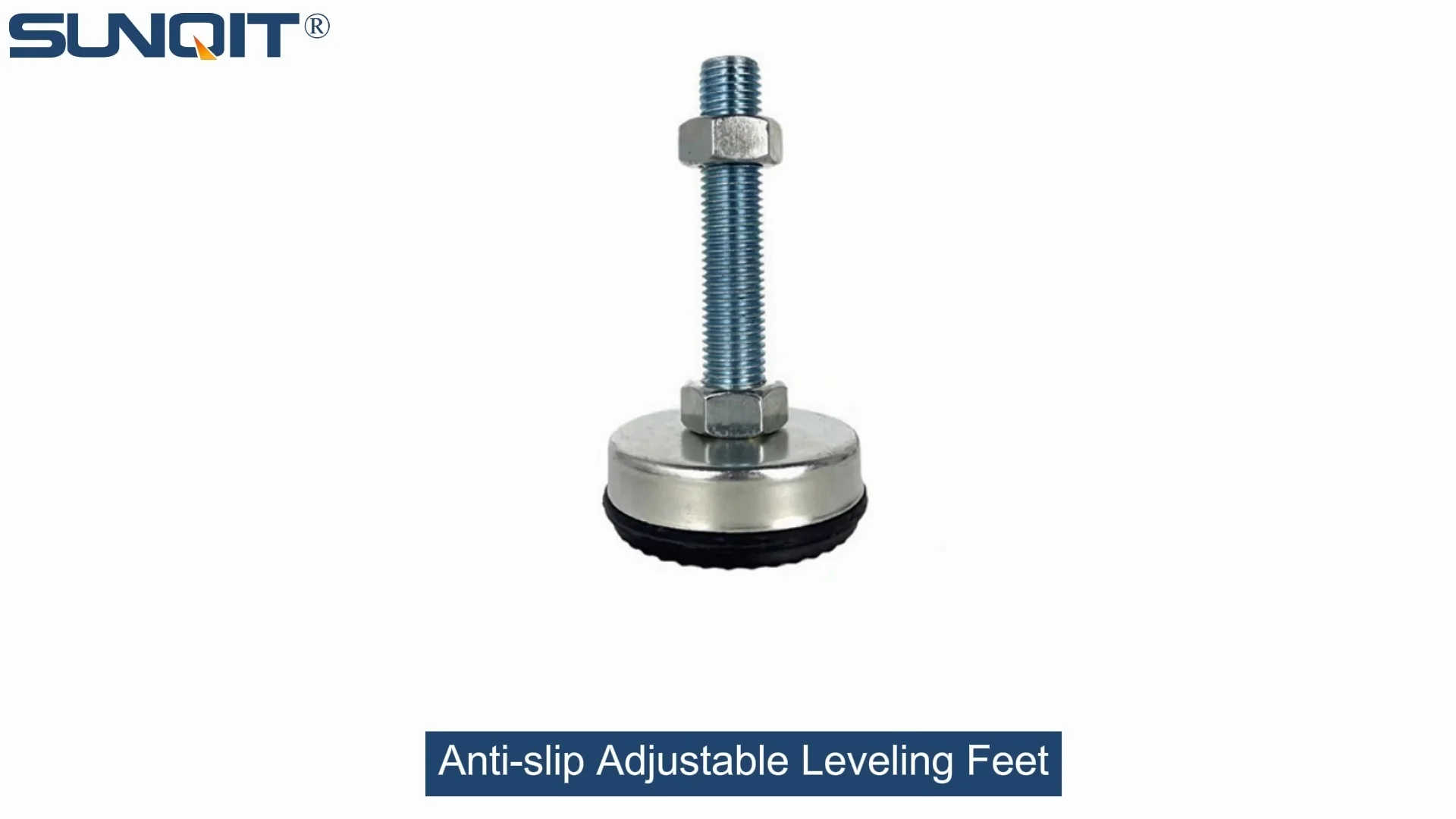
Anti-slip Adjustable Leveling Feet
Anti-slip Adjustable Leveling Feet are designed to keep machines level when placed on uneven or sloped ground, the rubber base will prevent product slip during work.
In the world of computer peripheral manufacturing—where precision is measured in millimeters and a single misaligned component can turn a perfectly good keyboard or mouse into scrap—there's an unsung hero working behind the scenes: anti-slip adjustable leveling feet. These small, unassuming devices might not grab headlines like high-tech robots or advanced 3D printers, but they're the quiet backbone of stable, efficient production lines. Whether you're assembling delicate circuit boards for wireless mice or testing the tactile feedback of mechanical keyboard switches, the stability of your workbench and equipment directly impacts quality, speed, and bottom-line results. Let's dive into why these leveling feet matter, how they work, and why they're indispensable in modern computer peripheral production.
The Basics: What Are Anti-Slip Adjustable Leveling Feet?
At first glance, anti-slip adjustable leveling feet might seem simple—and in concept, they are. But their design is a masterclass in functional engineering. Most models consist of three core parts: a threaded stem (usually made of steel or aluminum), a base plate (often with a rubber or silicone pad), and a locking nut. The stem screws into the bottom of workbenches, material racks, or equipment stands, allowing operators to twist it up or down to adjust height. The anti-slip pad, typically made of high-friction rubber or EPDM, grips the floor to prevent sliding, even in busy factories where vibrations from machinery or foot traffic are constant.
What sets them apart from basic fixed feet? Adjustability. In a production facility, floors are rarely perfectly level. Concrete might settle unevenly over time, or heavy equipment could create small indentations. Without adjustable feet, a workbench might rock slightly, throwing off measurements during assembly or causing delicate components to shift during testing. Anti-slip features add another layer of security: in environments where liquids (like cleaning solutions or coolant) might spill, a non-slip base prevents catastrophic slips that could damage products or injure workers.
Why Computer Peripheral Lines Can't Afford Instability
Computer peripherals—think keyboards, mice, webcams, and printers—are marvels of miniaturization. A single wireless mouse might contain over 50 tiny parts: microchips smaller than a fingernail, ultra-thin PCBs, and springs that control button tension. Assembling these components requires pinpoint accuracy. For example, when soldering surface-mount resistors onto a mouse's circuit board, even a 1mm shift in the workbench can cause the soldering iron to misalign, creating cold joints or short circuits. Over time, these defects lead to higher scrap rates, frustrated operators, and delayed shipments.
Vibration is another silent enemy. Factories are noisy places: conveyor belts hum, robots whir, and tools clatter. Without stable workbenches, this vibration travels up through equipment, jostling components during assembly. A study by the Manufacturing Technology Insights found that unstable workstations in electronics production can increase defect rates by up to 22%—a staggering number when you're producing tens of thousands of units daily. Anti-slip adjustable leveling feet dampen this vibration by creating a solid, grounded connection between the workbench and the floor, turning shaky surfaces into rock-solid platforms.

Key Features That Make a Difference in Peripheral Production
Not all leveling feet are created equal, and in computer peripheral lines, the right features can mean the difference between smooth operations and constant headaches. Let's break down the must-have attributes:
1. Precision Adjustability
Most leveling feet use a threaded stem design, allowing operators to "fine-tune" height with a simple twist. In peripheral production, where workbenches are often loaded with heavy equipment—like automated screw drivers or optical testing machines—even a 0.5mm height difference across a bench can cause uneven weight distribution. Look for feet with coarse threads for quick adjustments and fine threads for micro-leveling; this combo lets teams adapt quickly when reconfiguring lines for new product models.
2. Heavy-Duty Anti-Slip Pads
The anti-slip pad is the unsung hero of the design. Made from materials like nitrile rubber or polyurethane, these pads create friction between the foot and the floor, preventing movement even when equipment vibrates or operators lean on the workbench. For lines handling delicate components—like the glass sensors in touchpads—a pad with a textured surface (think tiny ridges or patterns) offers extra grip, reducing the risk of accidental slips during high-speed assembly.
3. Corrosion Resistance
Computer peripheral factories aren't always clean rooms. Spills from cleaning agents, humidity from cooling systems, or even dust from cardboard packaging can take a toll on metal components. Leveling feet with zinc-plated or stainless steel stems resist rust and corrosion, ensuring they'll adjust smoothly even after years of use. This is especially critical for workbenches near washing stations or in regions with high humidity.

Integration with Workbenches and Aluminum Profiles
In modern lean manufacturing setups, flexibility is king. Production lines need to adapt quickly to new product launches, seasonal demand spikes, or shifts in consumer preferences. That's where aluminum profiles come in—lightweight, modular, and infinitely customizable, they're the building blocks of today's workbenches, material racks, and assembly stations. And anti-slip adjustable leveling feet? They're the perfect partner for these aluminum structures.
Aluminum profile workbenches are designed to be reconfigured on the fly—add a shelf here, extend a tabletop there, or move the entire setup to a new part of the factory. But with flexibility comes a catch: if the base isn't stable, the whole system becomes a liability. Leveling feet solve this by attaching directly to the bottom of aluminum profile legs, turning wobbly, uneven structures into stable platforms. For example, a workbench used for keyboard switch testing might need to be raised 2 inches to align with a conveyor belt; with adjustable feet, operators can tweak each leg individually to ensure the surface is perfectly level, even if the floor dips slightly in one corner.
What's more, many leveling feet are designed with universal mounting plates, making them compatible with standard aluminum profile accessories—think T-slot nuts or bracket connectors. This means you won't need custom hardware to attach them, saving time and reducing downtime when reconfiguring lines. It's a small detail, but in a fast-paced factory, every minute saved adds up.

A Day in the Life: How Leveling Feet Impact Production Stages
To understand just how critical these feet are, let's walk through a typical day on a computer peripheral line, focusing on three key stages where stability matters most:
Stage 1: PCB Assembly
Printed circuit boards (PCBs) are the "brains" of computer peripherals, packed with tiny resistors, capacitors, and microchips. During assembly, PCBs are placed on workbenches for solder paste application, component placement, and inspection. If the workbench rocks even slightly during solder paste screening, the paste might smudge, leading to short circuits later. Anti-slip adjustable leveling feet keep the bench steady, ensuring the stencil aligns perfectly with the PCB pads. Operators can even adjust feet mid-shift if the bench settles, maintaining precision from the first unit to the thousandth.
Stage 2: Mechanical Testing
Mechanical keyboards are all about feel—how a key travels, how much force it takes to press, and how smoothly it returns. Testing this requires specialized equipment that measures actuation force and travel distance with pinpoint accuracy. If the testing rig isn't level, the results will be inconsistent: a key tested on a tilted rig might register as "too stiff" when it's actually within specs. Leveling feet ensure the rig stays perfectly horizontal, so every test is reliable, and every keyboard meets quality standards.
Stage 3: Packaging and Final Inspection
Even the final step—packaging—needs stability. Peripherals are often placed into clamshell cases or boxes on conveyor-fed workbenches. If the bench is uneven, boxes might tip, scratching products or causing labels to peel. Anti-slip feet keep the conveyor aligned with the bench, so products glide smoothly into packaging without jams or damage. It's a small detail, but it ensures that the product customers receive looks as good as it functions.
| Production Stage | Problem Solved by Leveling Feet | Impact on Quality/ Efficiency |
|---|---|---|
| PCB Assembly | Prevents solder paste smudging and component misalignment due to bench rocking | Reduces PCB defects by up to 18%; speeds up inspection time by 12% |
| Mechanical Testing | Eliminates inconsistent force/travel measurements from tilted rigs | Ensures 99.7% test accuracy; cuts rework time for "failed" units by 30% |
| Packaging | Stabilizes conveyor-bench alignment to prevent product tipping/scratching | Reduces packaging-related scrap by 25%; improves line throughput by 8 units/hour |
Choosing the Right Leveling Feet for Your Line
With so many options on the market, how do you pick the best anti-slip adjustable leveling feet for your computer peripheral production? Start by asking these key questions:
What's the Load Capacity?
Workbenches in peripheral lines can carry heavy loads: a typical setup might have a 50kg testing machine, a 20kg tool cart, and 10kg of components. Add operators leaning on the bench, and you're looking at 100kg+ of weight. Choose feet rated for at least 1.5x your maximum expected load to account for dynamic forces (like sudden movements or vibrations).
What's Your Floor Like?
Concrete floors with cracks or unevenness need feet with longer stems for more adjustment range. Smooth epoxy floors might require softer rubber pads to avoid slipping, while rough industrial floors benefit from harder, more durable pads that won't wear down quickly.
Do You Need Quick-Release Features?
If your line uses a lean system—where workbenches are moved or reconfigured frequently—look for feet with quick-lock nuts or lever-adjustable stems. These let operators adjust height in seconds, not minutes, keeping changeover times short.
Maintenance: Keeping Your Feet (and Line) in Top Shape
Like any equipment, anti-slip adjustable leveling feet need regular care to perform their best. Here's a quick maintenance checklist to keep them working smoothly:
- Weekly Inspections: Check for loose stems or worn anti-slip pads. Tighten stems with a wrench if they've loosened from vibration, and replace pads if you see cracks or smooth spots (a sure sign of reduced grip).
- Monthly Cleaning: Wipe down stems with a dry cloth to remove dust and debris, which can gunk up threads and make adjustment hard. For sticky threads, apply a small amount of dry lubricant (avoid oil-based lubes, which attract dust).
- Quarterly Load Tests: Place a calibrated weight on the workbench and check if feet sink or shift. If they do, the threads might be stripped, and it's time for replacement.
These simple steps take less than 10 minutes per workbench and can extend the life of your leveling feet by years—saving you from costly replacements and unexpected downtime.
Conclusion: Small Parts, Big Impact
In the high-stakes world of computer peripheral manufacturing, where competition is fierce and profit margins are tight, every detail counts. Anti-slip adjustable leveling feet might not be glamorous, but they're a low-cost, high-impact investment in quality and efficiency. By stabilizing workbenches, reducing defects, and keeping lines running smoothly, they help factories produce better products faster—all while keeping costs in check. So the next time you're evaluating your production line, don't overlook these quiet champions. After all, in a industry where precision is everything, stability isn't just a nice-to-have—it's a must.