- Company Articles
- Products and Technology
- Product knowledge
- Anti-Slip Adjustable Leveling Feet for Consumer Electronics Production Workstations

Anti-Slip Adjustable Leveling Feet for Consumer Electronics Production Workstations
Related Product
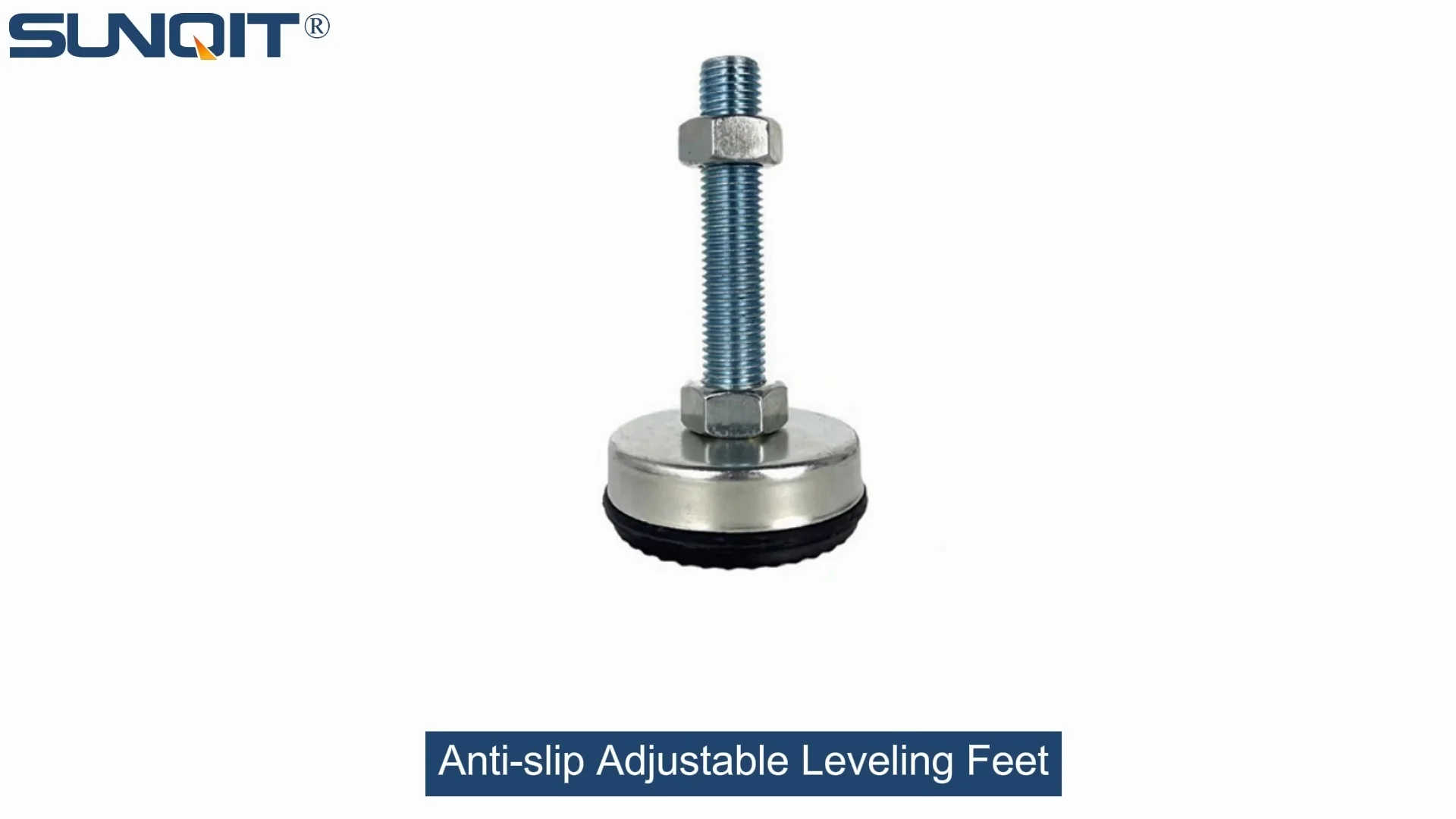
Anti-slip Adjustable Leveling Feet
Anti-slip Adjustable Leveling Feet are designed to keep machines level when placed on uneven or sloped ground, the rubber base will prevent product slip during work.
In the high-stakes world of consumer electronics manufacturing, where a single misaligned component can derail an entire production run, precision isn't just a goal—it's a necessity. From the tiniest microchips to the sleek casings of smartphones and laptops, every step of the assembly process demands stability. Yet, one critical element often overlooked in this quest for perfection is the very foundation of the workspace: the workbench's feet. Enter anti-slip adjustable leveling feet—small but mighty components that quietly ensure your production line stays steady, your workers stay safe, and your products meet the highest quality standards.
The Hidden Cost of Unstable Workstations in Electronics Manufacturing
Walk into any electronics factory, and you'll see rows of workbenches bustling with activity: technicians soldering delicate wires, assemblers placing surface-mount components, testers running diagnostics on newly built devices. What you might not notice, however, is the uneven concrete floor beneath those workbenches, the slight wobble of a table leg, or the subtle vibration that travels up a technician's arm as they work. These seemingly minor issues can have major consequences.
Consider a soldering station, where a technician must apply a precise amount of heat to a 0.5mm solder joint. A wobbly workbench could cause the soldering iron to slip, creating a cold joint that fails under stress. Or think about a quality control station, where a microscope is used to inspect circuit boards for defects. If the table shifts even a millimeter, the focus is lost, leading to missed flaws and potentially faulty products reaching customers. Beyond product quality, unstable workstations also take a toll on worker well-being. Prolonged standing on uneven surfaces can lead to muscle fatigue, back pain, and even repetitive strain injuries—all of which reduce productivity and increase absenteeism.
The problem is compounded by the fact that factory floors are rarely perfectly level. Years of heavy equipment traffic, temperature fluctuations, and general wear and tear create small dips, bumps, and cracks. A standard workbench with fixed-height legs might sit level in one spot but rock dangerously in another. This is where anti-slip adjustable leveling feet step in: they transform an unpredictable workspace into a stable, reliable foundation—no matter what the floor throws at them.
What Are Anti-Slip Adjustable Leveling Feet, Anyway?
At their core, anti-slip adjustable leveling feet are mechanical components designed to stabilize equipment by compensating for uneven surfaces. They consist of three main parts: a threaded stem, a base, and an anti-slip pad. The stem screws into the bottom of a workbench leg (or other equipment), while the base rests on the floor. By rotating the stem, you can raise or lower the height of the leg, adjusting each foot individually to ensure the entire workbench sits perfectly level. The anti-slip pad—usually made of rubber, polyurethane, or a textured metal—prevents the foot from sliding on smooth or oily factory floors, adding an extra layer of safety.
But these feet are more than just "adjustable legs." Modern designs are engineered with the unique demands of electronics manufacturing in mind. Many feature corrosion-resistant stems (often stainless steel or zinc-plated) to withstand the cleaning agents and humidity common in factory environments. Others are ESD (electrostatic discharge)-safe, meaning their materials don't generate static electricity—critical for protecting sensitive electronic components from damage. Some even come with locking mechanisms to prevent accidental adjustment once the perfect height is set.

Key Features That Make Anti-Slip Adjustable Leveling Feet Indispensable
1. Precision Adjustability
Most anti-slip adjustable leveling feet offer a height adjustment range of 10mm to 50mm, with some heavy-duty models extending up to 100mm. This level of precision allows workers to fine-tune the workbench height to match not just the floor, but also the task at hand. For example, a technician assembling small components might prefer a slightly lower workbench, while someone packaging larger devices could benefit from a higher surface. The threaded stem ensures smooth, incremental adjustments—no guesswork, no sudden jolts.
2. Unmatched Grip: The Anti-Slip Advantage
The "anti-slip" in the name isn't just a marketing buzzword. The pads on these feet are designed to create maximum friction between the workbench and the floor. Rubber pads, for instance, conform to minor surface irregularities, increasing contact area and grip. Textured metal pads, on the other hand, dig slightly into soft floors (like concrete) to prevent sliding. This is especially important in electronics manufacturing, where spills of coolant, lubricants, or cleaning fluids are common. A workbench with non-slip feet won't slide when a technician leans against it, reducing the risk of tools or components falling off the table.
3. Durability for the Long Haul
Factory environments are tough on equipment, and leveling feet are no exception. They must support heavy loads (a typical workbench, plus tools and materials, can weigh 200kg or more), resist corrosion from chemicals, and withstand constant vibration. High-quality leveling feet are built with this in mind: stems made from hardened steel or aluminum, bases from impact-resistant plastics or stainless steel, and pads from industrial-grade rubber that won't crack or degrade over time. Many manufacturers back their products with 5-year warranties, a testament to their longevity.

Integrating Leveling Feet with Lean Pipe Workbenches and Aluminum Profiles
Today's electronics factories rely heavily on modular workstations, and few are as popular as the lean pipe workbench. Built from lightweight aluminum or steel pipes and joints, these workbenches are flexible, easy to reconfigure, and ideal for lean manufacturing principles—minimizing waste, maximizing space, and adapting quickly to changing production needs. But even the most well-designed lean pipe workbench is only as good as its foundation. That's why anti-slip adjustable leveling feet are a critical accessory for these setups.
Lean pipe workbenches are often constructed using aluminum profile—extruded aluminum bars with T-slots that allow for easy attachment of shelves, tool holders, and other accessories. The legs of these workbenches are typically made from 2020, 3030, or 4040 aluminum profiles (referencing their width and height in millimeters). Anti-slip adjustable leveling feet are designed to integrate seamlessly with these profiles: their threaded stems fit into pre-drilled holes or T-slot nuts in the profile, making installation a breeze. For example, a 4040 aluminum profile leg might use a leveling foot with a 12mm stem, which screws into a threaded insert welded into the profile's end cap. This secure connection ensures the leveling foot can support the weight of the workbench without loosening over time.
What makes this integration so powerful is the combination of flexibility and stability. A lean pipe workbench can be customized with additional layers, bins, or lighting, but all that extra weight needs a solid base. By adjusting the leveling feet, workers can ensure the entire structure remains level, even when loaded unevenly. This is especially important for workbenches with conveyor systems or roller tracks—common in assembly lines—where materials must flow smoothly from one station to the next. A single unlevel leg could cause jams, delays, or damaged components.

Leveling Feet vs. Casters: When to Choose Which (And Why You Might Need Both)
Walk through a factory, and you'll notice two common types of workstation mobility/stability solutions: casters and leveling feet. Casters—wheeled components that attach to equipment bottoms—are great for moving workbenches, carts, and racks around the floor. But when it comes to precision work, they have a downside: even with locking brakes, casters can still shift slightly under load, and their small contact area with the floor offers less stability than a solid leveling foot. So, when should you choose casters, and when should you opt for leveling feet? The answer often depends on the workstation's purpose.
Caster and accessories are ideal for mobile workstations: think of a turnover trolley used to transport components between assembly lines, or a temporary workbench that needs to be moved for cleaning. In these cases, mobility is key, and the trade-off for slightly less stability is acceptable. Leveling feet, on the other hand, are non-negotiable for static workstations where precision is critical: soldering stations, testing benches, and quality control areas. Here, the anti-slip, vibration-dampening properties of leveling feet ensure the workstation stays put, even during intense, repetitive tasks.
Many modern workstations actually combine both: they feature casters for mobility and leveling feet for stability. When the workstation needs to be moved, the leveling feet are retracted, and the casters take over. Once in position, the feet are extended, lifting the casters off the floor and securing the workstation in place. This "best of both worlds" approach is popular in flexible manufacturing environments, where production lines are reconfigured regularly. For example, a lean pipe workbench might be equipped with 4-inch swivel casters for easy maneuvering and four anti-slip adjustable leveling feet (one at each corner) for stability when in use. The result is a workstation that's both mobile and rock-solid—exactly what electronics manufacturers need.
A Closer Look: Types of Anti-Slip Adjustable Leveling Feet (And Which One Is Right for You)
Not all anti-slip adjustable leveling feet are created equal. Different workbenches, loads, and environments require different designs. To help you choose, we've broken down the most common types, their features, and their ideal applications:
| Type | Stem Material | Base Material | Load Capacity (kg) | Adjustment Range (mm) | Anti-Slip Feature | Best For |
|---|---|---|---|---|---|---|
| Standard Rubber Base | Zinc-Plated Steel | Rubber (60 Shore A) | 150–300 | 10–30 | Textured rubber pad; conforms to floor irregularities | General assembly workbenches, light to medium loads |
| Heavy-Duty Metal Base | Stainless Steel (304) | Cast Iron with Rubber insert | 500–1000 | 20–50 | Grooved metal base + rubber insert; high friction on concrete | Workbenches with heavy equipment (e.g., testing machines, 3D printers) |
| ESD-Safe | Anodized Aluminum | Conductive Rubber | 200–400 | 15–40 | Conductive rubber dissipates static electricity; prevents ESD damage | Circuit board assembly, semiconductor testing, sensitive electronics work |
| Low-Profile | Steel (Nickel-Plated) | Polyurethane | 100–250 | 5–15 | Thin, wide base; fits in tight spaces (e.g., under low workbenches) | Bench-top equipment, small assembly stations, under-shelf storage units |
For most electronics production workbenches, the standard rubber base or ESD-safe model will suffice. If your workstation houses heavy equipment (like a large testing rig), opt for the heavy-duty metal base. And if you're working with microelectronics or semiconductors, ESD-safe leveling feet are non-negotiable—they prevent static buildup from damaging delicate components.
Applications Across the Electronics Production Line: Where Leveling Feet Shine
Anti-slip adjustable leveling feet aren't just for assembly workbenches—they're used across the entire electronics production process, from component storage to final packaging. Let's take a closer look at how they enhance stability in key areas:
Assembly Stations
At the heart of any electronics factory is the assembly line, where workers place, solder, and connect components. These stations often feature lean pipe workbenches with overhead lighting, magnifying glasses, and tool organizers. Anti-slip adjustable leveling feet ensure the workbench remains steady, even when a technician leans into the table to place a tiny SMD (surface-mount device) component. This stability reduces the risk of (hand tremors) affecting precision, leading to fewer defective solder joints and higher first-pass yields.
Testing and Quality Control
Testing stations are where newly assembled devices are put through their paces: stress tests, voltage checks, software updates. Many testing tools—like oscilloscopes, multimeters, and thermal cameras—are sensitive to vibration. A wobbly table could cause measurement errors, leading to false failures or missed defects. Leveling feet dampen vibration and keep the equipment level, ensuring accurate readings and reliable test results.
Packaging and Shipping
Once devices are assembled and tested, they move to packaging stations, where they're boxed, labeled, and prepared for shipping. Here, workbenches are often equipped with roller tracks to move products along quickly. But if the workbench is unlevel, boxes can get stuck, or products might slide off, leading to dents, scratches, or broken screens. Anti-slip adjustable leveling feet keep the roller track perfectly aligned, ensuring smooth, damage-free flow.
Repair and Rework Benches
Not every product passes inspection on the first try. Repair benches are where technicians diagnose and fix defects, often using delicate tools like tweezers, hot air stations, and microscopes. A stable workbench is critical here: a single slip could worsen a defect or damage a component beyond repair. Leveling feet provide the rock-solid base needed for precise, careful work, helping technicians restore products to like-new condition.
Installation and Maintenance: Keeping Your Leveling Feet Working Like New
Installing anti-slip adjustable leveling feet is a straightforward process, but getting it right ensures maximum stability and longevity. Here's a step-by-step guide:
- Prepare the workbench legs: If using an aluminum profile leg, ensure the end cap is installed and the mounting hole (or T-slot) is clean and free of debris. For lean pipe workbenches with steel legs, check that the threads are in good condition (no rust or stripped areas).
- Screw in the leveling feet: Hand-tighten the leveling foot into the leg until the base is flush with the leg bottom. Avoid over-tightening, as this can damage the threads or leg material.
- Level the workbench: Place a spirit level on the workbench surface (both lengthwise and widthwise). Rotate the leveling feet to raise or lower each leg until the bubble is centered. For uneven floors, you may need to adjust one foot more than others—this is normal!
- Test stability: Apply gentle pressure to different corners of the workbench to check for wobbling. If it moves, readjust the feet until the table feels solid.
- Lock the feet (if applicable): Some leveling feet have lock nuts—tighten these against the leg to prevent the foot from rotating during use.
Maintenance is equally simple. Every 3–6 months, inspect the leveling feet for signs of wear: check the anti-slip pad for cracks or smooth spots (replace if worn), ensure the stem threads are clean and free of rust, and tighten any loose lock nuts. If the workbench is moved, recheck the level and adjust the feet as needed. In environments with heavy oil or chemical use, wipe the feet with a damp cloth monthly to prevent buildup that could reduce grip.
The Ripple Effect: How Stable Workstations Boost Your Bottom Line
It's easy to think of anti-slip adjustable leveling feet as a "small" investment—after all, they cost a fraction of a new workbench or testing machine. But their impact on your business can be huge. Here's how:
- Reduced defects: Stable workstations mean fewer errors during assembly and testing, lowering the number of defective products and the cost of rework.
- Higher productivity: Workers spend less time adjusting equipment or fixing mistakes, and more time focused on value-adding tasks.
- Improved worker satisfaction: A comfortable, stable workspace reduces fatigue and injuries, leading to happier employees and lower turnover.
- Longer equipment life: Vibration and instability can damage sensitive tools and machinery over time. Leveling feet extend the lifespan of your equipment, delaying costly replacements.
- Compliance with standards: Many electronics manufacturers must meet ISO 9001 (quality management) or IPC-A-610 (electronics assembly) standards, which require controlled, stable work environments. Leveling feet help you meet these requirements with ease.
Conclusion: Don't Overlook the Foundation of Your Production Line
In the fast-paced world of consumer electronics manufacturing, it's easy to focus on the latest gadgets, cutting-edge machinery, and high-tech materials. But the most successful factories know that greatness starts from the ground up—or, more precisely, from the feet up. Anti-slip adjustable leveling feet may not be the most glamorous components in your production line, but they're among the most critical. They turn uneven floors into stable workspaces, wobbly tables into precision platforms, and tired workers into focused, productive team members.
Whether you're building a new lean pipe workbench with aluminum profile legs, upgrading an existing assembly line, or simply looking to improve product quality, investing in high-quality anti-slip adjustable leveling feet is a decision that pays dividends. They're a small cost for a big return: fewer defects, happier workers, and a production line that runs smoother, safer, and more efficiently than ever before. So, the next time you walk through your factory, take a moment to look down. Those little feet under your workbenches? They're not just keeping things steady—they're helping your business thrive.