- Company Articles
- Products and Technology
- Product knowledge
- Anti-Slip Adjustable Leveling Feet for Flexible Production Carts: Benefits

Anti-Slip Adjustable Leveling Feet for Flexible Production Carts: Benefits
Related Product
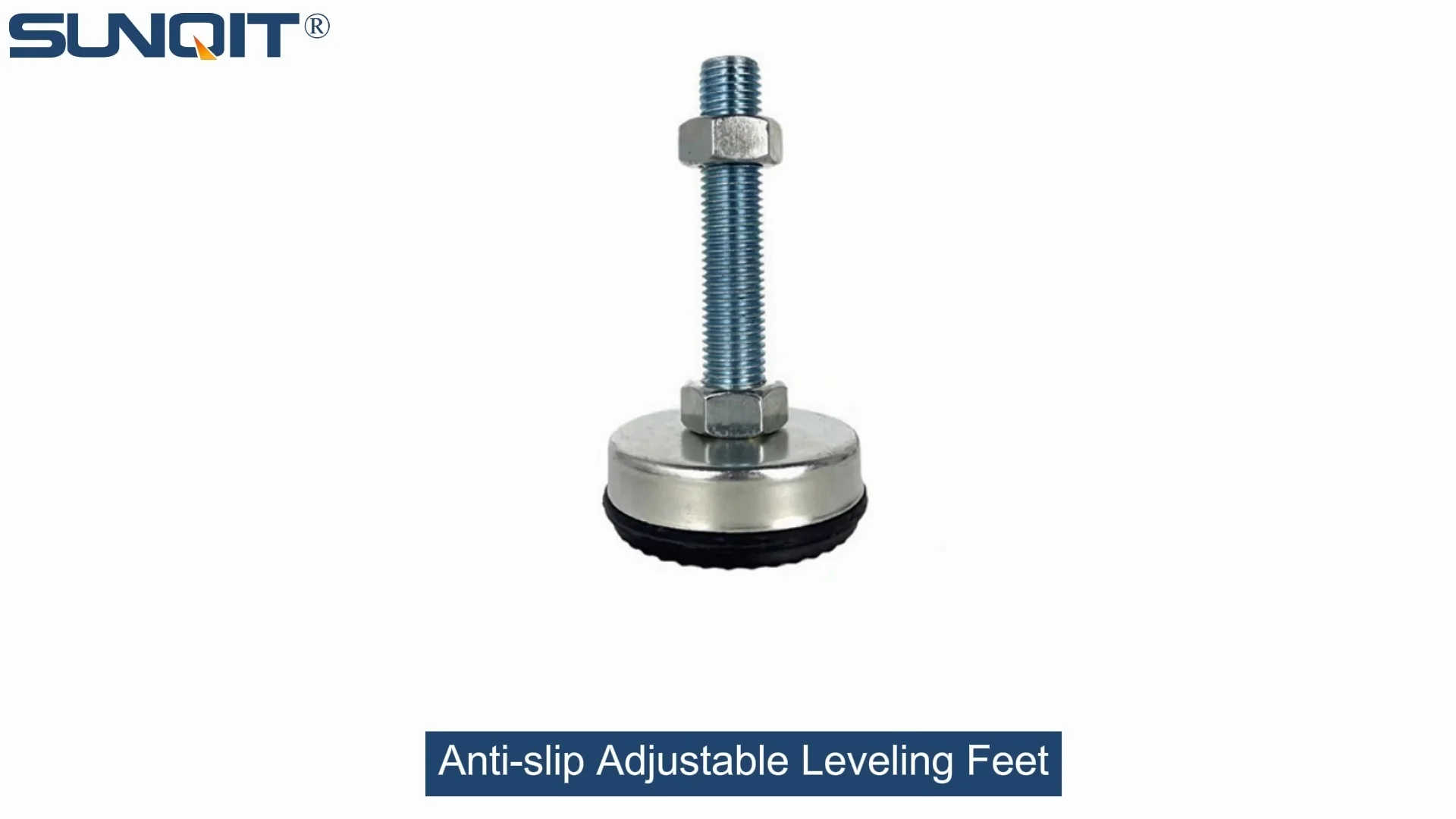
Anti-slip Adjustable Leveling Feet
Anti-slip Adjustable Leveling Feet are designed to keep machines level when placed on uneven or sloped ground, the rubber base will prevent product slip during work.
Walk through any busy manufacturing facility, and you'll quickly notice the unsung heroes keeping operations moving: production carts. These humble workhorses shuttle materials from one station to the next, carry tools to assembly lines, and hold components ready for just-in-time use. But here's the thing—for all their importance, production carts are only as reliable as the parts that keep them stable. A wobbly cart isn't just an annoyance; it can slow down workflows, damage sensitive components, or even create safety hazards for workers. That's where anti-slip adjustable leveling feet come into play. These small but mighty components might not grab headlines, but they're quietly revolutionizing how factories maintain efficiency, safety, and precision in their daily operations.
In this article, we'll dive deep into why anti-slip adjustable leveling feet have become a must-have for modern production carts. We'll explore their design, how they integrate with lean systems, their role in supporting turnover trolleys and workbenches, and the real-world benefits they bring to factories big and small. Whether you're managing a bustling automotive plant or a precision electronics workshop, understanding the value of these unassuming parts could be the key to unlocking smoother, safer, and more efficient operations.
What Are Anti-Slip Adjustable Leveling Feet, Anyway?
Let's start with the basics. Anti-slip adjustable leveling feet are exactly what their name suggests: components attached to the bottom of equipment—like production carts, workbenches, or material racks—that serve two primary purposes. First, they let you adjust the height of the equipment to compensate for uneven floors, ensuring it sits level. Second, their anti-slip bases grip the floor to prevent sliding, even when the cart is loaded with heavy materials. Think of them as the "feet" of your production equipment, but with superpowers: they can "grow" or "shrink" to fit the ground and "hold on" tight to keep everything steady.
At first glance, they might look simple—a metal stem with a threaded section, a rotating base, and a rubber or plastic pad at the bottom. But that simplicity is by design. The magic is in the details: the threading allows for precise height adjustments (usually by twisting the base or stem), while the anti-slip pad is made from materials like nitrile rubber or polyurethane, which are chosen for their high friction and durability. Some models even include a locking nut to keep the height setting secure once adjusted, so vibrations from nearby machinery or frequent movement won't throw things off balance.
Key Design Features That Make Them Stand Out
Not all leveling feet are created equal, and the best anti-slip adjustable models come with a few key features that set them apart:
- Adjustable Height Range: Most models offer between 10mm to 50mm of height adjustment, which might not sound like much until you're dealing with a factory floor that has a 20mm dip from years of heavy equipment traffic. That small range can mean the difference between a cart that rocks and one that sits solid.
- Wide, Stable Base: The larger the contact area between the foot and the floor, the better the stability. Many anti-slip feet have bases that are 50mm to 80mm in diameter, spreading the weight of the cart and its load over a broader surface to prevent sinking into soft floors (like concrete that's starting to crack) or slipping on smooth surfaces (like polished factory floors).
- Corrosion Resistance: Factories are tough environments—oils, coolants, and cleaning chemicals can eat away at metal over time. That's why high-quality leveling feet often have stems made from stainless steel or zinc-plated steel, and bases coated in corrosion-resistant materials. This ensures they last longer, even in damp or messy work areas.
- Easy Installation: They're designed to be retrofitted onto existing equipment, so you don't need to replace your entire cart to upgrade. Most screw into pre-drilled holes or attach via a bolt-on plate, making installation a 10-minute job for a maintenance technician.
Now, you might be thinking, "Can't I just use regular rubber feet or even blocks of wood to level my cart?" Sure, but those are temporary fixes at best. Wood warps over time, regular rubber feet can't adjust for uneven floors, and neither offers the same grip as a dedicated anti-slip design. Anti-slip adjustable leveling feet are built to solve these problems permanently, turning a wobbly, sliding cart into a reliable workhorse.
Why Lean Systems Love Anti-Slip Adjustable Leveling Feet
If you're familiar with lean manufacturing, you know the goal is to eliminate waste—whether that's wasted time, wasted materials, or wasted effort. Every component in a lean system is there to make workflows smoother, faster, and more consistent. So where do anti-slip adjustable leveling feet fit into this picture? Let's break it down.
Stability = Less Waste, More Efficiency
In a lean system, downtime is the enemy. Even small delays add up. Imagine a production line where a turnover trolley loaded with circuit boards keeps sliding slightly out of position every time a worker bumps it. The worker has to stop, reposition the cart, and then get back to work. Multiply that by 20 workers and 50 trolley movements a day, and suddenly you're looking at hours of wasted time. With anti-slip feet, the cart stays put. No more stopping, no more repositioning—just steady, uninterrupted work.
Then there's material waste. A wobbly cart can cause items to shift, scratch, or even fall off. In a precision industry like electronics, a single dropped circuit board might mean a $50 part is ruined. In automotive manufacturing, a scratched metal component could fail quality checks, leading to rework or scrap. Anti-slip feet keep loads stable, reducing the risk of damage and cutting down on material waste. It's a small change that directly impacts the bottom line.
Flexibility to Adapt to Changing Needs
Lean systems thrive on flexibility—being able to reconfigure workstations, adjust workflows, or repurpose equipment as production needs change. Anti-slip adjustable leveling feet support this flexibility in two ways. First, their adjustability means you can move a cart from one area of the factory to another (where the floor might be uneven) and quickly level it without tools. Second, they work with a wide range of equipment: turnover trolleys, workbenches, material racks, and even mobile assembly stations. This versatility means you don't need different feet for different tools—one standard part can do it all, simplifying inventory and reducing costs.
Take, for example, a facility that switches between producing two product lines: one requiring tall material racks and another needing low, wide workbenches. With adjustable feet, the same racks and workbenches can be repositioned and leveled in minutes, instead of needing separate, fixed-height equipment for each line. That's the kind of adaptability lean managers dream of.
Safety: A Non-Negotiable in Lean Environments
Lean isn't just about efficiency—it's about creating a safe workplace where workers can focus on their tasks without worrying about accidents. A cart that slides unexpectedly or tips because it's unlevel is a safety hazard. Workers might trip over a wobbling cart, or heavy items could fall and cause injuries. Anti-slip feet drastically reduce these risks by keeping equipment stable and grounded.
In fact, many safety regulations require equipment to be stable and secure, especially when handling heavy loads. Anti-slip adjustable leveling feet help facilities meet these standards without adding complexity. They're a simple, cost-effective way to turn "almost safe" into "definitely safe"—and in lean systems, where every process is optimized, that peace of mind is priceless.

Turnover Trolleys and Racks: Perfect Partners for Leveling Feet
Now, let's zoom in on a specific piece of equipment that benefits hugely from anti-slip adjustable leveling feet: turnover trolleys and racks. If you've ever worked in a factory, you've seen these—open or enclosed carts with shelves or bins, used to move parts from storage to assembly lines, or to hold finished products ready for shipping. They're the backbone of material handling, but they're also prone to the same stability issues as other carts.
Why Turnover Trolleys Need Stable Feet More Than Most
Turnover trolleys are often loaded unevenly. Maybe one shelf has heavy metal parts, and another has lightweight plastic components. This uneven weight distribution can make the trolley tip if it's not sitting level. Add in the fact that they're frequently moved across different floor surfaces—from smooth concrete in the assembly area to slightly rough asphalt in the loading dock—and you've got a recipe for instability. Anti-slip adjustable leveling feet solve both problems: they level the trolley, even with uneven loads, and their grip prevents sliding on tricky surfaces.
Consider a food processing plant, where turnover trolleys carry perishable goods. A sliding trolley could lead to spills, which not only waste product but also create slippery floors—another safety risk. With anti-slip feet, the trolley stays put during loading and unloading, and height adjustment ensures it aligns perfectly with worktables, making it easier (and safer) for workers to transfer goods without bending or reaching awkwardly.
Material Racks: When Stability Saves Space and Time
Material racks, especially those with multiple shelves (like the "material rack b (3 row and 3 floor)" you might find in warehouses), face similar challenges. A rack that's not level can cause items on the top shelf to slide off, or put extra stress on the frame, leading to premature wear. Adjustable leveling feet let you tweak each corner of the rack to ensure it's perfectly vertical, even if the floor dips in one corner. This not only prevents items from falling but also ensures the rack can hold its maximum weight capacity without strain—extending its lifespan and reducing the need for replacements.
In a busy warehouse, space is at a premium. Racks are often placed close together to maximize storage. If a rack is unlevel, it might stick out slightly, wasting precious inches that could be used for another shelf or cart. By keeping racks level with adjustable feet, you can fit more storage into the same space—another win for lean efficiency.

Workbenches: Where Precision Meets Stability
Production carts and racks aren't the only beneficiaries of anti-slip adjustable leveling feet. Workbenches, the heart of assembly and inspection tasks, rely on stability to ensure precision. Imagine a worker assembling a small medical device, where even a 1mm misalignment could render the product useless. If the workbench rocks with every movement, that precision goes out the window. Anti-slip adjustable feet turn a shaky workbench into a rock-solid platform, letting workers focus on their tasks instead of compensating for wobbles.
Ergonomics: A Hidden Benefit for Worker Wellbeing
It's not just about precision—leveling feet also play a role in worker ergonomics. Adjustable height means you can set the workbench to the perfect height for each worker, reducing strain on their backs, shoulders, and wrists. A worker who's comfortable is a worker who's more productive and less likely to suffer from repetitive strain injuries. In lean terms, this reduces absenteeism and keeps workflows running smoothly—another example of how small components contribute to big-picture success.
Many modern workbenches, like the "workbench e (single deck-without caster)" model, are designed to be stationary, making leveling feet even more critical. Without casters to move it, the bench stays in one spot, so any unevenness in the floor is permanent unless you can adjust the feet. Anti-slip bases also prevent the bench from shifting during heavy tasks, like hammering or drilling, ensuring both safety and accuracy.

How Anti-Slip Adjustable Leveling Feet Compare to Other Options
You might be wondering, "Why not just use caster wheels with brakes?" or "Can't I get by with fixed rubber feet?" It's a fair question—there are other options out there, but they each have trade-offs. Let's put anti-slip adjustable leveling feet head-to-head with two common alternatives to see why they often come out on top.
| Feature | Anti-Slip Adjustable Leveling Feet | Fixed Rubber Feet | Caster Wheels (with Brakes) |
|---|---|---|---|
| Adjustability | High: 10-50mm height adjustment for uneven floors | None: Fixed height; can't compensate for unevenness | Limited: Height fixed; brakes stop movement but don't level |
| Anti-Slip Performance | Excellent: Rubber/polyurethane pads with high friction | Good: Rubber provides grip, but no adjustability means less contact on uneven floors | Fair: Brakes can slip on smooth floors; wheels have low friction when unlocked |
| Best For | Stationary or semi-mobile equipment needing stability (workbenches, loaded carts) | Light, stationary equipment on perfectly even floors (small shelves, light tools) | Frequently moved equipment (trolleys, mobile workstations) that needs occasional locking |
| Load Capacity | High: Often rated for 200-500kg per foot | Medium: Typically 100-300kg per foot (depends on size) | Medium-High: 150-400kg per caster, but stability decreases with uneven loads |
| Installation & Maintenance | Easy: Screw-on design; minimal maintenance (occasional cleaning of threads) | Very Easy: Glue-on or screw-on; no maintenance, but can wear out quickly | Moderate: Requires mounting plates; wheels need lubrication; brakes can wear out |
As the table shows, anti-slip adjustable leveling feet excel in scenarios where stability and adaptability are key. Caster wheels are great for moving equipment, but when you need something to stay put and stay level, leveling feet are the better choice. Fixed rubber feet are simple, but they're a one-size-fits-all solution in a world where factory floors are rarely one-size-fits-all.
Installation and Maintenance: Keeping Your Feet (and Carts) Happy
Installing anti-slip adjustable leveling feet is usually straightforward, but a few tips can ensure you get the best performance:
Installation Tips for Maximum Stability
- Check the Equipment's Weight Capacity: Make sure the leveling feet you choose can handle the weight of your cart or bench, including its maximum load. Most manufacturers list a "static load capacity" per foot—aim for feet that can support at least 120% of the expected weight to be safe.
- Install Feet at All Corners: Don't cut corners by using only three feet—four corners mean better stability, especially with uneven loads. If your equipment has more than four legs (like a large workbench), add feet to every support point.
- Level in Both Directions: When adjusting, check level both front-to-back and side-to-side. A spirit level is your best friend here—place it on the cart or bench and tweak the feet until the bubble is centered.
- Lock It In: If your feet have a locking nut, tighten it against the equipment leg once you've set the height. This prevents the foot from unscrewing over time due to vibrations.
Maintenance: Simple Steps to Extend Lifespan
Anti-slip adjustable leveling feet are low-maintenance, but a little care goes a long way:
- Clean the Threads Regularly: Dust, dirt, and debris can get stuck in the threading, making adjustments harder. Wipe the stem with a dry cloth every few months, and use a small brush to clean out any gunk.
- Inspect the Anti-Slip Pad: Over time, the rubber pad can wear down or crack, reducing grip. Check it quarterly—if you see signs of wear, replace the foot to maintain safety.
- Tighten Locking Nuts: If you notice the equipment starting to wobble, check if the locking nuts have loosened. A quick tighten with a wrench will often fix the issue.
- Lubricate Threads (If Needed): If adjusting the height becomes stiff, a drop of light machine oil on the threads can help—just wipe off excess to avoid attracting dirt.
Real-World Impact: Case Studies That Prove the Value
Still not convinced these small feet can make a big difference? Let's look at a couple of real-world examples (with fictional names to protect privacy) where anti-slip adjustable leveling feet transformed operations.
Case Study 1: Automotive Parts Manufacturer Cuts Scrap Rate by 30%
ABC Automotive, a mid-sized manufacturer of engine components, was struggling with a 15% scrap rate on their aluminum parts. After investigating, they found the issue: turnover trolleys carrying machined parts were wobbling on uneven factory floors, causing parts to collide and scratch. Workers were spending extra time inspecting and reworking damaged parts, and the scrap was eating into profits.
The solution? Installing anti-slip adjustable leveling feet on all 50 of their turnover trolleys. Within a month, the scrap rate dropped to 10%, and after three months, it was down to 5%—a 30% reduction overall. The plant manager noted, "We didn't realize how much time we were wasting on rework until the trolleys stopped wobbling. The feet paid for themselves in scrap savings alone within two months."
Case Study 2: Electronics Plant Reduces Worker Fatigue and Injuries
XYZ Electronics, which assembles circuit boards for smartphones, had a problem with worker fatigue. Employees reported back pain from leaning over workbenches that weren't level, and there were two minor injuries in one quarter from tools sliding off wobbly benches.
After upgrading to workbenches equipped with anti-slip adjustable leveling feet, workers could adjust each bench to their ideal height and ensure it stayed stable. Within six months, reports of back pain dropped by 40%, and there were no further tool-related injuries. The HR director commented, "We thought the issue was just ergonomics training, but the real fix was giving workers benches that stayed put and fit their bodies. The leveling feet made a world of difference."
Conclusion: Small Parts, Big Results in Lean Systems
Anti-slip adjustable leveling feet might not be the most glamorous components in a factory, but they're a testament to the lean principle that every detail matters. By ensuring equipment stays level, stable, and safe, these small parts reduce waste, boost efficiency, and create a better working environment for everyone. Whether you're outfitting turnover trolleys, workbenches, or material racks, investing in quality leveling feet is an investment in smoother operations and a healthier bottom line.
So the next time you walk through your facility, take a look at the feet of your production carts and workbenches. Are they just "there," or are they working hard to keep things steady? If it's the former, maybe it's time to upgrade. After all, in lean manufacturing, the smallest changes often lead to the biggest gains—and anti-slip adjustable leveling feet are proof of that.