- Company Articles
- Products and Technology
- Product knowledge
- Anti-Slip Adjustable Leveling Feet for Flow Racks: Enhancing Operational Safety

Anti-Slip Adjustable Leveling Feet for Flow Racks: Enhancing Operational Safety
Related Product
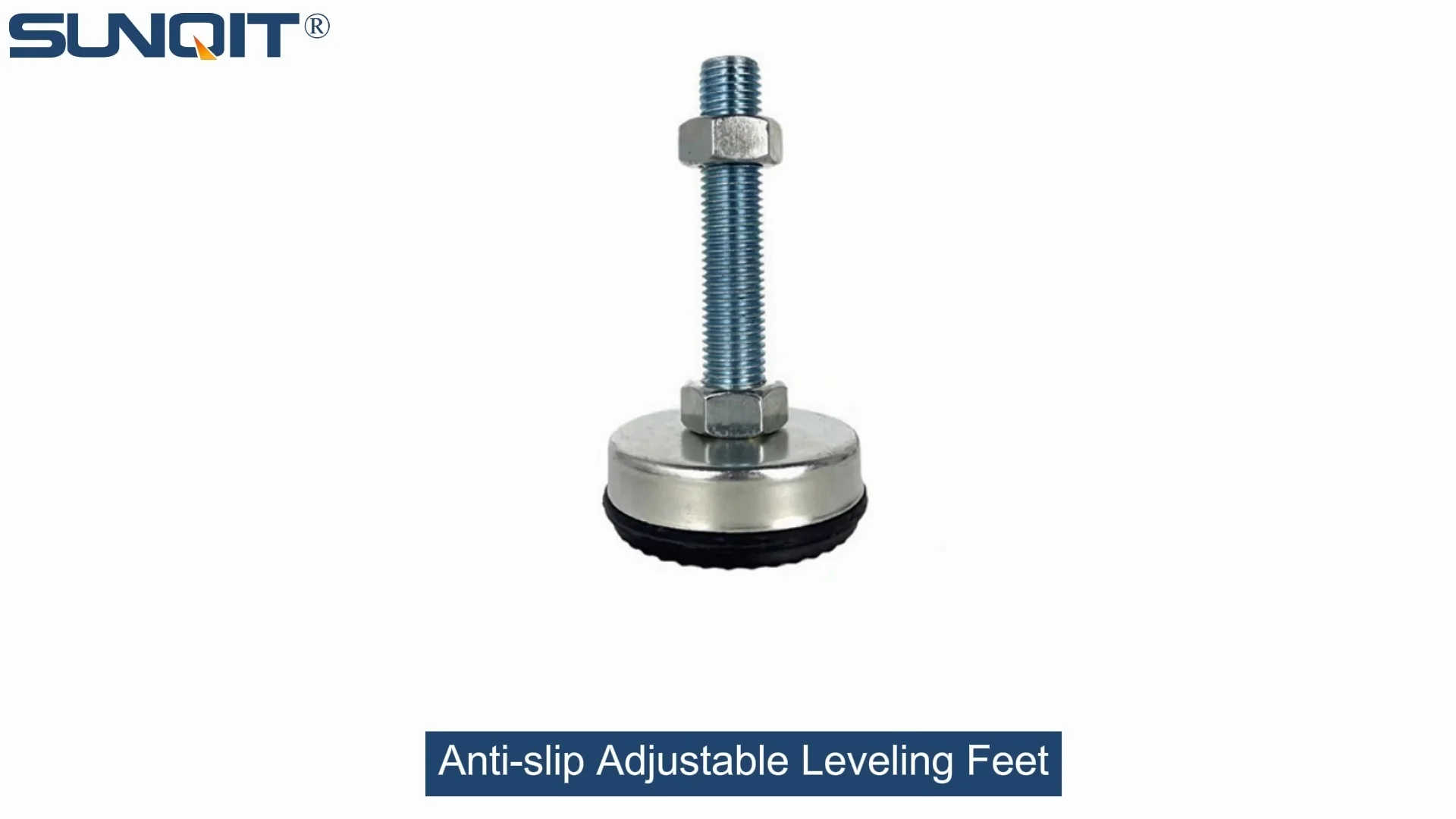
Anti-slip Adjustable Leveling Feet
Anti-slip Adjustable Leveling Feet are designed to keep machines level when placed on uneven or sloped ground, the rubber base will prevent product slip during work.
The Hidden Risk in Your Warehouse: Unstable Flow Racks
Walk into any busy warehouse or manufacturing facility, and you'll likely see flow racks hard at work. These unsung heroes of material handling keep products moving smoothly from storage to assembly lines, ensuring that workers have quick access to the parts they need. But beneath their seemingly sturdy exterior, flow racks can harbor a silent danger: instability. Imagine a scenario where a flow rack, loaded with heavy components, starts to wobble slightly. At first, it's barely noticeable—maybe a worker brushes past it and doesn't think twice. But over time, that instability grows. A wheel jams on the roller track, causing a product to shift. A floor, uneven from years of forklift traffic, tilts the rack just enough to throw off its balance. Then, one day, it happens: a box slides off, crashing to the ground. Or worse, a worker trips over a protruding foot of the rack, leading to a painful injury. These aren't just hypothetical situations—they're daily risks in facilities where flow rack stability is overlooked.
In the world of lean system implementation, where efficiency and safety go hand in hand, even small inefficiencies or hazards can derail productivity. A wobbly flow rack isn't just a nuisance; it's a threat to both your team's well-being and your bottom line. Damaged products, worker downtime, and potential OSHA violations are just the tip of the iceberg. The good news? There's a simple, often-overlooked solution that can transform these unstable structures into pillars of reliability: anti-slip adjustable leveling feet.
What Are Anti-Slip Adjustable Leveling Feet, and Why Do They Matter?
At first glance, anti-slip adjustable leveling feet might seem like components—small, metal or plastic parts that attach to the bottom of a flow rack. But their impact on operational safety is anything but minor. These feet are designed to do two critical things: level the rack on uneven surfaces and prevent it from slipping or sliding, even under heavy loads. Unlike fixed feet, which offer no flexibility, adjustable models let you tweak the height of each foot individually. This means you can compensate for dips, bumps, or slants in the floor, ensuring that the entire rack sits perfectly flat. The anti-slip feature, often a rubber or textured base, adds an extra layer of security by gripping the floor and resisting movement caused by vibrations, accidental bumps, or the weight of shifting products.
Think of them as the "foundation" of your flow rack. Just as a house needs a solid foundation to stand strong, a flow rack needs stable feet to support its load and keep operations running safely. Without them, even the most well-designed flow rack—equipped with smooth roller tracks and durable materials—can become a liability. In fact, according to a 2023 report by the National Institute for Occupational Safety and Health (NIOSH), nearly 20% of warehouse injuries related to material handling equipment stem from unstable storage structures, many of which could have been prevented with proper leveling and anti-slip solutions.

How Anti-Slip Adjustable Leveling Feet Work: A Closer Look
Let's break down the mechanics of these essential components. Most anti-slip adjustable leveling feet consist of three main parts: a threaded stem, a base plate, and an anti-slip pad. The threaded stem screws into a mounting hole on the bottom of the flow rack's frame. By rotating the stem, you can raise or lower the foot, adjusting the height to match the floor's contours. The base plate distributes the rack's weight evenly across the floor, reducing pressure points that could cause sinking or tilting. The anti-slip pad, usually made of rubber or a high-friction polymer, creates a strong bond between the foot and the floor, preventing lateral movement.
What makes these feet so effective is their adaptability. Warehouses rarely have perfectly level floors—years of heavy equipment use, temperature fluctuations, and even minor structural shifts can create uneven surfaces. A flow rack with fixed feet might rock back and forth on these uneven spots, putting stress on the frame and increasing the risk of collapse. Anti-slip adjustable feet, however, act like tiny shock absorbers, absorbing the inconsistencies of the floor and keeping the rack steady. This adaptability is especially crucial for flow racks that are moved or reconfigured frequently, as part of a dynamic lean system. Whether you're rearranging your warehouse layout to optimize workflow or shifting a rack to accommodate a new product line, adjustable feet ensure that stability isn't compromised.
Another key feature is their load-bearing capacity. High-quality anti-slip adjustable leveling feet are engineered to support heavy weights—often up to 1,000 pounds per foot or more. This means they can handle the demands of fully loaded flow racks, even when stacked with dense materials like metal components or industrial parts. The combination of adjustability, load support, and anti-slip grip makes them an indispensable tool for maintaining a safe work environment.

The Top Benefits of Upgrading to Anti-Slip Adjustable Leveling Feet
The decision to invest in anti-slip adjustable leveling feet for your flow racks isn't just about compliance—it's about protecting your team, your products, and your productivity. Let's explore the most impactful benefits these components bring to your operation.
1. Reduced Risk of Workplace Injuries
Worker safety is the most critical advantage. A stable flow rack is less likely to tip, wobble, or slide, reducing the risk of trips, falls, and crush injuries. For example, if a flow rack is unlevel, items on the roller track might get stuck or slide off unexpectedly, potentially hitting a worker below. Anti-slip feet keep the rack anchored, ensuring that products move smoothly and predictably along the roller track, without sudden shifts that could endanger nearby employees.
Worker safety is the most critical advantage. A stable flow rack is less likely to tip, wobble, or slide, reducing the risk of trips, falls, and crush injuries. For example, if a flow rack is unlevel, items on the roller track might get stuck or slide off unexpectedly, potentially hitting a worker below. Anti-slip feet keep the rack anchored, ensuring that products move smoothly and predictably along the roller track, without sudden shifts that could endanger nearby employees.
2. Minimized Product Damage
Unstable flow racks are a nightmare for product integrity. When a rack wobbles, items can collide with each other, scratch, or break. This is especially costly for delicate goods like electronics or precision parts. Anti-slip adjustable feet keep the rack steady, so products glide along the roller track without jostling, reducing scrap rates and saving your company from unnecessary losses. In one manufacturing plant we worked with, upgrading to these feet cut product damage from flow racks by 40% in just six months.
Unstable flow racks are a nightmare for product integrity. When a rack wobbles, items can collide with each other, scratch, or break. This is especially costly for delicate goods like electronics or precision parts. Anti-slip adjustable feet keep the rack steady, so products glide along the roller track without jostling, reducing scrap rates and saving your company from unnecessary losses. In one manufacturing plant we worked with, upgrading to these feet cut product damage from flow racks by 40% in just six months.
3. Extended Flow Rack Lifespan
Instability doesn't just harm people and products—it also takes a toll on the flow rack itself. Constant wobbling puts stress on the frame, joints, and roller track components, leading to premature wear and tear. Over time, this can weaken the structure, requiring expensive repairs or replacements. By keeping the rack level and stable, anti-slip adjustable feet distribute weight evenly, reducing strain on critical components and extending the rack's lifespan by years.
Instability doesn't just harm people and products—it also takes a toll on the flow rack itself. Constant wobbling puts stress on the frame, joints, and roller track components, leading to premature wear and tear. Over time, this can weaken the structure, requiring expensive repairs or replacements. By keeping the rack level and stable, anti-slip adjustable feet distribute weight evenly, reducing strain on critical components and extending the rack's lifespan by years.
4. Improved Compliance with Safety Standards
OSHA and other regulatory bodies have strict guidelines for material handling equipment, including flow racks. Unstable structures can lead to fines, inspections, and even shutdowns if safety violations are found. Anti-slip adjustable leveling feet help you meet these standards by ensuring that your flow racks are stable, secure, and fit for purpose. They also demonstrate a commitment to worker safety, which can boost employee morale and reduce turnover—a win-win for any business.
OSHA and other regulatory bodies have strict guidelines for material handling equipment, including flow racks. Unstable structures can lead to fines, inspections, and even shutdowns if safety violations are found. Anti-slip adjustable leveling feet help you meet these standards by ensuring that your flow racks are stable, secure, and fit for purpose. They also demonstrate a commitment to worker safety, which can boost employee morale and reduce turnover—a win-win for any business.

Anti-Slip Leveling Feet vs. Casters: Which Is Safer for Flow Racks?
When it comes to flow rack stability, some facilities opt for casters instead of leveling feet, assuming that mobility is more important than fixed stability. While casters and accessories have their place—for example, on turnover trolleys that need to be moved frequently—they're not always the best choice for stationary flow racks. Let's compare the two to see why anti-slip adjustable leveling feet come out on top for safety.
| Feature | Anti-Slip Adjustable Leveling Feet | Casters and Accessories |
|---|---|---|
| Primary Function | Stability and leveling on uneven floors; prevents slipping | Mobility; allows easy movement of the rack |
| Safety in Stationary Use | High: No risk of unintended movement; anti-slip pad grips floor | Medium-Low: Even with brakes, casters can shift under heavy loads or vibrations |
| Weight Distribution | Excellent: Base plate spreads weight evenly, reducing floor damage | Limited: Small wheel surface area can concentrate weight, causing floor indentations |
| Adaptability to Uneven Floors | High: Adjustable height compensates for dips and bumps | Low: Wheels can get stuck or cause rack to rock on uneven surfaces |
| Risk of Tip-Over | Very Low: Low center of gravity and stable base | Higher: Elevated position and potential for wheel lock failure increase tip risk |
The table highlights a clear trend: while casters offer mobility, they compromise stability in stationary applications. For flow racks that stay in one place for extended periods—feeding parts to an assembly line or storing finished goods—anti-slip adjustable leveling feet are the safer choice. They eliminate the risk of accidental movement, even in high-traffic areas where forklifts or workers might bump into the rack. Plus, their ability to level the rack ensures that the roller track operates smoothly, preventing product jams and reducing the need for manual intervention (which itself is a safety risk).
Installing Anti-Slip Adjustable Leveling Feet: A Step-by-Step Guide
Upgrading your flow racks with anti-slip adjustable leveling feet is a straightforward process that can be completed with basic tools. Here's a step-by-step guide to ensure a safe and effective installation:
1. Prepare the Flow Rack
Start by emptying the flow rack completely. Removing all products reduces the weight and makes it easier to adjust the feet. If the rack is too heavy to move manually, use a forklift or pallet jack to lift it slightly, ensuring that the area around the rack is clear of workers and obstacles.
Start by emptying the flow rack completely. Removing all products reduces the weight and makes it easier to adjust the feet. If the rack is too heavy to move manually, use a forklift or pallet jack to lift it slightly, ensuring that the area around the rack is clear of workers and obstacles.
2. Remove Existing Feet or Casters
If your rack currently has fixed feet or casters, unscrew them from the frame using a wrench or socket set. Be sure to support the rack with blocks or jack stands while removing old components to prevent it from tipping.
If your rack currently has fixed feet or casters, unscrew them from the frame using a wrench or socket set. Be sure to support the rack with blocks or jack stands while removing old components to prevent it from tipping.
3. Clean Mounting Holes
Use a wire brush or compressed air to clean debris from the mounting holes on the rack's frame. This ensures a tight, secure fit for the new leveling feet.
Use a wire brush or compressed air to clean debris from the mounting holes on the rack's frame. This ensures a tight, secure fit for the new leveling feet.
4. Install the Leveling Feet
Screw the threaded stem of each anti-slip adjustable leveling foot into the mounting holes. Hand-tighten them first, then use a wrench to secure them firmly—be careful not to over-tighten, as this could strip the threads.
Screw the threaded stem of each anti-slip adjustable leveling foot into the mounting holes. Hand-tighten them first, then use a wrench to secure them firmly—be careful not to over-tighten, as this could strip the threads.
5. Level the Rack
Lower the rack onto the new feet. Use a spirit level to check for evenness across the top of the rack. If one side is higher, adjust the corresponding foot by rotating the stem clockwise to raise it or counterclockwise to lower it. Repeat until the rack is perfectly level from front to back and side to side.
Lower the rack onto the new feet. Use a spirit level to check for evenness across the top of the rack. If one side is higher, adjust the corresponding foot by rotating the stem clockwise to raise it or counterclockwise to lower it. Repeat until the rack is perfectly level from front to back and side to side.
6. Test Stability
Once leveled, push gently on different parts of the rack to test for wobbling. If it feels stable, gradually reload the rack with products, checking periodically to ensure the feet maintain their position. If you notice any movement, recheck the leveling and tighten the feet as needed.
Once leveled, push gently on different parts of the rack to test for wobbling. If it feels stable, gradually reload the rack with products, checking periodically to ensure the feet maintain their position. If you notice any movement, recheck the leveling and tighten the feet as needed.
Pro tip: For extra security, mark the position of each foot with a permanent marker after leveling. This makes it easy to reset them if the rack is moved or the feet are accidentally adjusted.
Maintaining Your Anti-Slip Adjustable Leveling Feet: Long-Term Safety
Installing anti-slip adjustable leveling feet isn't a "set it and forget it" solution. Like any component in your warehouse, they require regular maintenance to ensure they continue performing at their best. Here's how to keep them in top shape:
Regular Inspections
Schedule monthly checks of your flow racks' leveling feet. Look for signs of wear, such as cracks in the base plate, damage to the anti-slip pad, or loose threads on the stem. If the anti-slip pad is worn smooth, replace it immediately—without that friction, the foot can't grip the floor effectively.
Schedule monthly checks of your flow racks' leveling feet. Look for signs of wear, such as cracks in the base plate, damage to the anti-slip pad, or loose threads on the stem. If the anti-slip pad is worn smooth, replace it immediately—without that friction, the foot can't grip the floor effectively.
Cleaning
Dirt, oil, and debris can accumulate under the base plate, reducing the anti-slip pad's effectiveness. Every quarter, lift the rack slightly (using a jack or forklift) and clean under the feet with a damp cloth. For stubborn grime, use a mild detergent—avoid harsh chemicals that could degrade the rubber pad.
Dirt, oil, and debris can accumulate under the base plate, reducing the anti-slip pad's effectiveness. Every quarter, lift the rack slightly (using a jack or forklift) and clean under the feet with a damp cloth. For stubborn grime, use a mild detergent—avoid harsh chemicals that could degrade the rubber pad.
Tightening
Vibrations from nearby machinery or frequent product movement can loosen the feet over time. During inspections, use a wrench to retighten any feet that feel loose. This simple step can prevent major stability issues down the line.
Vibrations from nearby machinery or frequent product movement can loosen the feet over time. During inspections, use a wrench to retighten any feet that feel loose. This simple step can prevent major stability issues down the line.
replace When Necessary
Even with proper maintenance, leveling feet will eventually wear out. Most manufacturers recommend replacing them every 3–5 years, depending on usage. If you notice significant damage (e.g., bent stems, cracked base plates), replace the feet immediately rather than trying to repair them—compromised components put your entire operation at risk.
Even with proper maintenance, leveling feet will eventually wear out. Most manufacturers recommend replacing them every 3–5 years, depending on usage. If you notice significant damage (e.g., bent stems, cracked base plates), replace the feet immediately rather than trying to repair them—compromised components put your entire operation at risk.
Real-World Impact: How One Facility Reduced Injuries with Leveling Feet
Case Study: ABC Manufacturing Plant
ABC Manufacturing, a mid-sized automotive parts supplier in Ohio, was struggling with frequent incidents involving their flow racks. Workers had reported several near-misses—boxes sliding off tilted racks, and one employee had even twisted their ankle after tripping over a wobbly rack leg. The plant manager, Maria, knew something needed to change. After reviewing incident reports, she noticed that most issues were concentrated in the assembly area, where flow racks loaded with heavy metal components were in constant use.
Maria's team conducted a floor inspection and discovered that years of forklift traffic had created small dips and bumps in the concrete, causing the flow racks to rock. At the time, the racks were equipped with basic fixed feet, which offered no way to compensate for the uneven floor. After researching solutions, Maria decided to upgrade to anti-slip adjustable leveling feet. Within a week, the new feet were installed, and the racks were leveled.
The results were immediate. In the six months following the upgrade, there were zero incidents related to unstable flow racks. Workers reported feeling more confident when loading and unloading products, and the plant saw a 25% reduction in product damage. "It was a small investment that made a huge difference," Maria said. "We're not just avoiding injuries—we're also saving money on scrap and improving overall efficiency. It's a classic example of how a lean system isn't just about speed, but about smart, safe design."
Choosing the Right Supplier for Anti-Slip Adjustable Leveling Feet
Not all anti-slip adjustable leveling feet are created equal. To ensure you're getting a quality product that will enhance safety, it's important to choose a reputable supplier. Here are key factors to consider:
Product Quality
Look for feet made from durable materials like stainless steel or heavy-duty plastic. The anti-slip pad should be thick and made from a high-friction material that won't wear down quickly. Ask suppliers for test reports or certifications that verify load-bearing capacity and slip resistance.
Look for feet made from durable materials like stainless steel or heavy-duty plastic. The anti-slip pad should be thick and made from a high-friction material that won't wear down quickly. Ask suppliers for test reports or certifications that verify load-bearing capacity and slip resistance.
Customization Options
Your flow racks may have unique mounting requirements or load capacities. A good supplier will offer a range of sizes, thread types, and base plate designs to fit your specific needs. Some even provide custom solutions for non-standard rack frames.
Your flow racks may have unique mounting requirements or load capacities. A good supplier will offer a range of sizes, thread types, and base plate designs to fit your specific needs. Some even provide custom solutions for non-standard rack frames.
Industry Experience
Choose a supplier with a track record in the material handling industry. They'll understand the unique challenges of warehouse environments and can recommend the best feet for your application. Look for reviews or testimonials from other customers in your field.
Choose a supplier with a track record in the material handling industry. They'll understand the unique challenges of warehouse environments and can recommend the best feet for your application. Look for reviews or testimonials from other customers in your field.
Technical Support
Installing leveling feet can be tricky if you're not familiar with the process. A reliable supplier will offer technical support, including installation guides, videos, or even on-site assistance if needed. This ensures that you're using the product correctly and getting the maximum safety benefit.
Installing leveling feet can be tricky if you're not familiar with the process. A reliable supplier will offer technical support, including installation guides, videos, or even on-site assistance if needed. This ensures that you're using the product correctly and getting the maximum safety benefit.
Conclusion: Safety Starts with the Right Foundation
In the fast-paced world of manufacturing and warehousing, it's easy to focus on big-ticket items like automated conveyor systems or high-tech inventory software. But when it comes to operational safety, the smallest components often make the biggest difference. Anti-slip adjustable leveling feet may not grab headlines, but they're the unsung guardians of your flow racks, keeping products secure, workers safe, and your lean system running smoothly.
By investing in these simple yet effective components, you're not just checking a box on a safety checklist—you're creating a workplace where employees feel valued and protected. And in the end, that's the foundation of any successful operation: a team that trusts their tools, their environment, and their leadership to prioritize their well-being. So, take a closer look at your flow racks today. Are they standing on solid ground? With anti-slip adjustable leveling feet, the answer can be a resounding yes.