- Company Articles
- Products and Technology
- Product knowledge
- Anti-Slip Adjustable Leveling Feet for Food Industry Workbenches: Hygiene Considerations

Anti-Slip Adjustable Leveling Feet for Food Industry Workbenches: Hygiene Considerations
Related Product
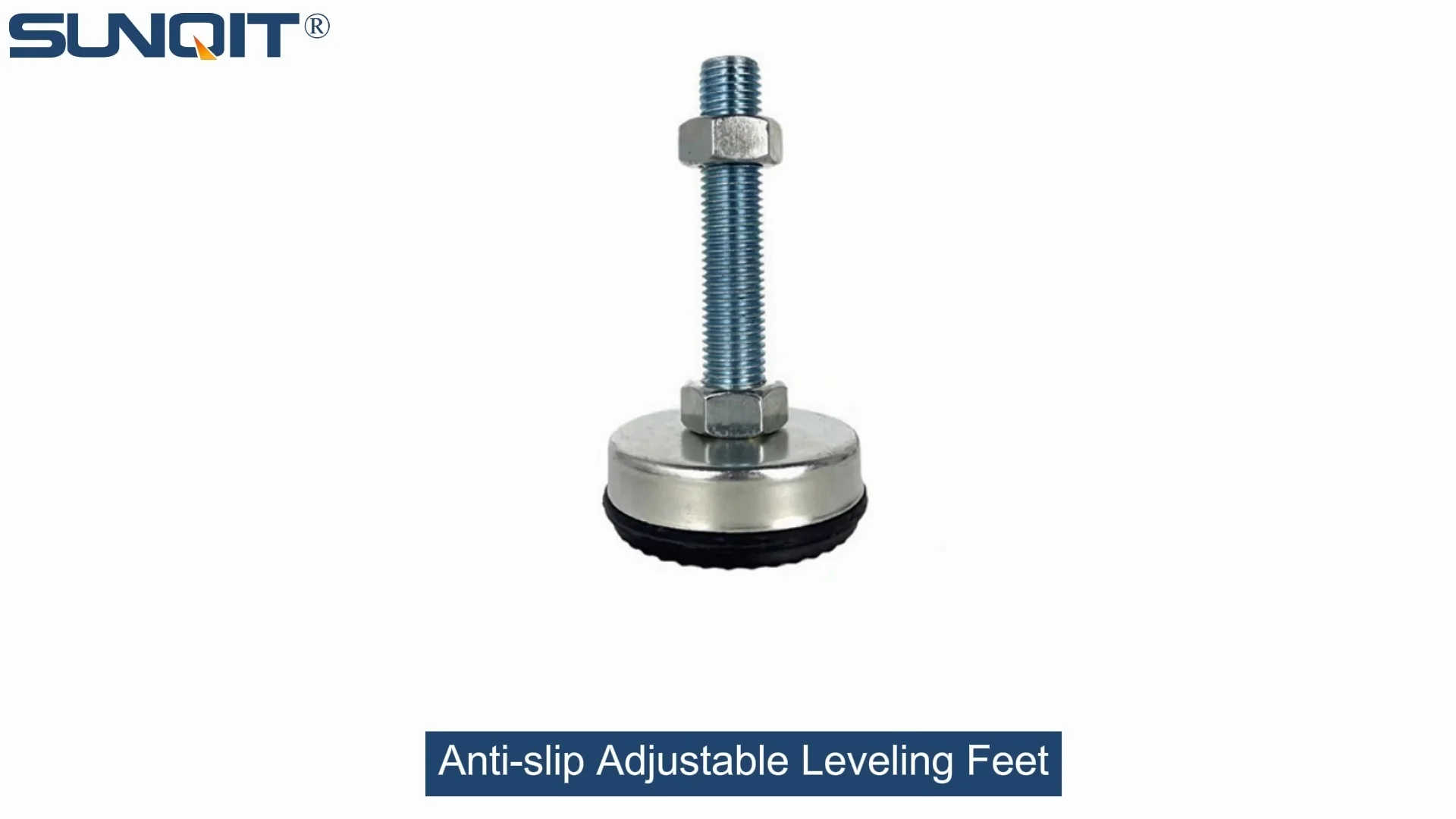
Anti-slip Adjustable Leveling Feet
Anti-slip Adjustable Leveling Feet are designed to keep machines level when placed on uneven or sloped ground, the rubber base will prevent product slip during work.
Walk into any food processing facility—whether it's a bustling bakery, a busy meatpacking plant, or a high-tech dairy operation—and you'll quickly notice a common thread: the workbenches. They're the unsung heroes of the production line, holding everything from mixing bowls to packaging equipment, raw ingredients to finished products. But here's the thing: not all workbenches are created equal. And one small component often gets overlooked, even though it can make or break both productivity and safety: the feet.
I've spent over a decade consulting with food manufacturers, and I've lost count of how many times a "minor" issue with workbench stability snowballed into bigger problems. A few months back, I visited a family-owned sauce factory where the production manager, Raj, was tearing his hair out. "We just can't keep the workbenches steady," he told me, gesturing to a wobbly station where workers were bottling hot sauce. "The floors here are uneven from years of heavy equipment, and every time someone leans on the bench, it shifts. Last week, a bottle spilled, and we had to shut down the line for two hours to sanitize. Not to mention the inspector flagged the gaps under the legs—said they're collecting crumbs and water. We're drowning in small fixes."
Sound familiar? If you've ever managed a food facility, you know the drill. Hygiene and stability aren't just box-checking exercises—they're the foundation of safe, efficient production. And that's where anti-slip adjustable leveling feet come in. These tiny but mighty components might not look like much, but they're the difference between a smooth, compliant operation and a never-ending cycle of spills, inspections, and stress. Let's dive into why they matter, what to look for, and how to choose the right ones for your workbench.
Why "Feet First" Thinking Saves Food Facilities from Headaches
First, let's get one thing straight: workbenches don't just "sit" on the floor. In food production, they're subjected to constant movement—workers leaning, equipment vibrating, carts bumping into them. Add in uneven floors (common in older facilities or those with concrete that's settled over time) and frequent cleaning with high-pressure hoses or harsh sanitizers, and you've got a recipe for instability. And instability, in this industry, isn't just annoying—it's dangerous.
The Hidden Costs of Wobbly Workbenches
A wobbly workbench might seem like a minor nuisance, but the costs add up fast. Let's break it down:
- Product waste: Spilled ingredients, broken containers, or misaligned packaging—Raj's sauce factory lost over $500 in product in one month alone due to bench wobbles.
- Sanitation risks: Gaps between the bench legs and the floor trap debris, water, and bacteria. Even a tiny crumb can attract pests or harbor pathogens like Listeria or E. coli . Inspectors don't miss these gaps—and neither do food safety audits.
- Worker frustration (and turnover): Trying to perform precise tasks on an unsteady surface is exhausting. Studies show that workers in unstable environments are 30% more likely to report fatigue, which leads to slower production and higher error rates. Over time, that frustration drives turnover—a huge cost for any business.
- Regulatory fines: In the U.S., the FDA's Food Safety Modernization Act (FSMA) mandates that food contact surfaces (including workbenches) be "easily cleanable and maintainable." Gaps, cracks, or instability can lead to violations, which average $19,000 per incident for small to mid-sized facilities, according to FDA data.
The worst part? Most facilities don't realize they're losing money until they fix the problem. Raj's factory installed anti-slip adjustable leveling feet six weeks after our conversation, and he called me last week to report: "Spills are down 80%, the inspector signed off without a single note, and the team says the benches feel 'rock solid.' We're saving hours every week just from not stopping to adjust or clean under the legs."
Hygiene 101: Why Food-Grade Leveling Feet Are Non-Negotiable
In food production, "hygiene" isn't just about wiping down surfaces. It's about designing every part of the workspace to prevent contamination. That includes the feet of your workbench. Let's talk about the specific hygiene challenges these feet solve—and why generic hardware store "levelers" won't cut it.
Gaps, Cracks, and Crevices: The Enemy of Cleanliness
Imagine you're cleaning a workbench at the end of a shift. You spray it down with sanitizer, wipe the surface, and feel pretty good—until you kneel down and notice the gap between the bench leg and the floor. It's only a quarter-inch wide, but it's packed with flour dust, sauce splatters, and tiny bits of food. You grab a toothbrush (yes, really—many facilities resort to this) and try to scrub it out, but the space is too tight. By the next day, that gap is a breeding ground for mold or bacteria.
Anti-slip adjustable leveling feet solve this by creating a tight, flush seal with the floor. The best models have a wide, flat base that minimizes gaps, and adjustable threads that let you "fine-tune" the height to match uneven floors. No more crumbs hiding, no more toothbrushes required. As one sanitation supervisor I worked with put it: "If you can't clean it with a sponge or a hose, it doesn't belong in a food facility."
Material Matters: Why Stainless Steel and Aluminum Are Your Best Bets
Not all leveling feet are made the same—and the material they're made of directly impacts hygiene. Let's compare the most common options:
| Material | Corrosion Resistance | Sanitizer Compatibility | Hygiene Risk (1 = Low, 5 = High) | Best For |
|---|---|---|---|---|
| Stainless Steel (304 or 316 Grade) | Excellent—resists rust and pitting from water, acids, and sanitizers | Compatible with all food-grade sanitizers (chlorine, peroxide, quats) | 1 | Wet environments (dairy, meat, seafood), high-sanitization areas |
| Aluminum (Anodized) | Good—resists corrosion but can react with acidic foods (e.g., citrus, vinegar) | Compatible with most sanitizers; avoid prolonged exposure to strong acids | 2 | Dry or low-acid environments (baking, dry goods packaging) |
| Plastic (Nylon or Polypropylene) | Poor—can crack or degrade with repeated sanitizer exposure; absorbs odors | Limited—may warp or discolor with high-heat or strong sanitizers | 4 | Temporary setups only; never recommended for permanent food contact areas |
| Zinc-Plated Steel | Poor—coating wears off, exposing steel to rust and corrosion | Not compatible with most sanitizers; coating can flake off into food | 5 | Never use in food production—major contamination risk |
Stainless steel is the gold standard here, especially 304 or 316 grade (316 is better for saltwater or high-chlorine environments, like seafood plants). It's non-porous, so bacteria can't hide in tiny cracks, and it stands up to daily hosing and harsh sanitizers. Aluminum is a solid runner-up for dry or low-acid areas, but I'd steer clear of plastic or zinc-plated options unless you want to be replacing feet every few months (and dealing with potential contamination in the meantime).
Pro Tip: When shopping for leveling feet, look for the "food-grade" label, but don't stop there. Ask suppliers for certification that the material meets FDA 21 CFR 177.2600 (for food contact surfaces) or EU 10/2011 standards. A reputable supplier will have no problem providing this documentation—if they hesitate, walk away.

Design Features That Make or Break Food-Grade Leveling Feet
Okay, so you're sold on stainless steel or aluminum—great. But not all metal leveling feet are created equal. The design features matter just as much as the material. Let's break down the must-haves for food industry workbenches.
Anti-Slip Bases: No More Slipping and Sliding
"Anti-slip" might sound like a no-brainer, but not all bases are effective. The best ones have a textured, rubberized pad (made from food-safe silicone or nitrile) that grips the floor even when wet. Avoid smooth metal bases—they'll slide on damp concrete, defeating the purpose. Raj's factory initially tried metal-only feet, and he laughed when he told me, "They worked… until we mopped the floor. Then the benches turned into ice skates. Not ideal when you're dealing with hot sauce."
Look for bases with a diameter of at least 2.5 inches—wider bases distribute weight better and reduce the risk of sinking into soft floors (like some types of industrial tile). And make sure the pad is replaceable—over time, rubber wears down, and you don't want to replace the entire foot when only the pad is worn.
Adjustability: One Size Doesn't Fit All Floors
Remember those uneven floors we talked about? Adjustable leveling feet let you compensate for dips and bumps without shimming (which creates more gaps!). The key here is the thread length—look for feet that adjust at least 1.5 inches (38mm). Why? Because even a small slope in the floor can add up over the length of a workbench. A 6-foot bench with a ½-inch slope at one end will need that full adjustment range to stay level.
Also, opt for feet with lock nuts. These small nuts tighten against the workbench leg once you've set the height, preventing the foot from loosening over time (a common problem with vibration from mixers or conveyors). Raj's team skipped the lock nuts initially, and within a week, the feet had started to "walk" loose. "We were adjusting them every morning," he groaned. "Lock nuts were a game-changer."
Sealed Threads: Keeping Debris Out of the Gears
Here's a detail most people miss: the threads on adjustable feet. If they're exposed, they'll collect flour, sugar, or sauce, which can gum up the works and make adjustment impossible. The best food-grade feet have a sealed design—either a rubber boot that covers the threads or a telescoping sleeve—to keep debris out. Think of it like a rain jacket for your threads: no mess, no jams, no frustration.

Beyond the Feet: How Workbench Design Impacts Leveling Success
Leveling feet are critical, but they're only part of the equation. The workbench itself—its frame, materials, and even its purpose—plays a role in how well the feet perform. Let's talk about two common workbench types in food facilities and how to pair them with the right feet.
Lean Pipe Workbenches: Flexibility Meets Stability
Lean pipe workbenches (also called "kitchen rail" or "flexible pipe" workbenches) are popular in food production because they're modular—you can add shelves, hooks, or bins as needed. They're made from metal pipes (often stainless steel or aluminum) and joints, which makes them lightweight but sturdy. But here's the catch: their lightweight design means they're more prone to wobbling if the feet aren't up to par.
For lean pipe workbenches, I recommend heavy-duty stainless steel leveling feet with a wide base (3 inches or more) to counteract the bench's lower weight. The joints in lean pipe systems can also add slight flex, so lock nuts are non-negotiable—you don't want the feet shifting as the bench moves. A few months back, a craft brewery in Portland installed lean pipe workbenches for canning, and they paired them with cheap plastic feet. "The benches looked great, but they swayed every time the canning line started," the operations manager told me. "We switched to stainless steel feet with 3-inch bases, and now they're rock steady."
Solid-Top Workbenches: Heavy-Duty Needs Heavy-Duty Feet
Solid-top workbenches (often made from stainless steel or phenolic resin) are common in areas with heavy equipment—think meat grinders, dough mixers, or industrial scales. These benches are heavy, which means their feet need to support more weight (sometimes 500+ pounds). For these, look for feet with a high weight capacity (at least 200 pounds per foot) and a reinforced base to prevent sinking into the floor.
Also, consider the height of the bench. Taller workbenches (36 inches or more) are more prone to tipping, so wider feet (and sometimes additional bracing) are a must. A chocolate factory I worked with had a 40-inch-tall bench for tempering chocolate, and they used standard feet. "Every time someone leaned on the edge, it felt like it was going to tip," the owner said. We swapped in feet with 4-inch bases and added cross-bracing, and the difference was night and day.

Installation and Maintenance: Keeping Feet (and Workbenches) in Top Shape
You've picked the perfect leveling feet—now what? Installation and maintenance are just as important as the product itself. Even the best feet will fail if they're installed incorrectly or neglected.
Installation: Measure Twice, Drill Once
First, check the workbench legs. Most come with pre-drilled holes for feet, but if yours don't, you'll need to drill them. Use a drill bit that matches the thread size of the feet (most food-grade feet use ⅜-inch or ½-inch threads). Pro tip: Apply a drop of food-safe thread locker (like Loctite 243) to the threads before screwing in the feet—it adds extra security without making future removal impossible.
Next, level the bench. Use a spirit level (digital levels are more accurate for large benches) and adjust each foot until the bubble is centered. Tighten the lock nuts, then give the bench a good shake—if it wobbles, double-check the level. Raj's team rushed this step initially, and the bench was still slightly off-kilter. "We skipped the level and just 'eyeballed' it," he admitted. "Big mistake. Take the extra five minutes—it's worth it."
Maintenance: A Little Care Goes a Long Way
Leveling feet are low-maintenance, but they're not no-maintenance. Here's a quick weekly checklist to keep them in shape:
- Inspect the anti-slip pad: Look for cracks, tears, or worn spots. replace if needed (pads cost $5–$10 each—cheap insurance).
- Tighten lock nuts: Vibration can loosen them over time. A quick twist with a wrench takes 10 seconds per foot.
- Clean the threads: Wipe them down with a damp cloth to remove any debris. If they're sealed, check the boot for cracks.
- Re-level if needed: Floors can shift slightly with temperature changes or heavy equipment. A monthly level check prevents big issues.
Raj's team now does this checklist every Friday afternoon during their end-of-week cleanup. "It takes 15 minutes total, and we haven't had a single issue since," he said. "Preventive maintenance beats crisis mode any day."
Compliance: Checking the Boxes for Inspectors
At the end of the day, no matter how stable or clean your workbench is, it needs to pass inspection. Let's talk about the key regulations and how leveling feet help you comply.
FDA and FSMA: The Basics
The FDA's Food Safety Modernization Act (FSMA) requires that "all plant equipment and utensils shall be so designed and constructed to be adequately cleanable, and to be maintained in a sanitary condition." That means no gaps, no porous materials, and no areas where bacteria can hide—exactly what food-grade leveling feet address.
Inspectors will check for three things: (1) Can the workbench be easily cleaned? (2) Is it stable enough to prevent spills? (3) Are there any harborage points for pests or bacteria? Anti-slip adjustable feet with sealed designs, wide bases, and stainless steel construction check all three boxes.
Third-Party Audits: BRC, SQF, and Beyond
If your facility sells to major retailers or restaurants, you might also face third-party audits (like BRCGS or SQF). These are even stricter than FDA standards. For example, BRCGS Issue 9 requires that "equipment shall be designed to prevent product contamination from lubricants, coolants, or other foreign materials." That means no exposed threads (which can collect lubricant) and no plastic parts that might shed particles—another win for sealed, stainless steel feet.
Real Talk: Inspectors notice the details. I once sat in on an SQF audit where the inspector spent 10 minutes examining a workbench's feet. "These are 304 stainless, right?" he asked, running his finger along the base. "And the threads are sealed? Good. Last facility I visited had zinc-plated feet with exposed threads—found mold in the crevices. You're doing it right." That small moment of validation made all the difference for the plant manager. Don't skimp on the details—they're what set compliant facilities apart.
Choosing the Right Supplier: It's About More Than Price
Okay, you're ready to buy—now where do you start? Not all suppliers are created equal, and in the food industry, cutting corners on components can cost you big time. Here's what to look for in a leveling feet supplier:
Food-Grade Expertise
Avoid general hardware suppliers—they might sell "stainless steel feet," but they won't know the difference between 304 and 316 grade, or why sealed threads matter. Look for suppliers who specialize in food processing equipment or industrial workbenches. They'll ask the right questions: "What's your sanitizing process?" "How much weight does the bench need to support?" "Is the environment wet or dry?" A good supplier will help you choose the right foot, not just sell you the most expensive one.
Documentation and Certifications
Ask for material certificates (like mill test reports for stainless steel) and compliance documents (FDA, EU 10/2011). Reputable suppliers will have these on hand and happy to share them. If a supplier says, "Oh, these are 'food-grade'—trust us," walk away. No documentation = no compliance.
Customer Support (Because Mistakes Happen)
Even with the best planning, you might order the wrong size or need help with installation. A good supplier offers technical support—phone, email, or even video calls to walk you through it. Raj ordered feet with a ⅜-inch thread, only to realize his workbench legs had ½-inch holes. "The supplier sent adapters overnight at no extra charge," he said. "That kind of service matters."
Final Thoughts: Small Components, Big Impact
Anti-slip adjustable leveling feet might not be the sexiest part of your food production line, but they're the unsung heroes. They keep your workbenches stable, your facility compliant, and your team safe. Raj's sauce factory is now running smoother than ever—spills are down, inspections are a breeze, and the team no longer dreads adjusting wobbly benches. "I never thought I'd get excited about feet," he joked, "but these things? They're worth every penny."
So, if you're dealing with wobbly workbenches, gaps that won't stay clean, or inspectors who keep flagging the same issues, take a closer look at your feet. They might just be the solution you've been missing. And remember: in food production, the smallest details often make the biggest difference. Invest in the right feet today, and you'll spend tomorrow focusing on what really matters—making great food.