- Company Articles
- Products and Technology
- Product knowledge
- Anti-Slip Adjustable Leveling Feet for Heavy Machinery Support

Anti-Slip Adjustable Leveling Feet for Heavy Machinery Support
Related Product
Anti-slip Adjustable Leveling Feet
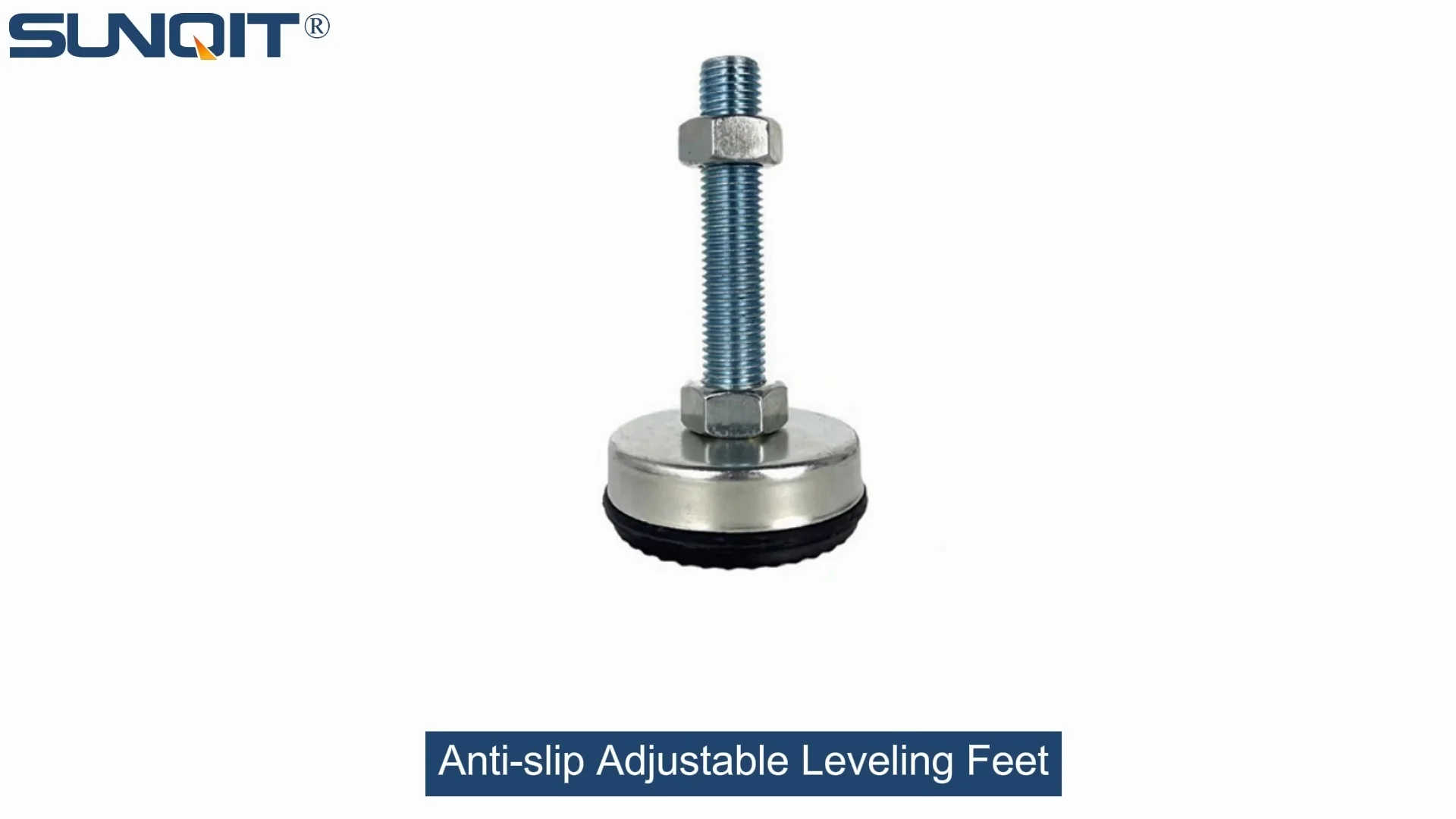
Anti-slip Adjustable Leveling Feet are designed to keep machines level when placed on uneven or sloped ground, the rubber base will prevent product slip during work.
Walk into any factory, workshop, or manufacturing plant, and your eyes might be drawn to the big, impressive machines—robotic arms whirring, assembly lines churning, conveyor belts moving with precision. But if you look a little closer, beneath those giants of industry, you'll find something small but mighty: the components that keep everything steady, safe, and efficient. Today, we're shining a light on one of those unsung heroes: anti-slip adjustable leveling feet. These unassuming devices might not grab headlines, but they're the backbone of stable, productive work environments. Let's dive into why they matter, how they work, and why every heavy machinery setup needs them.
What Are Anti-Slip Adjustable Leveling Feet, Anyway?
At their core, anti-slip adjustable leveling feet are exactly what their name suggests: small, sturdy components designed to support heavy machinery by adjusting to uneven surfaces and preventing slipping. Think of them as the "feet" of your equipment—except these feet can grow, shrink, and grip like a vice to keep everything balanced. They're typically made from durable materials like steel, aluminum, or reinforced plastic, with a threaded stem that screws into the machinery's base. The bottom often features a rubber or non-slip pad that digs into the floor, creating friction that stops unwanted movement.
But why "adjustable"? Floors in industrial spaces are rarely perfect. Over time, concrete can crack, settle, or develop slopes. Even new facilities might have slight unevenness that, under a machine weighing thousands of pounds, becomes a big problem. Adjustable leveling feet let you tweak the height of each "foot" independently, ensuring the machine sits perfectly level, no matter the floor's quirks. And the "anti-slip" part? That's about safety. Heavy machinery that shifts or slides isn't just a productivity killer—it's a hazard. A good set of leveling feet with a strong grip keeps the machine rooted, protecting workers and equipment alike.
Fun fact: A single heavy-duty anti-slip adjustable leveling foot can support up to 10,000 pounds or more. That's like holding up two adult elephants—all from a component smaller than a coffee mug!
Why Heavy Machinery Can't Afford to Skip Anti-Slip Adjustable Leveling Feet
Imagine this: You're running a busy auto parts assembly line. The machines are humming, workers are focused, and deadlines are tight. Suddenly, you notice the main conveyor belt is wobbling. A quick check reveals the floor under one corner has a slight dip, causing the machine to tilt. Over time, that wobble leads to misaligned parts, jams, and even premature wear on the conveyor's motor. Worse, if the machine shifts enough, it could throw off the entire production flow—or, scarier, injure someone nearby. This isn't just a hypothetical scenario; it's a daily risk in facilities without proper leveling support.
Here's why anti-slip adjustable leveling feet are non-negotiable for heavy machinery:
- Safety First: A level machine is a safe machine. When equipment is balanced, there's less risk of tipping, sliding, or vibrating excessively. This protects workers from accidents and reduces the chance of costly damage to the machine itself.
- Precision Performance: Many industrial processes—like CNC machining, 3D printing, or quality inspection—require pinpoint accuracy. Even a tiny tilt can throw off measurements, leading to defective products and wasted materials. Leveling feet ensure the machine stays stable, so every cut, print, or test is spot-on.
- Longevity of Equipment: Machinery that's out of level puts uneven stress on its parts. Bearings wear faster, gears grind, and motors overheat. By keeping the machine balanced, leveling feet extend its lifespan, saving you money on repairs and replacements.
- Noise and Vibration Reduction: Unstable machinery vibrates more, which isn't just annoying—it's destructive. Vibrations can loosen bolts, damage sensitive components, and even spread to other parts of the facility. Leveling feet absorb some of that shock, keeping the peace (and the equipment) intact.

Key Features That Make a Great Anti-Slip Adjustable Leveling Foot
Not all leveling feet are created equal. When shopping for these critical components, you'll want to look for a few key features that separate the best from the rest. Let's break them down:
| Feature | Why It Matters | What to Look For |
|---|---|---|
| Non-Slip Base Material | Prevents sliding on smooth or oily floors | Rubber, polyurethane, or textured metal pads with high friction coefficients |
| Adjustable Height Range | Accommodates uneven floors and varying machinery heights | Stems with at least 1–3 inches of adjustability; easy-to-turn knobs or hex sockets |
| Load Capacity | Supports the machine's weight without bending or breaking | Choose feet rated for 1.5x the machine's weight (to account for dynamic loads) |
| Corrosion Resistance | Withstands harsh environments (oils, chemicals, moisture) | Zinc-plated steel, stainless steel, or anodized aluminum construction |
| Easy Installation | Saves time and labor during setup | Standard thread sizes (e.g., M12, M16) that fit common machinery bases; pre-drilled mounting holes |
Take, for example, a workbench in a electronics manufacturing plant. These workbenches often hold sensitive equipment like soldering stations, microscopes, or testing tools. A wobbly workbench could lead to shaky hands, misaligned solder joints, or even damaged circuit boards. By adding anti-slip adjustable leveling feet to the workbench legs, the surface stays perfectly flat, letting workers focus on precision instead of fighting instability. It's a small change that makes a huge difference in daily operations.

Anti-Slip Adjustable Leveling Feet vs. Casters: When to Choose Which
You might be wondering: If my machinery needs mobility, shouldn't I use casters instead? Casters are great for moving equipment around, but they're not always the best choice for stationary support. Here's the breakdown:
Casters (wheels mounted to machinery bases) are ideal when you need to move the machine regularly—say, a tool cart in a workshop or a mobile assembly station. They're part of the broader category of caster and accessories , which includes brakes, swivel locks, and floor protectors. But when a machine is meant to stay put for hours or days at a time, casters can be a liability. Even with brakes, casters can creep or shift under vibration, and they don't always provide the same level of stability as fixed leveling feet.
Anti-slip adjustable leveling feet , on the other hand, are designed for stationary support. They're the go-to when the machine needs to stay rooted, and precision or safety is critical. That said, some setups use a hybrid approach: leveling feet for when the machine is in use, and casters for when it needs to be moved. For example, a heavy-duty material rack might have leveling feet that can be lowered to lock it in place during loading/unloading, then raised to let the casters take over for transport.
The key is to match the component to the machine's needs. If it moves daily, casters with strong brakes might work. If it stays put and needs to be rock-solid, anti-slip adjustable leveling feet are the way to go.

How Anti-Slip Adjustable Leveling Feet Fit Into a Lean System
In today's fast-paced manufacturing world, many facilities adopt lean system principles—focused on minimizing waste, maximizing efficiency, and continuous improvement. At first glance, leveling feet might seem like a small detail in the grand scheme of lean, but they play a big role in keeping operations running smoothly.
Here's how: In a lean system, downtime is the enemy. A machine that breaks down, produces defective parts, or requires frequent adjustments eats into productivity. Anti-slip adjustable leveling feet reduce downtime by preventing the issues that come with instability—like misalignments, jams, or premature wear. They also make setup faster: when installing a new machine, adjustable feet let you level it in minutes, instead of hours of shimming or floor repair. And because they protect machinery from unnecessary stress, they extend equipment life, reducing the waste of replacing parts or entire machines.
Consider a lean production line where every second counts. If a conveyor belt is out of level, products might get stuck, causing backups. Workers have to stop, clear the jam, and restart the line—wasting time and breaking the flow. With anti-slip adjustable leveling feet under the conveyor's supports, the belt stays aligned, products move smoothly, and the line keeps humming. It's a tiny investment in lean principles that pays off in big efficiency gains.
Materials Matter: Why Aluminum and Steel Are Top Choices for Leveling Feet
When it comes to leveling feet, material choice is everything. The best options are strong, corrosion-resistant, and built to last. Two materials stand out: steel and aluminum.
Steel is the heavyweight champion. It's incredibly strong, making it perfect for supporting the heaviest machinery—think industrial presses or large CNC machines. Steel leveling feet often come with zinc plating or powder coating to resist rust, making them suitable for damp or oily environments.
Aluminum , on the other hand, is lighter but still tough. It's resistant to corrosion by nature, which is why it's popular in food processing, pharmaceuticals, or clean rooms where hygiene is key. Aluminum leveling feet are also easier to handle during installation, which can save time on the job. Plus, aluminum pairs well with aluminum profile structures—like modular workbenches or material racks made from aluminum extrusion profiles. The matching materials create a cohesive, durable setup that's both functional and visually consistent.
For example, a material rack in a food packaging plant might use aluminum leveling feet. The aluminum resists corrosion from cleaning chemicals, and the anti-slip rubber pads prevent the rack from sliding on wet floors. It's a material choice that aligns with the plant's need for durability, safety, and compliance with standards.
Installation Tips: Getting the Most Out of Your Anti-Slip Adjustable Leveling Feet
Installing anti-slip adjustable leveling feet isn't rocket science, but a few pro tips can ensure you get the best results:
- Check the Floor First: Before installing, walk around the area where the machine will sit. Note any dips, cracks, or slopes. This will help you estimate how much adjustability you'll need.
- Use a Spirit Level: A small bubble level is your best friend. Place it on the machine's surface (or workbench top) and adjust each leveling foot until the bubble is centered. Do this in both directions (front-to-back and side-to-side) for total balance.
- Tighten Securely: Once level, lock the leveling feet in place. Many models have a lock nut that screws against the machinery base to prevent the stem from unscrewing over time. Don't skip this step—vibration can loosen even the tightest threads!
- Test the Grip: Give the machine a gentle push or shake. If it moves, the anti-slip pads might not be making good contact. Clean the floor (oil or dust can reduce friction) or replace the pads if they're worn.
- Inspect Regularly: Over time, leveling feet can wear down, especially in high-traffic areas. Check them monthly for loose threads, cracked pads, or corrosion. A quick inspection can prevent big problems later.
Real-World Success Stories: How Anti-Slip Adjustable Leveling Feet Transformed Workplaces
Still not convinced these little feet make a big difference? Let's look at a few real-world examples:
Case Study 1: Automotive Plant Reduces Downtime by 30%
A major automotive manufacturer was struggling with frequent jams on their transmission assembly line. The root cause? The main conveyor belt support legs were sitting on uneven concrete, causing the belt to sag in one spot. After installing anti-slip adjustable leveling feet on each support, the belt ran perfectly level. Jams dropped by 30%, and the line's overall efficiency increased by 15%. Workers reported less frustration, and the plant saved thousands in repair costs.
Case Study 2: Electronics Workshop Improves Product Quality
A small electronics workshop was seeing high defect rates on their circuit board assemblies. Investigators found the soldering workbenches were wobbling, leading to inconsistent solder joints. Adding anti-slip adjustable leveling feet to the workbenches stabilized the surfaces. Defect rates dropped by 40%, and customer complaints nearly vanished. The workshop owner called it "the cheapest quality improvement we ever made."
Case Study 3: Warehouse Reduces Worker Injuries
A large warehouse used heavy-duty material racks to store pallets of goods. Over time, the racks had settled, causing them to lean slightly. Workers were nervous about reaching for items on the top shelves, fearing the racks might tip. Installing anti-slip adjustable leveling feet on the rack bases straightened them out. Worker confidence improved, and the warehouse saw a 50% drop in near-misses and minor injuries.
Choosing the Right Supplier: What to Look For
Not all anti-slip adjustable leveling feet are created equal, and neither are their suppliers. When shopping for these critical components, look for a supplier who offers:
- Variety: A range of sizes, load capacities, and materials to fit different machinery needs.
- Quality Testing: Products that are tested for durability, load capacity, and slip resistance. Ask for test reports or certifications if needed.
- Custom Options: Sometimes, standard leveling feet won't fit your unique setup. A good supplier can create custom sizes or materials to match your requirements.
- Expert Support: Knowledgeable staff who can help you choose the right feet for your machinery. They should ask about load weight, floor type, and environment to make tailored recommendations.
Whether you're a small workshop owner or a procurement manager at a large plant, partnering with a reliable supplier ensures you get leveling feet that perform when it matters most.
The Bottom Line: Anti-Slip Adjustable Leveling Feet Are a Must-Have
At the end of the day, anti-slip adjustable leveling feet are more than just "parts"—they're investments in safety, efficiency, and peace of mind. They keep heavy machinery stable, workers safe, and production lines running smoothly. They turn wobbly workbenches into precision stations, shaky conveyors into reliable lines, and uneven floors into non-issues.
So the next time you walk through your facility, take a moment to look down. Those small, unassuming feet under your machinery? They're the quiet heroes keeping everything moving forward. And if your equipment doesn't have them yet? It might be time to make the switch. Your workers, your bottom line, and your machinery will thank you.
After all, in the world of heavy industry, it's often the smallest components that hold the biggest systems together. Anti-slip adjustable leveling feet prove that great things really do come in small packages.