- Company Articles
- Products and Technology
- Product knowledge
- Anti-Slip Adjustable Leveling Feet for Home Appliance Assembly Benches

Anti-Slip Adjustable Leveling Feet for Home Appliance Assembly Benches
Related Product
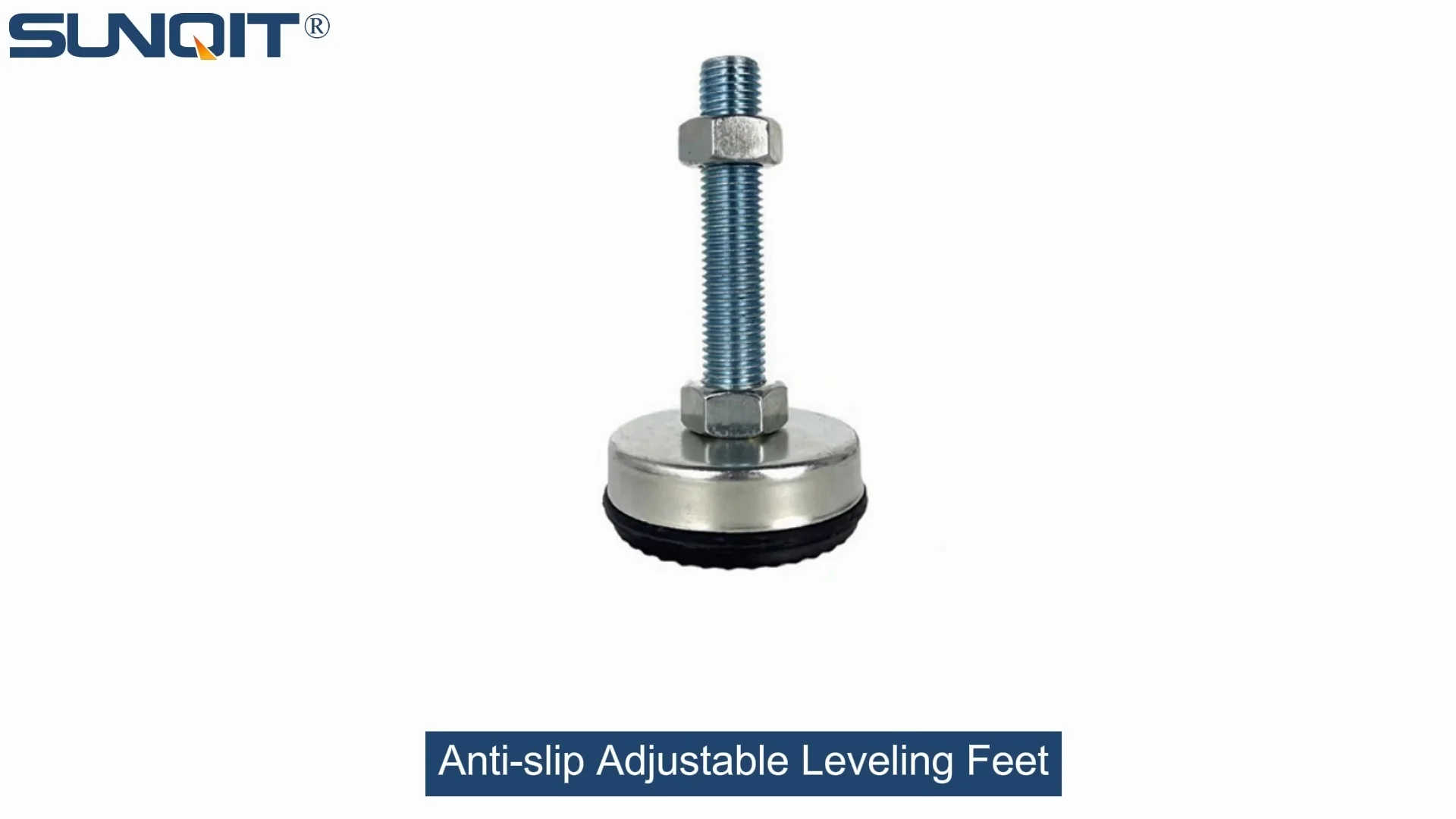
Anti-slip Adjustable Leveling Feet
Anti-slip Adjustable Leveling Feet are designed to keep machines level when placed on uneven or sloped ground, the rubber base will prevent product slip during work.
Walk into any home appliance assembly plant, and you'll notice a symphony of movement: technicians hunched over workbenches, carefully aligning circuit boards in microwaves, securing door hinges on refrigerators, or testing control panels on washing machines. In this fast-paced environment, every second counts—and so does stability. A wobbly workbench isn't just an annoyance; it's a silent productivity killer, a risk to product quality, and even a safety hazard. That's where anti-slip adjustable leveling feet step in. These unassuming components might not grab headlines, but they're the unsung heroes that keep assembly lines running smoothly, ensuring precision, safety, and efficiency when it matters most.
The Workbench: The Heart of Home Appliance Assembly
Before diving into the specifics of leveling feet, let's take a moment to appreciate the workbench itself. In home appliance manufacturing, the workbench isn't just a flat surface—it's the command center. It's where delicate parts are sorted, intricate assemblies are built, and final quality checks are performed. Whether it's a compact station for small parts like blender blades or a heavy-duty setup for assembling oven frames, the workbench's role is foundational. And in today's lean manufacturing environments, flexibility is key. That's why many plants opt for lean pipe workbenches: modular, customizable, and designed to adapt to changing production needs. But even the most advanced lean pipe workbench is only as good as its foundation. Uneven floors, common in older facilities or large warehouses with subtle slopes, can turn a state-of-the-art workbench into a frustrating, unstable mess.
Imagine a technician trying to solder a wire connection on a microwave control board. The workbench rocks slightly every time they lean in, causing their hand to slip. The result? A faulty solder joint, a product that fails quality control, and wasted time and materials. Or consider a heavier scenario: assembling a refrigerator door, which can weigh 50 pounds or more. A wobbly workbench increases the risk of the door tipping, endangering the technician and damaging the appliance. These aren't hypothetical scenarios—they're everyday challenges in plants that overlook the importance of stable workbench support. Anti-slip adjustable leveling feet address these issues head-on, turning instability into reliability.
What Are Anti-Slip Adjustable Leveling Feet?
At their core, anti-slip adjustable leveling feet are simple devices: they attach to the bottom of workbench legs (or other equipment) and allow users to adjust the height of each leg individually. This adjustability compensates for uneven floors, ensuring the workbench sits perfectly level. But what sets "anti-slip" models apart is their base design. Unlike standard leveling feet, which might use hard plastic or metal bases that can slide on smooth concrete, anti-slip versions feature rubber or textured materials that grip the floor, preventing movement even under vibration or light pressure. They're the perfect marriage of adjustability and stability.
Most anti-slip adjustable leveling feet consist of three main parts: a threaded stem, a rotating base, and an anti-slip pad. The stem screws into a threaded hole in the workbench leg, allowing height adjustment by twisting the base. The anti-slip pad, usually made of durable rubber or thermoplastic elastomer (TPE), forms a secure bond with the floor. Some models also include a lock nut to secure the adjusted height, preventing the foot from loosening over time due to machine vibrations—a critical feature in busy assembly environments.
Key Features to Look For
Not all leveling feet are created equal. When choosing anti-slip adjustable leveling feet for home appliance assembly benches, there are a few key features to prioritize:
- Load Capacity: Home appliance workbenches often support heavy tools, parts bins, and the appliances themselves. Look for leveling feet rated to handle at least 500 pounds per foot (and more for larger workbenches). This ensures they won't compress or fail under stress.
- Adjustment Range: Floors can be surprisingly uneven—even in new facilities. A good leveling foot should offer at least 1–2 inches of height adjustment to accommodate slopes and dips.
- Anti-Slip Material: The pad material matters. Rubber is a top choice for its grip on concrete, tile, or epoxy floors. Some manufacturers use specialized compounds that resist oil, grease, and chemicals common in manufacturing settings, ensuring the anti-slip properties hold up over time.
- Durability: The stem and base should be made from robust materials like steel or aluminum. Aluminum, in particular, is a popular choice for its lightweight strength and resistance to corrosion—important in environments where floors might be cleaned with water or chemicals.

Why Anti-Slip Adjustable Leveling Feet Beat Traditional Solutions
For years, manufacturers have used makeshift solutions to stabilize workbenches. Shims—small pieces of wood, metal, or plastic—are a common quick fix. But shims are a band-aid, not a solution. They slip out of place, compress over time, and never provide the precise leveling needed for delicate assembly work. Caster wheels are another option, often used to make workbenches mobile. While casters have their place (e.g., for moving workstations between production lines), they're a poor choice for stationary assembly. Even with brake locks engaged, casters can roll or shift under vibration, and their small contact area with the floor offers minimal stability. Anti-slip adjustable leveling feet solve these problems with a combination of precision, grip, and reliability.
To illustrate the difference, let's compare anti-slip adjustable leveling feet to caster wheels in a side-by-side table. This will help highlight why leveling feet are the superior choice for stationary home appliance assembly workbenches:
| Feature | Anti-Slip Adjustable Leveling Feet | Caster Wheels (with Brakes) |
|---|---|---|
| Primary Purpose | Stabilize and level stationary workbenches | Enable mobility for temporary or movable workstations |
| Stability | High: Wide, anti-slip base distributes weight evenly; no movement once adjusted | Low: Narrow wheel contact area; brakes can slip under vibration or heavy loads |
| Anti-Slip Protection | Excellent: Rubber/TPE base grips floors, even when wet or oily | Poor: Wheels can slide on smooth or polished floors, even with brakes locked |
| Load Capacity | High (500–2,000 lbs per foot, depending on model) | Medium (200–800 lbs per caster, depending on size and material) |
| Floor Protection | Good: Soft base reduces scratches and indentations | Risk of damage: Hard wheels (e.g., plastic, steel) can scratch or scuff floors |
| Installation Complexity | Simple: Screw into pre-drilled holes; no specialized tools needed | More complex: Requires mounting plates, bearings, and brake mechanisms |
The table speaks for itself: when stability and precision are priorities, anti-slip adjustable leveling feet outperform casters. But what about cost? It's true that leveling feet are often more affordable than high-quality casters, but their real value lies in long-term savings. Reduced product defects, fewer workplace injuries, and less time wasted on adjusting shims or fixing wobbly workbenches add up to significant ROI over time.

Materials Matter: The Role of Aluminum in Leveling Feet Design
When it comes to leveling feet, material choice directly impacts performance. Steel is strong but heavy, making it less ideal for lightweight lean pipe workbenches. Plastic is affordable but lacks the load capacity needed for heavy appliances. That's why many manufacturers turn to aluminum profile for the stem and base of their leveling feet. Aluminum offers the best of both worlds: it's lightweight (reducing the overall weight of the workbench), corrosion-resistant (important in humid or chemically treated environments), and surprisingly strong. In fact, aluminum profile is a staple in lean manufacturing, used in everything from workbench frames to material racks. Its compatibility with lean pipe systems makes aluminum-based leveling feet a natural fit for lean pipe workbenches, ensuring seamless integration and easy customization.
Aluminum's benefits don't stop there. Unlike steel, it won't rust, which is crucial in facilities where floors are cleaned regularly with water or disinfectants. It's also easy to machine, allowing manufacturers to create threaded stems with precise tolerances—ensuring smooth height adjustment without sticking or stripping. And for plants focused on sustainability, aluminum is fully recyclable, aligning with green manufacturing goals. When paired with a high-quality rubber anti-slip pad, aluminum leveling feet offer a durable, lightweight, and eco-friendly solution that stands up to the demands of home appliance assembly.

Integrating Anti-Slip Leveling Feet with Lean Pipe Workbenches
Lean pipe workbenches have revolutionized manufacturing by offering modular flexibility. Built from aluminum or steel pipes and joints, they can be easily reconfigured to accommodate new products, production volumes, or workflow changes. But this flexibility means nothing if the workbench itself isn't stable. Anti-slip adjustable leveling feet enhance the lean pipe workbench's strengths by adding a foundation of reliability. Here's how they integrate:
Easy Installation: Most lean pipe workbenches feature threaded holes in their leg assemblies, designed to accept accessories like leveling feet or casters. Installing leveling feet is a straightforward process: simply screw them into the pre-drilled holes, adjust the height using a wrench or by hand, and lock them in place with the included lock nut. No special tools or modifications are needed, making it easy to upgrade existing workbenches without disrupting production.
Customizable Height: Lean pipe workbenches are often adjusted to match technician heights, reducing ergonomic strain. Leveling feet complement this by allowing micro-adjustments to ensure the workbench is perfectly level, even if the floor isn't. For example, a workbench set to 36 inches high for a technician can be fine-tuned by 1/4 inch on one leg to compensate for a floor dip, ensuring the surface remains flat and stable.
Compatibility with Accessories: Lean pipe workbenches often include add-ons like tool racks, LED lights, or bin holders. These accessories add weight, which can exacerbate instability on uneven floors. Leveling feet distribute this extra weight evenly, preventing the workbench from tipping or rocking. This is especially important for heavy accessories like power tool holders or material bins filled with metal parts.
A Day in the Life: How Leveling Feet Improve Assembly Workflows
To put this in perspective, let's walk through a typical day in a home appliance plant before and after installing anti-slip adjustable leveling feet on lean pipe workbenches. Before the upgrade, the plant struggled with frequent workbench instability. Technicians reported spending 5–10 minutes per shift adjusting shims or repositioning workbenches. Quality control checks flagged 8–10% of microwaves for faulty solder joints, traced back to wobbly workbenches. Morale was low, with technicians complaining of fatigue from constantly compensating for unstable surfaces.
After switching to anti-slip adjustable leveling feet, the changes were immediate. The time spent adjusting workbenches dropped to almost zero. Solder joint defects plummeted to 2%, saving the plant thousands in rework costs. Technicians reported less physical strain, as they no longer had to brace themselves against wobbly surfaces. Even better, the leveling feet's anti-slip pads reduced the number of tool incidents—no more screwdrivers or pliers sliding off the bench onto the floor. It's a small change with a ripple effect across the entire production line.
Installation and Maintenance: Keeping Your Leveling Feet in Top Shape
Installing anti-slip adjustable leveling feet is a simple process, but attention to detail ensures optimal performance. Here's a step-by-step guide:
- Prepare the Workbench: Empty the workbench of all tools, parts, and accessories. If possible, tilt the workbench slightly to access the legs (use a helper for heavy workbenches).
- Clean the Threaded Holes: Use a brush or compressed air to remove dirt, debris, or old thread locker from the leg holes. This ensures a tight, secure fit for the leveling feet.
- Screw in the Leveling Feet: Hand-tighten each leveling foot into the leg holes until snug. Avoid over-tightening, as this can strip the threads.
- Level the Workbench: Place a bubble level on the workbench surface. Adjust the height of each leveling foot by rotating the base clockwise (to lower) or counterclockwise (to raise) until the bubble is centered. For larger workbenches, check level in both directions (front-to-back and side-to-side).
- Lock the Height: Once level, tighten the lock nut (if included) against the workbench leg to prevent the leveling foot from loosening over time. Use a wrench to secure the nut, being careful not to disturb the adjusted height.
- Test Stability: Apply gentle pressure to different corners of the workbench to ensure it doesn't rock. If it does, readjust the affected leveling foot and retest.
Maintenance is equally straightforward. To keep your leveling feet performing at their best:
- Inspect Regularly: Check the lock nuts monthly to ensure they're tight. Vibration from machinery can cause them to loosen over time.
- Clean the Anti-Slip Pads: Sweep or vacuum debris from the rubber pads to maintain grip. For stubborn dirt, wipe with a damp cloth and mild detergent.
- Lubricate Threads: If height adjustment becomes stiff, apply a small amount of silicone-based lubricant to the threaded stem. Avoid oil-based lubricants, which can attract dirt.
- replace Worn Pads: Over time, the anti-slip pad may wear down, reducing grip. Most manufacturers offer replacement pads, making it easy to extend the life of the leveling feet without replacing the entire unit.
Choosing the Right Supplier for Your Leveling Feet
Not all anti-slip adjustable leveling feet are created equal, and choosing the right supplier is just as important as selecting the right product. Look for suppliers with experience in manufacturing for the home appliance or lean manufacturing industries—they'll understand your specific needs, from load capacity to floor compatibility. A reputable supplier should offer:
- Customization Options: The ability to adjust stem length, pad material, or load capacity to match your workbench requirements.
- Quality Testing: Certifications or test reports verifying load capacity, anti-slip performance, and durability.
- Technical Support: Expert advice on selecting the right leveling feet for your lean pipe workbench or application.
- Reliable Lead Times: Consistent delivery schedules to avoid production delays when upgrading workbenches.
Don't hesitate to ask for samples. Testing a few leveling feet on a single workbench before committing to a full plant upgrade can help you verify performance and ensure they meet your needs. A good supplier will be happy to provide samples and answer any questions about installation, maintenance, or compatibility with your existing lean pipe systems.
The Bottom Line: Stability Drives Success
In home appliance assembly, where precision and efficiency are non-negotiable, anti-slip adjustable leveling feet are more than an accessory—they're an investment in quality, safety, and productivity. By transforming unstable workbenches into rock-solid foundations, they reduce defects, improve technician satisfaction, and keep assembly lines running smoothly. When paired with lean pipe workbenches and aluminum materials, they embody the principles of lean manufacturing: eliminating waste (in this case, wasted time and materials due to instability) and creating value.
So the next time you walk through a home appliance plant, take a moment to look down. The anti-slip adjustable leveling feet under those workbenches might not be glamorous, but they're hard at work, ensuring that every microwave, refrigerator, and washing machine that rolls off the line is built with the precision your customers expect. In the end, it's the little things—like a stable workbench—that make the biggest difference.