- Company Articles
- Products and Technology
- Product knowledge
- Anti-Slip Adjustable Leveling Feet for Lightweight vs. Heavy Workbenches

Anti-Slip Adjustable Leveling Feet for Lightweight vs. Heavy Workbenches
Related Product
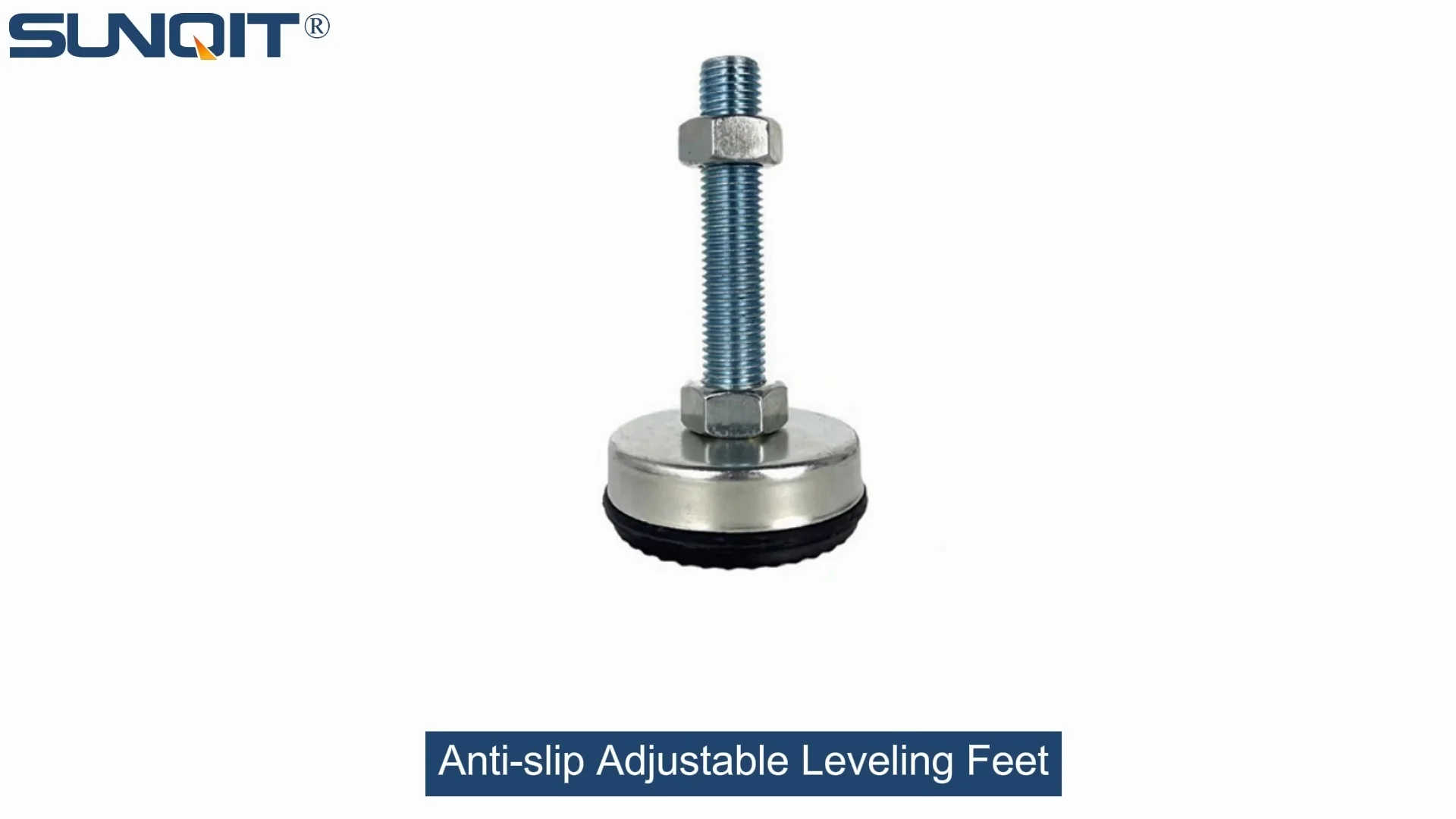
Anti-slip Adjustable Leveling Feet
Anti-slip Adjustable Leveling Feet are designed to keep machines level when placed on uneven or sloped ground, the rubber base will prevent product slip during work.
The Unsung Heroes of Workbench Stability
Walk into any workshop, factory, or garage, and you'll likely spot a workbench holding tools, parts, or machinery. But have you ever stopped to think about what keeps that workbench steady? It's not just the frame or the materials—it's often the small, unassuming components like
anti-slip adjustable leveling feet
. These tiny but mighty parts are the backbone of workbench stability, ensuring everything from delicate electronics assembly to heavy metal fabrication happens on a secure, wobble-free surface. But here's the thing: not all workbenches are created equal, and neither are their leveling feet. Whether you're using a lightweight
aluminum profile
workbench for hobby projects or a rugged
lean pipe workbench
in an industrial setting, choosing the right leveling feet can make or break your workflow, safety, and even the lifespan of your equipment. Let's dive into the world of these unsung heroes and explore how they differ for lightweight vs. heavy workbenches.
Workbench Personalities: Lightweight vs. Heavy-Duty
Before we talk about leveling feet, let's get to know the workbenches themselves. Think of lightweight workbenches as the "versatile athletes" of the workshop. They're often made from materials like aluminum—think
aluminum profile
or basic aluminum tubes—and are designed for tasks that don't require hauling tons of weight. Picture a small electronics repair shop: a lightweight workbench here might hold a soldering iron, a few tools, and a laptop. These workbenches are easy to move (if needed), take up less space, and are budget-friendly. Some even come minimalistic, like the
Workbench E (single deck-without caster)
—a simple, no-frills option perfect for light daily use.
On the flip side, heavy workbenches are the "industrial giants." Found in factories, auto shops, or heavy manufacturing plants, they're built to withstand abuse. Made from steel,
lean pipe
, or reinforced materials, they support everything from hydraulic presses to stacks of metal sheets. A heavy workbench isn't just a table; it's a foundation for productivity. Imagine a lean pipe workbench in an automotive assembly line: it might hold engines, heavy tool chests, or conveyor systems. Stability here isn't just a luxury—it's a safety requirement. A wobbly heavy workbench could lead to equipment damage, product defects, or even injuries.

What Are Anti-Slip Adjustable Leveling Feet, Anyway?
Let's break down the basics. Anti-slip adjustable leveling feet are small devices attached to the bottom of workbench legs (or frames) to do two key things: adjust the height of the workbench to compensate for uneven floors, and prevent the workbench from sliding or shifting during use. They typically have three main parts: a threaded stem that screws into the workbench leg (allowing height adjustment), a base plate that sits on the floor, and an anti-slip pad (usually rubber or silicone) on the bottom of the base to grip the surface.
The "adjustable" part is straightforward: twist the stem, and the workbench leg rises or falls, letting you level it even if the floor is warped or sloped. The "anti-slip" part is where the magic happens. That rubber pad doesn't just sit there—it creates friction between the workbench and the floor, so even if you're pushing, pulling, or hammering on the bench, it stays put. For lightweight workbenches, this prevents annoying slides when you're reaching for a tool. For heavy workbenches, it could mean the difference between a stable workspace and a dangerous accident.

Leveling Feet for Lightweight Workbenches: Small but Mighty
Lightweight workbenches have unique needs. Since they're often used for lighter tasks—like assembling small parts, crafting, or as temporary workstations—their leveling feet don't need to support tons of weight. But they do need to be lightweight themselves (to keep the workbench portable), easy to adjust (since you might move the bench around), and compatible with materials like aluminum profile.
Let's take the
Workbench E (single deck-without caster)
as an example. This is a simple, single-deck workbench without wheels, designed for light to medium use. Its aluminum frame is sturdy but not overly heavy, so its leveling feet need to match that balance. Ideal features here include:
-
Lightweight Materials:
Plastic or aluminum bases, since steel would add unnecessary weight.
-
Easy Adjustment:
A stem that's easy to twist by hand (no tools needed), so you can level the bench quickly when moving it to a new spot.
-
Low Profile:
A compact base plate that doesn't add bulk, keeping the workbench close to the floor for stability without sacrificing portability.
-
Soft Anti-Slip Pads:
Rubber pads that grip well on smooth floors (like in a home garage or small workshop) without scratching them.
For example, a lightweight leveling foot with a 1.5-inch diameter rubber pad and a plastic stem might be perfect here. It weighs next to nothing, adjusts in seconds, and keeps the Workbench E steady even when you're leaning on it to reach for a part.

Leveling Feet for Heavy Workbenches: Built to Bear the Load
Heavy workbenches are a different beast. Think about a
lean pipe workbench
in a manufacturing plant: it might support 500+ pounds of equipment, from power tools to conveyor systems. In this scenario, leveling feet aren't just about convenience—they're about safety and durability. A foot that fails here could lead to the workbench collapsing, damaging expensive machinery or injuring someone.
So, what makes a leveling foot "heavy-duty"? Let's break it down:
-
High Weight Capacity:
Steel or cast iron bases that can support 200+ pounds per foot (since a workbench has four feet, that's 800+ pounds total).
-
Reinforced Stems:
Thick, threaded steel stems that won't bend or strip under heavy loads.
-
Large, Sturdy Base Plates:
A 3-inch or larger diameter base plate spreads the weight over more floor area, reducing pressure and preventing the foot from sinking into soft floors (like concrete that's cracked or uneven).
-
Aggressive Anti-Slip Pads:
Thick, textured rubber or polyurethane pads that grip even on oily or wet floors (common in industrial settings). These pads might also have a grooved design to channel away liquids, maintaining grip when the floor is messy.
For a lean pipe workbench, which uses steel or aluminum pipes and joints for a rugged frame, the leveling feet need to bolt securely to the frame (not just screw in) to handle the constant vibration and movement of heavy tools. A heavy-duty anti-slip adjustable leveling foot with a steel base, a 2-inch rubber pad, and a weight capacity of 300 pounds per foot would be right at home here.
Lightweight vs. Heavy-Duty: The Key Differences
To make it easier to see the contrast, let's compare lightweight and heavy-duty anti-slip adjustable leveling feet side by side:
The takeaway? It's not just about "bigger is better." Lightweight feet prioritize portability and ease of use, while heavy-duty feet prioritize strength and durability. Using a lightweight foot on a heavy workbench would lead to bending or breaking. Using a heavy-duty foot on a lightweight bench would make it bulky and hard to move.
| Feature | Lightweight Workbenches (e.g., Aluminum Profile) | Heavy Workbenches (e.g., Lean Pipe Workbench) |
|---|---|---|
| Material | Plastic or aluminum base; aluminum or plastic stem | Steel or cast iron base; steel stem |
| Weight Capacity | 50–150 lbs per foot | 200–500+ lbs per foot |
| Adjustment Range | 0.5–1 inch (smaller range, since floors are often smoother in light settings) | 1–3 inches (larger range to compensate for uneven industrial floors) |
| Anti-Slip Design | Soft rubber pad (grips smooth floors; prevents scratching) | Thick, textured rubber/polyurethane pad (grips rough, oily, or wet floors) |
| Installation | Hand-tightened (no tools needed) | May require tools (e.g., wrench) to secure tightly under heavy loads |
Choosing the Right Feet: What to Consider
Now that you know the differences, how do you choose the right leveling feet for your workbench? Here are the key factors to keep in mind:
-
Workbench Weight & Load:
First, calculate the total weight of your workbench plus the maximum load it will hold. For example, if your aluminum profile workbench weighs 50 lbs and you'll put 100 lbs of tools on it, each of the four feet needs to support at least 37.5 lbs (50+100=150 lbs / 4 feet). For a lean pipe workbench that weighs 200 lbs and holds 800 lbs of machinery, each foot needs to support 250 lbs (1000 lbs / 4 feet). Always round up to be safe!
-
Floor Type:
Smooth floors (like tile or polished concrete) need softer anti-slip pads to avoid sliding. Rough or uneven floors (like industrial concrete with cracks) need larger base plates to distribute weight and adjustable stems with a wider range.
-
Environment:
If your workshop is damp (e.g., a garage with rain leaks) or oily (e.g., a mechanic's shop), heavy-duty feet with corrosion-resistant steel and oil-resistant rubber pads are a must. For dry, clean environments, lightweight feet with standard rubber pads work fine.
-
Portability Needs:
If you move your workbench often (like a home crafter who sets up and takes down their workspace), lightweight, tool-free adjustable feet are key. If the bench stays in one spot (like a factory lean pipe workbench), heavy-duty, bolt-down feet are better for long-term stability.
Final Thoughts: Stability Starts at the Bottom
At the end of the day, anti-slip adjustable leveling feet might seem like small parts, but they play a huge role in making your workbench functional, safe, and efficient. Whether you're using a lightweight aluminum profile workbench like the Workbench E or a heavy-duty lean pipe workbench in an industrial setting, the right feet will keep your workspace steady, your tools secure, and your mind at ease.
So next time you're setting up a workbench, don't overlook these unsung heroes. Take a moment to match the feet to the workbench's needs—you'll be glad you did when your projects run smoothly, your tools stay in place, and your workbench lasts for years to come. After all, a stable foundation makes everything else possible.