- Company Articles
- Products and Technology
- Product knowledge
- Anti-Slip Adjustable Leveling Feet for Material Handling Equipment: Benefits

Anti-Slip Adjustable Leveling Feet for Material Handling Equipment: Benefits
Related Product
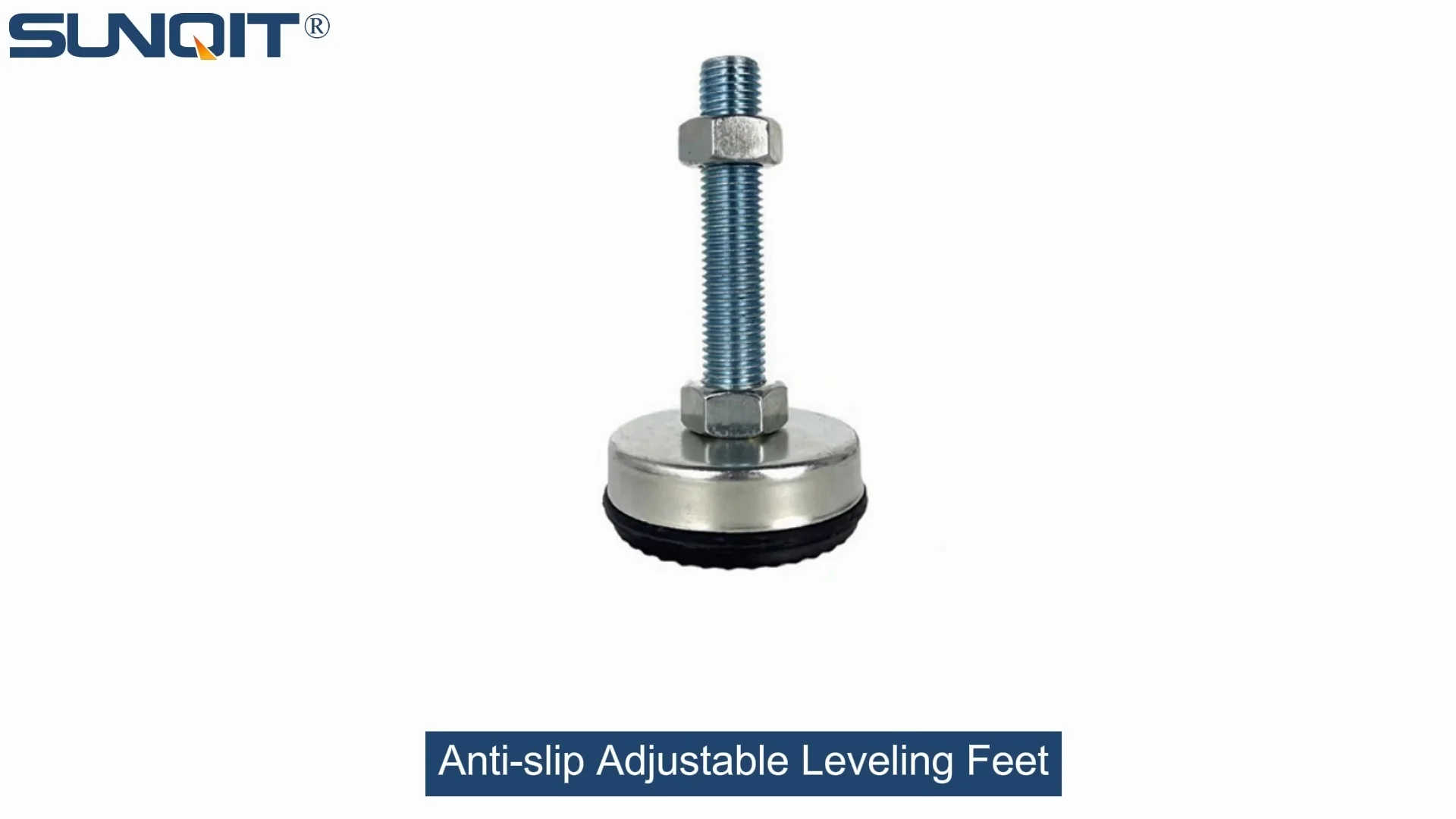
Anti-slip Adjustable Leveling Feet
Anti-slip Adjustable Leveling Feet are designed to keep machines level when placed on uneven or sloped ground, the rubber base will prevent product slip during work.
In the bustling world of warehouses, factories, and assembly lines, attention often fixates on large machinery, high-tech conveyor systems, or sleek aluminum profile workbenches. Yet, some of the most critical components in keeping operations running smoothly are the smallest ones—quiet, unassuming parts that work behind the scenes. Enter anti-slip adjustable leveling feet: the unsung heroes that stabilize equipment, enhance safety, and adapt to the chaos of real-world workspaces. These tiny but mighty tools play a pivotal role in everything from ensuring a steady workbench during precision assembly to preventing a turnover trolley and rack from tipping over mid-transit. Let's dive into why these components deserve a spot in the spotlight.
What Are Anti-Slip Adjustable Leveling Feet?
At first glance, anti-slip adjustable leveling feet might seem simple: a threaded stem, a base plate, and a knurled or hexagonal top for adjustment. But their design is purposeful. The adjustable stem allows users to tweak the height of equipment by rotating the foot, compensating for uneven floors or mismatched surfaces. The base plate, often made of rubber, plastic, or metal with a textured finish, delivers the "anti-slip" magic—gripping floors to prevent unwanted movement. Many models are engineered to pair seamlessly with modern material handling setups, including those built with aluminum profile, ensuring compatibility with everything from lightweight workbenches to heavy-duty racks.
Unlike fixed feet, which offer no flexibility, these leveling feet adapt. Whether you're dealing with a warehouse floor scarred by years of forklift traffic, a factory with slightly sloped concrete, or a workshop with temporary mats covering cracks, they bridge the gap between imperfect surfaces and stable equipment. And in environments where safety and precision matter most, that adaptability isn't just convenient—it's essential.
Core Benefits: Why They Matter in Material Handling
1. Stability: The Foundation of Efficient Operations
Stability is the backbone of any material handling system. A wobbly workbench isn't just annoying—it can throw off measurements during assembly, leading to faulty products. A turnover trolley and rack that sways when loaded with inventory risks spilling goods or tipping over. Anti-slip adjustable leveling feet eliminate these issues by creating a solid base, even when the ground beneath isn't perfect.
Scenario: Imagine a electronics assembly line where workers attach delicate components to circuit boards. The workbench, originally placed on a floor with a hairline slope, wobbles slightly with every movement. A technician, focusing on soldering a tiny wire, accidentally misaligns it due to the bench shifting—costing time and materials. After installing anti-slip adjustable leveling feet, the team adjusts each foot to counteract the slope. Now, the bench stays rock-steady, reducing errors by 20% in the first week alone.
For turnover trolleys and racks, stability is even more critical. When moving pallets of raw materials or finished goods, a trolley that leans can lead to load shifts. Anti-slip feet grip the floor during loading and unloading, preventing the trolley from sliding as workers push or pull. This stability isn't just about protecting inventory—it's about protecting the people moving it.
2. Safety First: Reducing Risks in Busy Workspaces
Workplace safety is non-negotiable, and anti-slip adjustable leveling feet contribute in ways both obvious and subtle. The anti-slip base is a frontline defense against slips and slides. In environments with oil, water, or dust on the floor—common in manufacturing—equipment can easily skid. The textured base of these feet creates friction, holding machinery in place even when surfaces are less than ideal.
Beyond preventing slides, properly leveled equipment reduces ergonomic strain. A workbench that's tilted forces workers to hunch or reach awkwardly, leading to back pain, carpal tunnel, or chronic fatigue. By adjusting leveling feet to align the workbench with the worker's waist height, employers promote better posture and reduce the risk of long-term injuries. Over time, this translates to fewer sick days, higher morale, and a more productive team.
3. Adaptability: Thriving on Imperfect Floors
Perfectly flat floors are rare in the real world. Warehouses age, concrete cracks, and temporary fixes (like patching) create uneven patches. Anti-slip adjustable leveling feet turn these imperfections into non-issues. Their threaded stems allow for precise height adjustments—often down to fractions of an inch—so even if one corner of a workbench sits on a bump, the feet can be shortened on that side to keep the surface level.
This adaptability extends to equipment relocation, too. When a workbench is moved from a smooth concrete area to a section with a rubber mat, or a turnover trolley and rack is shifted to a new aisle with a slight slope, leveling feet make rebalancing quick and easy. No need for shims, wooden blocks, or makeshift fixes—just a few twists of the foot, and the equipment is stable again.
4. Protecting Equipment and Floors Alike
Material handling equipment isn't cheap. A high-quality aluminum profile workbench or a heavy-duty turnover trolley and rack represents a significant investment. Unstable equipment risks more than just operational hiccups—it can damage the equipment itself. Wobbling stresses joints, loosens bolts, and accelerates wear on moving parts. By keeping equipment level and steady, leveling feet extend its lifespan, delaying the need for repairs or replacements.
Floors benefit, too. Hard plastic or metal feet can scratch or dent delicate surfaces like polished concrete or epoxy. Anti-slip bases, often made of soft rubber or polyurethane, act as a buffer, distributing weight evenly and preventing indentations. In facilities where floor appearance matters—like showrooms or cleanrooms—this protection is invaluable.
5. Compatibility with Modern Material Handling Systems
Today's warehouses and factories rely on modular, flexible setups. Aluminum profile systems, for example, allow teams to build custom workbenches, racks, and trolleys by connecting standardized parts. Anti-slip adjustable leveling feet are designed to integrate with these systems, featuring stems that fit into standard T-slots or mounting holes. This compatibility means you don't have to overhaul your existing equipment to upgrade stability—simply swap out old feet for new ones and adjust as needed.
Whether you're using a lightweight aluminum workbench for small-parts assembly or a steel-reinforced turnover trolley and rack for heavy loads, there's a leveling foot designed to fit. Many manufacturers offer options in different sizes, load capacities, and base materials, ensuring a perfect match for your specific needs.

A Closer Look: How Benefits Translate to Real Results
To put these benefits into perspective, let's compare the impact of using anti-slip adjustable leveling feet versus sticking with fixed or non-slip feet in common scenarios:
| Scenario | Without Anti-Slip Adjustable Leveling Feet | With Anti-Slip Adjustable Leveling Feet |
|---|---|---|
| Workbench on uneven floor | Wobbles during use; increases error rates in precision tasks by 15-20%. | Stays level; error rates drop by up to 30% due to stable work surface. |
| Turnover trolley loaded with 500 lbs of inventory | Slides on oily floor; risk of tipping during turns or sudden stops. | Anti-slip base grips floor; trolley remains stable even during quick maneuvers. |
| Assembly line with varying floor heights | Equipment must be placed in "perfect" spots; limits layout flexibility. | Equipment can be placed anywhere; feet adjust to floor variations, increasing layout options by 40%. |
| Workbench used by multiple workers of different heights | One-size-fits-all height causes ergonomic strain for shorter/taller employees. | Feet adjust to tweak workbench height by 2-4 inches, reducing worker fatigue. |

Choosing the Right Anti-Slip Adjustable Leveling Feet
Not all leveling feet are created equal. To maximize benefits, consider these factors when selecting options for your material handling equipment:
- Load Capacity: Match the foot's weight rating to your equipment. A small workbench might need 100 lbs per foot, while a heavy turnover trolley and rack could require 500 lbs or more.
- Base Material: Rubber bases offer excellent grip on smooth floors, while metal bases with rubber pads work better on rough surfaces. For ESD (electrostatic discharge) environments, conductive materials prevent static buildup.
- Adjustment Range: Look for feet that adjust at least ½ to 1 inch—enough to handle most floor unevenness without being overly bulky.
- Mounting Type: Ensure compatibility with your equipment. Threaded stems are common for metal or aluminum profile frames, while bolt-on bases work for wooden or plastic surfaces.
- Environmental Resistance: In damp or chemical-heavy areas, choose feet with corrosion-resistant stems (stainless steel) and chemical-resistant base materials.

Conclusion: Small Parts, Big Impact
Anti-slip adjustable leveling feet may not have the flash of a high-speed conveyor or the complexity of a robotic assembly arm, but their role in material handling is irreplaceable. They turn wobbly workbenches into pillars of precision, transform unstable trolleys into reliable workhorses, and turn uneven floors from obstacles into afterthoughts. For businesses focused on safety, efficiency, and adaptability, investing in these small components delivers outsized returns—fewer accidents, lower error rates, longer equipment lifespans, and happier, healthier workers.
So the next time you walk through a warehouse or factory, take a moment to look down. Chances are, the steady workbench where a technician assembles your products, the turnover trolley gliding smoothly through aisles, and the rack holding inventory securely—all owe their stability to these unsung heroes. In the world of material handling, sometimes the smallest parts make the biggest difference.