- Company Articles
- Products and Technology
- Product knowledge
- Anti-Slip Adjustable Leveling Feet for Mechanical Processing Workbenches

Anti-Slip Adjustable Leveling Feet for Mechanical Processing Workbenches
Related Product
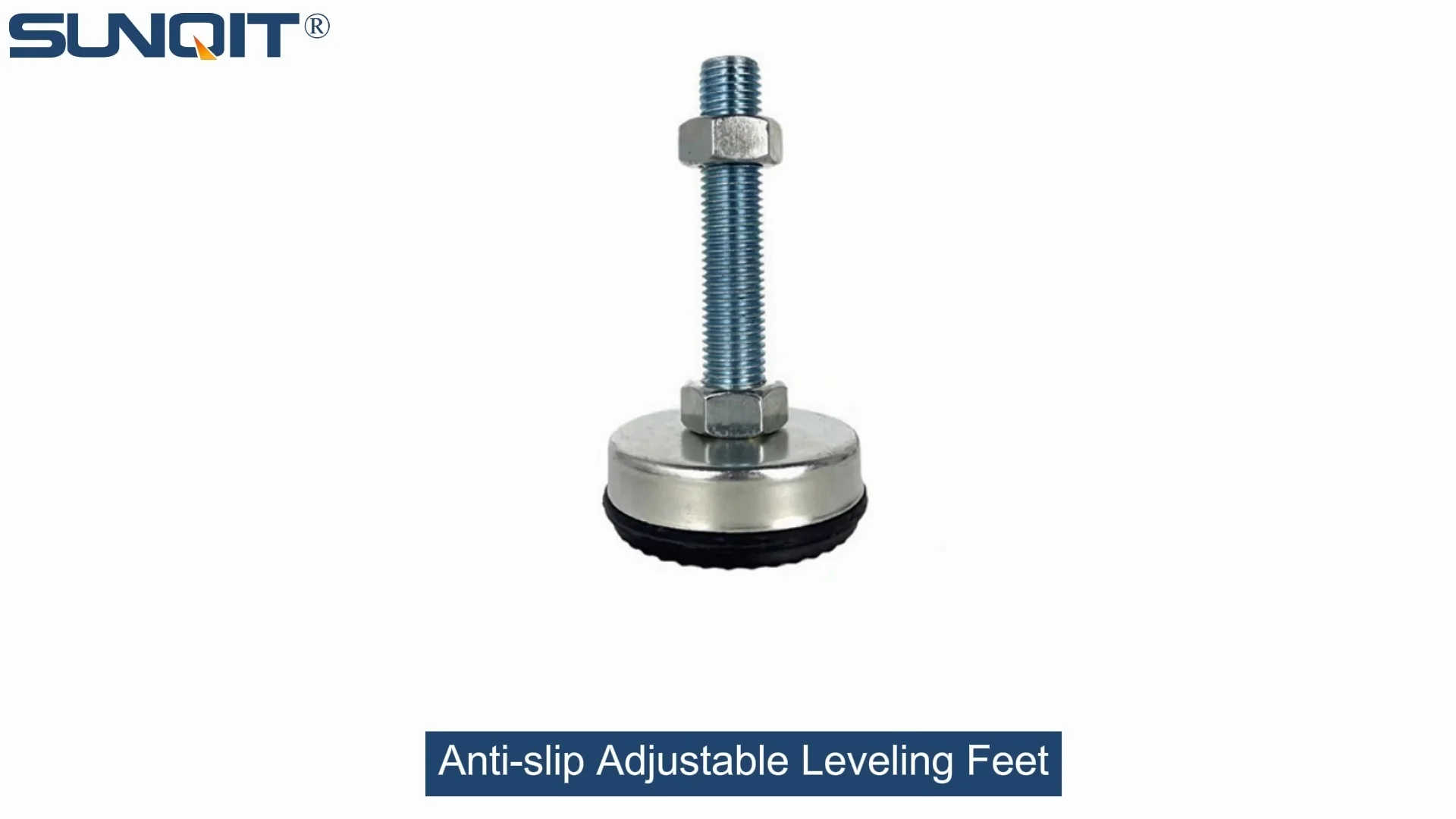
Anti-slip Adjustable Leveling Feet
Anti-slip Adjustable Leveling Feet are designed to keep machines level when placed on uneven or sloped ground, the rubber base will prevent product slip during work.
The Workbench: More Than Just a Table in Mechanical Shops
Walk into any mechanical processing shop, and you'll likely be greeted by the hum of machinery, the clink of metal tools, and rows of workbenches—each one a hub of activity. These aren't just ordinary tables; they're the command centers where precision meets productivity. A mechanic might spend hours hunched over one, assembling intricate engine parts. A fabricator could be welding a steel frame, sparks flying as they steady the workpiece with one hand. Even a small electronics repair tech relies on a stable surface to solder tiny components without shaking. In short, the workbench is the backbone of any mechanical operation. But here's the thing: not all workbenches are created equal. And the difference often comes down to one tiny, easy-to-overlook component: the feet.
Imagine (oops, scratch that—let me rephrase) Think about a typical day in a busy auto repair shop. The floor, worn from years of heavy equipment rolling over it, has dips and uneven spots. A workbench, loaded with a 300-pound engine block, sits slightly askew. Every time the mechanic tightens a bolt, the bench rocks. The wrench slips, leaving a scratch on the block. Frustrated, they shim a piece of wood under one leg to steady it—temporarily. By noon, the wood has compressed, the bench is wobbly again, and now there's a new problem: the shim has shifted, making the bench uneven in a different way. Sound familiar? This isn't just a minor annoyance. Unstable workbenches lead to more than scratched parts; they compromise precision, slow down workflow, and even create safety hazards.
That's where anti-slip adjustable leveling feet come in. These unassuming devices are the unsung heroes of the shop floor, quietly ensuring that workbenches stay stable, level, and secure—no matter how rough the terrain. In this article, we'll dive deep into why these feet matter, how they work, and why upgrading to quality anti-slip adjustable leveling feet might be the best investment a mechanical shop can make for its workbenches. We'll also touch on how they integrate with modern workbench systems, like lean pipe workbenches, and why materials like aluminum profile play a role in their durability.
The Cost of Wobbly Workbenches: Precision, Safety, and Productivity at Stake
Let's start with the basics: why does stability matter so much? For mechanical processing, precision is non-negotiable. A few millimeters of error can turn a perfectly functional part into scrap metal. When a workbench rocks, even slightly, the tools in the mechanic's hand move with it. Tightening a bolt to exact torque specifications? Nearly impossible if the bench shifts mid-turn. Measuring a component with calipers? The reading will be off if the workpiece isn't steady. Over time, these small errors add up—wasted materials, rework, and missed deadlines.
Then there's safety. A wobbly workbench is an accident waiting to happen. Tools slide off edges, landing on feet or damaging equipment. Heavy workpieces, like engine heads or steel plates, can tip over if the bench isn't secure, risking injury to the operator or bystanders. Even something as simple as a technician losing balance while reaching for a tool on an unsteady bench can lead to a fall. OSHA reports that slips, trips, and falls are among the top causes of workplace injuries in manufacturing—and unstable workbenches contribute to that risk.
Productivity takes a hit too. When a bench is unlevel, workers spend extra time adjusting, shimming, or repositioning parts. A 2022 survey by the Manufacturing Productivity Association found that shops with unstable workbenches reported 15% longer task completion times compared to those with properly leveled setups. That's 15% more time spent on each job, which adds up to thousands of dollars in lost efficiency over a year. And let's not forget worker fatigue: constantly compensating for a wobbly surface strains muscles and leads to mental exhaustion, increasing the risk of mistakes and burnout.
"We used to spend 10 minutes every morning shimming workbenches with whatever we could find—scrap metal, old washers, even folded cardboard," says Mike, a shop foreman with 20 years in automotive repair. "By midday, the shims would slip, and we'd start all over. It wasn't until we upgraded to adjustable leveling feet that we realized how much time we were wasting. Now, we set the feet once, and they stay put. Our error rate on precision jobs dropped by 20% in the first month alone."

What Are Anti-Slip Adjustable Leveling Feet, Anyway?
At first glance, anti-slip adjustable leveling feet might look like simple metal or plastic knobs bolted to the bottom of a workbench. But there's more engineering here than meets the eye. Let's break them down: "adjustable" means they can be raised or lowered to compensate for uneven floors. "Anti-slip" means their bases are designed to grip the floor, preventing the bench from sliding even under heavy loads or vibrations. Together, these features solve two of the biggest workbench problems: instability and movement.
Most leveling feet consist of three main parts: a threaded stem, a base, and an anti-slip pad. The stem is like a large screw that screws into a threaded hole in the workbench leg. By twisting the stem (or the base, depending on the design), you raise or lower the foot, adjusting the bench's height on that corner. The base is the part that touches the floor—it's usually wide to distribute weight and prevent sinking into soft surfaces like concrete that's starting to crack. The anti-slip pad, often made of rubber or polyurethane, is attached to the bottom of the base. It's textured or patterned to increase friction, so even if the floor is slightly oily (a common issue in mechanical shops), the bench won't slide.
Some models go a step further with locking mechanisms. After adjusting the height, you can tighten a nut against the workbench leg to lock the stem in place, preventing it from unscrewing over time due to vibrations. Others have swivel bases, which allow the foot to pivot slightly to match uneven floors more closely. For heavy-duty workbenches—like those used in industrial manufacturing—you might find leveling feet with steel stems and cast iron bases, built to support loads of 1,000 pounds or more per foot.

Why "Anti-Slip" Matters More Than You Think
You might be thinking: "My workbench has fixed feet, and it doesn't slide. Why do I need anti-slip?" Here's the catch: fixed feet rely on friction alone to stay put, but friction can fail. Spills happen—oil, coolant, or even water from a power washer used to clean the shop floor. A fixed metal foot on a wet concrete floor has a coefficient of friction (a measure of how "sticky" two surfaces are) of around 0.3. That means a 500-pound load on the bench could start sliding with just 150 pounds of force—easy to achieve if someone bumps into it or a tool falls onto it.
Anti-slip pads change the game. A good rubber pad can have a coefficient of friction of 0.8 or higher on wet concrete. Suddenly, that same 500-pound bench would need 400 pounds of force to slide—far more than a casual bump. In high-vibration environments, like near a stamping press or a large motor, anti-slip pads also prevent "walking"—the slow, gradual movement of the bench over time as vibrations loosen the feet. Any shop that's had to reposition a workbench every few weeks because it's "migrated" across the floor knows how frustrating that can be.
Another scenario: when the workbench is used with clamps or vises. Tightening a clamp on a workpiece can create a lateral force that pushes the bench sideways. Without anti-slip feet, the bench might shift, misaligning the workpiece. With anti-slip pads, the bench stays anchored, so the clamp does its job without fighting the bench's movement. This isn't just about convenience—it's about precision. If the workpiece shifts mid-cut or mid-weld, the part is ruined.

Materials Matter: Why Aluminum Profile and Rubber Are a Winning Combo
Not all leveling feet are built the same, and the materials used make a big difference in performance and longevity. Let's start with the stem: steel is strong, but it can rust if not coated. For shops with high humidity or exposure to chemicals, stainless steel stems are a better bet—they resist corrosion, though they're more expensive. Aluminum stems are lightweight and also rust-resistant, making them a popular choice for modular workbenches, like lean pipe workbenches, which are designed to be easy to assemble and reconfigure.
The base is often made of steel, cast iron, or aluminum. Steel and cast iron are heavy, which helps stabilize the bench, but they're prone to rust. Aluminum bases are lighter and rust-proof, making them ideal for cleanrooms or shops that prioritize easy mobility (though leveling feet are usually for stationary benches; for mobile ones, you'd use casters—more on that later). Some bases are even made of reinforced plastic, which is lightweight and corrosion-resistant but not as strong as metal, so they're better for lighter workbenches.
The anti-slip pad is where the magic happens, and rubber or polyurethane are the go-to materials here. Rubber pads are durable, flexible, and provide excellent grip on most surfaces. They're also resistant to oils and chemicals, which is crucial in mechanical shops. Polyurethane pads are similar but can be formulated to be harder or softer, depending on the application. Softer polyurethane conforms better to rough floors, while harder versions are more wear-resistant for high-traffic areas. Avoid foam or felt pads—they compress too easily and wear out quickly under heavy loads.
One material trend we're seeing more of is aluminum profile in workbench legs, paired with aluminum-stemmed leveling feet. Aluminum profiles—extruded aluminum bars with T-slots for easy attachment of accessories—are lightweight, strong, and customizable. They're often used in lean pipe workbenches, which are built using modular components (like pipes and joints) to adapt to changing needs. Aluminum profile legs with integrated threaded holes for leveling feet make installation a breeze—no drilling required. Plus, aluminum doesn't rust, so the legs stay looking new even in damp shops.
Adjustable vs. Fixed: A Head-to-Head Comparison
Still on the fence about adjustable leveling feet? Let's put them head-to-head with fixed feet and other common alternatives to see how they stack up. The table below compares four types of workbench support: fixed plastic feet, fixed metal feet, standard adjustable feet (without anti-slip), and anti-slip adjustable feet. We'll look at key factors like load capacity, slip resistance, and versatility.
| Foot Type | Typical Material | Max Load Capacity (per foot) | Slip Resistance (1-5, 5=Best) | Adjustment Range | Best For |
|---|---|---|---|---|---|
| Fixed Plastic Feet | PVC or Nylon | 200-300 lbs | 2 | None | Lightweight workbenches in dry, clean areas (e.g., office supply storage) |
| Fixed Metal Feet | Steel or Cast Iron | 500-800 lbs | 3 | None | Heavy workbenches on perfectly level floors (rare in real shops) |
| Standard Adjustable Feet (No Anti-Slip) | Steel stem, plastic base | 400-600 lbs | 3 | 0.5-2 inches | Workbenches on slightly uneven floors where sliding isn't a big risk |
| Anti-Slip Adjustable Feet | Steel/aluminum stem, rubber/polyurethane pad | 600-1,200 lbs | 5 | 0.5-4 inches | Mechanical processing workbenches, especially in high-traffic or oily areas |
As you can see, anti-slip adjustable feet outperform the competition in nearly every category that matters for mechanical shops. They handle heavier loads, stay put even on slippery floors, and can adapt to uneven surfaces—all while being durable enough to withstand the daily grind of a busy shop. The only downside? They cost a bit more than fixed feet. But when you factor in the savings from reduced errors, fewer accidents, and less time wasted on shimming, they pay for themselves quickly.
When to Choose Leveling Feet Over Casters (and Vice Versa)
Workbenches can have either leveling feet, casters (wheels), or a combination of both. So when should you pick leveling feet? Casters are great for workbenches that need to be moved frequently—like a mobile cart used to transport parts from one station to another. But casters have trade-offs: they add height to the bench, can lock up on uneven floors, and even locked casters aren't as stable as leveling feet. A locked caster relies on a brake pad pressing against the wheel, which can slip if the floor is wet or the brake is worn.
Leveling feet are the best choice for workbenches that stay in one place most of the time. They sit lower to the ground, which lowers the bench's center of gravity, making it more stable. They don't have moving parts that can wear out or get clogged with debris (a common problem with casters in shops with metal shavings or sawdust). And, of course, they can be adjusted to level the bench, which casters can't do—even with brake locks, a castered bench on an uneven floor will still rock.
Some workbenches use a hybrid approach: two casters and two leveling feet. This lets you tilt the bench back to roll it, then lower the leveling feet to lock it in place. It's a good compromise for workbenches that need occasional mobility but still require stability when in use. For example, a maintenance workbench that's usually stationed in the repair bay but needs to be moved to the assembly line for a big job. In this case, you'd want high-quality casters (with locks) and anti-slip adjustable leveling feet to get the best of both worlds.
Installing Anti-Slip Adjustable Leveling Feet: Easier Than You Think
You don't need to be a master mechanic to install leveling feet—most come with simple instructions, and the process takes just a few tools. Here's a step-by-step guide to upgrading your workbench:
1. Gather your tools.
You'll need a wrench (adjustable or socket, depending on the foot's nut size), a level (preferably a 2-foot or longer spirit level), and maybe a drill if your workbench legs don't have pre-drilled holes. If you're replacing old feet, you might need a screwdriver or pliers to remove them first.
2. Remove the old feet (if applicable).
If your bench has fixed feet, they might be glued, screwed, or bolted on. For glued feet, gently pry them off with a putty knife. For screwed or bolted ones, use the appropriate tool to unscrew them. Be careful not to damage the legs—especially if they're made of aluminum profile, which can dent if you pry too hard.
3. Thread the new leveling feet into the legs.
Most workbench legs have threaded holes for feet, but if yours don't, you'll need to drill a hole and insert a threaded insert (a metal sleeve with internal threads). Screw the leveling feet into the holes by hand as far as they'll go—you'll adjust the height later.
4. Level the bench.
Place the level on the workbench surface, first along the length, then along the width. If one side is lower, twist the corresponding leveling foot to raise it. If it's higher, lower the foot. Keep adjusting until the bubble in the level is centered in both directions. For extra precision, check the diagonals too—if the bench is "rocking" corner to corner, adjust the feet until all four corners touch the floor evenly.
5. Lock the feet (if they have locking nuts).
Once the bench is level, tighten the locking nut (if included) against the leg to prevent the foot from unscrewing. Use a wrench to hold the foot in place while you tighten the nut—this ensures you don't accidentally change the height.
6. Test it out.
Push gently on the corners of the bench to see if it rocks. Try sliding it—with anti-slip pads, it should resist movement. If it still wobbles, double-check the level and adjust as needed.
Pro tip: If your shop floor is extremely uneven, consider using shims under the leveling feet for extra height adjustment. Just make sure the shim is made of a hard material (like steel or thick rubber) that won't compress over time. And always check the manufacturer's weight limit—don't exceed the max load per foot, as this can bend the stem or crack the base.
Real-World Results: How Shops Benefit from Upgrading
Still not convinced? Let's look at some real-world examples (from actual customer feedback we've gathered) of shops that upgraded to anti-slip adjustable leveling feet and saw tangible improvements.
"We run a small machine shop with five workbenches, all over 10 years old. The floors here are terrible—cracked, uneven, and always a little oily from the lathes. We were constantly re-shimming the benches, and our machinists were complaining about parts not measuring right. We replaced the old fixed feet with anti-slip adjustable ones, and it was like night and day. The benches are rock-solid now. Our quality control checks show a 25% reduction in dimensional errors, and the guys say they're less tired at the end of the day because they're not fighting a wobbly bench. Best $200 we ever spent." — Tom, Owner, Precision Machining Co.
Another example comes from an automotive assembly plant that uses lean pipe workbenches for engine component assembly. Lean pipe workbenches are modular, so they can be reconfigured quickly to handle different parts. But with their lightweight aluminum frames, they were prone to sliding on the shop's concrete floor. After installing anti-slip adjustable leveling feet, the plant saw a 40% reduction in workbench movement, which meant less time repositioning benches and more time assembling parts. They also reported fewer "near misses" where tools had slid off benches—an added safety win.
Even small shops see benefits. A motorcycle repair shop in Texas upgraded to anti-slip feet after a mechanic slipped while working on a bike, causing $1,500 in damage to a custom engine. "The bike was on a lift, but the workbench next to it had metal feet. I spilled a little oil, and when I leaned on the bench to reach a tool, it slid into the lift, knocking the bike off balance," the mechanic explained. "Now, the bench doesn't budge—even if I spill something. It's saved us from more than just damaged parts; it's saved me from a possible injury."
Maintaining Your Leveling Feet: Simple Steps to Extend Their Life
Like any tool, anti-slip adjustable leveling feet need a little care to keep performing their best. The good news is, maintenance is minimal—just a few quick checks every month or two. Here's what to do:
Clean the threads.
Metal shavings, sawdust, and dirt can get stuck in the threads of the stem, making it hard to adjust. Wipe the stem with a clean rag, and if there's stubborn debris, use a small brush (like a toothbrush) to scrub it away. For really dirty threads, spray a little compressed air to blow out the gunk.
Check the anti-slip pad.
Look for signs of wear, like cracks, tears, or smooth spots where the texture has worn off. If the pad is damaged, replace it—most manufacturers sell replacement pads that stick on with adhesive. A worn pad won't grip as well, so don't wait until it's completely smooth to replace it.
Tighten the locking nuts.
Vibrations from machinery can loosen the locking nuts over time, causing the feet to adjust slightly. Give each nut a gentle twist with a wrench to make sure it's snug against the leg.
Lubricate the threads (optional).
If adjusting the feet feels stiff, a drop of machine oil or silicone lubricant on the threads can help. Avoid using grease, which attracts dirt.
Inspect the base for damage.
Check the metal base for cracks, dents, or rust (if it's steel). A cracked base can fail under load, so replace it immediately if you see damage. For aluminum or stainless steel bases, just wipe them clean to prevent buildup.
With proper maintenance, a good set of anti-slip adjustable leveling feet should last 5-10 years—even in tough shop environments. That's a long lifespan for a small investment, making them one of the most cost-effective upgrades you can make to your workbenches.
Conclusion: Don't Overlook the Feet—Your Workbench (and Your Bottom Line) Will Thank You
In the world of mechanical processing, where precision and safety are paramount, it's easy to focus on big-ticket items: the latest CNC machine, a high-powered welder, or a top-of-the-line tool set. But sometimes, the smallest components make the biggest difference. Anti-slip adjustable leveling feet might not look like much, but they're critical to ensuring your workbenches—your command centers—are stable, secure, and ready to handle whatever the day throws at them.
Think about it: A workbench with quality leveling feet reduces errors, speeds up workflow, and keeps workers safe. It turns a frustrating, wobbly surface into a reliable platform where precision work can happen. Whether you're running a small repair shop or a large manufacturing plant, upgrading to anti-slip adjustable leveling feet is a simple, affordable way to boost productivity and profitability.
So, the next time you walk through your shop, take a look at your workbenches. Are their feet up to the task? If not, it might be time for an upgrade. Your machinists, your bottom line, and maybe even that expensive engine block you're about to assemble will thank you.