- Company Articles
- Products and Technology
- Product knowledge
- Anti-Slip Adjustable Leveling Feet for Mobile Workstations: Stability on the Go

Anti-Slip Adjustable Leveling Feet for Mobile Workstations: Stability on the Go
Related Product
Anti-slip Adjustable Leveling Feet
Anti-slip Adjustable Leveling Feet are designed to keep machines level when placed on uneven or sloped ground, the rubber base will prevent product slip during work.
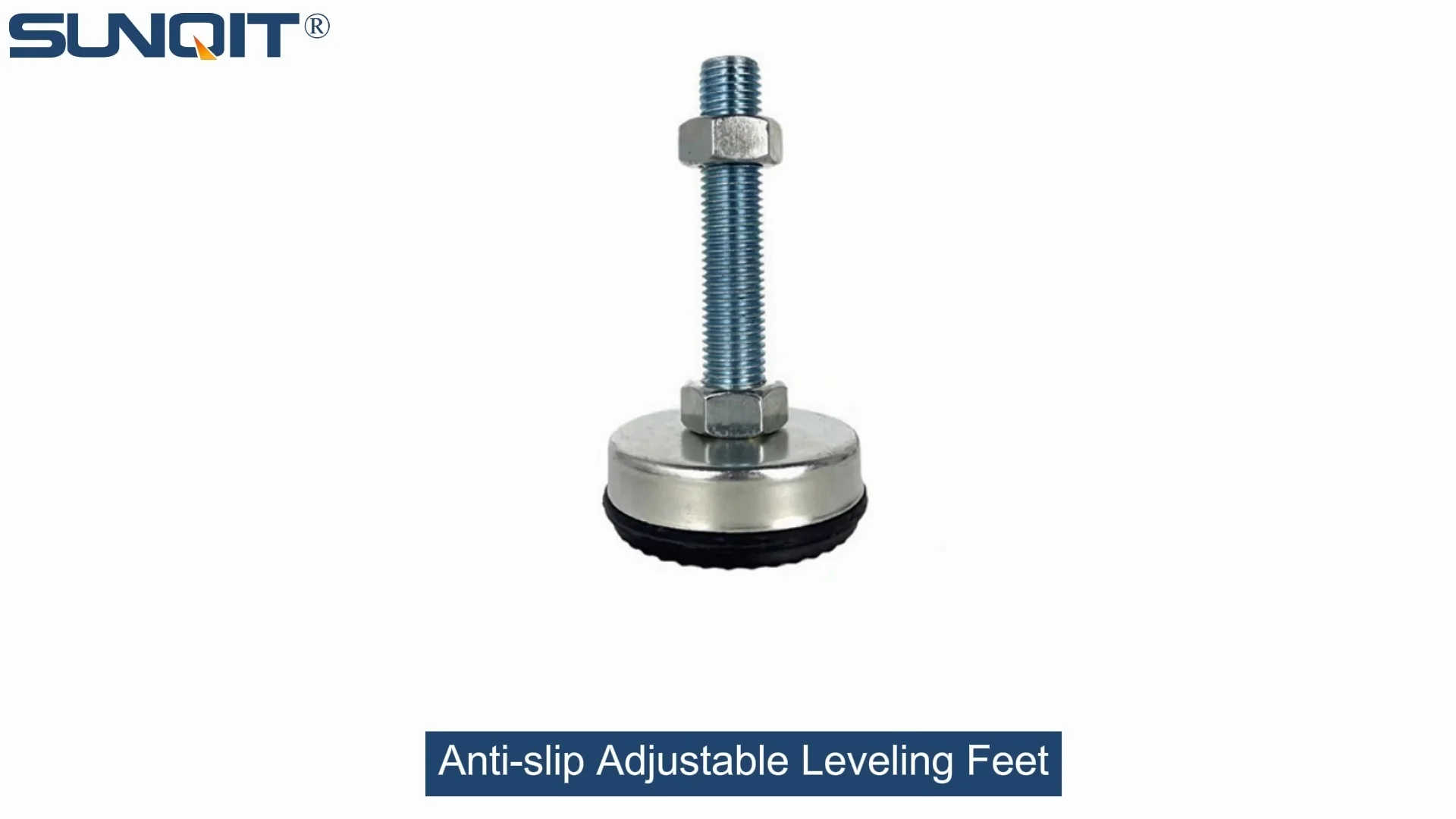
In the fast-paced world of manufacturing, laboratories, and workshops, mobile workstations have become indispensable. They promise flexibility, allowing teams to reconfigure spaces quickly, transport tools between stations, and adapt to evolving project needs. But anyone who's worked with these dynamic setups knows the hidden frustration: stability. A workstation that rolls smoothly one minute might wobble the next, tools slide off surfaces, and delicate tasks become a battle against an unsteady base. This isn't just an annoyance—it's a threat to efficiency, precision, and even safety. Enter anti-slip adjustable leveling feet: the unsung heroes that bridge the gap between mobility and stability, turning unpredictable workbenches into reliable hubs of productivity.
The Hidden Cost of Unstable Mobile Workstations
To understand why anti-slip adjustable leveling feet matter, let's start with the problems they solve. Imagine a assembly line operator in a lean system environment, rushing to meet a deadline. Their mobile workbench, equipped with caster wheels for easy movement, suddenly shifts as they lean into a task. A screwdriver tumbles to the floor, and a partially assembled component teeters on the edge. Seconds turn into minutes as they retrieve tools and readjust—time that adds up over a shift, eating into productivity. Or consider a lab technician measuring precise chemical doses on a wobbly workstation; even a millimeter of movement could compromise an entire experiment.
Worse, instability isn't just about lost time. It's a safety hazard. A workstation that slides unexpectedly can cause trips, or tools that fall might injure someone below. For industries like electronics manufacturing, where static control and precision are critical, an unstable workbench could even damage sensitive components. Traditional fixed feet solve stability but kill mobility, while relying solely on caster wheels—even lockable ones—leaves workstations vulnerable to uneven floors or accidental bumps. This is where the need for a hybrid solution becomes clear: something that lets you move freely when you need to, then lock down tight when you don't.
Anti-Slip Adjustable Leveling Feet: The Stability-Mobility Bridge
Anti-slip adjustable leveling feet are designed to address this exact tension. At their core, they're versatile components that attach to the base of mobile workstations, offering two key functions: adjustability to compensate for uneven surfaces, and anti-slip properties to keep the workstation anchored. Unlike fixed feet, they can be raised or lowered to level the workstation on rough floors—think warehouse concrete with cracks or lab floors with subtle slopes. And unlike basic leveling feet, their anti-slip pads (often made of high-friction rubber or polyurethane) grip surfaces firmly, preventing sliding even under lateral pressure.
What makes them particularly valuable is their compatibility with mobile setups. Most models are designed to work alongside caster wheels, creating a system where you can engage the casters for movement, then lower the leveling feet to lift the casters off the ground and lock the workstation in place. This hybrid approach is a cornerstone of modern lean system design, where efficiency depends on both flexibility and reliability. Whether you're using a simple workbench or a complex modular station built with aluminum profile frames, these feet integrate seamlessly, turning a mobile asset into a stable workspace in seconds.

Key Features: What Makes Anti-Slip Adjustable Leveling Feet Stand Out
Not all leveling feet are created equal. The best anti-slip adjustable models come packed with features that address real-world challenges. Let's break down the most important ones:
1. Precision Adjustability
Top-tier leveling feet offer fine-tuned height adjustment, often via a threaded stem that screws into the workstation base. This allows users to tweak the height by fractions of an inch, ensuring the workbench sits perfectly level even on highly uneven floors. Look for models with clear height markings or a smooth, easy-to-turn adjustment knob—no tools required—so operators can make on-the-fly adjustments without interrupting workflow.
2. High-Friction Anti-Slip Pads
The anti-slip pad is the unsung hero of these feet. Made from materials like nitrile rubber or thermoplastic elastomer (TPE), these pads are engineered to maximize friction with floor surfaces, from concrete to tile. Some even feature textured or grooved designs to channel away dust and debris, maintaining grip even in dirty environments. For ESD-sensitive areas (like electronics assembly), conductive rubber pads are available to dissipate static, adding another layer of functionality.
3. Durable Construction
Workstations take a beating—constant movement, heavy loads, and exposure to oils, chemicals, or moisture. That's why quality leveling feet are built to last. Many use aluminum or stainless steel for the stem and base, resisting corrosion and standing up to heavy loads (some models support over 1,000 pounds per foot). The combination of a robust metal frame and a tough anti-slip pad ensures these feet won't crack, warp, or lose grip over time, even in industrial settings.
4. Easy Integration with Existing Setups
Whether your workstation is built with aluminum profile frames, steel tubing, or wood, anti-slip adjustable leveling feet are designed for easy installation. Most come with standard mounting holes or threaded inserts that align with common workstation bases. For modular setups using aluminum profile (a popular choice in lean manufacturing for its lightweight strength), specialized brackets or T-slot compatible stems make attachment a breeze, no welding or drilling required.

How They Stack Up: A Comparison of Stability Solutions
To highlight the advantages of anti-slip adjustable leveling feet, let's compare them to other common stability solutions:
| Feature | Fixed Feet | Lockable Caster Wheels | Basic Leveling Feet | Anti-Slip Adjustable Leveling Feet |
|---|---|---|---|---|
| Mobility | None (permanent fixed) | High (when unlocked) | None (fixed once adjusted) | High (when raised, paired with casters) |
| Stability on Uneven Floors | Poor (no adjustability) | Poor (locks prevent rolling but not wobble) | Good (adjustable but no anti-slip) | Excellent (adjustable + anti-slip grip) |
| Slip Resistance | Low (smooth metal/plastic base) | Low (locks can slip on smooth floors) | Low (basic pads with minimal friction) | High (specialized anti-slip materials) |
| Load Capacity | High (depends on material) | Medium (limited by caster design) | Medium-High | High (steel/aluminum construction) |
| Best For | Static workstations | Light-duty, frequently moved setups | Level floors, minimal lateral force | Heavy loads, uneven floors, high precision needs |

Beyond Stability: The Ripple Effects of Better Workstation Design
The benefits of anti-slip adjustable leveling feet extend far beyond just keeping workstations still. They create a cascade of positive impacts on productivity, safety, and even employee satisfaction. Let's dive into the most significant ones:
1. Boosted Productivity in Lean Systems
In lean system environments, every second counts. Time spent readjusting a wobbly workstation, retrieving fallen tools, or fixing errors from unstable surfaces is waste—exactly what lean principles aim to eliminate. By stabilizing workstations, anti-slip leveling feet reduce these interruptions. Operators can focus on tasks without worrying about the workstation shifting, cutting down on rework and speeding up cycle times. In one case study, a automotive parts manufacturer reported a 12% increase in assembly line efficiency after upgrading to anti-slip adjustable feet on their mobile workbenches, simply by reducing the time spent on "micro-adjustments" throughout the day.
2. Enhanced Safety and Ergonomics
A stable workstation is a safer workstation. Anti-slip feet reduce the risk of trips, falls, and tool-related injuries by keeping the workstation anchored. They also contribute to better ergonomics: by allowing precise height adjustment, they let workers set the workstation to their ideal height, reducing strain on backs, shoulders, and wrists. This is especially critical in settings where employees stand for long shifts, like manufacturing or warehousing. Over time, better ergonomics leads to fewer injuries and lower turnover—a hidden cost many businesses overlook.
3. Versatility Across Industries
These feet aren't limited to one type of workspace. They shine in manufacturing, where lean system setups demand flexibility; in labs, where precision is non-negotiable; in workshops, where rough floors are the norm; and even in retail, where mobile display stations need to stay put during busy hours. Their compatibility with different workstation materials—from aluminum profile frames to steel trolleys—makes them a one-size-fits-most solution, reducing the need for custom stability fixes.
4. Long-Term Cost Savings
Investing in quality leveling feet might seem like a small expense, but it pays off. By preventing tool damage, reducing rework, and lowering injury rates, they cut operational costs. Their durability also means fewer replacements compared to cheap plastic feet, which crack or wear out quickly. For businesses using modular aluminum profile workstations—known for their longevity—adding anti-slip adjustable feet ensures the entire setup remains functional for years, protecting the initial investment in the workstation itself.
Working in Harmony: Pairing with Casters, Aluminum Profiles, and Lean Systems
Anti-slip adjustable leveling feet rarely work alone—they're part of a larger ecosystem of workstation components. Their most common partner? Caster wheels. The magic lies in the combination: when you need to move the workstation, raise the leveling feet to lift them off the floor, then use the casters to roll to the new location. Once in place, lower the leveling feet until they touch the floor and the casters lift off—now the workstation is stable, with no risk of rolling. This "move and lock" system is a staple in lean manufacturing, where workstations are frequently reconfigured to optimize workflow.
Aluminum profile frames, another key component in modern workstations, pair exceptionally well with these leveling feet. Aluminum's lightweight strength makes it ideal for mobile setups, and its modular T-slot design allows easy attachment of leveling feet via brackets or threaded inserts. Whether you're building a custom workbench, a material rack, or a turnover trolley, aluminum profiles provide the structural backbone, while anti-slip leveling feet add the finishing touch of stability. This combination is why so many lean system suppliers recommend them as a bundle: aluminum for flexibility, leveling feet for reliability.
Even accessories like roller tracks or conveyor systems benefit indirectly. A stable workstation ensures that materials flow smoothly along roller tracks without jamming, as the base doesn't shift mid-process. In assembly lines, where components move from station to station via conveyors, a wobble in one workstation can throw off the entire flow—anti-slip feet prevent that domino effect, keeping the line running smoothly.
Real-World Impact: Use Cases Across Industries
To bring this to life, let's look at how anti-slip adjustable leveling feet are making a difference in three distinct industries:
1. Electronics Manufacturing: Precision in Assembly
A contract electronics manufacturer specializing in circuit board assembly was struggling with quality issues. Their mobile workstations, used to transport boards between soldering and testing stations, often shifted during testing, causing misalignments in probe readings. After installing anti-slip adjustable leveling feet, they saw a 30% reduction in test errors. The feet kept the workstations level and anchored, ensuring probes made consistent contact with board components. Plus, the adjustable height feature let technicians align the workbench with testing equipment, reducing strain and speeding up the process.
2. Food and Beverage: Hygiene and Stability
A craft brewery needed mobile workstations for bottling and labeling, but their concrete floor—sloped for drainage—made stability a nightmare. Fixed feet left workstations uneven, while casters slipped on wet floors. Anti-slip adjustable feet solved both problems: the adjustable stems leveled the workstations on the sloped floor, and the rubber pads gripped even when wet, complying with strict hygiene standards (the feet are easy to clean, with no crevices for bacteria buildup). Now, the brewery can move stations between bottling lines and lock them down securely, even during high-speed production runs.
3. Educational Labs: Safety for Students
A university chemistry department upgraded its lab workstations to mobile setups, allowing professors to reconfigure rooms for different experiments. But with students moving around, even lockable casters weren't enough—workstations would shift when bumped, spilling chemicals or breaking glassware. Adding anti-slip adjustable leveling feet turned the tide. Now, instructors lower the feet before class, and students can focus on experiments without worrying about stability. The adjustable height also lets labs accommodate students of different heights, making the workspace more inclusive.
Choosing the Right Anti-Slip Adjustable Leveling Feet: A Buyer's Guide
Not all anti-slip adjustable leveling feet are created equal. To find the best fit for your needs, consider these key factors:
1. Load Capacity
Start with the maximum weight your workstation will carry—tools, materials, and any equipment. Choose feet with a load capacity that exceeds this by at least 20% to account for dynamic forces (like someone leaning on the workstation). Most manufacturers list load capacity per foot, so multiply by the number of feet on your workstation to get the total capacity.
2. Floor Type
Smooth floors (like tile or polished concrete) need softer, more flexible anti-slip pads to maximize friction. Rough floors (warehouse concrete, asphalt) require harder pads that won't wear down quickly. For ESD-sensitive areas, look for conductive pads to dissipate static electricity.
3. Adjustment Range
Measure the maximum unevenness of your floors. If your workspace has slopes or cracks, you'll need feet with a wider adjustment range (e.g., 1–3 inches). For relatively flat floors, a smaller range (0.5–1 inch) may suffice.
4. Material and Environment
In damp or corrosive environments (like food processing or marine settings), stainless steel stems and bases are a must to prevent rust. For dry industrial settings, aluminum or steel works well. The anti-slip pad material should also resist chemicals or oils present in your workspace.
5. Compatibility
Check that the feet fit your workstation's base. Most come with standard mounting threads (M10, M12) or holes, but if you're using aluminum profiles, confirm that the feet can attach via T-slot brackets or specialized adapters. Many lean system suppliers offer compatibility charts to help you match feet with workbench models.
Stability That Moves With You
Anti-slip adjustable leveling feet may seem like small components, but their impact on productivity, safety, and efficiency is huge. They solve the age-old tradeoff between mobility and stability, letting workstations be both flexible and reliable. In lean systems, where waste reduction and workflow optimization are king, they're not just an accessory—they're a critical tool for keeping operations running smoothly. In labs, workshops, and factories, they turn frustrating, wobbly workstations into trusted partners that workers can depend on, day in and day out.
So the next time you're evaluating mobile workstations, don't overlook the feet. They might be the smallest part of the setup, but they're the foundation of everything that happens on top. With anti-slip adjustable leveling feet, you're not just buying stability—you're investing in a workspace that adapts to your needs, protects your team, and keeps your operations moving forward, without ever missing a step.