- Company Articles
- Products and Technology
- Product knowledge
- Anti-Slip Adjustable Leveling Feet for Modular Workstations: Flexibility

Anti-Slip Adjustable Leveling Feet for Modular Workstations: Flexibility
Related Product
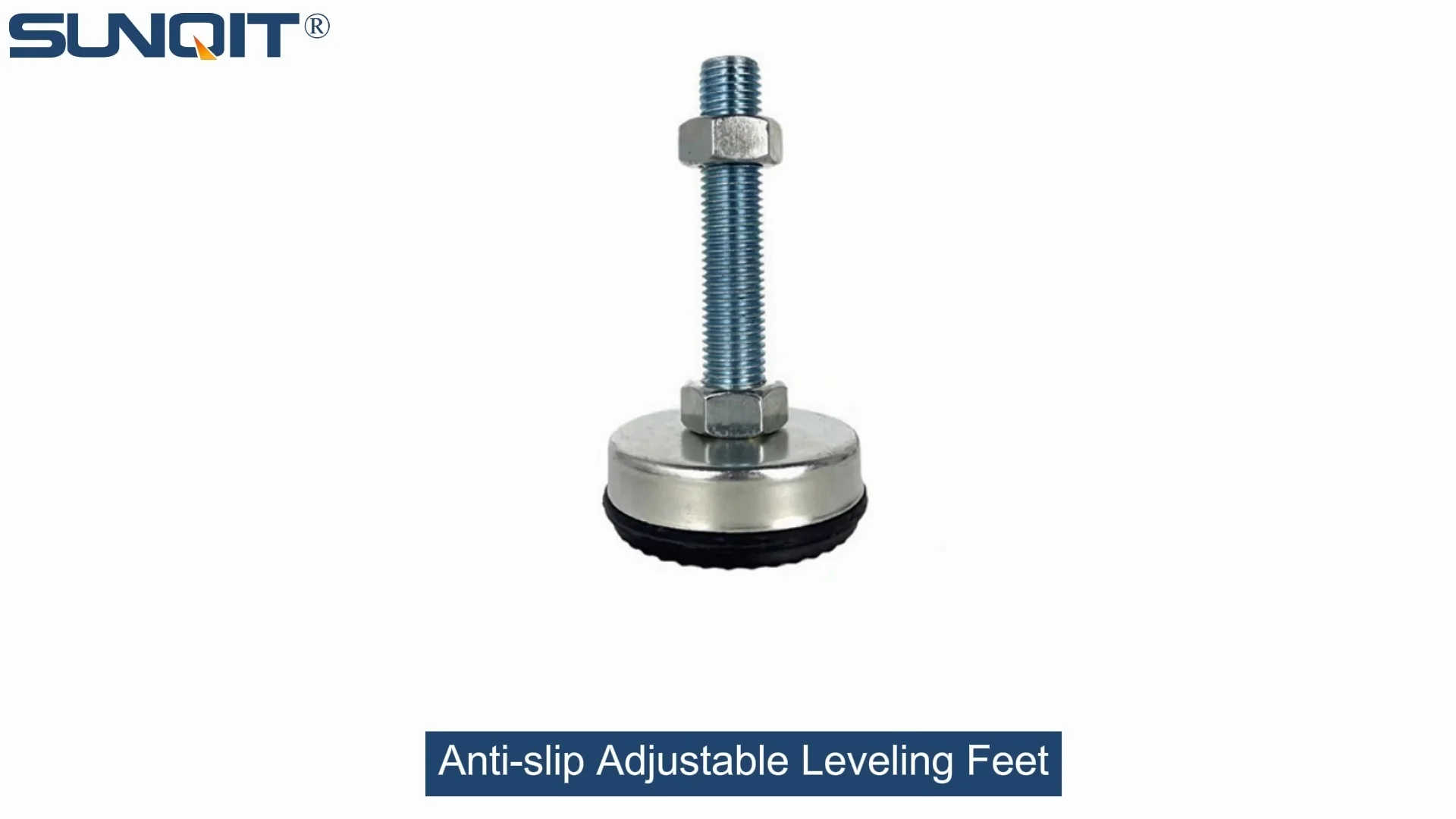
Anti-slip Adjustable Leveling Feet
Anti-slip Adjustable Leveling Feet are designed to keep machines level when placed on uneven or sloped ground, the rubber base will prevent product slip during work.
The Hidden Hero of a Stable Workspace
Walk into any modern workshop, factory floor, or lab, and you'll notice something crucial but often overlooked: the workbench. It's the silent backbone of daily operations—where parts are assembled, tools are organized, and ideas turn into products. But here's the thing: even the sturdiest workbench can fall short if it's not standing on the right foundation. Uneven floors, wobbly surfaces, and slippery feet can turn a productive space into a frustrating, even dangerous, one. That's where anti-slip adjustable leveling feet come in. These small but mighty components are the unsung heroes that transform a basic workstation into a stable, efficient, and adaptable hub—especially in modular setups built with aluminum profiles, lean pipe workbenches, and other flexible systems.
Let's start with the obvious: floors are rarely perfect. Whether it's a concrete slab with minor cracks, a warehouse with uneven wear, or a lab with subtle slopes, uneven surfaces are everywhere. A workbench without adjustable feet might rock back and forth, making it hard to focus. Imagine trying to assemble tiny electronics components on a wobbly surface—one wrong move, and a part could slip, get damaged, or worse, cause a mistake that derails an entire production run. Or think about a lean pipe workbench in a busy manufacturing plant: if it's not level, tools slide off, workers hunch to compensate, and over time, that instability adds up to wasted time, sore muscles, and even safety risks.
Traditional fixed feet? They're a band-aid at best. They might work on perfectly flat floors, but in the real world, they're rigid and unforgiving. That's why anti-slip adjustable leveling feet have become a game-changer. They don't just "level" a workstation—they adapt to it. With a simple twist, you can raise or lower each foot to match the floor's quirks, ensuring the entire surface stays steady. And the anti-slip feature? That's the cherry on top. It keeps the workstation rooted in place, even when tools are moved, parts are stacked, or workers lean against it. No more sliding, no more sudden shifts—just a solid base that lets everyone focus on what matters: getting the job done.
What Makes Anti-Slip Adjustable Leveling Feet Different?
Not all leveling feet are created equal. The best anti-slip adjustable models combine three key traits: adaptability, grip, and durability. Let's break them down.
1. Adjustability: One Size Fits… All Floors
The "adjustable" part is straightforward but powerful. Most anti-slip leveling feet use a threaded rod design: twist the foot clockwise to lower it, counterclockwise to raise it. This lets you fine-tune each corner of a workbench, even if the floor dips by just a few millimeters. For example, a modular workstation built with aluminum profiles—known for their lightweight strength and easy customization—often needs precise leveling to align with conveyor belts or material racks. With adjustable feet, you can tweak the height by up to 20mm or more, ensuring the workbench integrates seamlessly with the rest of your setup. No more shimming with cardboard or wood scraps (we've all been there) to prop up a wobbly corner—just a clean, tool-free adjustment that takes seconds.
2. Anti-Slip Grip: Traction That Sticks
Adjustability keeps the workstation level; anti-slip keeps it stable . The base of these feet is usually made of high-quality rubber or a rubber-like compound—materials chosen for their friction. When pressed against the floor, they form a tight grip that resists sliding, even under heavy loads. Think about a workbench in a busy auto parts shop, where mechanics regularly push and pull heavy toolboxes across the surface. Without anti-slip feet, the entire bench might shift with each movement, creating a hazard. But with rubberized bases? The feet "grab" the floor, turning the workstation into an anchor. Some models even have textured or grooved bases to enhance traction, making them ideal for smooth floors like tile or polished concrete.
3. Durability: Built to Outlast the Workbench Itself
Workbenches take a beating. They're exposed to oil, chemicals, heavy tools, and constant use. So their feet need to keep up. The best anti-slip adjustable leveling feet are built with tough materials: stainless steel rods to resist rust, reinforced rubber bases that don't crack or degrade, and corrosion-resistant coatings for humid or messy environments (like food processing plants or labs with frequent cleaning). Unlike cheap plastic feet that wear down in months, these models last years—even decades—making them a smart long-term investment for any modular system.

How They Play Nice with Modular Systems
Modular workstations are all about flexibility. Aluminum profiles, lean pipe workbenches, and t-slot aluminum pipes let you reconfigure layouts on the fly—adding shelves, attaching conveyor belts, or moving stations to adapt to new projects. But that flexibility only works if every component plays well together. Anti-slip adjustable leveling feet aren't just add-ons; they're integral to this ecosystem. Here's how they fit in:
Aluminum Profiles: These lightweight, strong frames are the backbone of modern modular workbenches. Most aluminum profile systems have pre-drilled holes or t-slots that make attaching leveling feet a breeze. You can screw them directly into the profile's base, ensuring a secure fit that won't loosen over time. And since aluminum profiles are often used in cleanrooms or labs where precision matters, the adjustability of these feet ensures the entire setup stays level, even when the bench is extended with extra shelves or material racks.
Lean Pipe Workbenches: Lean manufacturing thrives on efficiency, and lean pipe workbenches are designed to minimize waste. But a wobbly bench wastes time and energy. Anti-slip adjustable feet complement this ethos perfectly. They're easy to install on the pipe frames, and their adjustability means you can level the bench even if it's loaded with heavy tools or parts. Plus, since lean systems often involve frequent reconfigurations (adding a new shelf here, moving a bin there), these feet let you quickly readjust stability whenever the setup changes.
Caster Wheels: A Dynamic Duo Here's a pro tip: pair anti-slip adjustable leveling feet with caster wheels, and you've got a workstation that's both mobile and stable. Many modular workbenches come with casters for easy movement—great for repositioning during deep cleans or relocating to a new project area. But once you're in place, you need to lock it down. That's where leveling feet shine. Some models even have a "lockable" design: when you want to move the bench, retract the feet and use the casters; when you're set, extend the feet to lift the casters off the ground, relying on the anti-slip base for stability. It's the best of both worlds—mobility when you need it, rock-solid stability when you don't.

The Benefits That Go Beyond "Level"
Stability is just the start. Anti-slip adjustable leveling feet bring a host of benefits that ripple through your entire operation:
- Safety First: A stable workstation reduces the risk of slips, trips, and falls. No more tools sliding off, no more workers losing balance—just a secure space where everyone can focus on the task, not the wobble.
- Better Ergonomics: When a workbench is level, workers stand or sit comfortably, reducing strain on backs, shoulders, and necks. Over time, this leads to fewer injuries, happier teams, and lower absenteeism.
- Improved Quality Control: Precision work (like electronics assembly or lab testing) demands a steady surface. With leveling feet, measurements are accurate, parts align correctly, and mistakes drop—meaning fewer defects and higher-quality products.
- Longer Workbench Lifespan: A wobbly workstation puts extra stress on its frame, joints, and shelves, leading to premature wear. Leveling feet distribute weight evenly, reducing strain and extending the life of your aluminum profile or lean pipe setup.
- Customization for Every Need: Not all workbenches are the same. A lab bench holding sensitive equipment might need extra height adjustment; a factory workbench with heavy machinery might need higher load capacity. Anti-slip adjustable feet come in a range of sizes, load ratings, and materials, so you can pick the perfect fit for your unique setup.

Choosing the Right Anti-Slip Adjustable Leveling Feet: Key Factors to Consider
With so many options on the market, how do you pick the right feet for your workstation? Here are the critical factors to keep in mind:
| Factor | What to Look For | Example Scenario |
|---|---|---|
| Load Capacity | Check the maximum weight each foot can support (usually listed in kg or lbs). For heavy workbenches with tools, aim for 200-500kg per foot. | A lean pipe workbench in an auto shop holding a 300kg tool chest needs feet rated for at least 100kg each (4 feet total). |
| Adjustment Range | Look for a range of 10-50mm. More adjustability means better adaptability to uneven floors. | A warehouse with a 25mm floor dip? Choose feet that adjust up to 30mm to compensate. |
| Anti-Slip Material | Rubber or thermoplastic elastomer (TPE) bases work best for traction. Avoid hard plastics, which can slide on smooth floors. | A lab with polished concrete floors needs rubber-based feet to prevent slipping during experiments. |
| Environmental Resistance | Stainless steel rods for humid/damp areas; chemical-resistant rubber for labs or factories with oils/solvents. | A food processing plant needs feet with corrosion-resistant coatings to handle daily washdowns. |
| Compatibility | Ensure the feet fit your workstation's frame (aluminum profile, lean pipe, etc.). Look for universal mounts or model-specific designs. | An aluminum profile workbench with 40x40mm t-slots needs feet with compatible mounting brackets. |
Don't forget to test! If possible, sample a few models and see how they perform on your actual floor. A foot that works well on concrete might struggle on tile, so real-world testing beats specs on paper every time.
From Factories to Labs: Where These Feet Make a Difference
Anti-slip adjustable leveling feet aren't just for manufacturing. Their versatility makes them indispensable across industries:
Electronics Manufacturing: Precision is everything here. A wobbly workbench can ruin delicate circuit board assemblies. Leveling feet ensure microscopes, soldering irons, and component trays stay steady, reducing defects and rework.
Medical Labs: Labs deal with sensitive equipment (centrifuges, scales) and hazardous materials. A stable surface is non-negotiable. Anti-slip feet keep workbenches from shifting during experiments, protecting samples and ensuring accurate results.
Automotive Workshops: Heavy tools, oily floors, and constant movement—this is where durability and anti-slip grip shine. Leveling feet keep tool benches stable, even when mechanics lean on them while wrenching on car parts.
Retail Warehouses: Material racks and packing stations need to stay level to prevent boxes from sliding. Adjustable feet adapt to warehouse floor wear, keeping inventory organized and safe.
Schools and Makerspaces: With students and hobbyists moving tools and projects, safety is key. Leveling feet reduce the risk of accidents, letting learners focus on creativity, not balance.
Investing in the Foundation: Why It Matters
It's easy to overlook leveling feet when building a workstation. After all, they're small, and there are bigger, flashier components to consider—like the aluminum profile frame or the sleek worktop. But here's the truth: a workstation is only as good as its base. Skimp on feet, and you'll pay for it in lost productivity, safety risks, and constant frustration. Invest in high-quality anti-slip adjustable leveling feet, and you're not just buying a part—you're investing in stability, efficiency, and peace of mind.
Think about it: A typical workbench is used 8+ hours a day, 5 days a week. Over a year, that's 2,000+ hours of operation. A stable workstation means workers can focus on their tasks, not the bench. It means fewer mistakes, less waste, and a smoother workflow. And in lean systems—where every second counts—those small gains add up to big results.
So the next time you're setting up a modular workspace—whether it's a lean pipe workbench, an aluminum profile station, or a custom lab setup—don't forget the feet. They might be small, but they're the foundation of a workspace that works with you, not against you. Stable, adaptable, and built to last—anti-slip adjustable leveling feet are the quiet power behind a productive day.