- Company Articles
- Products and Technology
- Product knowledge
- Anti-Slip Adjustable Leveling Feet for Small Parts Assembly Workstations

Anti-Slip Adjustable Leveling Feet for Small Parts Assembly Workstations
Related Product
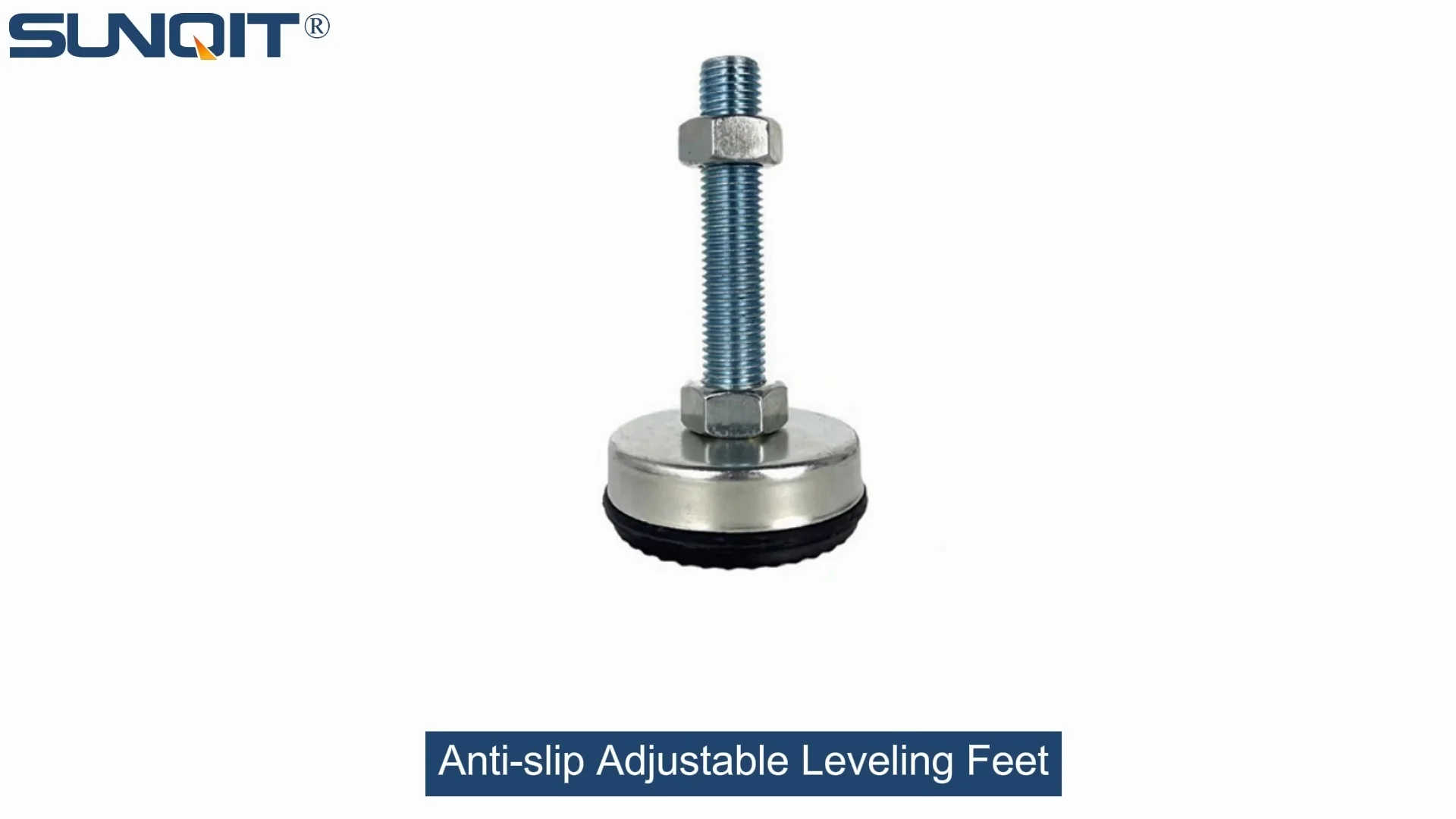
Anti-slip Adjustable Leveling Feet
Anti-slip Adjustable Leveling Feet are designed to keep machines level when placed on uneven or sloped ground, the rubber base will prevent product slip during work.
The Hidden Cost of a Wobbly Workbench
Walk into any small parts assembly line, and you'll likely see workers hunched over intricate components—circuit boards with tiny resistors, medical device parts no bigger than a fingernail, or precision mechanical pieces that demand millimeter-perfect alignment. What you might not notice, though, is the quiet battle they're fighting every day: the instability of their workbench. A table that rocks slightly when leaned on, a surface that shifts when a tool is set down, or a leg that skids on a dusty factory floor might seem trivial. But in a world where a single misplaced screw can scrap an entire product, that "trivial" instability is costing time, money, and even worker morale.
I've talked to assembly line supervisors who've watched in frustration as a technician, mid-assembly, pauses to steady a wobbling workbench for the third time that hour. "It's not just the 10 seconds they spend adjusting it," one told me. "It's the mental toll. When you're trying to focus on something smaller than a grain of rice, a wobbly surface makes you second-guess every move." And then there are the accidents: tools sliding off, parts rolling onto the floor, even workers losing balance. These aren't just productivity killers—they're safety risks, too.
This is where anti-slip adjustable leveling feet step in. They're not the flashiest tools in the lean manufacturing toolkit—you won't see them in glossy brochures for assembly systems—but they're the backbone of a stable workstation. Think of them as the foundation of a house: you don't notice them until they're missing, but everything else falls apart without them. In this article, we'll dive into why these unassuming components matter, how they integrate with systems like lean pipe workbenches and aluminum profiles, and why they're a must-have for anyone serious about small parts assembly.
What Are Anti-Slip Adjustable Leveling Feet, Anyway?
At their core, anti-slip adjustable leveling feet are exactly what their name suggests: devices attached to the bottom of workbenches, racks, or machinery to stabilize them on uneven surfaces. But "adjustable" is key here. Unlike fixed feet, these can be screwed up or down to compensate for dips, bumps, or sloped floors—common in older factories or spaces where heavy equipment has worn down the concrete. The "anti-slip" feature, often a rubber or textured base, ensures the workstation stays put even when pushed or pulled, preventing dangerous shifts during use.
But they're more than just glorified screws. Modern leveling feet come in a range of designs to suit different needs. Some have threaded stems that screw directly into the workbench leg, allowing for precise height adjustments. Others use suction-cup bases for extra grip on smooth floors. Heavy-duty models can support thousands of pounds, making them ideal for workbenches loaded with tools and materials. And many are made with corrosion-resistant materials, like stainless steel or aluminum, to stand up to the grease, oil, and moisture of factory environments.
What makes them especially valuable for small parts assembly is their versatility. They pair seamlessly with popular workstation setups, from simple wooden tables to modular lean pipe workbenches—those flexible, customizable setups built with aluminum profiles and connectors that are a staple in lean manufacturing. Whether your workstation is stationary or on casters (more on that later), leveling feet ensure it stays steady when it matters most.

Why Stability Is Non-Negotiable in Small Parts Assembly
Let's get specific: why does stability matter so much when assembling small parts? For starters, precision. Imagine soldering a 0.5mm wire to a circuit board. If the workbench shifts even 1mm mid-solder, you could bridge two connections, rendering the board useless. That's a $50 component ruined, plus the time to redo the work. Multiply that by 10 shifts a week, and suddenly "minor" instability is costing thousands.
Then there's ergonomics. A stable workstation lets workers sit or stand comfortably, maintaining proper posture without straining to compensate for a wobble. When a workbench is unlevel, people often lean to one side or hunch over to steady themselves—leading to back pain, neck strain, and fatigue. Over time, this increases absenteeism and turnover, two major drains on lean system efficiency.
And let's not forget safety. Small parts assembly often involves sharp tools, adhesives, or even hazardous materials. A slippery workbench leg could cause the entire setup to slide, spilling chemicals or sending a utility knife skittering across the floor. OSHA reports that slips, trips, and falls are among the top causes of workplace injuries, and unstable equipment is a leading contributor. Anti-slip leveling feet don't just stabilize—they actively prevent these accidents by gripping the floor, even in dusty or oily conditions.

How Anti-Slip Leveling Feet Fit Into the Lean System Puzzle
Lean manufacturing is all about eliminating waste—whether it's time, materials, or effort. A stable workstation might not seem like a "lean tool" at first, but it's actually a cornerstone of the lean system philosophy. Here's why:
Reduced Rework: Lean thrives on "first-time right" production. A stable workbench minimizes errors, meaning fewer defective parts and less time spent reworking. One electronics manufacturer I worked with reported a 15% drop in rework rates after installing anti-slip leveling feet on their small parts benches. "We used to have a bin labeled 'oops' by every station," the plant manager laughed. "Now it's collecting dust."
Improved Flow: In lean, workflow is king. A workstation that's always needing adjustment disrupts the flow—workers wait for tools, parts get delayed, and bottlenecks form. Leveling feet keep the line moving by ensuring each station is reliable. No more stopping to fix the workbench; just steady, consistent production.
Worker Engagement: Lean isn't just about processes—it's about people. When workers see that their employer cares about their comfort and safety enough to invest in small upgrades like stable feet, morale climbs. "It sounds silly, but that little rubber foot under my bench makes me feel like someone's looking out for me," a technician told me. "I'm more focused, less stressed, and I take more pride in my work." Happy workers are more productive workers—another win for lean.

Choosing the Right Leveling Feet: A Comparison Guide
Not all leveling feet are created equal. The best choice depends on your workstation type, floor conditions, and load requirements. Here's a breakdown of common types to help you decide:
| Type of Leveling Foot | Key Features | Best For | Anti-Slip Rating | Load Capacity (per foot) |
|---|---|---|---|---|
| Threaded Rubber-Base Feet | Adjustable via threaded stem; rubber base for grip; corrosion-resistant steel stem | Standard lean pipe workbenches, aluminum profile setups | High (rubber grips on concrete, tile, or wood) | Up to 1,500 lbs |
| Suction-Cup Leveling Feet | Vacuum-style suction base; ideal for smooth floors (e.g., epoxy, polished concrete) | Cleanrooms, labs, or areas with minimal debris | Very High (suction prevents sliding even with lateral force) | Up to 800 lbs (suction weakens with heavy loads) |
| Heavy-Duty Steel Feet with Polyurethane Pads | Reinforced steel construction; polyurethane pad resists oil, chemicals, and abrasion | Workstations with heavy tools, material racks, or machinery | Medium-High (polyurethane grips well but less flexible than rubber) | Up to 5,000 lbs |
| Swivel-Head Leveling Feet | Head rotates to adapt to uneven floors; often used with caster wheels for mobile workstations | Workbenches that need mobility (e.g., turnover trolleys) but stability when in use | Medium (swivel design can reduce grip on very uneven surfaces) | Up to 2,000 lbs |
Pro tip: If your workstation uses caster wheels for mobility (common in lean setups where workbenches are moved between stations), pair them with leveling feet that can be engaged when the workstation is in use. Many casters come with a locking feature, but adding leveling feet ensures even more stability—no more "rocking" between locked casters on uneven floors.
Real-World Impact: How One Factory Cut Errors by 30% with Leveling Feet
Let's take a look at a real example. A medical device manufacturer in Ohio was struggling with a 12% error rate on their insulin pump assembly line. The parts were tiny—spring-loaded mechanisms smaller than a AA battery—and technicians were consistently misaligning components. The supervisor, Maria, suspected the workbenches were the issue. "The floors here are old, with cracks and dips from years of heavy equipment," she explained. "We'd level the tables with shims, but they'd shift by the end of the day."
Maria's team decided to test anti-slip adjustable leveling feet on three workstations. The results were immediate. "Within a week, the error rate on those stations dropped to 4%," she said. "The technicians noticed right away. One told me, 'I didn't realize how much energy I was wasting steadying the table until I didn't have to.'" Encouraged, they rolled out the feet across all 15 assembly stations. Three months later, the overall error rate was down to 8%—a 30% improvement. And perhaps more importantly, Maria noted, "The grumbling stopped. People aren't complaining about back pain anymore, and we've had zero tool-slip accidents since the upgrade."
This isn't an isolated story. I've heard similar feedback from automotive part suppliers, electronics manufacturers, and even jewelry makers. The common thread? Stability breeds confidence, and confidence breeds precision.
Integration with Lean Pipe Workbenches and Aluminum Profiles
If you're using a lean pipe workbench—those modular setups built with aluminum profiles, connectors, and accessories—you're already ahead in the efficiency game. These workbenches are designed for flexibility: you can add shelves, tool holders, or lighting as needed, and reconfigure them in minutes. But even the most modular bench is only as good as its foundation. That's where anti-slip adjustable leveling feet shine.
Aluminum profiles, known for their lightweight strength, are a popular choice for lean workbenches. They're easy to cut, drill, and assemble, making them perfect for custom setups. Most aluminum profile systems come with pre-drilled holes at the base, making it simple to attach leveling feet. Just screw the threaded stem into the hole, adjust the height to level the bench, and the rubber base does the rest. No special tools, no complicated modifications—just a stable workstation in minutes.
And because aluminum is corrosion-resistant, pairing it with stainless steel or aluminum leveling feet creates a setup that can handle harsh factory environments. I visited a food packaging plant once where the workbenches were exposed to daily washdowns. Their aluminum profile benches, fitted with stainless steel leveling feet, had been in use for five years with zero rust or degradation. "We used to replace wooden workbenches every 18 months," the maintenance manager said. "These? They'll outlast me."
Installation and Maintenance: Keeping Your Feet (and Workbench) Happy
Installing anti-slip adjustable leveling feet is usually a one-person job. Here's a quick step-by-step:
- Assess the floor: Use a level to check for unevenness. Mark areas where the workbench currently wobbles.
- Attach the feet: Screw the leveling feet into the pre-drilled holes on your workbench legs. For wooden benches, you may need to drill pilot holes first.
- Level the workstation: Adjust each foot by turning the stem clockwise (to lower) or counterclockwise (to raise) until the bench is stable and level.
- Test for slip: Push gently on all corners of the bench. If it moves, tighten the feet or replace the rubber base if it's worn.
Maintenance is equally straightforward. Wipe the rubber bases clean periodically to remove dust or oil, which can reduce grip. Check the threads for debris and lubricate them with a light oil if they start to stick. If a base becomes cracked or worn, replace it—most suppliers sell replacement bases separately, so you don't need to buy a whole new foot.
One final tip: if your workstation uses casters for mobility, look for leveling feet with a "lock and level" design. These let you flip the feet down when the bench is in use (to stabilize it) and flip them up when you need to roll it to a new location. It's the best of both worlds: mobility and stability, no compromises.
The Bottom Line: Stability as a Lean Investment
Anti-slip adjustable leveling feet might not be the sexiest purchase on your lean system checklist. They won't get featured in training videos or win awards for innovation. But in the quiet, day-to-day work of small parts assembly, they're the unsung heroes. They turn frustrating, error-prone workstations into havens of precision. They turn sore, stressed workers into focused, confident contributors. And they turn wobbly, wasteful processes into streamlined, efficient operations.
Think of it this way: a single error caused by an unstable workbench can cost hundreds of dollars in materials and labor. A set of four high-quality leveling feet costs less than $50. That's not just a purchase—that's an investment with a return measured in days, not years.
So the next time you walk through your assembly line, take a closer look at those workbenches. Are they standing steady? Or are they quietly undermining your team's hard work? If it's the latter, maybe it's time to give your workstation the foundation it deserves. Your technicians will thank you, your bottom line will thank you, and your lean system will run smoother than ever.