- Company Articles
- Products and Technology
- Product knowledge
- Anti-Slip Adjustable Leveling Feet for Storage Racks in Logistics Centers

Anti-Slip Adjustable Leveling Feet for Storage Racks in Logistics Centers
Related Product
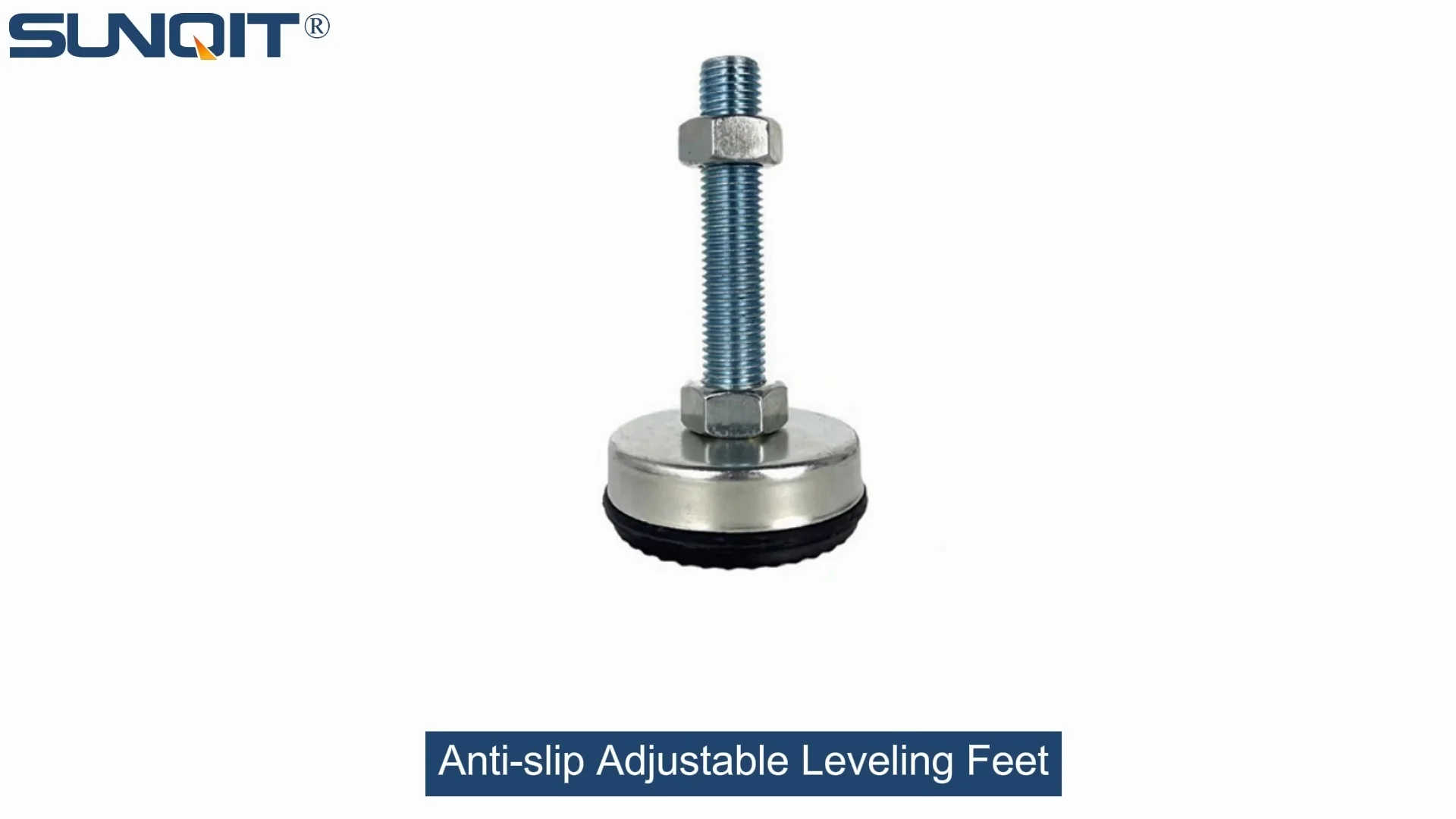
Anti-slip Adjustable Leveling Feet
Anti-slip Adjustable Leveling Feet are designed to keep machines level when placed on uneven or sloped ground, the rubber base will prevent product slip during work.
In the bustling world of logistics centers, where every second counts and precision is non-negotiable, the focus often lands on high-tech sorting systems, automated conveyor belts, or advanced inventory software. But if you ask any warehouse manager or frontline worker, they'll tell you: the real backbone of a smooth operation isn't always the flashy tech—it's the unsung components that keep everything steady, safe, and efficient. Today, we're shining a light on one such hero: anti-slip adjustable leveling feet . These small but mighty parts play a critical role in stabilizing storage racks, and in turn, keeping your entire logistics workflow running like a well-oiled machine.
Logistics centers are dynamic environments. Pallet jacks zoom by, forklifts unload heavy cargo, and workers hustle to meet tight deadlines. Amidst this chaos, storage racks stand tall, holding everything from fragile electronics to bulk consumer goods. But here's the problem: no warehouse floor is perfect. Over time, concrete cracks, shifts, or develops uneven patches from years of heavy use. Even new facilities can have minor inconsistencies in flooring. When racks aren't properly leveled, the consequences range from annoying to catastrophic—wobbly shelves, shifting products, and even safety hazards that put your team and inventory at risk. That's where anti-slip adjustable leveling feet step in. They're not just "feet" for racks; they're the foundation of stability in an industry where instability can cost thousands.
Why Stability Matters: The Hidden Costs of Wobbly Racks
Let's start with the basics: why does rack stability matter so much? For logistics centers, storage racks aren't just pieces of equipment—they're the infrastructure that holds your business's most valuable assets: your inventory. A single unstable rack can trigger a domino effect of problems, many of which come with hidden costs that eat into your bottom line.
1. Product Damage: When "Minor" Tilt Becomes Major Loss
Imagine a rack that's tilted just 2 degrees. It might not look like much, but over a 10-foot height, that tilt translates to several inches of misalignment. Stacked boxes, especially those with irregular shapes or fragile contents, start to shift. A slight nudge from a passing pallet jack, or even a gust of wind from an open loading dock, and suddenly you're looking at a pile of damaged goods. Electronics get scratched, glassware shatters, and perishables get crushed. The cost? Not just the price of replacing the items, but also the time spent cleaning up, processing returns, and reordering stock. For a mid-sized logistics center, this could add up to tens of thousands of dollars annually—all because of a preventable lack of stability.
2. Worker Safety: The Human Cost of Instability
Your team is your most important resource, and unstable racks put them directly in harm's way. A rack that wobbles while a worker is retrieving a box can lead to slips, trips, or even falling debris. In 2023, the Occupational Safety and Health Administration (OSHA) reported that over 15% of warehouse injuries are related to unstable storage equipment. These injuries don't just result in medical bills; they lead to lost workdays, decreased morale, and potential legal liabilities. Anti-slip adjustable leveling feet aren't just about protecting inventory—they're about protecting the people who keep your operation moving.
3. Operational Inefficiency: When Time Slips Through the Cracks
Wobbly racks slow down every step of the workflow. Workers hesitate to stack items too high, fearing the rack might tip. Picking becomes a, time-consuming process as employees adjust boxes to prevent them from sliding. Even inventory checks take longer, as staff double-check shelf alignment. Over time, these small delays add up. A study by the Material Handling Industry (MHI) found that unstable storage systems can reduce warehouse productivity by up to 20%—that's hours of lost work each day, all because racks aren't properly leveled.
Key Takeaway: Stability isn't a "nice-to-have"—it's a foundational requirement for efficient, safe, and cost-effective logistics operations. And at the heart of that stability? Anti-slip adjustable leveling feet.
Meet the Solution: What Are Anti-Slip Adjustable Leveling Feet?
Now that we've covered the problem, let's dive into the solution. Anti-slip adjustable leveling feet are specialized components designed to attach to the base of storage racks, workbenches, and material handling equipment. Their primary job? To compensate for uneven floors, absorb vibrations, and prevent slipping—all while keeping the rack perfectly level.
How Do They Work?
At first glance, they might look simple: a threaded rod, a base plate, and an anti-slip pad. But their design is surprisingly clever. The threaded rod allows you to "adjust" the height of each foot by twisting it—so if one corner of the rack is higher than the others, you simply extend the leveling foot on that side to raise the rack, or retract it to lower it. This fine-tuning ensures the rack sits evenly, even on floors with cracks or slopes.
The base plate, usually made of durable steel or aluminum, distributes the rack's weight evenly across the floor, reducing pressure points that can cause further floor damage. And the anti-slip pad—often made of rubber, polyurethane, or textured plastic—creates friction between the foot and the floor, preventing the rack from sliding even when bumped by heavy equipment. Some models even include locking nuts to keep the adjustment in place, so once you've leveled the rack, it stays level.
A Closer Look at Key Features
Not all leveling feet are created equal. The best ones for logistics centers come with a few critical features:
- Load Capacity: Logistics racks hold thousands of pounds, so leveling feet must be rated to handle heavy loads. Look for options that support 1,000+ pounds per foot—more if you're storing industrial or bulk items.
- Corrosion Resistance: Warehouses are often humid, dusty, or exposed to spills. Leveling feet with zinc plating, stainless steel, or powder-coated finishes stand up to these conditions without rusting or deteriorating.
- Adjustment Range: Floors can be surprisingly uneven. A good leveling foot should offer at least 1–2 inches of adjustment to accommodate dips or bumps.
- Non-Marking Pads: For facilities with polished concrete or sensitive flooring, non-marking pads prevent scuffs and scratches—keeping your warehouse looking professional and avoiding costly floor repairs.

Types of Anti-Slip Adjustable Leveling Feet: Finding the Right Fit for Your Racks
Just as every logistics center has unique needs—whether you're storing lightweight electronics or heavy automotive parts—there are different types of leveling feet to match. Let's break down the most common options, and when to use each.
| Type of Leveling Foot | Key Materials | Best For | Pros | Cons |
|---|---|---|---|---|
| Standard Rubber-Pad Leveling Feet | Zinc-plated steel rod, rubber pad | General-purpose racks, dry environments | Affordable, good grip, easy to install | Rubber pad may wear faster in high-traffic areas |
| Heavy-Duty Polyurethane-Pad Feet | Stainless steel rod, polyurethane pad | Heavy loads (2,000+ lbs/foot), wet or oily floors | Superior anti-slip, chemical resistant, long-lasting | More expensive than rubber |
| Swivel-Head Leveling Feet | Aluminum or steel, swivel base plate | Extremely uneven floors, racks with angled bases | Base plate swivels to match floor slope, maximum contact | May require locking mechanism to prevent rotation |
| Low-Profile Leveling Feet | Compact steel rod, thin base plate | Racks with limited clearance, workbenches | Fits in tight spaces, doesn't raise rack height excessively | Less adjustment range than standard models |
Case in Point: Material Rack B (3 Row and 3 Floor)
Let's take a real-world example: Material Rack B (3 row and 3 floor) , a popular choice for logistics centers storing medium-sized boxes or parts. This rack is designed to hold up to 1,500 pounds per shelf, with three rows and three floors of storage space. For a rack like this, stability is key—especially when fully loaded. A standard rubber-pad leveling foot might work in a dry, low-traffic area, but if the rack is near a loading dock where spills are common, a heavy-duty polyurethane-pad foot would be smarter. And if the floor in that section has a noticeable slope? A swivel-head leveling foot would ensure the base plate stays flat, preventing the rack from tipping.

Integrating with Lean Systems: Stability as a Foundation for Efficiency
In logistics, lean system principles—eliminating waste, streamlining workflows, and continuous improvement—are the gold standard for efficiency. But here's the thing: you can't build a lean system on unstable ground. Anti-slip adjustable leveling feet might seem like a small detail, but they're a critical part of creating the stable, predictable environment lean systems require.
How Leveling Feet Support Lean Goals
Lean systems thrive on consistency. When racks are level and stable, everything else falls into place:
- Reduced Waste: No more damaged inventory from shifting boxes—meaning less waste and lower costs.
- Faster Picking: Workers can move quickly and confidently, knowing racks won't wobble as they retrieve items. This cuts down on "non-value-added" time spent stabilizing products.
- 5S Compliance: The "Set in Order" step of 5S (a core lean practice) requires tools and inventory to be stored in a way that's easy to access. Level racks mean products stay where they're supposed to, making organization effortless.
- Continuous Improvement: Stable racks are easier to measure and optimize. For example, you can accurately track how much weight each shelf holds, or adjust spacing to fit more inventory—something that's hard to do with a wobbly rack.
Case Study: Lean Transformation with Leveling Feet
BrightStar Logistics, a regional distribution center in Texas, was struggling to meet their lean goals. Their main issue? Unstable racks in the dry goods section, which were causing weekly product damage and slowing down pickers. After consulting with their lean system supplier , they replaced all standard rack feet with heavy-duty anti-slip adjustable leveling feet. The results were striking: in six months, damaged goods dropped by 65%, picking speed increased by 22%, and their 5S audit scores rose from "Needs Improvement" to "Excellent." As their warehouse manager put it: "We spent so much time optimizing our software and training our team, but we forgot the basics. The leveling feet were the missing piece."

Installation and Maintenance: Keeping Your Racks Stable for Years
Investing in anti-slip adjustable leveling feet is smart—but only if they're installed and maintained properly. Here's how to get the most out of them:
Installation Tips
- Start with a Clean Slate: Sweep or vacuum the area under the rack to remove debris that could prevent the feet from sitting flat.
- Level Before Loading: Install the feet and adjust them while the rack is empty. Use a spirit level to check both front-to-back and side-to-side.
- Lock It In: Once level, tighten the locking nut (if included) to prevent the foot from twisting out of place over time.
- Test the Grip: Give the rack a gentle push from all sides to ensure it doesn't slide. If it moves, check the anti-slip pad—you may need a higher-friction material.
Maintenance Routine
Like any equipment, leveling feet need regular check-ups to stay effective:
- Monthly Inspections: Look for loose locking nuts, worn anti-slip pads, or bent rods. Tighten nuts and replace pads at the first sign of wear.
- Quarterly Cleaning: Wipe down the feet and pads to remove oil, dust, or debris that could reduce grip.
- After Major Events: If the warehouse has heavy rainfall, flooding, or construction work, recheck the level—shifts in the floor can occur unexpectedly.
Choosing the Right Supplier: More Than Just a Part
Not all leveling feet are created equal, and neither are suppliers. When shopping for anti-slip adjustable leveling feet, look for a partner who understands logistics—not just parts. A good lean system supplier will take the time to assess your specific needs: the type of racks you use (like Material Rack B), the weight of your inventory, the condition of your floors, and your lean goals. They'll recommend the right feet for the job, not just the most expensive ones.
Key questions to ask: Do they offer custom sizing? Can they provide load capacity ratings? Do their feet comply with OSHA or ANSI standards? A supplier who answers these questions confidently is one who will help you build a stable, efficient logistics operation for the long haul.
Conclusion: Elevating Logistics Efficiency, One Foot at a Time
In the fast-paced world of logistics, it's easy to overlook the small components. But as we've seen, anti-slip adjustable leveling feet are anything but small. They're the foundation of stable storage racks, which in turn are the foundation of safe, efficient, and lean operations. From reducing product damage to speeding up workflows, these unassuming parts deliver a return on investment that far outweighs their cost.
So the next time you walk through your warehouse, take a moment to look down. Are your racks standing steady? If not, it might be time to invest in the unsung heroes of logistics stability. After all, in an industry where every detail matters, the right feet can lift your entire operation to new heights of success.