- Company Articles
- Products and Technology
- Application Cases
- Anti-Slip Adjustable Leveling Feet for Uneven Floors: Warehouse Logistics Applications

Anti-Slip Adjustable Leveling Feet for Uneven Floors: Warehouse Logistics Applications
Related Product
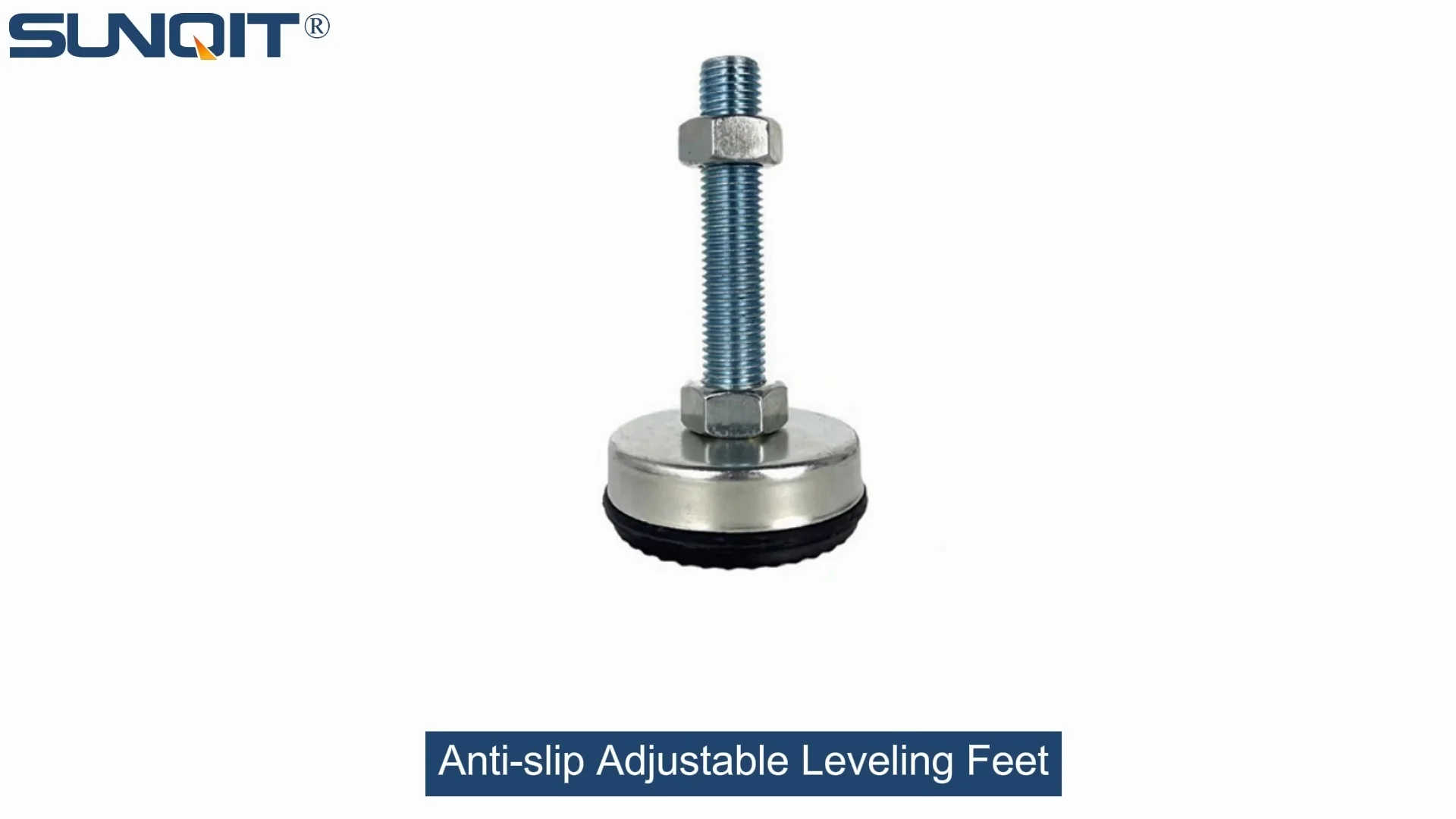
Anti-slip Adjustable Leveling Feet
Anti-slip Adjustable Leveling Feet are designed to keep machines level when placed on uneven or sloped ground, the rubber base will prevent product slip during work.
In the fast-paced world of warehouse logistics, every detail matters. From the speed of order fulfillment to the safety of workers, efficiency and reliability are the backbone of successful operations. Yet, there's one silent culprit that often undermines these goals: uneven floors. Whether due to years of heavy equipment traffic, poor initial construction, or natural settling, uneven floors are a common headache in warehouses, distribution centers, and manufacturing facilities. They disrupt workflows, compromise safety, and even damage valuable equipment. Enter anti-slip adjustable leveling feet—a simple yet transformative solution that's quietly revolutionizing how warehouses tackle floor irregularities. In this article, we'll explore how these unassuming components are becoming indispensable in warehouse logistics, with a focus on their applications, benefits, and real-world impact.
The Hidden Challenge of Uneven Floors in Warehouses
Walk into any warehouse, and you'll likely notice the hustle: forklifts zipping by, workers loading pallets, conveyors moving products, and workbenches bustling with activity. What you might not immediately see, however, is the unevenness of the floor beneath it all. Concrete floors, the industry standard, are prone to imperfections over time. Cracks, dips, and high spots form from repeated stress—think pallet jacks slamming down, heavy machinery vibrating, or water seeping into tiny gaps and freezing. Even new warehouses can have minor unevenness, with floor levels varying by as much as 0.5 to 1 inch in some areas.
At first glance, these irregularities might seem trivial. But their impact is far-reaching. For starters, unstable equipment is a major safety risk. A wobbly workbench, for example, can cause tools or products to slide off, leading to trips, falls, or damaged inventory. Material racks that lean due to uneven legs are ticking time bombs—overloaded with boxes, they can tip over, endangering workers and halting operations. Conveyors, which rely on precise alignment to move products smoothly, can jam or misfeed if their bases aren't level, leading to bottlenecks and frustrated teams.
Then there's the human cost. Workers pushing turnover trolleys that get stuck on a floor dip or strain to adjust a leaning shelf are more likely to suffer from muscle fatigue or repetitive stress injuries. Over time, this not only reduces productivity but also increases absenteeism and workers' compensation claims. For warehouses handling sensitive items—like electronics on an ESD workstation—uneven surfaces can even compromise functionality. Static discharge, a critical concern in ESD environments, becomes harder to control when equipment isn't stable, putting delicate components at risk of damage.
Traditionally, warehouses have addressed uneven floors with temporary fixes: shimming legs with pieces of wood, stacking metal washers, or even pouring quick-set concrete to level small areas. But these band-aids are short-lived. Wood shims rot or compress; washers slip; concrete patches crack. Worse, they rarely provide the precision needed to truly stabilize equipment. That's where anti-slip adjustable leveling feet come in—offering a durable, customizable solution that adapts to the floor, rather than fighting against it.
What Are Anti-Slip Adjustable Leveling Feet?
At their core, anti-slip adjustable leveling feet are mechanical components designed to stabilize equipment by compensating for uneven surfaces. They consist of three main parts: a threaded stem, an adjustable base, and an anti-slip pad. The stem screws into the equipment's leg or frame, while the base—often made of rubber, polyurethane, or metal—rests on the floor. By rotating the stem, users can raise or lower the base, fine-tuning the height of each leg to ensure the equipment sits perfectly level, even on the most irregular floors.
What sets anti-slip models apart is their base material. Unlike standard leveling feet, which may use smooth plastic or metal bases, anti-slip versions feature textured or high-friction pads (often rubber or silicone) that grip the floor, preventing the equipment from sliding or shifting during use. This is especially critical in high-traffic areas where vibrations or accidental bumps could otherwise destabilize the setup.
These feet come in a range of sizes, load capacities, and materials to suit different applications. For light-duty use—like a small workbench—you might find compact plastic feet with a load capacity of 200-500 pounds. For heavy-duty equipment, such as a Material Rack B (3 row and 3 floor) loaded with industrial parts, there are robust steel or stainless steel models that can support 2,000 pounds or more per foot. Some are even designed for specialized environments, like ESD workstations, where the anti-slip pad is conductive to dissipate static electricity, protecting sensitive electronics.

Key Applications in Warehouse Logistics
Anti-slip adjustable leveling feet aren't a one-size-fits-all solution—they're versatile tools that enhance stability across a wide range of warehouse equipment. Let's dive into their most impactful applications:
1. Workbenches: The Foundation of Precision
Workbenches are the workhorses of warehouse operations. Whether used for assembly, packing, quality control, or as ESD workstations for electronics, they demand stability. A wobbly workbench isn't just annoying—it's a productivity killer. Imagine a worker trying to assemble small components on a surface that shifts with every movement, or a packer struggling to align labels on a box that won't sit flat. The result? Slower tasks, more errors, and frustrated employees.
Anti-slip adjustable leveling feet transform workbenches into pillars of stability. For example, a workbench E (single deck-without caster) , a common model in many facilities, relies entirely on its four legs for support. On an uneven floor, one leg might hover above the ground, causing the bench to rock. By installing leveling feet, operators can adjust each leg individually, ensuring the deck is perfectly flat. The anti-slip pads add an extra layer of security, preventing the bench from sliding even if a heavy object is dropped or a worker leans against it. In ESD environments, this stability is even more critical: a level surface ensures consistent contact between the workstation and anti-static mats, reducing the risk of static discharge that could damage circuit boards or sensitive tech.
2. Material Racks: Safeguarding Inventory
Material racks, like the popular Material Rack B (3 row and 3 floor), are designed to maximize vertical storage space, holding everything from raw materials to finished goods. But their height and heavy loads make them particularly vulnerable to uneven floors. A rack that leans to one side puts uneven stress on its joints and fasteners, weakening the structure over time. Worse, if the lean becomes severe, the rack could collapse, sending boxes crashing to the floor—endangering workers and destroying inventory.
Anti-slip adjustable leveling feet address this by ensuring each leg of the rack bears weight evenly. For a 3-row, 3-floor rack, which might stand 6-8 feet tall and hold hundreds of pounds, even a 0.25-inch difference in floor height can cause a noticeable lean. By screwing leveling feet into each of the rack's legs, warehouse managers can "dial in" the height, making micro-adjustments until the rack is perfectly plumb. The anti-slip pads also prevent lateral movement, so the rack stays anchored during earthquakes, forklift vibrations, or accidental bumps. This not only extends the life of the rack but also protects the valuable inventory it holds—from automotive parts to consumer goods.
3. Turnover Trolleys and Racks: Smooth Transport Across Rough Terrain
Turnover trolley and rack systems are the unsung heroes of warehouse logistics, shuttling materials between workstations, storage areas, and loading docks. But anyone who's pushed a loaded trolley across a bumpy floor knows the struggle: wheels getting stuck in cracks, the trolley veering off course, or the load shifting dangerously. Over time, this not only slows down workflows but also strains workers' backs and shoulders, increasing the risk of injury.
Anti-slip adjustable leveling feet (often paired with swivel casters) solve this problem by adapting to the floor's contours. Many modern turnover trolleys use a combination of casters and leveling feet: the casters allow for easy movement, while the leveling feet can be lowered to stabilize the trolley when it's stationary. For example, when a trolley reaches a workstation, the operator can twist the leveling feet to lift the casters slightly off the ground, locking the trolley in place. The anti-slip pads grip the floor, preventing movement even if the trolley is jostled. When it's time to move again, the feet are raised, and the casters take over. This hybrid design ensures smooth transport across uneven floors and rock-solid stability when loading or unloading—reducing worker strain and keeping materials secure.
4. Conveyors: Keeping the Flow Uninterrupted
Conveyor systems are the arteries of warehouse logistics, moving products from point A to point B with minimal human intervention. But they're also highly sensitive to misalignment. A conveyor belt that's even slightly off-kilter can cause products to jam, slide, or fall off the track—leading to costly downtime. Much of this misalignment stems from uneven floors: if the conveyor's frame isn't level, the belt will drift to one side, wearing out prematurely and requiring frequent adjustments.
Anti-slip adjustable leveling feet are a game-changer for conveyors. By installing them at key points along the conveyor's frame, technicians can fine-tune the height to ensure the belt runs straight. This is especially important for roller conveyors, where even a small tilt can cause products to roll off track. The anti-slip pads prevent the frame from shifting over time, maintaining alignment even as the conveyor vibrates during operation. For example, a roller track used to transport boxes can benefit from leveling feet at its supports, ensuring the rollers spin evenly and products glide smoothly—no more jams, no more lost time.

Benefits Beyond Stability: Why Anti-Slip Adjustable Leveling Feet Matter
The primary job of anti-slip adjustable leveling feet is to stabilize equipment, but their impact goes far beyond that. Let's break down the key benefits that make them a must-have in modern warehouse logistics:
Enhanced Safety: Preventing Accidents Before They Happen
Safety is non-negotiable in warehouses, and uneven floors are a leading cause of accidents. Slips, trips, and falls account for a significant portion of workplace injuries, often due to unstable equipment or debris from fallen products. Anti-slip adjustable leveling feet mitigate these risks by securing equipment in place. The anti-slip pads grip the floor, even in wet or oily conditions, reducing the chance of workbenches, racks, or trolleys sliding. By keeping equipment level, they also prevent items from rolling or falling off, eliminating tripping hazards. For workers, this means a safer environment—and for employers, fewer injuries, lower insurance costs, and compliance with OSHA standards.
Improved Productivity: Less Downtime, More Output
Time is money in logistics, and uneven floors waste both. A jammed conveyor, a leaning rack that needs reloading, or a workbench that slows down assembly tasks—all these issues add up to hours of lost productivity. Anti-slip adjustable leveling feet reduce downtime by keeping equipment running smoothly. Workbenches stay level, so tasks are completed faster with fewer errors. Conveyors run straight, minimizing jams. Material racks stay upright, so inventory is easy to access and rarely needs to be reorganized. The result? A more efficient workflow where workers can focus on their jobs, not on fixing preventable problems.
Cost Savings: A Small Investment with Big Returns
Re-leveling an entire warehouse floor is expensive—often costing tens of thousands of dollars and requiring days of downtime. Anti-slip adjustable leveling feet offer a budget-friendly alternative, with most models priced at $10-$50 per unit. For a workbench or small rack, the total cost might be less than $200—a fraction of the price of floor repairs. Over time, the savings multiply: fewer damaged products, lower maintenance costs for equipment (since stable machinery wears more slowly), and reduced worker compensation claims. In short, they're one of the most cost-effective upgrades a warehouse can make.
Adaptability: Growing with Your Warehouse
Warehouses are dynamic environments. Layouts change, new equipment is added, and floor conditions evolve. Anti-slip adjustable leveling feet adapt to these changes. Need to move a workbench to a new area with a dip in the floor? Simply adjust the feet to match the new terrain. Upgrading to a heavier material rack? Swap out the existing feet for a higher load-capacity model. This flexibility makes them a long-term investment, capable of growing with your operation and adapting to new challenges.

Choosing the Right Anti-Slip Adjustable Leveling Feet
Not all anti-slip adjustable leveling feet are created equal. To maximize their benefits, you need to choose the right model for your equipment and environment. Here are key factors to consider:
- Load Capacity: Always check the maximum weight each foot can support. A workbench might only need 500 pounds per foot, but a Material Rack B (3 row and 3 floor) loaded with heavy parts could require 1,500+ pounds per foot. Overloading feet leads to failure, so err on the side of caution.
- Adjustment Range: Measure the floor unevenness in your facility to ensure the feet can compensate. Most models offer 0.5-2 inches of adjustment, which is sufficient for most warehouse floors. For extreme cases, look for feet with a 3+ inch range.
- Material: The stem and base material matter. Steel or stainless steel stems are durable for heavy loads, while plastic stems work for lighter equipment. The anti-slip pad should be made of high-friction rubber or polyurethane for grip; in ESD environments, opt for conductive materials.
- Environment: Consider your warehouse's conditions. If floors are often wet (e.g., food processing), choose feet with water-resistant pads. For corrosive environments (e.g., chemical storage), stainless steel stems prevent rust.
- Installation: Look for feet that are easy to install. Many screw directly into existing threaded holes in equipment legs, while others use clamps for quick retrofits.
| Equipment Type | Recommended Load Capacity (per foot) | Adjustment Range | Best Material | Key Feature |
|---|---|---|---|---|
| Workbench E (single deck-without caster) | 500-1,000 lbs | 0.5-1 inch | Plastic stem, rubber pad | Lightweight, easy adjustment |
| Material Rack B (3 row and 3 floor) | 1,500-2,000 lbs | 1-2 inches | Steel stem, polyurethane pad | Heavy-duty support, corrosion-resistant |
| Turnover Trolley and Rack | 800-1,200 lbs | 0.5-1.5 inches | Stainless steel stem, rubber pad | Anti-slip grip for smooth transport |
| ESD Workstation | 500-800 lbs | 0.5-1 inch | Steel stem, conductive rubber pad | Static dissipation, ESD compliance |
Installation and Maintenance Tips
To get the most out of your anti-slip adjustable leveling feet, proper installation and maintenance are key. Here's a step-by-step guide:
Installation Steps:
- Assess the Floor: Use a level to identify high and low spots under your equipment. Mark the legs that need adjustment.
- Prepare the Equipment: For existing equipment, clean the legs to remove dirt or rust. If there are no pre-drilled holes, use a tap to create threads (matching the stem size of the feet).
- Install the Feet: Screw each foot into the leg by hand until tight. Use a wrench to secure, but avoid over-tightening (this can strip threads).
- Level the Equipment: Place a level on the equipment's surface. Adjust each foot by rotating the stem—clockwise to lower, counterclockwise to raise—until the level shows perfect alignment.
- Test Stability: Gently push the equipment to ensure it doesn't rock or slide. The anti-slip pads should grip firmly.
Maintenance Tips:
- Regular Checks: Inspect feet monthly for loose stems or worn anti-slip pads. Tighten stems as needed.
- Clean Pads: Wipe anti-slip pads with a damp cloth to remove dirt, which can reduce grip.
- Lubricate Threads: Apply a small amount of lubricant (e.g., silicone spray) to the stem threads every 3-6 months to keep adjustments smooth.
- replace Worn Pads: If the anti-slip pad becomes cracked or smooth, replace it immediately—don't wait for a slip or fall to happen.
Real-World Impact: A Warehouse Success Story
To put these benefits into perspective, let's look at a real-world example. A mid-sized e-commerce fulfillment center in the Midwest was struggling with uneven floors in its packing area. The facility, housed in a 20-year-old building, had floors that dipped by up to 0.75 inches in some spots. Workers complained about wobbly workbenches, and the packing team was averaging 10% more errors due to unstable surfaces. Material Rack B units, loaded with boxes of clothing and electronics, were leaning noticeably, prompting safety concerns. The warehouse manager considered re-leveling the floor, but quotes came in at $40,000—far beyond the budget.
Instead, the team decided to retrofit key equipment with anti-slip adjustable leveling feet. They installed heavy-duty steel feet on the Material Rack B units, plastic feet with rubber pads on workbenches, and hybrid caster-leveling feet on turnover trolleys. The total cost? Just $3,500—less than 10% of the floor-repair quote.
The results were immediate. Within a week, workbench errors dropped by 15%, and packing speeds increased by 8% as workers no longer wasted time stabilizing surfaces. The leaning racks stood straight, and OSHA safety inspections showed a 40% reduction in "at-risk" observations. Perhaps most telling, worker feedback improved dramatically—complaints about back pain from pushing stuck trolleys vanished, and the team reported feeling "more confident" in their workspace.
Six months later, the warehouse manager noted another unexpected benefit: reduced equipment maintenance. Conveyors, which had previously required weekly alignment checks, now needed adjustments only once a month. The anti-slip feet had stabilized the frames, reducing belt wear and extending their lifespan. "It's amazing how such a small change made such a big difference," he said. "We're now rolling out leveling feet to other areas of the warehouse—starting with the shipping docks."
Conclusion: Small Feet, Big Impact
In the grand scheme of warehouse logistics, anti-slip adjustable leveling feet might seem like minor components. But as we've explored, their impact is anything but small. By tackling the silent problem of uneven floors, they enhance safety, boost productivity, and save money—making them an essential tool for modern warehouses. Whether stabilizing a workbench, securing a material rack, or keeping a conveyor running smoothly, these feet are the unsung heroes that keep operations on track.
As warehouse logistics continue to evolve—with faster turnaround times, heavier loads, and higher safety standards—the demand for reliable, adaptable solutions will only grow. Anti-slip adjustable leveling feet rise to this challenge, offering a simple, cost-effective way to turn uneven floors from a liability into a non-issue. So the next time you walk through a warehouse, take a moment to look down. Chances are, those feet under the workbenches and racks are hard at work, ensuring everything runs smoothly—one level adjustment at a time.