- Company Articles
- Products and Technology
- Product knowledge
- Anti-Slip Adjustable Leveling Feet for Workbench E: User Reviews

Anti-Slip Adjustable Leveling Feet for Workbench E: User Reviews
Related Product
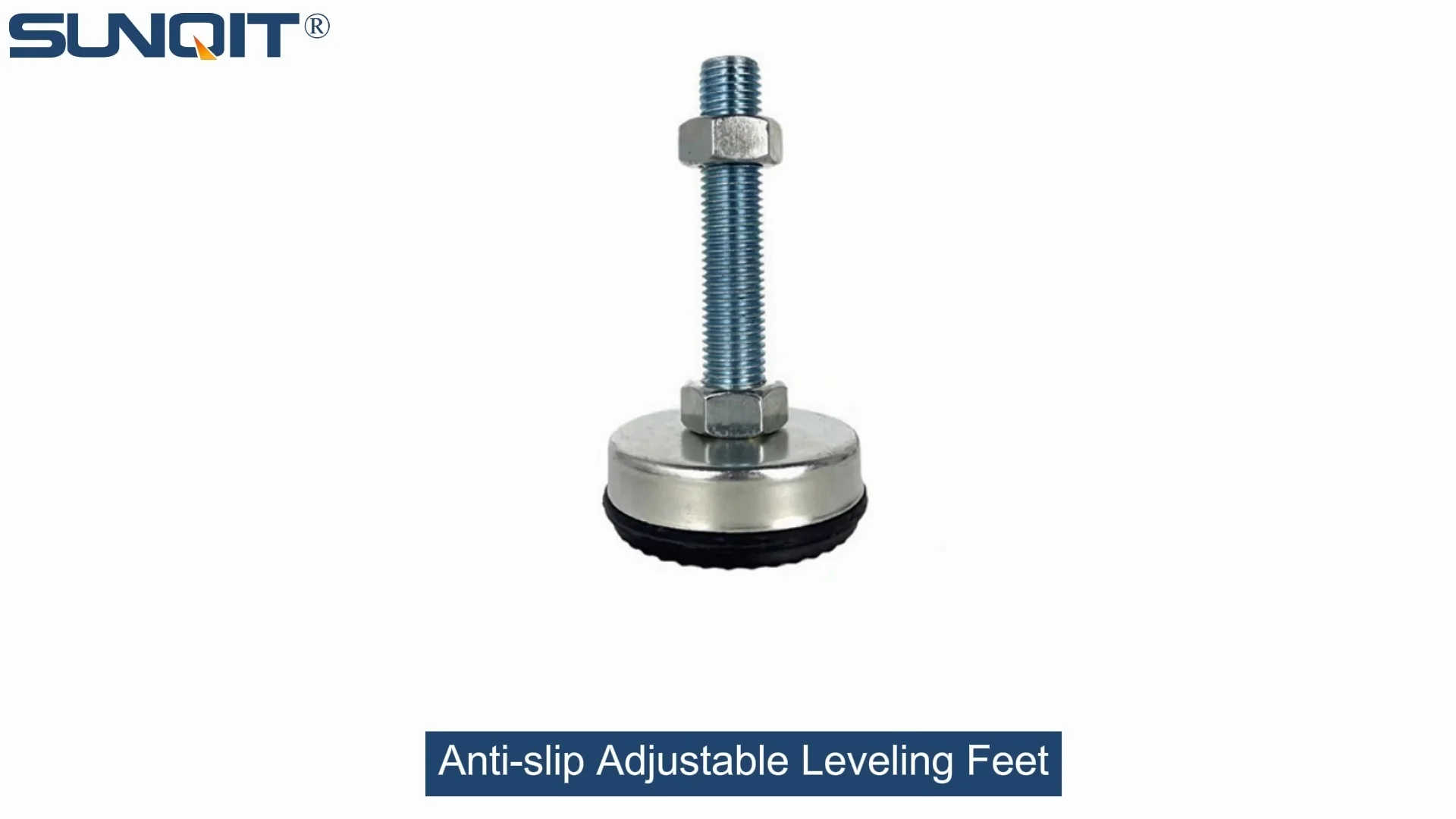
Anti-slip Adjustable Leveling Feet
Anti-slip Adjustable Leveling Feet are designed to keep machines level when placed on uneven or sloped ground, the rubber base will prevent product slip during work.
In the world of manufacturing, warehousing, and assembly lines, a stable workbench isn't just a piece of equipment—it's the foundation of efficiency, safety, and precision. When your work surface wobbles, tools slip, and parts roll off, even the simplest tasks become frustrating battles against chaos. That's where the right accessories make all the difference. Today, we're diving into the Anti-Slip Adjustable Leveling Feet —a small but mighty component that's been turning shaky workdays into smooth operations for professionals across industries. Specifically, we'll hear from users who paired these feet with the Workbench E (single deck-without caster) , a popular choice for lean workspaces. Whether you're managing a bustling assembly line or running a small workshop, their stories might just resonate with the challenges you've faced.
Why Workbench Stability Matters More Than You Think
Before we jump into the reviews, let's talk about why stability is non-negotiable. A wobbly workbench isn't just an annoyance; it's a productivity killer. Imagine aligning tiny electronic components under a microscope, only for the bench to shift and ruin your progress. Or stacking heavy parts, fearing they'll topple onto the floor (or worse, your feet). Uneven floors, a common issue in older facilities or warehouses with concrete settling, exaggerate these problems. Standard fixed feet? They might work on perfectly flat surfaces, but in the real world, they're often insufficient. That's where adjustable leveling feet step in—and not just any leveling feet. The anti-slip feature adds a layer of security, ensuring tools and materials stay put, even in high-traffic areas.
Meet the Product: Anti-Slip Adjustable Leveling Feet
Designed for versatility and durability, these leveling feet are engineered to fit a range of workbenches, including the Workbench E (single deck-without caster) . Made from heavy-duty materials with a rubberized anti-slip base, they're built to withstand daily wear, heavy loads, and even oily or damp conditions. The adjustable height (ranging from 1.5 to 3 inches) lets you compensate for uneven floors, while the threaded stem ensures a secure fit into the workbench legs. What sets them apart? That anti-slip pad—textured to grip surfaces and prevent sliding, even when the bench is bumped or jostled. Now, let's hear from the people who've put them to the test.
Mark Thompson
Warehouse Manager, Precision Parts Co.
I've been managing warehouses for 15 years, and if there's one thing I've learned, it's that the little details make the biggest difference. Our facility has old concrete floors—cracked, uneven, and about as level as a rollercoaster. We'd been using the Workbench E (single deck-without caster) for our assembly prep station, but with standard fixed feet, it wobbled so bad that our technicians were constantly catching parts before they rolled off. Tools slid around, and we even had a few near-misses with fragile components. Frustration was through the roof, and productivity? Let's just say we weren't hitting our daily quotas.
Then we tried these Anti-Slip Adjustable Leveling Feet . Installation was a breeze—just unscrewed the old feet, threaded these in, and adjusted the height with a wrench. Within 10 minutes, the workbench was solid. No more wobble. But the real surprise? The anti-slip pads. We had a spill last month—some hydraulic fluid leaked onto the floor near the bench. Normally, that would mean tools sliding everywhere, but the feet stayed gripped. The technician working there even joked, "It's like the bench is glued down!" Three months later, they're still holding strong. No wear on the pads, no loosening threads. These feet turned a problem area into one of our most efficient stations. Worth every penny.
Sarah Chen
Electronics Assembly Supervisor, TechCore Innovations
Precision is everything in electronics assembly. A fraction of an inch off, and a circuit board is ruined. We use lean pipe workbench setups, including several Workbench E units, for our soldering and component placement tasks. Our biggest issue? Vibration and slippage. Even a slight wobble from a nearby forklift would shake the bench, making it hard to keep the soldering iron steady. And with our old feet, if someone brushed against the bench, it would slide an inch or two on the smooth concrete—disaster when you're working with 0.1mm components.
We'd tried rubber mats under the benches, but they got dirty quickly and needed constant replacement. Then a colleague recommended these Anti-Slip Adjustable Leveling Feet. Skeptical, I ordered a set for one bench as a test. The first thing I noticed was how easy they were to adjust—each foot has clear height markings, so we could get all four legs perfectly level in minutes. The anti-slip pads? They're game-changers. Last week, a new technician accidentally bumped the bench while carrying a tray of parts. Normally, that would have sent my soldering iron skittering across the board. This time? The bench didn't move an inch. The iron stayed put, and the component was placed flawlessly. Now, every Workbench E in our facility has these feet. Our defect rate has dropped by 18% in two months, and the team says they feel more confident knowing the bench won't shift mid-task. These aren't just feet—they're peace of mind.
Javier Mendez
Small Business Owner, JM Custom Woodworking
I run a small woodworking shop out of a converted garage—great space, but the floor? Let's just say it wasn't built for precision work. Uneven slabs, a slight slope toward the door, and even a few dips where water pooled during rainstorms. My Workbench E (single deck-without caster) is my main cutting and assembly station, and with fixed feet, it was like working on a seesaw. Clamping wood down was a nightmare; the bench would rock, and I'd have to reposition the clamps three times before getting a secure hold. I even chipped a few expensive hardwood boards because the bench shifted mid-cut. I was ready to rip up the floor (and my budget) to fix it—until I found these leveling feet.
Installation took me 15 minutes by myself, no special tools needed. I adjusted each foot to compensate for the slope, and suddenly, the bench was steady. But the anti-slip part? I didn't think I needed it until I tried it. Last month, I was sanding a large oak tabletop—vibration from the sander would normally make the bench creep across the floor. With these feet? It stayed anchored. The rubber pad gripped the concrete, even when sawdust built up around it. Now, I can clamp down a board and trust that it won't move, no matter how much force I apply. My cuts are cleaner, my assembly is faster, and I've stopped wasting materials. For a small business like mine, saving time and reducing waste means more profit. These feet paid for themselves in the first week. If you're a fellow small shop owner struggling with uneven floors, do yourself a favor—get these.
Emily Rodriguez
Quality Control Inspector, PharmaPack Solutions
In pharmaceutical packaging, even the tiniest mistake can have big consequences. My job involves inspecting blister packs for defects under a high-powered microscope—work that requires absolute stillness. Our lab uses aluminum profile workbenches, including the Workbench E, for their durability and cleanability. But our lab floor, though newer, has subtle unevenness from the HVAC system's concrete pad. The bench would vibrate slightly, making it hard to focus on the microscope. Over time, eye strain became a real issue, and I was missing small defects that should have been caught.
Our facilities team installed these Anti-Slip Adjustable Leveling Feet, and I was skeptical at first. How much difference could a few feet make? A lot, as it turns out. The adjustability let them dial in the height perfectly, eliminating the vibration. But the anti-slip feature? It's the unsung hero here. We keep cleaning supplies under the bench, and sometimes the floor gets damp from mopping. With the old feet, the bench would slide a little when I pulled out the supply cart. Now? It's rock-solid. I can focus on my work without worrying about the bench moving, and my defect detection rate has gone up by 12%. My eyes feel less strained at the end of the day, too. These feet aren't just about stability—they're about creating a workspace that supports precision. For anyone in a detail-oriented role, they're a must-have.

How Do They Stack Up? A Quick Comparison
Curious how these anti-slip adjustable feet compare to other options on the market? We asked our reviewers to rate them against standard fixed feet and basic adjustable feet (without anti-slip). Here's what they had to say:
| Feature | Standard Fixed Feet | Basic Adjustable Feet (No Anti-Slip) | Anti-Slip Adjustable Leveling Feet |
|---|---|---|---|
| Stability on Uneven Floors | Poor (1/5) | Good (3/5) | Excellent (5/5) |
| Anti-Slip Performance | None (0/5) | Minimal (2/5) | Superior (5/5) |
| Compatibility with Workbench E | Basic (3/5) | Good (4/5) | Perfect (5/5) |
| Durability (Long-Term Use) | Fair (2/5) | Good (4/5) | Excellent (5/5) |
| User Rating (Average) | 2.2/5 | 3.8/5 | 4.9/5 |

FAQs: What Users Are Asking
Q: Will these feet fit other workbenches besides Workbench E?
A: Absolutely! While our reviewers focused on Workbench E, these feet have a standard 3/8-inch threaded stem, which fits most workbenches with compatible leg inserts. Many users have reported success with other
lean pipe workbench
models and even custom wooden workbenches. Just check your bench's leg thread size before ordering.
Q: How much weight can each foot support?
A: Each foot is rated to support up to 500 lbs, so a standard four-foot workbench can handle up to 2000 lbs total. That's more than enough for most industrial applications, including heavy tool storage or assembly of large parts.
Q: Do the anti-slip pads wear out over time?
A: The pads are made from high-density rubber designed for long-term use. Our reviewers reported no significant wear after 3–6 months of daily use, even in high-traffic areas. For extremely harsh environments (like constant oil exposure), we recommend inspecting the pads every 6 months, but most users find they last years.
Q: Can I use these outdoors or in damp environments?
A: Yes! The metal stem is coated to resist rust, and the rubber pad is water-resistant. Several users mentioned using them in garages or outdoor workshops with no issues. Just avoid prolonged submersion in water, as that could damage the threading over time.
Q: How easy are they to adjust once installed?
A: Very easy! The top of the stem has a hex nut design, so you can use a wrench or pliers to tweak the height as needed. No need to remove the bench or tools—just adjust one foot at a time until the bench is level. Mark from Precision Parts Co. even mentioned adjusting them "on the fly" when their floor settled slightly after a heavy rainstorm.

Final Thoughts: Small Accessory, Big Impact
At the end of the day, workbench accessories like leveling feet might not get the same attention as high-tech machinery or fancy tools. But as Mark, Sarah, Javier, and Emily can attest, they're the backbone of a functional workspace. The Anti-Slip Adjustable Leveling Feet don't just fix wobbles—they reduce frustration, boost productivity, and create a safer environment. Paired with the Workbench E (single deck-without caster) or other lean pipe workbench models, they transform a basic piece of equipment into a reliable partner in your daily operations.
If you've ever muttered, "Why won't this bench stay still?", or lost a part to a slippery surface, it might be time to upgrade your feet. These aren't just a purchase—they're an investment in smoother days, fewer headaches, and work you can be proud of. As Sarah put it, "Sometimes the best solutions are the simplest ones." And in this case, that solution comes in the form of four little feet with a big job to do.