- Company Articles
- Products and Technology
- Product knowledge
- Anti-Slip Adjustable Leveling Feet in 3C Electronics Testing Benches

Anti-Slip Adjustable Leveling Feet in 3C Electronics Testing Benches
Related Product
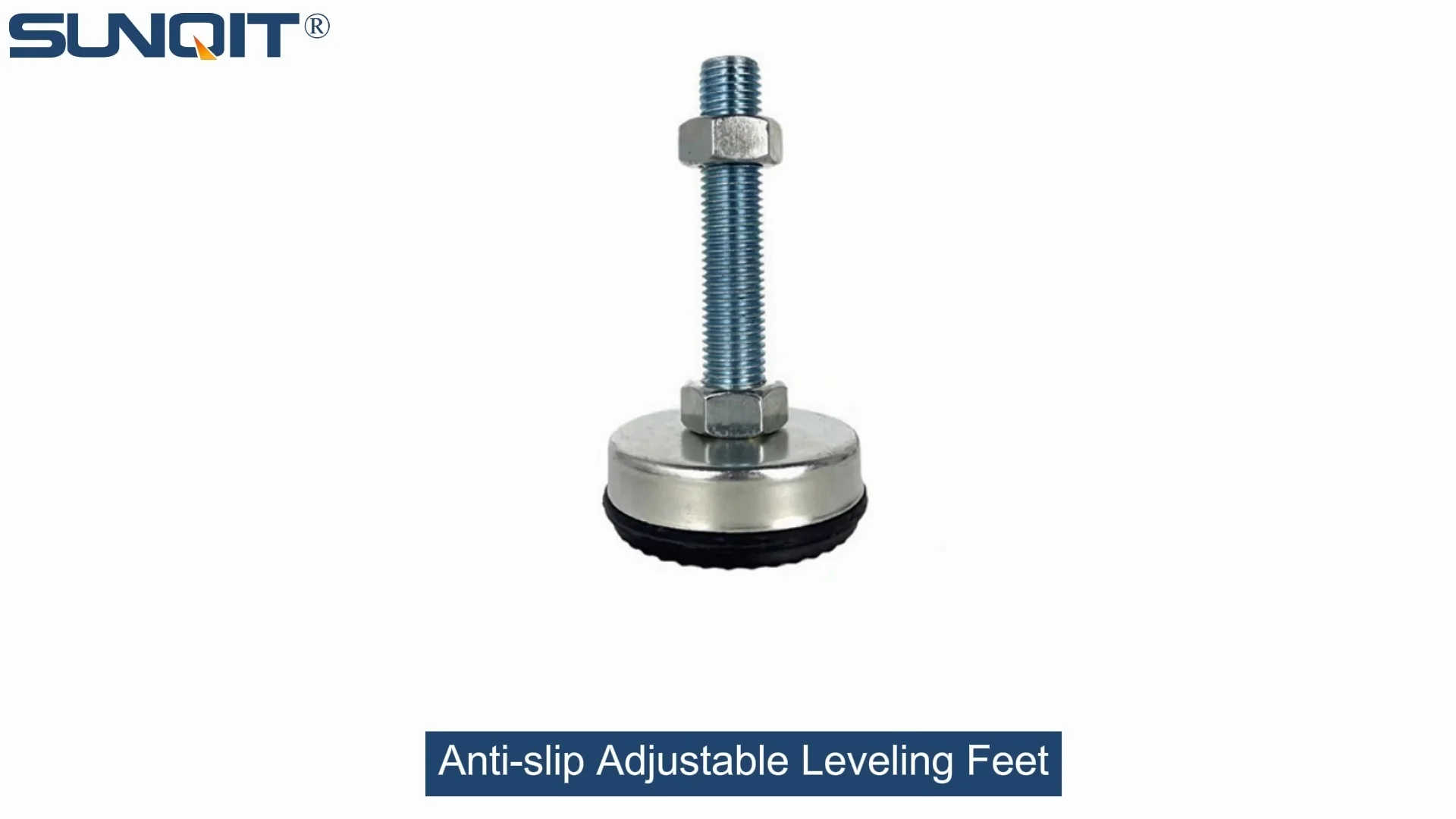
Anti-slip Adjustable Leveling Feet
Anti-slip Adjustable Leveling Feet are designed to keep machines level when placed on uneven or sloped ground, the rubber base will prevent product slip during work.
In the fast-paced world of 3C electronics—where "3C" stands for computers, communication devices, and consumer electronics—precision isn't just a buzzword; it's the backbone of every product that reaches our hands. Think about the smartphone in your pocket, the laptop on your desk, or the smartwatch tracking your steps. Each of these devices, packed with tiny circuits, delicate sensors, and intricate components, undergoes rigorous testing before it ever makes it to market. From signal strength checks to battery life simulations, from thermal stress tests to electrostatic discharge (ESD) evaluations, every step demands unwavering accuracy. But here's a question: What ensures that the testing equipment itself stays steady enough to deliver reliable results? More often than not, the answer lies in a component so small, it's easy to overlook: the anti-slip adjustable leveling feet beneath the testing workbench.
In this article, we're going to shine a spotlight on these unsung heroes. We'll explore why stability matters in 3C testing, how anti-slip adjustable leveling feet solve common workspace challenges, and why they're non-negotiable for modern ESD workstations and lean pipe workbenches. We'll also dive into their integration with aluminum profiles, break down their technical specs, and even share real-world stories of how upgrading these tiny components transformed testing workflows. Let's get started.
The Hidden Cost of Instability: Why Even a Wobble Matters
Imagine a technician named Alex, tasked with testing the touchscreen sensitivity of a new tablet model. The test requires mounting the tablet on a workbench and using a robotic arm to press specific points with precise force—down to the millinewton. If the workbench shifts by just 0.5mm during the test, the robotic arm's calibration is thrown off. The result? False negatives (reporting a faulty screen when it's actually fine) or false positives (missing a real defect). Either way, the cost adds up: rework, delayed production, and even potential recalls if a flawed product slips through.
Instability isn't just about movement, either. Uneven workbenches can strain cables connected to testing equipment, leading to intermittent connectivity issues. They can cause tools to roll off surfaces, risking damage to expensive gear or injury to technicians. And in ESD-sensitive environments—where a single static discharge can fry a $500 microchip—an unstable bench might disrupt grounding paths, turning a safe workspace into a hazard zone.
So, what causes these stability issues? More often than not, it's the floor. Factory floors, lab spaces, and even dedicated testing facilities are rarely perfectly level. Years of foot traffic, heavy equipment movement, and general wear can create small dips, bumps, or slopes. Add to that the weight of testing gear—oscilloscopes, spectrum analyzers, thermal chambers—and a workbench without adjustable support is almost guaranteed to wobble. That's where anti-slip adjustable leveling feet step in.
What Are Anti-Slip Adjustable Leveling Feet, Anyway?
Let's start with the basics. Anti-slip adjustable leveling feet are mechanical components attached to the bottom of a workbench (or any piece of equipment) to do two key things: level the bench on uneven surfaces and prevent it from sliding or shifting during use . They're like the "feet" of the workbench, but with superpowers.
Most models consist of three main parts: a threaded stem, an adjustment nut, and a base. The stem is typically made of metal (stainless steel or aluminum for durability), while the base is often a rubber or polyurethane pad. Here's how they work: By turning the adjustment nut, you raise or lower the stem, which changes the height of that corner of the bench. This lets you tweak each foot independently to compensate for floor unevenness. The rubber base, meanwhile, grips the floor to prevent the bench from sliding—even when technicians lean on it, or when heavy tools are placed on one side.
But not all leveling feet are created equal. Fixed-height feet, for example, can't adjust to uneven floors. Metal glides (smooth metal bases) might slide easily on concrete, defeating the "anti-slip" purpose. Anti-slip adjustable models, however, combine the best of both worlds: adaptability and grip. That's why they're the gold standard for 3C testing environments.

Why ESD Workstations Can't Compromise on Leveling Feet
3C electronics are notoriously sensitive to electrostatic discharge (ESD). A static charge of just 2,000 volts—barely enough to make you feel a zap when you touch a doorknob—can destroy a microchip. That's why ESD workstations are designed to dissipate static safely, usually through grounded mats, wrist straps, and conductive surfaces. But here's the catch: For ESD protection to work, the entire workstation must be electrically continuous. If the bench isn't level, or if its feet aren't making solid contact with the floor, that continuity can break.
Imagine an ESD workstation with a wobbly foot. The bench rocks slightly, causing the grounding strap connected to the floor to loosen or stretch. Now, when a technician builds up static charge (from moving around or rubbing against clothing), the charge might not flow to ground as intended. Instead, it could discharge through the device being tested—ruining it instantly. Anti-slip adjustable leveling feet solve this by keeping the bench firmly planted. The rubber base (often infused with conductive materials in ESD-rated models) ensures constant contact with the floor, maintaining that critical grounding path.
Sarah, an ESD compliance officer at a major smartphone manufacturer, puts it this way: "We used to have issues with random ESD failures during testing. We checked the mats, the wrist straps, even the air ionizers—everything seemed fine. Then we realized some of our older workbenches had plastic feet that would slide on our epoxy floors. The benches would shift just enough to break the ground connection. After switching to anti-slip adjustable feet with conductive rubber bases, those failures dropped by 40%. It was a game-changer."

Integrating with Aluminum Profiles: A Match Made for Precision
Modern testing workbenches are rarely built from heavy, fixed materials like solid wood or steel. Instead, many facilities opt for aluminum profiles—lightweight, modular, and infinitely customizable. Aluminum profiles (think of them as industrial-grade "Tinkertoys") have grooves (called T-slots) that let you attach shelves, tool holders, and even testing equipment with ease. They're strong enough to support heavy gear but light enough to reconfigure when workflows change. And when paired with anti-slip adjustable leveling feet, they become a precision powerhouse.
Here's why aluminum profiles and leveling feet work so well together: Aluminum is rigid, meaning it doesn't flex under load—so once the feet are adjusted, the bench stays level. The T-slots also make attaching leveling feet a breeze. Most feet come with threaded inserts that fit into the slots, allowing for secure, tool-free installation. This modularity is key for 3C testing labs, where workbenches might need to be rearranged weekly to test new products or accommodate different testing setups.
Take, for example, a lean pipe workbench built with aluminum profiles. Lean manufacturing principles prioritize efficiency and waste reduction, and lean pipe workbenches are designed to be reconfigurable on the fly. If a lab needs to add a second testing station, they can disassemble part of the bench, move it, and reassemble—all without tools. But reconfiguring often means placing the bench on a new section of floor, which might be uneven. With anti-slip adjustable feet, technicians can level the bench in minutes, ensuring stability without slowing down the workflow.

Technical Specs That Matter: What to Look for in a Quality Leveling Foot
Not all anti-slip adjustable leveling feet are suitable for 3C testing. To ensure they meet the demands of precision work, pay attention to these key specs:
- Load Capacity: 3C testing workbenches often hold equipment weighing 200–500 kg (oscilloscopes, thermal chambers, etc.). Look for feet rated for at least 150% of your maximum expected load to account for uneven weight distribution.
- Adjustment Range: The stem should adjust by at least 10–50 mm. This gives you enough flexibility to compensate for most floor dips or bumps.
- Anti-Slip Rating: The base should have a high coefficient of friction (COF). Rubber bases typically have a COF of 0.6–0.8 on concrete, which is ideal for preventing sliding.
- Material Compatibility: For ESD workstations, choose feet with conductive rubber bases (resistivity of 10⁶–10⁹ ohms) to maintain grounding. For aluminum profiles, ensure the stem's thread size matches the T-slot inserts.
Comparison Table: Common Leveling Feet Types for Testing Benches
| Type | Stem Material | Base Material | Load Capacity (kg/foot) | Adjustment Range (mm) | Anti-Slip COF (on concrete) | Best For |
|---|---|---|---|---|---|---|
| Anti-Slip Adjustable | Stainless Steel | Conductive Rubber | 500–1000 | 15–50 | 0.7 | ESD workstations, lean pipe workbenches |
| Fixed-Height Rubber | Carbon Steel | Non-Conductive Rubber | 300–600 | 0 (fixed) | 0.6 | Low-budget, even-floor environments |
| Metal Glide | Zinc-Plated Steel | Smooth Metal | 800–1500 | 10–30 | 0.2 | Heavy machinery (not recommended for testing) |
As the table shows, anti-slip adjustable feet with conductive rubber bases are the clear choice for 3C testing. Their high load capacity, wide adjustment range, and strong grip make them indispensable for ESD workstations and lean pipe workbenches built with aluminum profiles.
Installation and Calibration: Getting It Right the First Time
Even the best leveling feet won't perform well if installed incorrectly. Here's a step-by-step guide to setting them up for optimal stability:
- Assess the Floor: Before installing, use a spirit level to check the floor's unevenness. Mark high and low spots—this will help you know which feet need more adjustment.
- Attach the Feet: For aluminum profile workbenches, insert threaded T-slot nuts into the profile's grooves. Screw the leveling feet into these nuts by hand until they're snug. Avoid over-tightening—this can strip the threads.
- Level the Bench: Place the spirit level on the bench surface. Start with the lowest corner (the one that wobbles when you press down). Turn the adjustment nut to raise that foot until the bubble is centered. Repeat for the other corners.
- Test for Stability: Lean on different parts of the bench to simulate use. If it still wobbles, (fine-tune) the feet until it feels solid. For extra precision, use a laser level to ensure the bench is flat across its entire surface.
- Lock the Nuts: Once level, tighten the lock nut (if included) against the bench frame to prevent the foot from loosening over time.
Pro tip: Check the leveling feet monthly. Floors can shift slightly with temperature changes or heavy traffic, and vibrations from testing equipment might loosen the nuts. A quick 5-minute check can save hours of rework later.
Maintenance: Keeping Your Feet (and Bench) in Top Shape
Like any tool, anti-slip adjustable leveling feet need regular care to perform their best. Here's how to maintain them:
- Clean the Bases: Dust, oil, or debris on the rubber base can reduce grip. Wipe them down monthly with a damp cloth and mild soap. Avoid harsh chemicals—they can degrade the rubber.
- Lubricate the Threads: If the adjustment nut starts to stick, apply a small amount of silicone lubricant to the stem. This makes adjustments smoother and prevents rust.
- replace Worn Bases: Over time, the rubber base will wear down, losing its anti-slip properties. If you notice cracks, flattening, or reduced grip, replace the base (many models let you swap just the base, not the entire foot).
- Check for Corrosion: If you're using steel stems in a humid environment, inspect for rust. A light coating of anti-rust spray can extend their life.
Real-World Impact: How Leveling Feet Transformed Testing Workflows
Let's wrap up with a story from Mike, a production manager at a mid-sized 3C contract manufacturer. A few years ago, his team was struggling with inconsistent test results on their smartphone antenna testing line. "We'd run the same test on 10 units, and 2 would fail for no apparent reason," he recalls. "Our technicians were frustrated—they thought it was the equipment. We even replaced an oscilloscope, which cost $15,000. The problem persisted."
Then, during a routine ESD audit, an inspector noticed that the testing benches were wobbling. "The floors in our old facility had settled over time, and the benches had fixed plastic feet," Mike explains. "We swapped them out for anti-slip adjustable leveling feet with conductive rubber bases. Overnight, the failure rate dropped from 20% to 2%. The technicians could focus on testing, not troubleshooting false results. We saved thousands in rework and regained trust in our data."
Mike's experience isn't unique. Across the 3C industry, small upgrades like leveling feet are proving to have outsized impacts. They reduce errors, boost technician morale, and extend the life of expensive testing equipment—all while costing a fraction of what a single failed product recall might cost.
The Future: Smart Leveling Feet? Maybe So.
As 3C testing becomes more automated and data-driven, we might soon see "smart" leveling feet enter the market. Imagine feet with built-in sensors that detect instability and send alerts to a technician's tablet. Or feet with motorized stems that auto-adjust when the bench shifts—no manual tweaking required. Some manufacturers are even exploring IoT integration, where feet could feed data into predictive maintenance systems, flagging wear before it causes issues.
But even without fancy tech, the humble anti-slip adjustable leveling foot remains a cornerstone of precision testing. As Mike puts it: "In this industry, the difference between good and great often comes down to the details. And leveling feet? They're one detail we'll never overlook again."
Conclusion: Small Feet, Big Impact
Anti-slip adjustable leveling feet might not be the most glamorous part of a 3C testing setup, but they're undeniably critical. They keep workbenches level, prevent slips, maintain ESD safety, and support the modularity of lean pipe workbenches and aluminum profile setups. For technicians, engineers, and production managers, they're the quiet confidence that comes from knowing the foundation of their work is solid.
So, the next time you walk into a 3C testing lab, take a moment to look down. Those small rubber-and-metal feet beneath the benches? They're not just holding up the equipment—they're holding up the promise of precision, reliability, and quality that defines the electronics we rely on every day.