- Company Articles
- Products and Technology
- Application Cases
- Anti-Slip Adjustable Leveling Feet in Automotive Manufacturing: Applications

Anti-Slip Adjustable Leveling Feet in Automotive Manufacturing: Applications
Related Product
Anti-slip Adjustable Leveling Feet
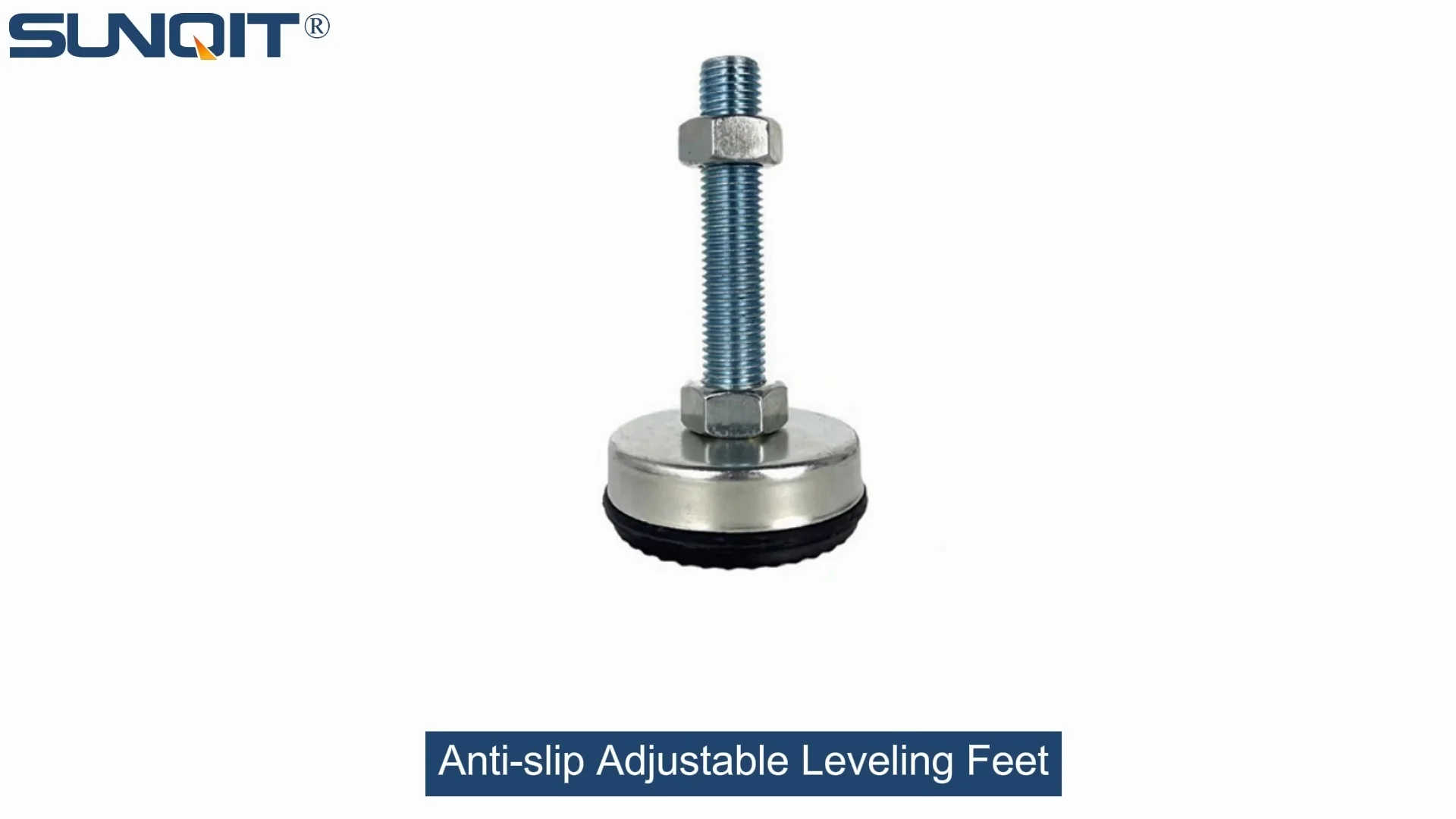
Anti-slip Adjustable Leveling Feet are designed to keep machines level when placed on uneven or sloped ground, the rubber base will prevent product slip during work.
Walk through any automotive manufacturing plant, and your eyes will likely be drawn to the grand machinery—the robotic arms assembling car bodies, the roaring stamping presses shaping metal panels, the automated guided vehicles zipping between stations. But if you look closer, you'll notice the unsung heroes that keep everything running smoothly: the small, unassuming components that stabilize, align, and secure the equipment that builds the cars we drive. Among these, anti-slip adjustable leveling feet stand out as quiet workhorses, playing a critical role in ensuring precision, safety, and efficiency in automotive production. In this article, we'll explore how these seemingly simple devices have become indispensable in modern automotive manufacturing, from assembly workbenches to conveyor systems, and why they're a cornerstone of lean manufacturing practices.
The Basics: What Are Anti-Slip Adjustable Leveling Feet?
Before diving into their applications, let's break down what anti-slip adjustable leveling feet are and how they work. At their most basic, these components are designed to do two things: level equipment on uneven surfaces and prevent that equipment from slipping or shifting during operation. They typically consist of three main parts: a threaded stem (often made of stainless steel or aluminum for strength and corrosion resistance), a swivel or fixed base (usually rubber, polyurethane, or a combination of metal and rubber), and a nut or locking mechanism to secure the height once adjusted.
The "adjustable" feature comes from the threaded stem: by twisting the foot, operators can raise or lower the height of the equipment it's attached to, compensating for dips, cracks, or slopes in factory floors. The "anti-slip" function is handled by the base material—rubber, for example, creates friction between the equipment and the floor, preventing movement even when the equipment is subjected to vibrations from nearby machinery, the push/pull of workers loading parts, or the lateral forces of conveyor belts. This combination of adjustability and grip makes them far more versatile than fixed feet (which can't adapt to uneven floors) or basic leveling feet without anti-slip bases (which may slide under stress).
Why Automotive Manufacturing Can't Do Without Them
Automotive manufacturing is an industry built on precision. A misaligned part here, a shaky workbench there, and suddenly a car door doesn't seal properly, a wiring harness is crimped, or a brake component fails quality inspection. Anti-slip adjustable leveling feet address these risks by ensuring that the equipment used to build cars remains stable, level, and secure—even in the chaotic environment of a busy factory. Let's break down their importance:
- Precision Assembly: Many automotive tasks require microscopic accuracy. Think about installing a dashboard with embedded airbags, or aligning a fuel injection system with tolerances measured in thousandths of an inch. If the workbench holding these components is tilted or wobbly, the technician's hand slips, and the part is ruined. Leveling feet eliminate this risk by keeping the workbench perfectly flat.
- Safety First: Automotive plants are full of heavy equipment and heavier parts—engine blocks, transmissions, axles. If a rack holding these parts shifts or tips, it could cause injuries or damage. Anti-slip bases prevent such accidents by anchoring equipment to the floor, even when jostled.
- Reduced Downtime: When a conveyor belt misaligns because the frame is unlevel, production stops. When a workbench shakes so much that tools fall off, workers waste time retrieving them. Leveling feet minimize these disruptions by keeping equipment stable, reducing unplanned downtime.
- Compliance with Standards: Automotive manufacturers must adhere to strict safety and quality regulations (ISO 9001, OSHA, etc.). Unstable equipment can lead to non-compliance, fines, or even product recalls. Anti-slip adjustable leveling feet help meet these standards by ensuring equipment operates as intended.

Key Applications in Automotive Manufacturing
Now, let's explore where anti-slip adjustable leveling feet are used in automotive plants, and how they contribute to each process. From the assembly line to quality control, these devices are everywhere—often in places you might not expect.
1. Assembly Workbenches: The Foundation of Precision
Assembly workbenches are the heart of automotive manufacturing. This is where technicians spend hours installing components: wiring harnesses in door panels, sensors in bumpers, circuit boards in infotainment systems. For these tasks, stability is non-negotiable. A workbench that rocks or slides can lead to misaligned parts, rework, and even injuries.
Enter anti-slip adjustable leveling feet. When paired with modern workbenches—often built with aluminum profiles for lightweight strength—these feet ensure the surface remains level and stationary. Aluminum profiles, known for their rigidity and modularity, are a popular choice for workbenches because they can be quickly reconfigured to accommodate different car models (a key feature in lean manufacturing). But even the sturdiest aluminum profile workbench is only as good as its base. Leveling feet compensate for uneven factory floors (a common issue in older plants or areas with heavy machinery traffic), while their anti-slip bases prevent the bench from shifting when a technician leans into a task or uses a power tool that vibrates.
Consider a scenario: A technician is installing a rearview camera in a car's trunk lid. The workbench holds the lid at a 45-degree angle, and the technician needs to drill a small hole for the camera wire. If the workbench shifts even 1/8 of an inch during drilling, the hole is off-center, and the camera won't align with the trunk's trim. With anti-slip adjustable leveling feet, the bench stays put, the hole is drilled perfectly, and the part passes inspection—no rework, no delays.
2. Conveyor Systems: Keeping Production Flowing
Conveyor systems are the arteries of automotive plants, moving parts from one station to the next—engine blocks from machining to assembly, door panels from painting to final installation, and so on. For these systems to work, they must be perfectly aligned: even a slight tilt can cause parts to slide too fast, get stuck, or fall off the line. This is where anti-slip adjustable leveling feet come in.
Conveyor frames, often built with aluminum or steel, are supported by legs fitted with leveling feet. By adjusting these feet, maintenance crews can ensure the conveyor belt runs horizontally, with no dips or rises that might disrupt part flow. The anti-slip base is crucial here, too: conveyors generate vibrations as they run, and over time, these vibrations can loosen bolts or shift the frame. Without anti-slip feet, the conveyor might "walk" across the floor, misaligning with other stations and causing jams. In a plant producing 60 cars per hour, a 10-minute conveyor jam can cost thousands of dollars in lost production—making leveling feet a small investment with huge returns.
3. Material Handling Equipment: Stability When It Matters Most
Automotive plants rely heavily on material handling equipment—trolleys, racks, and carts—to move parts from storage to the production line. Much of this equipment uses casters for mobility (think of a cart loaded with 200-pound brake rotors being pushed to the assembly line), but when it's time to load or unload, stability is critical. A cart that rolls away while a worker is lifting a heavy part is a safety hazard; a rack that tips when a pallet is loaded can damage expensive components.
Here, anti-slip adjustable leveling feet often work in tandem with casters. Many material handling carts are designed with both: casters for moving the cart, and leveling feet that can be lowered to the floor when the cart is stationary, "locking" it in place. The feet prevent rolling, while their anti-slip bases add extra grip. For example, a turnover trolley used to transport car seats might have four casters for mobility, but when parked at the assembly line, the operator lowers the leveling feet, which dig into the floor and keep the trolley from shifting as seats are lifted off. This not only protects workers but also ensures parts are always within easy reach, reducing fatigue and improving efficiency.
4. Lean System Integration: Efficiency Through Stability
Lean manufacturing—a philosophy focused on minimizing waste and maximizing efficiency—has revolutionized automotive production. Central to lean is the idea of adaptability: production lines that can quickly reconfigure to build new models, workstations that adjust to different tasks, and equipment that reduces downtime. Anti-slip adjustable leveling feet fit seamlessly into this ethos.
In a lean system, every second counts. When a plant switches from building a sedan to an SUV, for example, workbenches, racks, and conveyors may need to be moved or repositioned. Leveling feet make this quick and easy: instead of shimming equipment with pieces of wood or metal (a time-consuming, imprecise process), operators can simply twist the feet to level the equipment on the new floor surface. The anti-slip feature ensures that once repositioned, the equipment stays put, maintaining the flow of production. This adaptability reduces setup time, a key lean metric, and allows plants to respond faster to changing customer demands.

Comparing the Options: Why Anti-Slip Adjustable Feet Stand Out
To understand why anti-slip adjustable leveling feet are preferred in automotive manufacturing, it helps to compare them to other common stabilizing solutions. Below is a breakdown of how they stack up against fixed feet (non-adjustable) and caster-only systems (no leveling feet):
| Feature | Anti-Slip Adjustable Leveling Feet | Fixed Feet (Non-Adjustable) | Caster-Only Systems |
|---|---|---|---|
| Stability on Uneven Floors | Excellent: Adjusts to dips/cracks; anti-slip base prevents shifting. | Poor: Can rock or wobble on uneven surfaces. | Fair: Casters may lock, but no height adjustment for leveling. |
| Safety | High: Prevents sliding/vibrating; reduces risk of tipping. | Medium: Stable on flat floors but unstable on uneven ones. | Low: Casters can unlock accidentally; risk of rolling. |
| Adaptability to Change | High: Easy to adjust for reconfigured workstations or new equipment. | Low: Requires shimming or replacement to level on new surfaces. | Medium: Easy to move but hard to level once in place. |
| Cost Over Time | Low: Reduces downtime from instability; minimal maintenance. | High: May require frequent repairs to equipment damaged by wobbling. | High: Risk of accidents/damaged parts from rolling equipment. |
| Best For | Workbenches, conveyors, lean manufacturing cells, quality control stations. | Light, stationary equipment on perfectly flat floors (rare in auto plants). | Equipment that needs constant movement (e.g., garbage carts, tool trolleys). |

The Future: Innovations in Leveling Feet for Automotive Manufacturing
As automotive manufacturing evolves—with the rise of electric vehicles, automation, and smart factories—so too do the components that support it. Anti-slip adjustable leveling feet are no exception. Today's manufacturers are developing feet with advanced features tailored to the needs of modern plants:
- Smart Sensing: Some leveling feet now include built-in sensors that monitor stability in real time. If a foot starts to loosen or the equipment begins to vibrate excessively, the sensor sends an alert to the plant's maintenance system, preventing downtime before it happens.
- Eco-Friendly Materials: With sustainability becoming a priority, manufacturers are using recycled rubber for bases and aluminum (a highly recyclable metal) for stems, reducing the environmental impact.
- Modular Design: To fit the modularity of modern aluminum profile workbenches and lean systems, leveling feet are now available in standardized sizes and thread patterns, making them easy to swap or upgrade without replacing entire equipment bases.
- High-Load Capacities: As electric vehicle batteries and components grow heavier, leveling feet are being engineered to support higher weights—up to 10,000 pounds or more—without compromising stability.
Conclusion: Small Parts, Big Impact
In the grand scheme of automotive manufacturing, anti-slip adjustable leveling feet may not grab headlines like robotic arms or 3D printers. But their impact is undeniable. They're the reason assembly workbenches stay level when technicians drill, conveyor belts run straight when moving engine blocks, and material handling carts don't roll away during loading. They're a cornerstone of lean manufacturing, enabling quick reconfigurations and reducing waste. And they're a critical safety feature, protecting workers and preventing costly accidents.
The next time you see a car on the road, take a moment to appreciate the precision that went into building it. Behind every smooth ride, every tight seal, every reliable component, there's a network of small, hardworking parts ensuring that the equipment building that car stays stable, aligned, and secure. And among those parts, anti-slip adjustable leveling feet are some of the hardest working of all.