- Company Articles
- Products and Technology
- Product knowledge
- Anti-Slip Adjustable Leveling Feet in Harsh Industrial Environments: Durability

Anti-Slip Adjustable Leveling Feet in Harsh Industrial Environments: Durability
Related Product
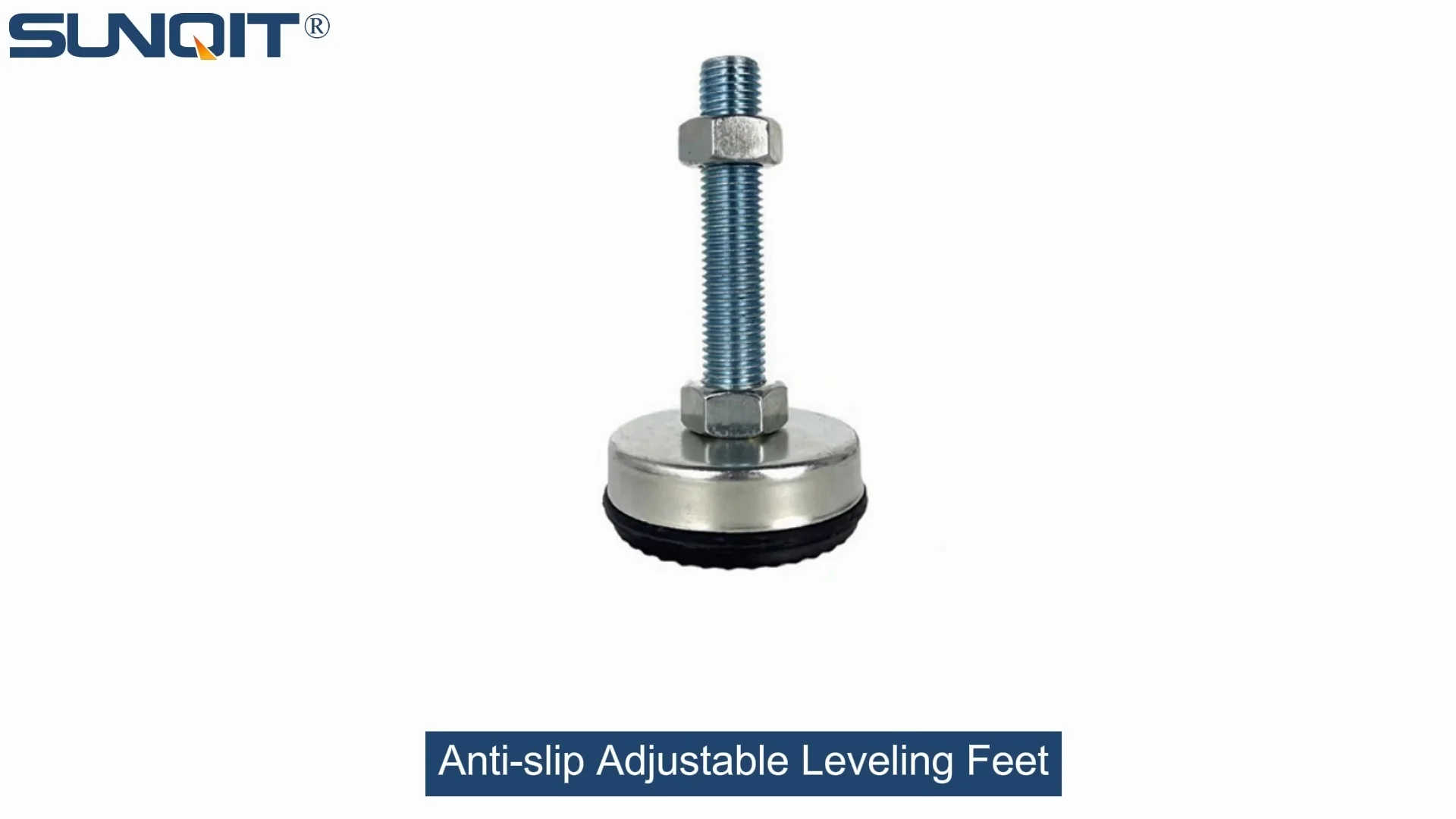
Anti-slip Adjustable Leveling Feet
Anti-slip Adjustable Leveling Feet are designed to keep machines level when placed on uneven or sloped ground, the rubber base will prevent product slip during work.
The Hidden Hero of Industrial Stability
Walk into any busy factory, warehouse, or manufacturing plant, and you'll notice the obvious stars: the massive conveyor belts humming along, the robotic arms assembling products with pinpoint precision, the towering racks stacked with materials. But if you look closer—down at the floors, at the bases of workbenches, at the feet of heavy machinery—you'll find a quiet champion keeping everything from falling apart: anti-slip adjustable leveling feet. These unassuming components might not grab headlines, but in harsh industrial environments, they're the difference between a smooth, safe workflow and a disaster waiting to happen.
Harsh environments are unforgiving. Floors are rarely perfect—cracked concrete, oil spills, uneven slabs from years of heavy traffic. Machinery vibrates constantly, sending shudders through workstations. And let's not forget the loads: workbenches holding 50kg toolboxes, material racks stacked with metal parts, assembly lines supporting the weight of half-assembled cars. In these conditions, a wobbly workstation isn't just an annoyance; it's a safety hazard. A technician soldering delicate electronics on a shaky table might make a costly mistake. A worker reaching for a heavy part on an unstable rack could lose balance and get injured. Even small vibrations can throw off measurements in quality control checks, leading to defective products and wasted resources.
So why aren't we talking more about these feet? Maybe because they're "out of sight, out of mind"—until they fail. But in lean system setups, where efficiency and waste reduction are king, overlooking stability is a critical oversight. Lean systems thrive on consistency: consistent workflows, consistent quality, consistent safety. And consistency starts from the ground up. That's where anti-slip adjustable leveling feet come in. They're not just "feet"—they're the foundation of reliability in environments where nothing stays still.
What Are Anti-Slip Adjustable Leveling Feet, Anyway?
Let's start with the basics. At their core, anti-slip adjustable leveling feet are exactly what their name suggests: devices attached to the bottom of equipment (think workbenches, racks, machines) that do two key things: adjust height to compensate for uneven floors, and prevent slipping to keep the equipment stable. Unlike fixed feet, which are rigid and can't adapt to bumps or slopes, these feet have a threaded stem or similar mechanism that lets you twist or turn them to raise or lower one corner of a workstation until it's perfectly level. And the "anti-slip" part? That's usually a rubber, silicone, or textured base that grips the floor, even when there's oil, water, or debris in the way.
You might be thinking, "Why not just use casters?" Great question. Casters are fantastic for mobility—if you need to roll a workbench across the shop floor or reposition a material rack, casters are your friend. But in many industrial settings, once equipment is in place, you don't want it moving an inch. That's where leveling feet beat casters hands down. Casters can lock, sure, but even locked casters can slip on smooth or oily floors, and they don't always provide the same rock-solid stability as a well-adjusted leveling foot. It's a trade-off: casters for movement, leveling feet for stationary stability. (Though some setups use both—casters for moving, leveling feet for locking into place when stationary. More on that later.)
Real Talk from the Shop Floor: "I used to work at a small electronics plant where we had these old workbenches with fixed metal feet," says Juan, a production supervisor with 15 years of experience. "The floor was so uneven, every time someone leaned on the bench, it would wobble. We'd stack pieces of cardboard under the feet to level it, but then the cardboard would get greasy or wet and slip out. One day, a new hire was soldering a circuit board, the bench wobbled, and he burned a hole in the component. That's when we switched to anti-slip adjustable leveling feet. Now, I can twist the feet to get the bench perfectly level, and the rubber base doesn't slip—even when someone spills cutting fluid. No more wobbles, no more mistakes. Total game-changer."

Why Lean Systems Can't Afford to Overlook Them
Lean system principles are all about eliminating waste—waste of time, waste of materials, waste of effort. But one form of waste that often flies under the radar is "waste from instability." Think about it: if a worker has to stop every hour to readjust a wobbly workbench, that's time wasted. If a product is damaged because a machine vibrated out of alignment, that's material wasted. If someone gets hurt because a rack tipped over, that's effort (and money) wasted on accidents and downtime. Anti-slip adjustable leveling feet attack this waste at the source.
In a lean setup, every component should serve a purpose, and these feet serve a big one: they create a stable foundation for standardized work. Standardization is key to lean—if every workstation is set up the same way, workers can move between tasks without relearning the layout, and processes are easier to optimize. But standardization goes out the window if one workbench is higher than another because the floor dips, or if one machine vibrates so much that parts slide off. Leveling feet ensure that no matter how uneven the floor, each workstation can be adjusted to the exact same height and stability, making standardization possible.
Another lean goal is continuous improvement. But how do you improve a process if the equipment itself is unpredictable? If a quality control station isn't level, measurements might be off by a millimeter one day and two millimeters the next. With leveling feet, you eliminate that variability. The station stays stable, measurements stay consistent, and you can actually trust the data you're collecting to make improvements. It's hard to "improve" when your baseline is wobbly.

The Workbench Connection: From Wobbly to Rock-Solid
Workbenches are the workhorses of industrial environments. They're where assembly happens, where tools are stored, where inspections are done. And they take a beating. A typical workbench might hold a 30kg tool chest, a 20kg monitor, and have workers leaning, pushing, and pulling on it all day. If that bench isn't stable, it's not just annoying—it's dangerous. Enter anti-slip adjustable leveling feet, which turn even the shakiest workbench into a fortress.
Modern workbenches, especially those used in lean systems, are often built with modularity in mind. Many are constructed using aluminum profile frames—lightweight, strong, and easy to customize. Aluminum profile workbenches are popular because you can add shelves, hooks, or tool holders as needed. But even the sturdiest aluminum profile frame is only as stable as its base. That's why most quality aluminum profile workbenches come with adjustable leveling feet as standard. The feet screw into the bottom of the aluminum profile legs, and you can twist them to raise or lower each corner, compensating for uneven floors. The anti-slip base (usually rubber or a high-friction plastic) then grips the floor, preventing the bench from sliding, even under heavy use.
But it's not just about workbenches. Material racks, conveyor supports, inspection tables—any stationary equipment that needs to stay put and level benefits from these feet. Take material racks, for example. A rack loaded with heavy parts can easily tip if it's not level, especially if the floor slopes. Adjustable leveling feet let you tweak each corner until the rack is perfectly vertical, reducing the risk of tipping. And the anti-slip base ensures that even if someone bumps into the rack with a forklift (we've all seen it), it won't slide across the floor.

Material Matters: Building Durability for the Toughest Floors
Not all leveling feet are created equal. In harsh industrial environments—think chemical plants with corrosive spills, food processing facilities with constant washdowns, or automotive shops with oil and grease—you need feet that can stand up to abuse. That starts with the right materials. Let's break down the most common options and why they matter:
- Stainless Steel: The gold standard for corrosion resistance. Stainless steel stems and bases hold up to water, chemicals, and sanitizing agents, making them ideal for food processing, pharmaceutical manufacturing, or marine environments. They're also strong—stainless steel feet can handle heavy loads (1000kg+ per foot) without bending.
- Reinforced Nylon/Plastic: Lightweight but surprisingly tough. Reinforced nylon feet are resistant to oils, greases, and many chemicals, making them a good fit for automotive or mechanical shops. They're also non-marking, so they won't scratch polished concrete floors—a big plus in facilities where floor appearance matters (like showrooms or clean rooms).
- Zinc-Plated Steel: A budget-friendly option for dry, indoor environments. Zinc plating resists rust, but it's not as durable as stainless steel in wet or corrosive settings. Good for warehouses or workshops with minimal exposure to liquids.
- Rubber/Polyurethane Bases: The anti-slip secret weapon. Even the strongest stem is useless if the base slips. Rubber or polyurethane bases have high friction coefficients, meaning they grip floors tightly—even when wet or oily. Some bases are textured or have suction-cup designs for extra grip.
But materials alone aren't enough. The design matters too. Look for feet with a wide base—wider bases distribute weight better and are less likely to sink into soft floors (like worn concrete). Threaded stems should be coarse enough to allow quick adjustments but fine enough to get precise leveling. And the adjustment mechanism should be easy to use, even with gloves on (because let's be real—most industrial workers wear gloves). A knurled knob or a hex head that fits a standard wrench is a must.
Comparing the Options: Which Leveling Foot is Right for You?
With so many options on the market, how do you choose the right anti-slip adjustable leveling foot for your environment? It depends on your load, your floor conditions, and the hazards you're facing. To make it easier, we've put together a quick comparison of common models:
| Model Type | Material (Stem/Base) | Max Load Capacity (Per Foot) | Anti-Slip Feature | Best For | Price Range (Approx.) |
|---|---|---|---|---|---|
| Standard Duty Stainless Steel | Stainless Steel/Rubber | 800kg | Textured rubber base | Food processing, clean rooms | $15–$25 |
| Heavy-Duty Reinforced Nylon | Nylon/Polyurethane | 1200kg | Suction-cup polyurethane base | Automotive shops, oil/grease exposure | $10–$18 |
| Zinc-Plated Steel Economy | Zinc-Plated Steel/Rubber | 500kg | Basic rubber pad | Dry warehouses, light-duty workbenches | $5–$10 |
| Chemical-Resistant Polypropylene | Polypropylene/Viton Rubber | 600kg | Viton rubber (resists acids/ solvents) | Chemical plants, laboratories | $20–$30 |
Remember, price isn't everything. A $5 economy foot might seem like a steal, but if it fails in a month and causes a $500 product defect, you've lost money. Invest in quality feet that match your environment—your workers, your products, and your bottom line will thank you.
Beyond the Basics: Advanced Features for Harsh Conditions
In really tough environments, basic leveling feet might not cut it. That's where advanced features come in. Here are a few upgrades worth considering:
- Tool-Free Adjustment: Some feet have a large, ergonomic knob that you can twist by hand, no wrench needed. Perfect for quick adjustments on the fly—like when a new shipment of materials makes a rack uneven.
- Dual-Lock Design: Once you've adjusted the foot to the right height, a second lock nut (usually a jam nut) lets you tighten the stem in place, preventing it from unscrewing over time due to vibration. Critical for machinery that vibrates constantly.
- Swivel Bases: These feet have a ball-and-socket joint that allows the base to pivot, conforming to uneven floors. Great for floors with cracks or significant slopes—instead of the foot rocking, the base swivels to stay flat on the floor.
- High-Temperature Resistance: For environments like foundries or glass manufacturing, where temperatures exceed 100°C, you need feet with heat-resistant materials (like silicone bases or ceramic stems). Standard rubber melts; high-temp feet keep their grip.
Another advanced trend? Integration with caster accessories. Some manufacturers now make leveling feet that can be paired with casters in a "2-in-1" system. For example, a workbench might have two casters and two leveling feet. When you need to move the bench, you raise the leveling feet (using a lever or foot pedal), letting the casters touch the floor. When you're in place, you lower the leveling feet, lifting the casters off the floor and locking the bench into place. It's the best of both worlds—mobility when you need it, stability when you don't.
Real-World Wins: Industries Where These Feet Shine
Let's take a look at how anti-slip adjustable leveling feet make a difference in some of the toughest industrial environments:
Automotive Manufacturing
Automotive shops are a minefield for slipping and instability. Oil, grease, and coolant spills are daily occurrences, and the floors take a beating from heavy equipment. Adjustable leveling feet with oil-resistant polyurethane bases are a must here. They grip even when the floor is slick, and they stand up to constant exposure to automotive fluids. Many automotive workbenches and tool chests now come standard with these feet—no more propping up chests with bricks or pieces of wood.
Food Processing
In food processing plants, cleanliness is non-negotiable. Floors are washed down multiple times a day with hot water and sanitizers, which can corrode metal. Stainless steel leveling feet with non-porous rubber bases are the go-to here. They resist rust, won't harbor bacteria (no cracks or crevices for germs to hide), and can handle the constant moisture. Plus, their adjustability ensures that conveyor systems stay level, preventing food products from jamming or spilling.
Electronics Assembly (ESD Workstations)
Electronics assembly requires precision—even a tiny vibration can ruin a circuit board. ESD (electrostatic discharge) workstations need to be stable to prevent static buildup and ensure accurate soldering. Anti-slip adjustable leveling feet with conductive rubber bases (to dissipate static) are critical here. They keep the workstation level and grounded, reducing the risk of static damage to sensitive components.
The Cost of Cutting Corners: Why Cheap Feet Cost More in the Long Run
It's tempting to save money by buying the cheapest leveling feet on the market. But in industrial environments, "cheap" often translates to "disposable." Let's do the math: A budget leveling foot costs $5, but it lasts 6 months before the rubber base wears out or the stem bends. A quality foot costs $15 but lasts 5 years. Over 5 years, you'd spend $50 on budget feet (10 replacements) vs. $15 on a quality foot. That's a no-brainer. But the real cost of cheap feet goes beyond replacement: think about the time spent replacing them, the risk of accidents, and the potential for product damage.
A Cautionary Tale: A mid-sized furniture manufacturer decided to cut costs by switching to budget zinc-plated leveling feet for their assembly tables. Six months later, during a busy season, several feet rusted through (the shop had poor ventilation, leading to high humidity), causing the tables to wobble. A worker assembling a dining chair lost balance and fell, breaking his arm. The company faced workers' comp claims, downtime while replacing the feet, and a backlog of orders. The "savings" from cheap feet cost them tens of thousands of dollars. "We learned our lesson," says the plant manager. "Now we only use stainless steel feet. The extra $10 per foot is nothing compared to the peace of mind."
Conclusion: Stability Isn't Optional—It's Essential
Anti-slip adjustable leveling feet might not be the most glamorous part of your industrial setup, but they're one of the most critical. In harsh environments where uneven floors, spills, and heavy loads are the norm, they provide the stability that keeps workers safe, processes efficient, and products intact. They're a small investment that pays huge dividends in reduced waste, fewer accidents, and smoother operations.
So the next time you're setting up a workbench, installing a material rack, or upgrading your lean system, don't overlook the feet. Choose ones made from durable materials, with anti-slip bases and easy adjustability. Your team will work more confidently, your equipment will last longer, and your bottom line will thank you. After all, in industrial settings, the best foundations aren't just built on concrete—they're built on good leveling feet.