- Company Articles
- Products and Technology
- Product knowledge
- Anti-Slip Adjustable Leveling Feet: Reducing Workplace Accidents in Factories

Anti-Slip Adjustable Leveling Feet: Reducing Workplace Accidents in Factories
Related Product
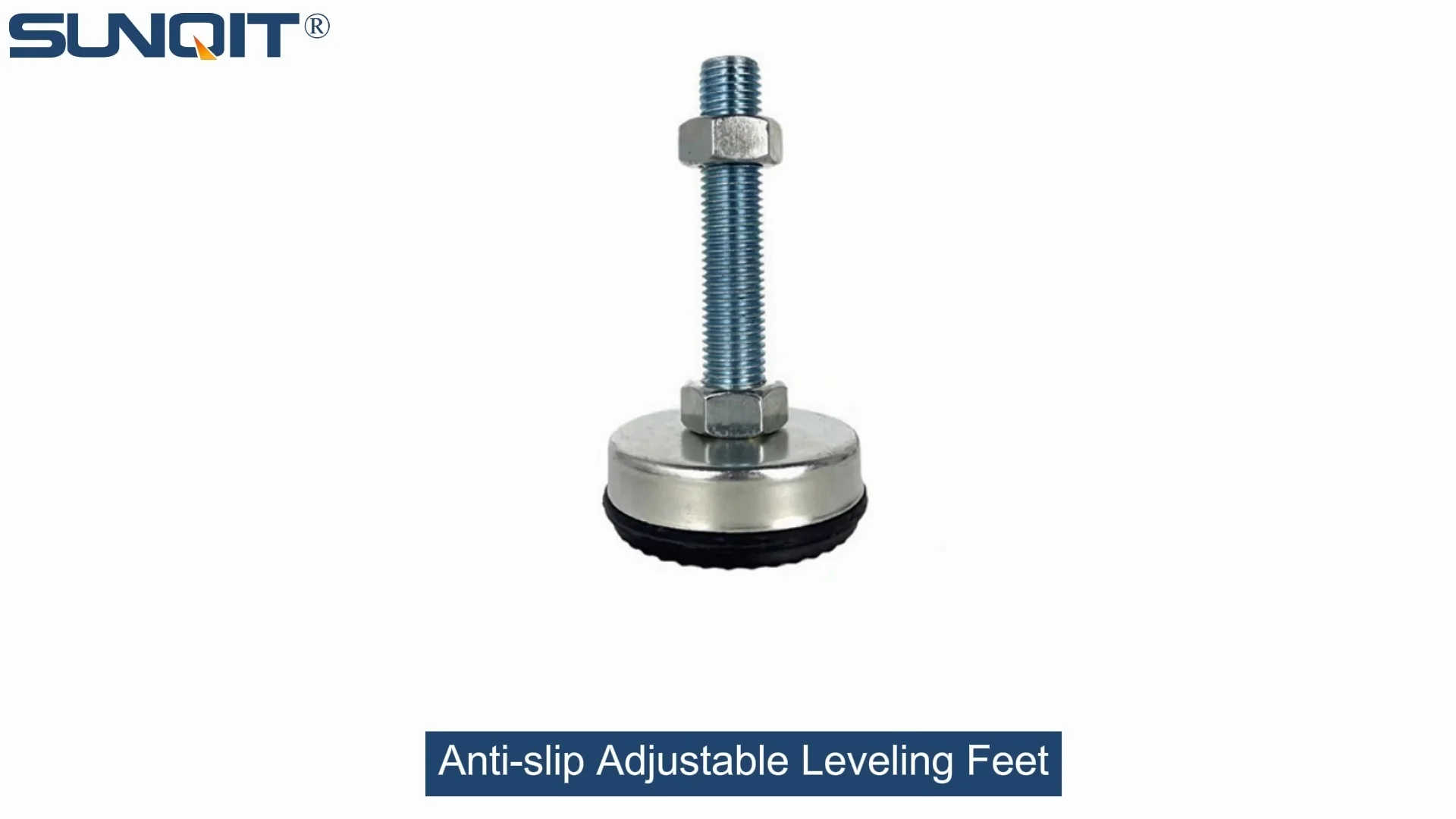
Anti-slip Adjustable Leveling Feet
Anti-slip Adjustable Leveling Feet are designed to keep machines level when placed on uneven or sloped ground, the rubber base will prevent product slip during work.
The Hidden Cost of Unstable Equipment in Factories
Walk through any busy factory floor, and you'll feel the pulse of productivity—machines humming, conveyor belts moving, workers collaborating to hit deadlines. But beneath that rhythm, there's often an unspoken risk: unstable equipment. A workbench that wobbles when leaned on. A material rack that shifts slightly when loaded. A roller track that vibrates out of alignment. These might seem like minor annoyances, easy to brush off as "part of the job." But the truth is, they're silent hazards.
According to the Occupational Safety and Health Administration (OSHA), slips, trips, and falls account for over 25% of all workplace injuries—and many of these incidents trace back to unstable work surfaces. A wobbly workbench isn't just a nuisance; it's a recipe for disaster. A worker leaning in to adjust a component might lose balance, sending tools crashing to the floor. A material rack that rocks could tip, spilling heavy parts onto a nearby employee. Even a slight vibration from an unlevel conveyor can cause products to jostle off track, leading to delays, damaged goods, or worse, a worker rushing to catch a falling item and straining their back.
The costs add up fast: medical bills, lost workdays, increased insurance premiums, and the intangible toll of a team that no longer feels fully safe. But here's the good news: many of these accidents are preventable. The solution isn't a complete overhaul of your factory setup. It's something much simpler: anti-slip adjustable leveling feet. These unassuming components might not grab headlines, but they're the unsung heroes of factory safety—turning unstable equipment into rock-solid foundations.
The Role of Anti-Slip Adjustable Leveling Feet: More Than Just "Stabilizers"
At first glance, anti-slip adjustable leveling feet might look like basic hardware. A metal stem, a rubber base, a nut to twist for height. But their design is deceptively clever. They're engineered to solve two critical problems in factories: uneven floors and slippery surfaces. Factories aren't known for perfect concrete—years of heavy machinery, spills, and repairs leave floors bumpy, cracked, or sloped. Standard fixed feet can't adapt to these imperfections, leaving equipment teetering. Adjustable leveling feet fix that by letting you "fine-tune" each leg of a workbench, rack, or table, ensuring it sits perfectly level, even on the most uneven ground.
Then there's the "anti-slip" part. Traditional leveling feet often use hard plastic or metal bases that slide easily on smooth or oily floors. Anti-slip models, though, feature rubber or textured bases that grip the floor like a shoe with treads. This isn't just about preventing the equipment itself from sliding—it's about giving workers confidence. When a workbench stays put, even when leaned on, employees don't have to waste mental energy compensating for wobbles. They can focus on their tasks, move efficiently, and avoid the split-second mistakes that lead to accidents.

How Anti-Slip Adjustable Leveling Feet Work: A Closer Look at Design and Functionality
Let's break down what makes these feet so effective. It starts with materials. The best anti-slip adjustable leveling feet use a combination of sturdy metal (like steel or aluminum) for the stem and a high-quality rubber for the base. The metal ensures durability—these feet need to support heavy loads, from a 500-pound workbench to a multi-tier material rack. The rubber, though, is where the magic happens. It's often formulated to resist oils, chemicals, and wear, so it maintains grip even in messy factory environments. Some models even have serrated or grooved bases to dig into uneven concrete, creating an extra layer of stability.
Adjustability is another key feature. Most feet have a threaded stem that screws into the equipment's base, with a nut that locks the height in place. Twist the stem up or down, and you can raise or lower each corner of the equipment by fractions of an inch—enough to compensate for small dips or bumps in the floor. This might sound trivial, but in precision work (like assembling electronics or aligning automotive parts), even a 1-degree tilt can throw off measurements. By keeping the equipment level, anti-slip adjustable leveling feet don't just prevent accidents—they improve product quality, too.
Finally, there's the anti-slip technology. Rubber bases are standard, but some manufacturers take it further. Look for feet with "non-marking" rubber (to avoid scuffing floors) or "oil-resistant" formulas (critical in automotive or machinery shops where spills are common). For extra slippery environments, some models add a layer of textured silicone or even small suction cups to the base, creating a vacuum-like grip on smooth floors. The goal? To make sure once the equipment is set, it stays set—no sliding, no shifting, no surprises.

Real-World Impact: Case Studies in Accident Reduction
Case Study 1: Automotive Assembly Plant in Michigan
A mid-sized automotive parts manufacturer was struggling with a recurring problem: their assembly workbenches kept wobbling. The factory floor, worn from years of heavy truck traffic, had developed small dips near the conveyor lines. Workers reported tools sliding off benches, and there had been two minor injuries in six months—one employee sprained an ankle tripping over a fallen wrench, another strained a shoulder catching a tipping bin of screws.
The plant manager initially considered resurfacing the floor, a costly and time-consuming project. Instead, they tested anti-slip adjustable leveling feet on 10 workbenches. Within a week, workers noticed a difference. The benches stayed steady, even when leaned on. Tools stayed in place. After three months, the trial expanded to all 45 workbenches and 20 material racks. In the following year, there were zero injuries related to unstable equipment. The plant saved an estimated $75,000 in potential medical costs and lost productivity—all from a $2,000 investment in leveling feet.
Case Study 2: Electronics Manufacturing Facility in California
An electronics factory producing circuit boards faced a different issue: static and slippery floors. Their ESD workstations (designed to prevent electrostatic discharge) had fixed plastic feet that slid easily on the smooth, anti-static flooring. Workers often had to reposition the workstations multiple times a day, and there was a constant risk of the benches shifting during delicate soldering work.
They switched to anti-slip adjustable leveling feet with conductive rubber bases (to maintain ESD protection) and serrated undersides. The adjustable stems leveled the workstations on the facility's slightly sloped floor, and the conductive rubber gripped the anti-static tiles without sliding. The result? A 40% reduction in time spent repositioning workstations, and a 100% reduction in near-misses from sliding benches. "It's like night and day," one lead technician noted. "I don't have to worry about the bench moving when I'm soldering a tiny component. I can focus on the work, not the wobble."

Integrating with Existing Systems: Compatibility with Workbenches, Aluminum Profiles, and Lean Systems
One of the best things about anti-slip adjustable leveling feet is how easily they fit into existing factory setups. They're not a "rip and replace" solution—they're an upgrade that works with what you already have. Let's look at three common factory systems and how these feet enhance them.
Pairing with Workbenches:
Whether you're using a basic single-deck workbench or a specialized ESD workstation, stability is non-negotiable. Workbenches hold tools, parts, and often sensitive equipment like microscopes or testing devices. A wobbly bench doesn't just risk accidents; it ruins precision. Anti-slip adjustable leveling feet bolt directly into most workbench legs, turning even the oldest, most beat-up bench into a steady platform. For example, the "Workbench E (single deck-without caster)" model—a popular choice in small factories—can be instantly stabilized with a set of four leveling feet, no modifications needed.
Working with Aluminum Profiles:
Aluminum profiles have revolutionized factory setups with their lightweight strength and modular design. They're used for everything from material racks to custom assembly lines. But even the sturdiest aluminum profile structure is only as stable as its base. That's why anti-slip adjustable leveling feet are a natural complement. Aluminum profiles like the 4040 or 3030 series often have pre-drilled holes in their feet, making it easy to attach leveling feet. This combination—aluminum's flexibility and the feet's stability—creates structures that are both adaptable and rock-solid. For instance, a "Material Rack B (3 row and 3 floor)" built with aluminum profiles can safely hold hundreds of pounds of parts when paired with leveling feet, even on uneven floors.
Supporting Lean Systems:
Lean manufacturing is all about efficiency—eliminating waste, streamlining processes, and keeping workflows smooth. But efficiency means nothing if it comes at the cost of safety. Anti-slip adjustable leveling feet align perfectly with lean principles by preventing disruptions. A conveyor that stays level doesn't jam. A workbench that doesn't wobble keeps production on schedule. Even small adjustments, like leveling a turnover trolley, reduce the time workers spend fixing avoidable problems. In lean systems, every second counts—and stable equipment ensures those seconds are spent producing, not problem-solving.
Comparing Solutions: Why Anti-Slip Adjustable Leveling Feet Stand Out
You might be thinking: "Can't I just use shims? Or rely on casters with brakes?" Let's compare the options.
| Solution | Stability | Adjustability | Anti-Slip Grip | Long-Term Durability |
|---|---|---|---|---|
| Standard Fixed Feet | Poor—can't adapt to uneven floors | None | Low—often plastic or metal bases | Medium—wear out quickly on rough floors |
| DIY Shims (Wood/Plastic) | Fair—temporary fix, can shift over time | Limited—hard to fine-tune | Low—shims can slide out of place | Poor—break or compress under heavy loads |
| Casters with Brakes | Medium—brakes can slip on smooth floors | None for leveling | Medium—casters have some grip, but not designed for stability | Medium—brakes wear out; casters can get stuck |
| Anti-Slip Adjustable Leveling Feet | Excellent—adapts to uneven floors | High—precise height adjustment | High—rubber/textured bases grip floors | High—metal stems and durable rubber bases |
The verdict? Shims are a Band-Aid. Casters with brakes are great for mobility but not stability. Standard fixed feet work only on perfect floors. Anti-slip adjustable leveling feet, though, solve the root problem: they adapt to your factory's unique floor conditions, grip tightly, and stand the test of time.
Choosing the Right Anti-Slip Adjustable Leveling Feet: Key Considerations
Not all leveling feet are created equal. To get the most out of them, you'll need to match the feet to your equipment and environment. Here's what to look for:
Load Capacity:
Start with the basics: how much weight does the equipment need to support? A small workbench might need feet rated for 200 pounds per foot, while a heavy material rack could require 500 pounds or more. Always check the manufacturer's load rating—overloading feet can cause them to bend or break, defeating the purpose.
Floor Type:
Concrete floors? Look for feet with hard rubber bases that resist wear. Smooth tile or epoxy floors? Opt for textured or suction-cup bases to prevent sliding. Oily or wet environments (like food processing or automotive plants)? Choose oil-resistant rubber to maintain grip.
Adjustment Range:
How much height variation do you need to compensate for? Most feet adjust between 0.5 and 2 inches—enough for minor floor dips. If your factory has major unevenness, look for feet with a wider adjustment range (up to 4 inches).
Compatibility:
Make sure the feet fit your equipment. Check the thread size (common sizes include M10, M12) and the mounting style (some feet bolt on, others screw into existing holes). For aluminum profiles or specialized workbenches, look for feet with universal mounting plates that fit multiple designs.
Installation and Maintenance: Simple Steps for Long-Term Safety
Installing anti-slip adjustable leveling feet is surprisingly easy—most factory maintenance teams can do it in minutes. Here's a quick guide:
Step 1: Prepare the Equipment
– Empty the equipment (workbench, rack, etc.) to reduce weight. If it has existing feet, remove them using a wrench.
Step 2: Screw in the Leveling Feet
– Thread the new feet into the mounting holes. Hand-tighten first, then use a wrench to secure them (don't over-tighten—you'll need to adjust them later).
Step 3: Level the Equipment
– Place a spirit level on the equipment's surface. Twist the leveling feet up or down until the bubble is centered. Lock the nut against the equipment base to hold the height in place.
Step 4: Test for Stability
– Push gently on all corners of the equipment. It should stay firm, no wobbling. If it moves, readjust the feet until it's stable.
Maintenance is just as simple. Every few months, check the feet for wear—if the rubber base is cracked or flattened, replace them. Tighten any loose locking nuts. If the floor shifts over time (common in older factories), re-level the equipment using the feet's adjustment feature. A little upkeep goes a long way in keeping your equipment stable for years.
Conclusion: Investing in Safety as a Foundation for Productivity
In the rush to meet deadlines and boost output, it's easy to overlook the small components that keep a factory running safely. But anti-slip adjustable leveling feet are a reminder that safety and productivity go hand in hand. They're not just "hardware"—they're an investment in your team's well-being and your bottom line.
Think about it: a stable workbench means fewer accidents, less downtime, and happier workers. A level material rack means parts stay secure, reducing waste. A steady conveyor means smoother production, keeping orders on track. All of this from a component that costs less than a hour of downtime from an accident.
So the next time you walk your factory floor, take a closer look at your equipment. Is that workbench wobbling? Does that material rack shift when you push it? These aren't just "quirks"—they're opportunities to improve. With anti-slip adjustable leveling feet, you can turn those opportunities into safer, more efficient workflows. Because in the end, a factory that's stable is a factory that thrives.