- Company Articles
- Products and Technology
- Product knowledge
- Anti-Slip Adjustable Leveling Feet: Solving Uneven Floor Problems in Factories

Anti-Slip Adjustable Leveling Feet: Solving Uneven Floor Problems in Factories
Related Product
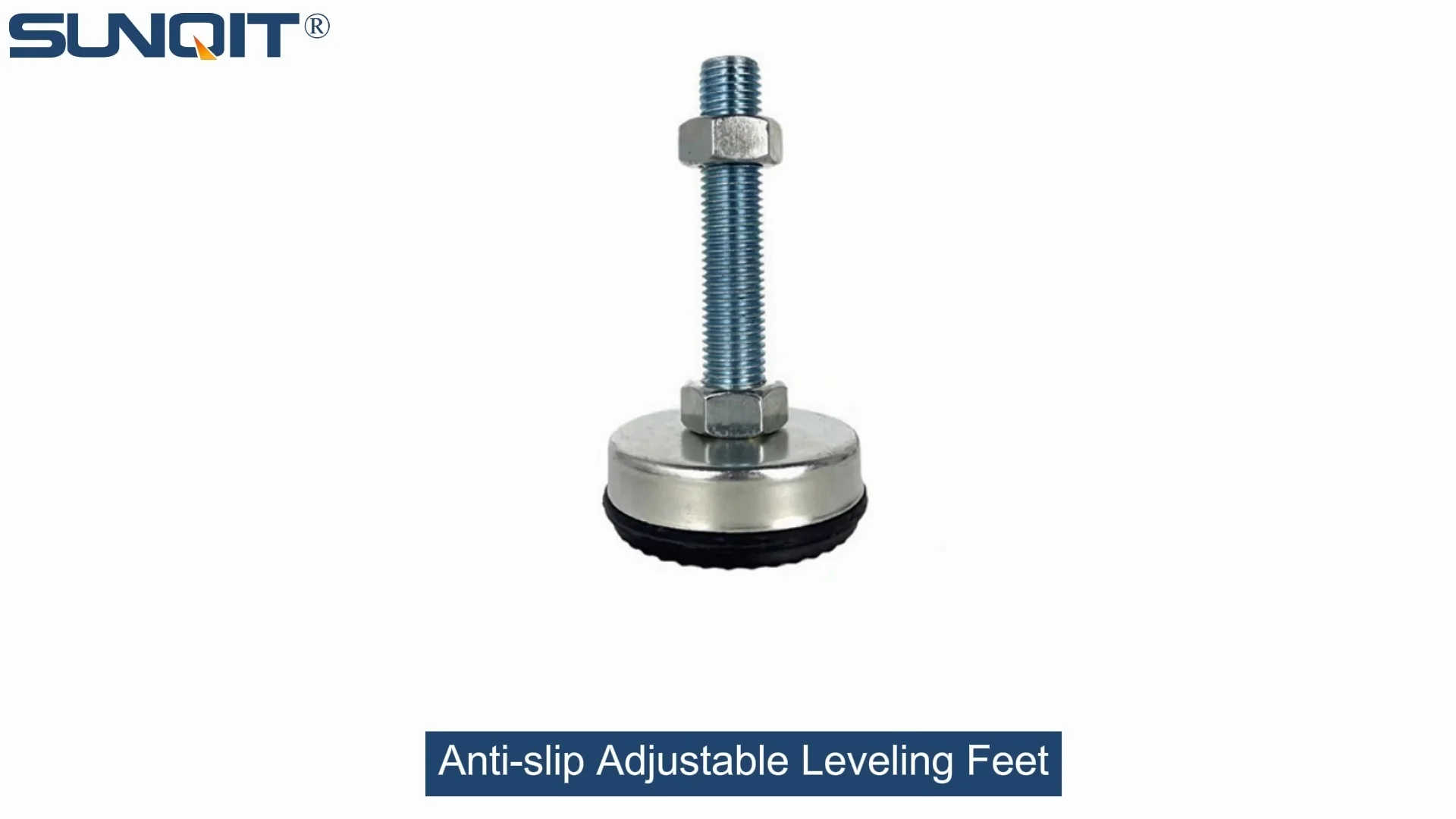
Anti-slip Adjustable Leveling Feet
Anti-slip Adjustable Leveling Feet are designed to keep machines level when placed on uneven or sloped ground, the rubber base will prevent product slip during work.
Picture this: It's 8 AM on a Monday in your factory. The production line is gearing up, workers are setting up their stations, and the hum of machinery starts to fill the air. But at Station 3, Maria is already frustrated. Her workbench wobbles every time she places a component down, causing her to slow down and double-check her alignment. Last week, a small tool slid off the edge and nearly hit her foot. "Just another day with this uneven floor," she mutters, adjusting a stack of cardboard under one leg to prop it up—again. Sound familiar? If your factory floor has seen better days, you're not alone. And those wobbly workbenches, tilting material racks, and unstable equipment aren't just minor nuisances—they're silent productivity killers, safety hazards, and hidden drains on your bottom line. Today, we're diving into a simple but powerful solution: anti-slip adjustable leveling feet. These unassuming components might just be the key to stabilizing your operations, boosting safety, and aligning with the lean system principles your factory relies on.
The Hidden Costs of Uneven Factory Floors
First, let's talk about why uneven floors matter. You might think, "Floors aren't perfect—deal with it." But the reality is, those small dips, cracks, and uneven surfaces add up. Let's break down the costs:
Safety Risks That Hit Close to Home : A wobbly workbench isn't just annoying—it's dangerous. When equipment isn't stable, tools slide, parts topple, and workers compensate by shifting their posture, leading to strains or falls. According to OSHA, slips, trips, and falls are among the top causes of workplace injuries, and uneven surfaces are a major contributor. Even a minor spill on an already unstable surface can turn into a serious accident. And when an injury happens, you're looking at downtime, workers' compensation claims, and a hit to team morale.
Productivity Drains You Can't Afford : Think about Maria at Station 3. Every time she adjusts that cardboard shim, every extra second she spends realigning parts, every pause to steady a (shaky) material rack—those seconds add up to minutes, and minutes add up to hours of lost production each week. Multiply that across all your stations, and you're looking at significant delays. Worse, instability leads to errors: misaligned components, defective products, and rework. In a lean system, waste like this is the enemy—and uneven floors are feeding it.
Equipment Damage and Wear : Your machinery and workbenches weren't cheap. But when they're forced to sit on uneven surfaces, they take a beating. A wobbly conveyor belt, for example, will wear unevenly, leading to premature breakdowns and costly repairs. Material racks that tilt put extra stress on their joints and frames, shortening their lifespan. Even something as simple as a turnover trolley with uneven wheels will wear out casters faster, meaning more frequent replacements. Over time, these "small" damages add up to big maintenance bills.
Enter Anti-Slip Adjustable Leveling Feet: The Unsung Heroes of Stability
So, what's the solution? Enter anti-slip adjustable leveling feet—small, versatile components designed to turn uneven chaos into rock-solid stability. At first glance, they might look like just another piece of hardware, but their design is cleverly engineered to solve the problem at its root: adjusting to the floor, not the other way around.
Here's how they work: Most leveling feet consist of three main parts: a threaded stem, a base plate with an anti-slip pad, and a locking nut. The stem screws into a threaded hole on the bottom of your equipment (like a workbench or material rack), and you twist the base to raise or lower it—no cardboard shims required. Once you've got the perfect height, you tighten the locking nut to keep it in place. The anti-slip pad, usually made of rubber or a high-friction material, grips the floor to prevent sliding, even on smooth or slightly oily surfaces.
What makes them "adjustable" is that they can compensate for differences in floor height—whether it's a 1mm dip or a 10mm bump. And the "anti-slip" feature? That's crucial in factories where spills happen, or where equipment vibrates during operation. Unlike fixed feet (which can't adjust) or basic casters (which prioritize mobility over stability), anti-slip adjustable leveling feet strike the perfect balance: they keep your equipment steady, even when the floor isn't.

Why These Leveling Feet Stand Out: Benefits Beyond Stability
Anti-slip adjustable leveling feet aren't just about stopping wobbles—they deliver a host of benefits that ripple through your entire operation:
Safety First, Always : The anti-slip base is a game-changer. In environments where oil, coolant, or water might hit the floor, a stable workbench with non-slip feet reduces the risk of tools or parts sliding off. Workers can focus on their tasks without worrying about sudden shifts, and the risk of trips and falls drops significantly. It's a small change that makes a big difference in keeping your team safe.
Productivity That Stays Consistent : Remember Maria? With a leveling foot-equipped workbench, she no longer wastes time propping up legs or repositioning parts. Tasks that used to take 10 minutes now take 8, and errors from misalignment plummet. Multiply that across all your stations, and you're looking at measurable gains in output. Plus, when equipment is stable, workers feel more confident and less frustrated—happy workers are productive workers.
Longer Equipment Lifespan : By distributing weight evenly across your workbenches, material racks, and machinery, leveling feet reduce stress on frames, joints, and components. A material rack B (3 row and 3 floor) that's properly leveled won't have one shelf bearing more weight than the others, preventing warping or collapse. Your equipment lasts longer, and you spend less on replacements and repairs.
Flexibility for Changing Needs : Factories evolve—new equipment is added, layouts are rearranged, and floor conditions can shift over time (think: wear from heavy traffic or minor repairs). Leveling feet adapt to these changes. Move a workbench to a new spot? Just readjust the feet to the new floor's contours. No need to buy new equipment or permanently modify your space. They're a flexible solution for a dynamic environment.

Where Do These Leveling Feet Fit? Applications Across Your Factory
Anti-slip adjustable leveling feet aren't one-trick ponies—they're versatile enough to stabilize almost any stationary equipment in your factory. Let's look at some key applications:
Workbenches: The Heart of the Operation : From assembly stations to quality control checkpoints, workbenches are where the magic happens. Whether it's a simple aluminum workbench A or a heavy-duty workbench E (single deck-without caster), leveling feet ensure the surface stays flat and steady. Imagine a soldering station where precision is critical—even a 1-degree tilt can lead to faulty joints. With leveling feet, that workbench stays locked in place, no matter the floor's quirks.
Material Racks and Storage Systems : Material rack B (3 row and 3 floor) might hold hundreds of pounds of components. If it's leaning, those components could shift, leading to jams when retrieving items or, worse, a collapse. Leveling feet distribute the weight evenly, keeping racks vertical and stable. The same goes for turnover trolley and rack systems—when they're stationary, leveling feet (or a combination of casters and leveling feet) keep them from rolling or tipping.
Machinery and Conveyors : Even heavy machinery needs a stable base. Lathes, presses, and conveyor systems rely on level surfaces to operate smoothly. A conveyor that's tilted might cause products to jam or slide off, disrupting the entire line. Leveling feet under support legs keep everything aligned, reducing downtime and maintenance.
Test and Inspection Stations : Precision is non-negotiable here. If a testing fixture is unlevel, measurements could be off, leading to false passes or fails. Anti-slip adjustable leveling feet ensure these stations stay accurate, so you can trust your quality control process.

Leveling Feet vs. Casters vs. Fixed Feet: Which Should You Choose?
You might be wondering: "We already use casters for mobility, or fixed feet for simplicity—why switch?" The truth is, each option has its place. Let's break down the pros and cons with a quick comparison:
| Feature | Anti-Slip Adjustable Leveling Feet | Casters (with Brakes) | Fixed Feet |
|---|---|---|---|
| Stability | Excellent—locks equipment in place, even on uneven floors | Fair—brakes help, but still prone to slight movement on uneven surfaces | Good on flat floors, but useless on uneven ones (causes wobbling) |
| Adjustability | Highly adjustable—twist to raise/lower for floor irregularities | Limited—casters can't adjust height; you'd still need shims | No adjustability—fixed height means wobbles on uneven floors |
| Mobility | None—best for stationary equipment | Excellent—designed for moving equipment (e.g., turnover trolleys) | None—permanently fixed in place |
| Anti-Slip Performance | Superior—rubber/non-slip base grips floors, even with vibration | Fair—brakes prevent rolling, but casters themselves don't grip | Depends on material—no built-in anti-slip feature |
| Best For | Stationary workbenches, material racks, heavy machinery | Equipment that needs frequent moving (trolleys, portable workstations) | Light, temporary setups on perfectly flat floors (rare in factories!) |
The takeaway? If your equipment stays in one place (like a workbench or material rack), anti-slip adjustable leveling feet are the clear winner. For equipment that moves (like a hand trolley), casters are necessary—but consider combining them with leveling feet (some casters have built-in leveling features!) for when mobility isn't needed. Fixed feet? They're fine for perfectly smooth floors, but in the real world of factories, they're often more hassle than they're worth.
Aligning with Lean System Principles: How Leveling Feet Support Efficiency
If your factory follows lean system principles, you know the goal is to eliminate waste—whether it's time, materials, or effort. Uneven floors create waste in spades: wasted time adjusting equipment, wasted materials from errors, wasted labor from injuries, and wasted money on repairs. Anti-slip adjustable leveling feet directly target these wastes, making them a lean-friendly investment.
Lean manufacturing thrives on stability and consistency. A stable workbench means consistent assembly times. A level material rack means parts are easy to access, reducing "motion waste" (workers bending or reaching awkwardly). And a safer environment means fewer disruptions from accidents, keeping your production flow smooth. In short, leveling feet help create the predictable, reliable processes that lean systems depend on.
Plus, lean is about continuous improvement. By installing leveling feet, you're not just fixing a problem—you're showing your team that you care about their work environment and efficiency. That mindset of small, impactful improvements is what drives long-term success in lean systems.
Choosing the Right Anti-Slip Adjustable Leveling Feet: What to Look For
Not all leveling feet are created equal. To get the most out of your investment, here's what to consider when selecting them for your factory:
Load Capacity : Start with the basics—how much weight will the equipment bear? A lightweight workbench might need feet rated for 200 lbs, while a heavy material rack could require 1,000 lbs or more. Check the manufacturer's specs to ensure the feet can handle your load.
Floor Type and Conditions : Is your floor concrete, tile, or epoxy? Do you deal with oil, coolant, or water spills? Look for anti-slip pads made of materials like nitrile rubber (resistant to oils) or polyurethane (excellent grip on smooth surfaces). For rough concrete, a larger base plate distributes weight better and prevents sinking.
Adjustment Range : Measure the worst-case unevenness in your floor. If the biggest dip is 15mm, choose feet that can adjust at least 20mm to be safe. You don't want to max out the adjustment and still have a wobble.
Mounting Compatibility : Do your workbenches or racks use aluminum profile frames? Many leveling feet are designed to fit standard aluminum profile holes, making installation a breeze. If you're retrofitting old equipment, check the thread size (e.g., M10, M12) to ensure the stem fits existing holes.
Durability : Factory environments are tough—look for feet with corrosion-resistant stems (stainless steel or zinc-plated) and rugged base plates. You don't want to replace them every few months.
Conclusion: Small Change, Big Impact
Uneven factory floors might seem like a problem you just have to live with—but they're not. Anti-slip adjustable leveling feet are a simple, affordable solution that delivers outsized benefits: safer workspaces, happier workers, higher productivity, and longer-lasting equipment. They align perfectly with lean system goals by eliminating waste and creating stability, and they adapt to the ever-changing needs of your factory.
So, the next time you walk through your facility, take a look at those wobbly workbenches and tilting racks. Imagine what your team could accomplish if they didn't have to fight the floor every day. Then, take the first step: invest in anti-slip adjustable leveling feet. It's a small change that could transform your operations—one stable workbench at a time.