- Company Articles
- Products and Technology
- Product knowledge
- Anti-Slip Adjustable Leveling Feet: Supporting Lean Manufacturing's Reusability

Anti-Slip Adjustable Leveling Feet: Supporting Lean Manufacturing's Reusability
Related Product
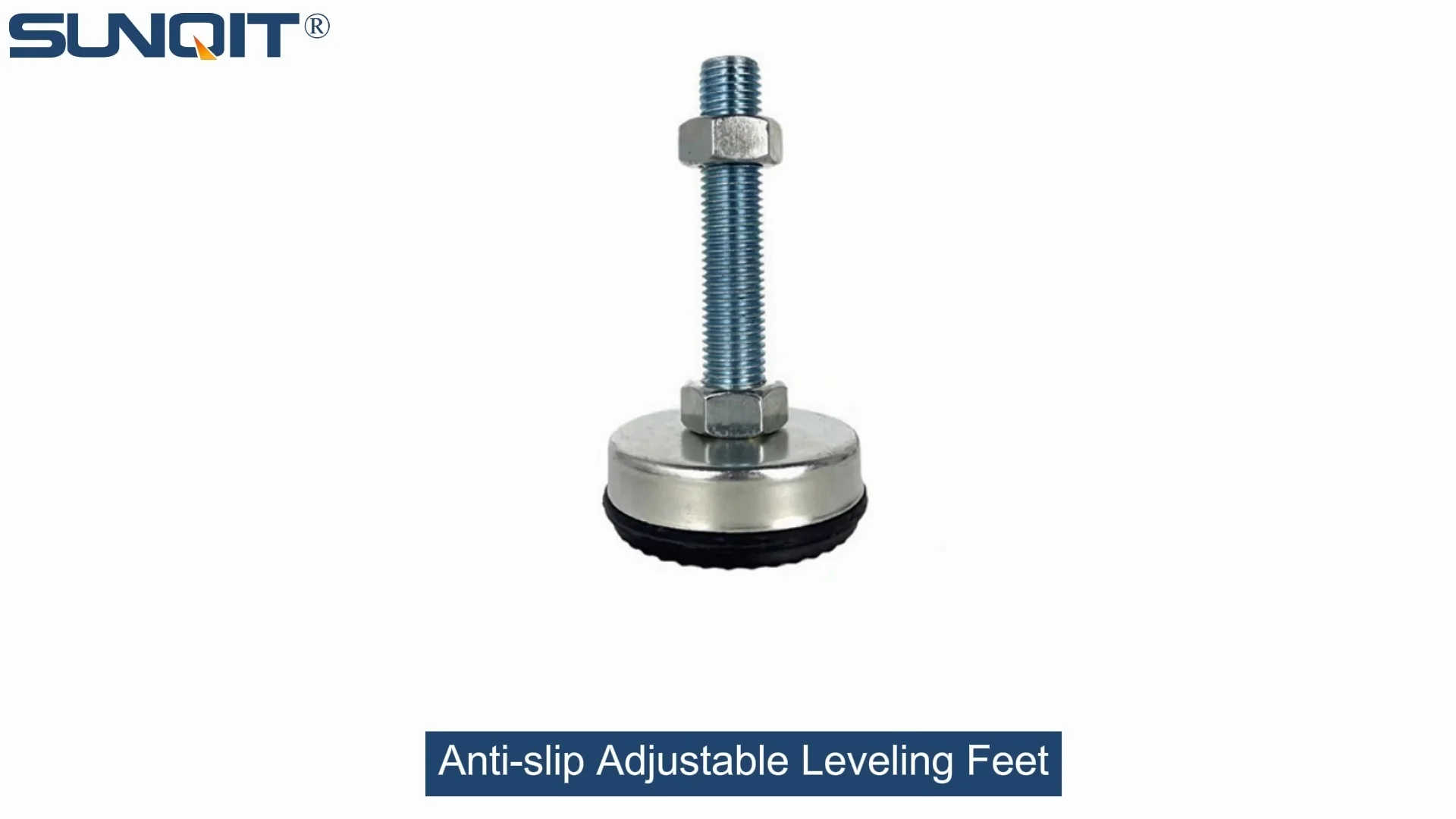
Anti-slip Adjustable Leveling Feet
Anti-slip Adjustable Leveling Feet are designed to keep machines level when placed on uneven or sloped ground, the rubber base will prevent product slip during work.
Walk into any thriving manufacturing facility today, and you'll likely notice a quiet revolution unfolding. It's not in the flashy robotics or high-tech software (though those play their part). Instead, it's in the small, intentional choices that turn chaos into order—choices that prioritize efficiency, safety, and sustainability. At the heart of this revolution lies lean manufacturing, a philosophy built on eliminating waste and maximizing value. And if lean manufacturing were a symphony, then components like anti-slip adjustable leveling feet would be the unsung percussionists, keeping the rhythm steady, ensuring every note (or in this case, every workflow) hits just right.
But let's back up. What does "lean" really mean for the teams on the ground? It means no more wasted motion chasing tools that don't stay put. No more time lost adjusting wobbly workbenches mid-shift. No more frustration over equipment that can't adapt when production needs change. Lean is about creating systems that work with people, not against them. And in that spirit, today we're shining a light on one of lean's most humble yet critical tools: the anti-slip adjustable leveling foot. This unassuming component might not grab headlines, but it's a cornerstone of reusable, adaptable manufacturing infrastructure—exactly the kind that turns good operations into great ones.
Lean Manufacturing and the Need for Adaptable Infrastructure
Lean manufacturing isn't just a buzzword; it's a mindset. Born from the Toyota Production System decades ago, it's evolved into a global standard for organizations that refuse to settle for "good enough." At its core, lean is about asking: How can we do more with less? Less waste, less time, less cost—while delivering more value to customers and more satisfaction to employees.
One of the biggest enemies of lean is inflexibility. A manufacturing line that's bolted down, equipment that can't be reconfigured, or workstations that only do one job well—these are the antitheses of lean. They trap teams in rigid processes, making it impossible to pivot when customer demands shift or new efficiencies are discovered. That's where reusable infrastructure comes in. Think of it as the manufacturing equivalent of modular furniture: components that can be rearranged, repurposed, and reused as needs change. This isn't just about saving money (though that's a nice bonus); it's about empowering teams to innovate on the fly.
Take, for example, a small electronics manufacturer I visited last year. Their production line had been stuck in a rut, with workbenches that were fixed in place and constantly wobbling on the uneven factory floor. Workers spent 15 minutes each morning adjusting tables, and another 10 troubleshooting spills when components slid off unstable surfaces. Then, they switched to a modular system built around aluminum profiles and adjustable components. Suddenly, they could reconfigure workstations in hours instead of days, and those wobbly tables? Stabilized with a simple upgrade: anti-slip adjustable leveling feet. The result? A 20% drop in wasted time and a team that felt seen—like their comfort and efficiency mattered. That's the power of lean infrastructure: it's not just about machines; it's about people.
The Unsung Hero: Anti-Slip Adjustable Leveling Feet
So, what exactly is an anti-slip adjustable leveling foot? At first glance, it might look like a small metal or plastic component with a threaded stem and a rubber base. But don't let its simplicity fool you. This little tool does three big jobs: it levels uneven surfaces, it prevents slipping, and it stabilizes equipment—all while being adjustable to fit different heights and weights. Let's break that down.
First, leveling. Factory floors are rarely perfect. Years of heavy machinery, foot traffic, and general wear leave small dips and bumps that can turn a sturdy workbench into a rocking hazard. Adjustable leveling feet solve this by letting you tweak each foot's height independently. Twist the stem, raise or lower the foot, and suddenly that wobbly table is steady as a rock. It's a small adjustment with a huge impact: no more spilled parts, no more strained wrists from working on uneven surfaces, and no more downtime spent jury-rigging fixes with scraps of wood.
Then there's the anti-slip feature. The base of these feet is usually made of rubber or a high-friction material that grips the floor, even when oil, water, or debris is present. In a busy manufacturing environment, spills happen. But with anti-slip feet, a workstation won't slide when someone bumps into it, and heavy equipment stays anchored during operation. This isn't just about convenience—it's about safety. A slipped trolley or a sliding workbench can lead to injuries, damaged products, or worse. Anti-slip leveling feet turn "what if" into "we're covered."
Finally, reusability. Unlike fixed feet that are glued or welded in place, adjustable leveling feet are designed to be detached, reattached, and reused. Need to move a workbench to a new line? Unscrew the feet, install them on the new workstation, and adjust as needed. Upgrading to a heavier-duty table? Swap out the feet for a higher-load-capacity model, no need to replace the entire setup. This reusability is gold for lean systems, where waste reduction is king. Why buy new equipment when you can repurpose what you already have?

Key Features of Anti-Slip Adjustable Leveling Feet: A Closer Look
Not all leveling feet are created equal. To truly support lean manufacturing, they need to check a few boxes. Let's walk through the features that matter most, and why they make a difference on the factory floor.
- Material Matters: Most leveling feet are made of steel, stainless steel, or aluminum. Steel is durable for heavy loads, stainless steel resists corrosion (perfect for wet or chemical-heavy environments), and aluminum is lightweight—ideal for mobile setups like turnover trolleys. The base is often rubber or polyurethane, chosen for its grip and shock-absorbing properties.
- Load Capacity: This is the maximum weight a foot can support without bending or breaking. A small workbench might need feet rated for 200 lbs each, while a heavy-duty material rack could require 1,000 lbs or more. Choosing the right load capacity isn't just about safety; it's about longevity. Overloading a foot leads to premature wear, which means more replacements and more waste—exactly what lean aims to avoid.
- Adjustment Range: How much can the foot be raised or lowered? A range of 1-3 inches is standard, but some models go higher. This flexibility ensures the foot can adapt to even the most uneven floors. Imagine a factory with a floor that slopes slightly—adjustable feet can compensate, keeping workstations level across the entire line.
- Anti-Slip Design: Look for feet with textured bases or specialized rubber compounds that maintain grip in harsh conditions. Some even have "non-marking" bases, which is a win for facilities where floor appearance matters (like food processing or cleanrooms).
- Compatibility: The best leveling feet play well with others. They should attach easily to common lean system components like aluminum profiles, workbenches, and material racks. Many come with standard thread sizes (like M10 or M12) to fit pre-drilled holes in equipment, making installation a breeze.
To help visualize how these features stack up, let's compare a few common types of anti-slip adjustable leveling feet. This table breaks down their key specs, so you can see which might be right for your needs:
| Type | Material | Load Capacity (per foot) | Adjustment Range | Anti-Slip Feature | Best For |
|---|---|---|---|---|---|
| Standard Steel Foot | Zinc-plated steel stem, rubber base | Up to 500 lbs | 1-2 inches | Textured rubber base | General workbenches, light material racks |
| Stainless Steel Heavy-Duty | 304 stainless steel stem, polyurethane base | Up to 1,500 lbs | 2-3 inches | Oil-resistant polyurethane | Wet environments, heavy machinery, cleanrooms |
| Aluminum Lightweight | Anodized aluminum stem, rubber base | Up to 300 lbs | 1.5-2.5 inches | Non-marking rubber | Mobile workstations, aluminum profile setups |
| Swivel Base Foot | Steel stem, swivel rubber base | Up to 800 lbs | 1-2 inches | Swivel base adapts to uneven floors | Extremely uneven surfaces, outdoor use |

Integration with Lean Systems: Workbenches, Aluminum Profiles, and Beyond
A leveling foot is only as good as its ability to work with the rest of your lean system. The magic happens when it's paired with components like workbenches, aluminum profiles, and material racks—turning individual parts into a cohesive, adaptable whole. Let's take workbenches, for example. A well-designed workbench is the command center of any manufacturing cell. It holds tools, components, and assembly materials, and it needs to be rock-solid for precision work. But even the sturdiest workbench is useless if it wobbles. That's where anti-slip adjustable leveling feet come in. By attaching them to the base of the workbench legs, you ensure stability on any floor, making tasks like assembly, testing, or packaging easier and more accurate.
Aluminum profiles are another key player in lean systems. These lightweight, modular rails are the building blocks of everything from shelving units to machine guards. They're loved for their flexibility—you can bolt, clamp, or slot components into place, then reconfigure them later. But aluminum profiles alone aren't enough. To build a stable structure, you need a solid foundation, and that's where leveling feet shine. Whether you're building a material rack B (with 3 rows and 3 floors) or a custom workstation, adding adjustable feet to the base of the aluminum profile frame lets you level the entire structure, even on uneven ground. It's like building with Legos, but for grown-ups—with the added benefit of knowing your creation won't topple over.
Then there are turnover trolleys and racks—those workhorses of material handling that ferry parts from one station to another. Trolleys often need to stop and start, and if their feet slip, they can roll away unexpectedly. Anti-slip leveling feet with locking mechanisms (or paired with caster accessories like brake wheels) keep trolleys anchored when they're supposed to be stationary. Imagine a team member loading a trolley with fragile circuit boards; the last thing they need is a wobbly or sliding cart. With the right feet, that trolley becomes a reliable partner, not a liability.
The beauty of this integration is how it supports lean's "reuse" principle. Let's say your team needs to shift from assembling smartphones to tablets. Instead of buying new workbenches, you can reconfigure your existing aluminum profile setup, adjust the leveling feet to fit the new layout, and be up and running in a day. The feet move with the system, adapting to new heights, new floors, and new challenges. This isn't just cost-effective—it's empowering. Workers aren't stuck with tools that can't keep up; they're given the flexibility to innovate.

Reusability: A Cornerstone of Lean Efficiency
If there's one word that sums up lean manufacturing, it's "reuse." Lean hates waste, and nothing is more wasteful than throwing away something that still works. That's why reusability isn't just a nice-to-have for leveling feet—it's a must. Let's talk about why this matters, both for your bottom line and for your team's morale.
First, the financial impact. Reusing components like leveling feet cuts down on procurement costs. Instead of buying new feet every time you reconfigure a workstation, you can unscrew the old ones and screw them into the new setup. Over time, this adds up. A mid-sized manufacturer might save tens of thousands of dollars annually by reusing adjustable feet alone. But it's not just about the money—it's about time. Ordering new parts means waiting for deliveries, tracking shipments, and coordinating installations. Reusing what you have eliminates those delays, letting teams focus on what they do best: making great products.
Then there's sustainability. Lean and sustainability go hand in hand. By reusing components, you reduce the demand for raw materials, lower your carbon footprint, and minimize waste sent to landfills. It's a small step, but it adds up. Customers today care about the environmental impact of the products they buy, and manufacturers who prioritize sustainability build trust and loyalty. Plus, employees want to work for companies that do the right thing. Knowing that their workplace values reuse over waste can boost pride and engagement.
But reusability isn't just about cost or the planet—it's about agility. In today's fast-paced manufacturing world, the ability to pivot quickly is a competitive advantage. Let's say a customer suddenly increases their order, and you need to add a new assembly line. With reusable leveling feet, you can take workbenches from a lower-priority line, adjust the feet to fit the new floor, and have the new line operational in hours. No waiting for new parts, no downtime—just action. That's the lean promise: be ready for whatever comes next.
I saw this in action at a automotive parts plant in Michigan a few years back. They'd been using fixed, welded feet on their workstations for years, and whenever they needed to reconfigure, they'd have to cut the old feet off and weld new ones on. It took a full day of work for two technicians, and the old feet went straight to the scrap heap. Then, they switched to adjustable, reusable leveling feet. The next time they reconfigured, a single technician did the job in two hours, and the old feet were used on a new material rack. The plant manager told me, "It's not just about saving time—it's about giving my team the freedom to experiment. If they have an idea for a better layout, they don't have to wait for maintenance to weld stuff. They can just do it." That's the power of reusability: it turns "we can't" into "we can."
Choosing the Right Supplier: Why Quality Matters
Okay, so you're sold on anti-slip adjustable leveling feet. You understand their role in lean systems, their key features, and why reusability matters. Now, the next step: finding a supplier who can deliver the quality and support you need. This might seem like a no-brainer, but not all lean pipe suppliers are created equal. The right supplier doesn't just sell you parts—they partner with you to build better systems.
First, look for a supplier who specializes in lean manufacturing components. These are the folks who live and breathe aluminum profiles, roller tracks, and yes, leveling feet. They'll understand your unique challenges, whether you're working in electronics, food processing, or heavy industry. A general hardware store might sell leveling feet, but they won't know how to pair them with your aluminum profile accessories or help you calculate load capacities for a custom workstation.
Quality is non-negotiable. A cheap leveling foot might save you a few dollars upfront, but if it bends under load or its anti-slip base wears out in six months, you'll end up replacing it—and that's waste. Look for suppliers who use durable materials (like stainless steel or anodized aluminum) and test their products rigorously. Ask about load ratings, corrosion resistance, and warranty terms. A supplier who stands behind their products with a solid warranty is a supplier who believes in quality.
Range matters too. The best suppliers offer a full suite of lean components, from basic aluminum tubes to roller track connectors to caster accessories. This one-stop shopping saves you time and ensures compatibility. For example, if you buy leveling feet, aluminum profiles, and caster wheels from the same supplier, you can be confident they'll work together seamlessly. No more guessing if the thread size on the feet matches the holes in the profiles—your supplier will have already done the homework.
Customer support is the final piece of the puzzle. Lean systems are all about problem-solving, and sometimes you need a little help. Maybe you're designing a workstation and aren't sure which leveling feet to use, or you need advice on reconfiguring a material rack. A good supplier will have technical experts on hand to answer questions, share best practices, and even help with custom solutions. They'll treat your success as their success, not just a sale.
Let me share a quick story: A medical device manufacturer I worked with once ordered leveling feet from a discount supplier to save costs. The feet looked fine, but after a month, the rubber bases started cracking, and the threads began stripping. They had to stop production to replace them, costing far more than the initial savings. Frustrated, they switched to a reputable lean pipe supplier who specialized in medical-grade components. The new feet were pricier, but they came with a 5-year warranty, and the supplier's tech team helped them calculate the exact load capacity needed for their sterile workbenches. Two years later, those feet are still going strong, and the manufacturer hasn't had a single issue. The lesson? You get what you pay for, and in lean manufacturing, reliability is priceless.
Real-World Applications: Case Studies in Lean Optimization
Talk is cheap—let's look at real examples of how anti-slip adjustable leveling feet have transformed lean manufacturing operations. These aren't hypothetical scenarios; they're stories of teams who rolled up their sleeves, embraced reusable infrastructure, and reaped the rewards.
Case Study 1: A Consumer Electronics Plant Cuts Downtime by 30%
A large electronics manufacturer in Vietnam was struggling with workbench instability. Their factory floor, like many older facilities, had uneven concrete, leading to wobbly assembly tables. Workers were spending 20 minutes each shift adjusting tables, and components frequently slid off, causing delays and defects. The plant manager decided to upgrade to modular workstations built with aluminum profiles and anti-slip adjustable leveling feet. The results? Adjustment time dropped to 5 minutes per week, defects from sliding components fell by 40%, and workers reported less fatigue. "It's the little things," one assembly line worker told me. "When the table doesn't wobble, I can focus on my job, not fighting the equipment."
Case Study 2: A Food Packaging Facility Boosts Safety Scores
A food packaging plant in Germany needed to comply with strict hygiene standards while improving safety. Their old wooden workbenches were hard to clean and often slippery from oil and water. They switched to stainless steel workstations with aluminum profile frames and stainless steel swivel roller balls for material handling. To stabilize the workstations, they added anti-slip adjustable leveling feet with corrosion-resistant bases. The feet's non-marking rubber didn't scratch the cleanroom floor, and their grip reduced slips and falls by 65%. The plant's safety audit score jumped from 78% to 95%, and cleaning time was cut in half. "We used to dread audit days," the safety manager said. "Now, we show off our workstations."
Case Study 3: A Automotive Parts Supplier Reduces Waste with Reusability
An automotive parts supplier in Mexico was tired of buying new equipment every time their production needs changed. They had a mix of fixed workbenches, custom racks, and one-off tools—all of which ended up in the scrapyard when changed. They partnered with a lean system supplier to transition to a fully modular setup: aluminum profiles, adjustable workbenches, and anti-slip leveling feet. Now, when they need to switch from making door handles to dashboard components, they reconfigure their existing workstations, adjusting the leveling feet to fit the new layout. In the first year, they reduced equipment waste by 70% and saved $120,000 on new tooling. "We used to see change as a cost," the operations director said. "Now, we see it as an opportunity."
These stories have one thing in common: they're about people. Behind the numbers and the components are teams who no longer have to fight their tools, who feel safer at work, and who have the freedom to do their best. That's the human side of lean manufacturing, and it's why components like anti-slip adjustable leveling feet matter.
Future Trends: Innovations in Lean Manufacturing Components
Lean manufacturing isn't standing still, and neither are the components that power it. As technology advances and sustainability becomes even more critical, we're seeing exciting innovations in leveling feet and other lean tools. Here's a sneak peek at what the future might hold.
One trend is smart leveling feet. Imagine feet embedded with sensors that monitor load, tilt, or wear, and send alerts when adjustments are needed. A workbench that's starting to wobble could send a notification to the maintenance team's tablet, preventing downtime before it happens. Or feet that track how often they're adjusted, giving managers insights into which workstations are being reconfigured most—data that can inform future layout decisions. This isn't science fiction; sensor technology is already being integrated into industrial equipment, and it's only a matter of time before it trickles down to components like leveling feet.
Sustainability is another driver of innovation. Manufacturers are experimenting with recycled materials for leveling foot bases, like rubber made from old tires, or stems made from recycled aluminum. There's also a push for "circular" designs, where feet are built to be easily disassembled and their parts recycled or reused. Imagine a leveling foot that reaches the end of its life; instead of throwing it away, you send it back to the supplier, who replaces the worn rubber base and sends it back good as new. This closes the loop on waste, aligning perfectly with lean's green goals.
Modularity is getting even more advanced. We're seeing feet designed to work with a wider range of systems, from traditional lean pipes to newer materials like carbon fiber profiles. Some manufacturers are even creating "universal" feet with interchangeable bases—swap out a rubber base for a stainless steel one if you move to a wet environment, or add a swivel joint for uneven floors. This flexibility will make it even easier for teams to adapt to new challenges.
Finally, ergonomics is taking center stage. Future leveling feet might include features like height presets (so workers can quickly adjust to their ideal table height) or vibration-dampening bases to reduce fatigue during long shifts. The goal? To make lean systems not just efficient, but also more comfortable and supportive for the people who use them. After all, the best lean system in the world is only as good as the team running it.
Wrapping Up: The Power of Small Components in Lean Manufacturing
As we've journeyed through the world of anti-slip adjustable leveling feet, one thing has become clear: lean manufacturing isn't about grand gestures. It's about the small, intentional choices that add up to big change. It's about the workbench that stays steady, the trolley that doesn't slip, and the team that feels empowered to reconfigure their space when inspiration strikes.
Anti-slip adjustable leveling feet might not be the most glamorous tools in the lean toolkit, but they're a reminder that every component matters. They support reusability, reduce waste, and make work safer and more efficient. They're the quiet partners of the manufacturing floor, working behind the scenes to turn chaos into order, and rigid systems into flexible ones.
So, the next time you walk into a manufacturing facility, take a moment to look down. Notice the feet under the workbenches, the bases of the material racks, the stabilizers on the trolleys. These are the unsung heroes of lean manufacturing. They're proof that in the world of lean, even the smallest components can make the biggest difference.
And to all the teams out there building, innovating, and reusing—keep going. Your commitment to lean isn't just making your operations better; it's making work better. And that's something worth celebrating.