- Company Articles
- Products and Technology
- Product knowledge
- Anti-Slip Adjustable Leveling Feet: Supporting Warehouse Logistics Efficiency

Anti-Slip Adjustable Leveling Feet: Supporting Warehouse Logistics Efficiency
Related Product
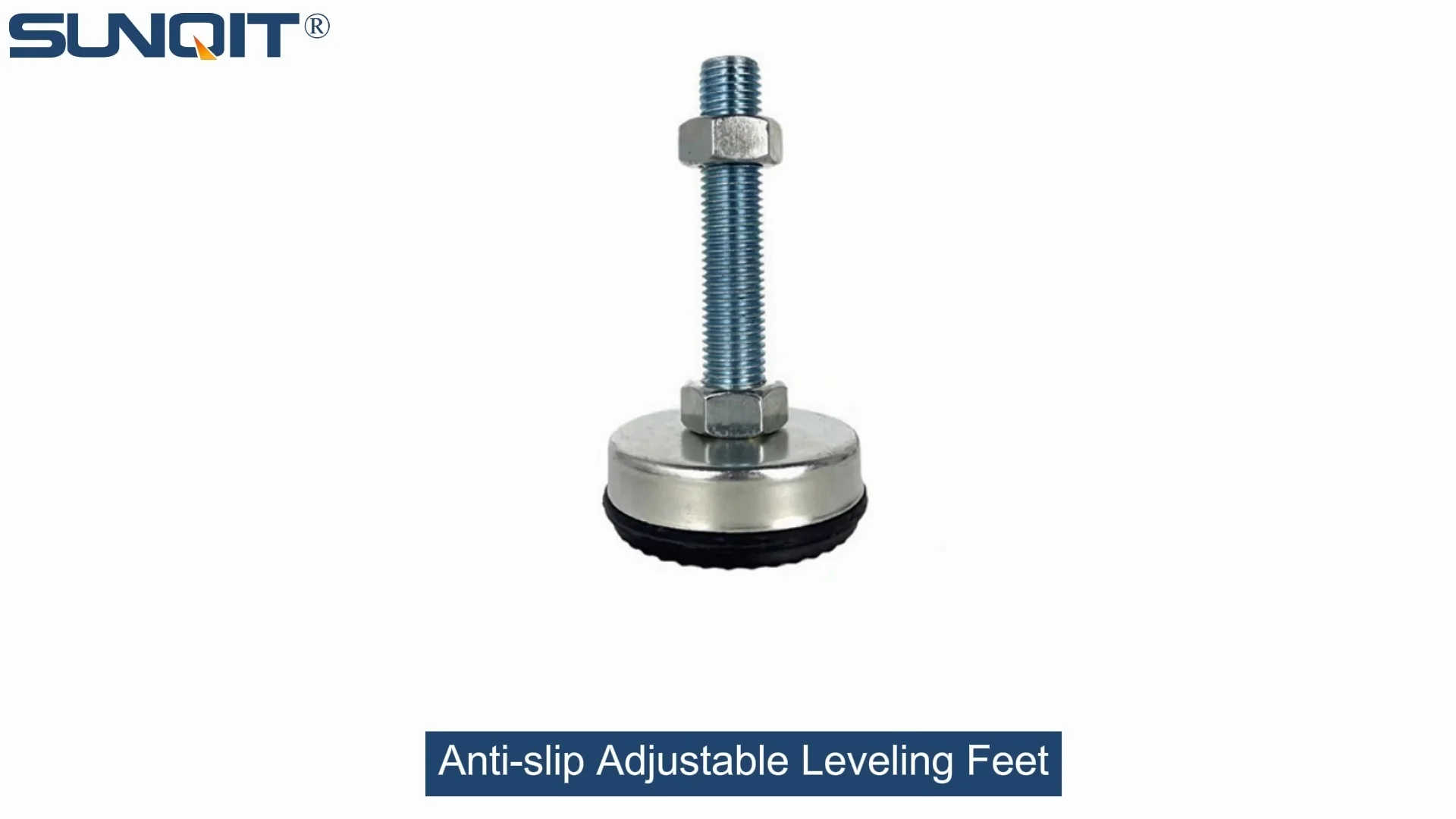
Anti-slip Adjustable Leveling Feet
Anti-slip Adjustable Leveling Feet are designed to keep machines level when placed on uneven or sloped ground, the rubber base will prevent product slip during work.
Picture this: It's a busy Tuesday morning in a mid-sized electronics manufacturing warehouse. The hum of conveyor belts fills the air, and workers in blue uniforms move swiftly between stations, assembling circuit boards and packing finished products. Near the back, Raj, the warehouse supervisor, stands with a furrowed brow, staring at a Material Rack B (3 row and 3 floor) that's been causing trouble all week. The rack, loaded with delicate components, leans slightly to the left—just enough that every time someone pulls a box from the top shelf, the entire structure wobbles. Last Thursday, a small carton of resistors toppled over, spilling parts across the floor and halting production for 20 minutes. "Enough is enough," Raj mutters, pulling out his phone to call maintenance. "We need to fix this."
What Raj might not realize is that the solution to his problem isn't a complete overhaul of the warehouse floor or a brand-new rack. It's something far simpler: anti-slip adjustable leveling feet. These unassuming components, often overlooked in the chaos of warehouse operations, are the unsung heroes that keep equipment stable, workflows smooth, and productivity high. In this article, we'll dive into how anti-slip adjustable leveling feet support warehouse logistics efficiency, why they matter more than you might think, and how they integrate seamlessly with essential warehouse tools like workbenches, lean systems, and material racks.
What Are Anti-Slip Adjustable Leveling Feet, Anyway?
At first glance, anti-slip adjustable leveling feet might seem like nothing more than small, metal or plastic components bolted to the bottom of equipment. But look closer, and you'll see they're precision-engineered tools designed to solve one of the most common headaches in warehouse management: uneven floors. Let's break down their anatomy.
Most anti-slip adjustable leveling feet consist of four key parts: a base plate, a threaded stem, an adjustment nut, and an anti-slip pad. The base plate is the part that makes contact with the floor, while the threaded stem screws into the equipment (like a workbench leg or material rack frame). The adjustment nut allows you to raise or lower the foot by turning it, fine-tuning the height to compensate for dips, bumps, or slants in the floor. The anti-slip pad, usually made of rubber or a high-friction polymer, sits on the bottom of the base plate, preventing the equipment from sliding even when jostled or vibrated.
Materials matter here, too. Many industrial-grade leveling feet use stainless steel or aluminum for the stem and base plate, ensuring they can withstand heavy loads and resist corrosion from spills or humidity. The anti-slip pads are often made of nitrile rubber or polyurethane, which offer excellent grip and durability—even in environments where oil, water, or dust is present.
But why "adjustable"? Warehouses are rarely perfect. Concrete floors crack, settle, or wear unevenly over time. New equipment may have slightly uneven legs. Without adjustability, even a small 1/4-inch difference in floor height can make a workbench wobble or a material rack lean. Adjustable feet turn that problem into a non-issue: a quick twist of the nut, and suddenly, the equipment is stable again.
Why Warehouse Logistics Can't Afford to Overlook Stability
You might be thinking, "So what if a workbench wobbles a little? Is that really a big deal?" In a word: yes. Unstable equipment isn't just an annoyance—it's a silent productivity killer, a safety hazard, and a threat to your bottom line. Let's unpack why stability matters in warehouse logistics.
1. Product Damage: Every Wobble Costs Money
Imagine a material rack holding fragile items—electronics, glassware, or medical supplies. When the rack sways, items shift. Over time, that shifting can loosen packaging, scratch surfaces, or even cause products to fall. For Raj's team, that spilled box of resistors wasn't just a 20-minute delay; it was $300 in wasted components and labor to clean up. Multiply that by a few incidents a month, and the costs add up fast.
2. Worker Fatigue: Unstable Surfaces Drain Energy
Now, think about the workers using that wobbly workbench. When a surface isn't stable, your body compensates without you even noticing. A worker assembling small parts might tense their shoulders to steady their hands, or shift their weight constantly to avoid knocking over tools. Over an 8-hour shift, that extra effort leads to fatigue. Tired workers are slower, more prone to mistakes, and more likely to take longer breaks. A study by the National Institute for Occupational Safety and Health (NIOSH) found that musculoskeletal disorders—often linked to poor ergonomics and unstable work surfaces—cost U.S. businesses over $50 billion annually in lost productivity and workers' compensation.
3. Safety Risks: Slips, Trips, and Tipping Hazards
Stability isn't just about keeping equipment upright—it's about keeping people safe. A leaning material rack could tip over if overloaded, crushing boxes (or worse, workers) underneath. A workbench with loose feet might slide unexpectedly when someone leans on it, causing a fall. Even small spills become more dangerous on unstable surfaces: if a workbench leg gives way while a worker is mopping, they could slip. OSHA reports that slips, trips, and falls are among the top causes of workplace injuries, with warehouses accounting for 25% of these incidents. Anti-slip adjustable leveling feet reduce these risks by keeping equipment rooted in place.
4. Inefficient Workflows: When Time Is Wasted on "Fixes"
Remember Raj's problem with the Material Rack B? Before he called maintenance, his team was spending 5 minutes every hour repositioning boxes to prevent them from falling. That's over 40 minutes a day—time that could have been spent assembling products or preparing orders. Unstable equipment also leads to more frequent maintenance checks, as workers or supervisors stop to adjust, shim, or prop up wobbly legs. In a lean system—where the goal is to eliminate waste—these "micro-delays" add up to macro inefficiencies.

Key Features That Make Anti-Slip Adjustable Leveling Feet Indispensable
Not all leveling feet are created equal. To truly support warehouse logistics efficiency, anti-slip adjustable leveling feet need specific features that set them apart from generic "feet" or basic pads. Let's explore the must-have traits that make these components essential.
- Precision Adjustability: The best leveling feet allow for fine-tuning—often down to 1/16 of an inch. This is crucial for compensating for minor floor irregularities that would otherwise go unnoticed. Look for feet with a threaded stem and a locking nut; the nut lets you secure the foot in place once adjusted, so it doesn't loosen over time due to vibration from nearby machinery.
- Heavy-Duty Load Capacity: Warehouse equipment isn't light. A standard workbench might hold 500 pounds of tools and materials, while a Material Rack B (3 row and 3 floor) can carry over 2,000 pounds when fully loaded. Anti-slip adjustable leveling feet need to handle these weights without bending, cracking, or sinking into the floor. Industrial-grade feet often have load capacities of 1,000–5,000 pounds per foot, depending on size and material.
- Anti-Slip Technology: The "anti-slip" part isn't just a marketing term. The bottom pad of the foot must grip the floor firmly, even when wet or dusty. Rubber pads with textured surfaces are a popular choice, as they conform slightly to the floor, increasing contact area and friction. Some advanced models use polyurethane pads infused with grit, which resist wear and maintain grip even after years of use.
- Durability for Tough Environments: Warehouses are harsh places. Feet are exposed to moisture, oil, chemicals, and heavy impacts from forklifts or pallet jacks. Stainless steel stems resist rust, while aluminum components offer a lightweight yet strong alternative (especially useful for mobile equipment like carts). The anti-slip pads should also stand up to wear—no peeling, cracking, or losing grip after months of use.
- Compatibility with Existing Equipment: The best leveling feet work with what you already have. Whether you're attaching them to a wooden workbench, a steel material rack, or an aluminum profile lean system, they should come with standard mounting options (like threaded inserts, bolts, or weld-on bases). This means you don't have to replace perfectly good equipment—just upgrade its foundation.

Where Do Anti-Slip Adjustable Leveling Feet Fit in Your Warehouse?
Anti-slip adjustable leveling feet aren't a one-trick pony. They integrate seamlessly with some of the most critical equipment in your warehouse, turning unstable tools into reliable workhorses. Let's look at three key applications where these feet shine.
1. Workbenches: The Heart of Assembly and Packaging
Workbenches are where the magic happens—whether it's assembling circuit boards, packing orders, or inspecting products for quality. A stable workbench is non-negotiable for precision and safety. Imagine a worker soldering a tiny wire onto a circuit board: if the bench wobbles, the soldering iron could slip, ruining the board or burning the worker. Anti-slip adjustable leveling feet ensure the bench stays rock-solid, even if the floor dips near the corner. They also help with ergonomics: by adjusting the height of individual feet, you can level the bench perfectly, reducing strain on workers' backs and shoulders.
Many modern workbenches, like the "Workbench E (single deck-without caster)" model, are designed with pre-drilled holes for leveling feet, making installation a breeze. Even older workbenches can be retrofitted—simply remove the existing feet (or cut off uneven legs) and screw in the adjustable ones. The result? A workbench that feels brand-new, without the cost of replacement.
2. Material Racks: Keeping Inventory Secure and Accessible
Material racks, like the Material Rack B (3 row and 3 floor) in Raj's warehouse, are the backbone of inventory storage. They hold everything from raw materials to finished goods, and their stability directly impacts how easily workers can retrieve items. A level rack ensures that boxes stack evenly, labels stay visible, and workers don't have to struggle to pull items from skewed shelves. Anti-slip feet are especially important for racks in high-traffic areas: the constant vibration from passing forklifts can loosen fixed feet, but adjustable feet with locking nuts stay put. Plus, if you ever need to reposition the rack, you can readjust the feet in minutes to the new floor conditions.
3. Lean Systems: Supporting the Pursuit of Efficiency
Lean systems are all about minimizing waste and maximizing value. They rely on streamlined workflows, standardized processes, and equipment that works in harmony. But even the most well-designed lean system can falter if the equipment isn't stable. For example, a flow rack used to move parts along an assembly line needs to be perfectly level to ensure items glide smoothly (not get stuck or slide too fast). Anti-slip adjustable leveling feet let you fine-tune the flow rack's angle, ensuring a consistent, efficient material flow. They also help maintain the "5S" principles of lean—specifically "Seiri" (sort) and "Seiton" (set in order)—by keeping equipment organized and stable, so workers can focus on their tasks instead of fixing wobbles.

Anti-Slip Adjustable Leveling Feet vs. the Alternatives: A Quick Comparison
You might be wondering, "Can't I just use shims, fixed feet, or even caster wheels instead?" While these alternatives have their place, they fall short in key areas. Let's compare anti-slip adjustable leveling feet to three common substitutes.
| Feature | Anti-Slip Adjustable Leveling Feet | Fixed Feet | Shims (Cardboard/Wood) | Caster Wheels Alone |
|---|---|---|---|---|
| Adjustability | High: Fine-tune height by turning the nut | None: Fixed height; can't adapt to uneven floors | Low: Add/remove shims, but imprecise and unstable | None: Casters roll, but don't level equipment |
| Anti-Slip Protection | High: Rubber/polymer pads prevent sliding | Low: Metal/plastic bases may slide on smooth floors | Low: Shims can shift or compress over time | Very Low: Casters roll easily, even accidentally |
| Load Capacity | High: Designed for heavy industrial loads (500–5,000 lbs/foot) | High: But only if floor is perfectly level | Low: Shims compress under heavy weight, losing effectiveness | Medium: Casters have load limits; stability decreases with weight |
| Durability | High: Stainless steel/aluminum stems; wear-resistant pads | Medium: May bend or crack if floor is uneven (stress on legs) | Very Low: Cardboard/wood breaks down; needs frequent replacement | Medium: Casters wear out over time; locks may fail |
| Best For | Workbenches, material racks, lean systems, heavy stationary equipment | Light equipment on perfectly level floors | Temporary fixes or light, infrequently used equipment | Mobile equipment that needs to be moved often (but pair with leveling feet for stability when stationary!) |
The takeaway? While caster wheels are great for mobility and fixed feet work on ideal floors, anti-slip adjustable leveling feet are the only option that combines adjustability, grip, and durability—making them the best choice for maximizing efficiency in real-world warehouses.
Case Study: How One Warehouse Cut Costs and Boosted Productivity
The Challenge: A Cosmetics Warehouse Struggles with Unstable Racks
LuxGlow Cosmetics runs a 50,000-square-foot warehouse in Chicago, storing and shipping skincare and makeup products. Their facility uses over 20 Material Rack B units (3 row and 3 floor) to hold inventory, along with 15 workbenches for order packing. Like many older warehouses, their concrete floor had settled over time, creating small dips and slopes in several areas. The result? Racks leaned, products shifted, and packers complained about wobbly workbenches. Over six months, LuxGlow recorded 12 incidents of product damage (costing $2,400), 8 worker complaints of fatigue, and an average of 30 minutes per day spent adjusting or shimming equipment.
The Solution: Installing Anti-Slip Adjustable Leveling Feet
In January 2024, LuxGlow's operations manager, Priya, decided to test anti-slip adjustable leveling feet. She ordered 100 feet (5 per rack, 4 per workbench) and had maintenance install them over a weekend. The feet were made of stainless steel with rubber anti-slip pads, and they came with locking nuts to prevent loosening. Installation was simple: workers removed the existing fixed feet, screwed in the new adjustable ones, and used a level to adjust each foot until the equipment was stable.
The Results: 90% Reduction in Damage, 2+ Hours Saved Daily
By March 2024, Priya reviewed the data—and the results were clear. Product damage incidents dropped from 12 to 1 (a 91% reduction), saving $2,160 in six months. Workers reported less fatigue, with no more complaints about wobbly workbenches. Most importantly, the time spent adjusting equipment plummeted from 30 minutes per day to just 5 minutes (a 83% reduction), freeing up over 2 hours of productive time daily. "It's amazing how such a small change made such a big difference," Priya said. "We're now planning to install them on all our equipment—including the conveyor systems and mobile carts."
Maintaining Your Leveling Feet: Tips for Long-Lasting Performance
Anti-slip adjustable leveling feet are built to last, but they still need a little TLC to perform at their best. Here are some simple maintenance tips to keep them working for years:
- Inspect Regularly: Once a month, take a walk through the warehouse and check the leveling feet on key equipment. Look for loose adjustment nuts, worn anti-slip pads, or bent stems. Tighten any loose nuts and replace pads that are cracked, flattened, or losing grip.
- Clean the Threads: Dust, dirt, and debris can get stuck in the threaded stem, making adjustment difficult. Use a small brush or compressed air to clean the threads every few months. If the stem is hard to turn, apply a tiny amount of lubricant (like silicone spray) to keep it moving smoothly.
- replace Pads Proactively: Anti-slip pads wear down over time—especially in high-traffic areas. Keep a few spare pads on hand, and replace them as soon as you notice signs of wear (like smooth spots or peeling edges). It's cheaper to replace a pad than to deal with a slipped workbench or damaged product.
- Check After Floor Work: If you've had the warehouse floor repaired, resurfaced, or cleaned with heavy equipment, check the leveling feet afterward. Floor work can shift equipment or create new unevenness, so you may need to readjust the feet.
Conclusion: The Foundation of Efficient Warehouse Logistics
Anti-slip adjustable leveling feet might not be the most glamorous part of your warehouse. They don't have the flash of a new conveyor system or the high-tech appeal of a barcode scanner. But as we've seen, they're the foundation upon which efficient, safe, and productive warehouse operations are built. By keeping workbenches stable, material racks upright, and lean systems flowing smoothly, they reduce waste, prevent damage, and keep workers happy and healthy.
So, what's next for Raj and his team? After installing anti-slip adjustable leveling feet on the Material Rack B and the wobbly workbench, he noticed an immediate difference. The rack no longer leans, the workbench stays steady, and the team has stopped complaining about spills and fatigue. "I wish I'd done this months ago," he says, grinning as he watches a worker pack an order without a single wobble. "Who knew something so small could make such a big impact?"
If you're ready to boost your warehouse's efficiency, start with the basics: check your equipment's stability. Chances are, anti-slip adjustable leveling feet are the missing piece you've been looking for. Your workers, your products, and your bottom line will thank you.