- Company Articles
- Products and Technology
- Product knowledge
- Anti-Static 2020 Aluminum Profile End Caps for Electronics Assembly

Anti-Static 2020 Aluminum Profile End Caps for Electronics Assembly
Related Product
2020 Aluminum Profile End Cap
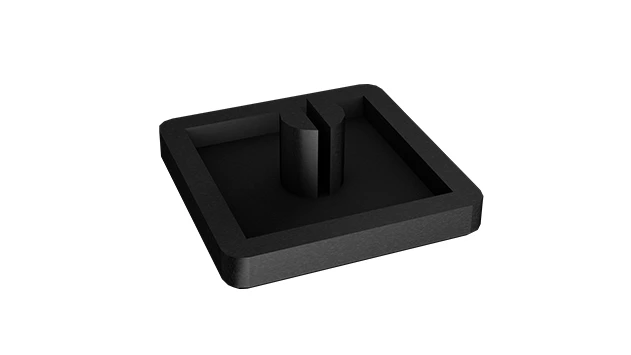
The aluminum profile end cap adds a finishing touch to your project and closes off profile ends to limit dust and debris buildup, also it can avaid some scratch for material and labor during the assemble work.
The Hidden Heroes of Electronics Assembly: Why Details Like End Caps Matter
Walk into any modern electronics assembly facility, and your eyes will likely be drawn to the high-tech machinery, the precision robots, or the rows of workers meticulously assembling circuit boards. It's easy to overlook the smaller components—the ones that don't make headlines but keep the entire operation running smoothly. Today, we're shining a light on one such unsung hero: the anti-static 2020 aluminum profile end cap. These tiny, unassuming pieces play a critical role in protecting sensitive electronics from static damage, ensuring worker safety, and maintaining the efficiency of lean manufacturing systems. In a world where a single static discharge can ruin a $500 microchip or delay production for hours, the right end cap isn't just an afterthought—it's a vital line of defense.
Consider Maria, a lead technician at a mid-sized electronics plant that assembles components for medical devices. Last year, her team was plagued by mysterious defects: perfectly assembled circuit boards would fail quality checks, with no visible signs of damage. After weeks of investigation, the culprit was traced to static electricity. A technician's wrist strap had malfunctioned, and a discharge traveled through the aluminum workbench frame, frying a sensitive sensor. What stood out, though, was that the issue was exacerbated by the workbench's end caps—standard plastic ones that didn't dissipate static. "We'd invested in expensive ESD mats and grounding equipment, but we'd skipped the end caps," Maria recalls. "It was a $2 part that cost us thousands in scrap and downtime." Today, her facility uses anti-static 2020 aluminum profile end caps on every workbench. "They're quiet, they fit perfectly, and we haven't had a static-related defect since."
Aluminum Profiles in Modern Manufacturing: The Backbone of Lean Systems
To understand why 2020 aluminum profile end caps matter, we first need to appreciate the role of aluminum profiles themselves in modern manufacturing. Aluminum profiles—especially the 2020 series—have become the backbone of modular workstations, material racks, and production lines in industries ranging from electronics to automotive. Their popularity stems from a simple yet powerful combination of strength, flexibility, and cost-effectiveness. Unlike rigid steel frames, aluminum profiles can be easily cut, connected, and reconfigured using aluminum profile accessories like joints, brackets, and end caps, making them ideal for lean manufacturing systems that prioritize adaptability and waste reduction.
The 2020 series, in particular, is a workhorse. Measuring 20mm by 20mm, these profiles strike a balance between load capacity and lightweight design, making them perfect for workbenches, small material racks, and ESD workstations where precision and mobility are key. "We use 2020 profiles for everything from assembly tables to component storage racks," says Raj, a manufacturing engineer who designs lean systems for a consumer electronics brand. "They're modular, so if we need to reconfigure a line for a new product, we can disassemble and rebuild in hours, not days. But none of that works if the accessories—like end caps—aren't reliable. A loose end cap can rattle, damage components, or even create a static buildup. It's the little things that keep the system lean."
Aluminum profiles also offer inherent advantages over other materials. They're resistant to corrosion, which is crucial in cleanroom environments common in electronics assembly. They're also non-magnetic, avoiding interference with sensitive magnetic components. When paired with anti-static accessories, they become an integral part of an ESD (Electrostatic Discharge) protected area (EPA), a controlled space where static charges are minimized to prevent damage to electrostatic discharge sensitive devices (ESDS).

End Caps 101: More Than Just a Pretty Finish
At first glance, an end cap might seem like little more than a decorative piece—a way to cover the sharp edges of an aluminum profile and give a workstation a polished look. While aesthetics and safety (no more scraped knuckles!) are important, modern end caps do much more. Let's break down their key roles:
Protection for Profiles and Components
Aluminum profiles are hollow, with open ends that can collect dust, debris, or moisture over time. In electronics assembly, where even a speck of dust can cause a short circuit, keeping these ends sealed is critical. End caps act as barriers, preventing contaminants from entering the profile and compromising its structural integrity or conductivity. They also protect the profile itself from dents or damage during transport or reconfiguration—essential in lean systems where workstations are often adjusted to meet changing production needs.
Safety First: No More Sharp Edges
Uncapped aluminum profiles have sharp, raw edges that pose a risk to workers. A quick brush against an exposed end can result in a cut, which not only injures the employee but also introduces the risk of bloodborne contaminants on the production line. In medical device or pharmaceutical manufacturing, this is a compliance issue; in any industry, it's a morale killer. End caps soften these edges, creating a safer workspace and reducing the risk of workplace accidents.
Static Dissipation: The Anti-Static Advantage
For electronics assembly, the most critical function of an end cap is its ability to dissipate static electricity. Standard plastic end caps are insulators—they trap static charges, which can build up and discharge unexpectedly. Anti-static end caps, on the other hand, are made with conductive materials or additives that allow static charges to flow safely to ground, preventing damaging discharges. This is especially important in ESD workstations, where even a charge of 500 volts (undetectable to humans) can destroy a sensitive microchip.
So, what makes an end cap "anti-static"? Most are made from polypropylene or nylon blended with carbon black or other conductive fillers. These additives create a path for static charges to travel through the end cap, into the aluminum profile, and down to the grounded workbench frame. The key is surface resistance: anti-static materials typically have a surface resistance between 10^6 and 10^9 ohms, high enough to prevent rapid discharges (which can still damage components) but low enough to bleed off charges slowly and safely.

Meet the Star: Anti-Static 2020 Aluminum Profile End Caps
Now that we understand why end caps matter, let's zoom in on our focus: the anti-static 2020 aluminum profile end cap. As the name suggests, these end caps are designed specifically for 2020 aluminum profiles—one of the most widely used profile sizes in electronics manufacturing. The "2020" refers to the profile's cross-section: 20mm by 20mm, a dimensions that strikes a perfect balance between strength and versatility. Whether you're building a lightweight workbench, a material rack, or a conveyor system, 2020 profiles offer the modularity needed for lean systems, and their end caps are engineered to match that flexibility.
Key Features of Quality Anti-Static 2020 End Caps
Not all end caps are created equal. When shopping for anti-static 2020 aluminum profile end caps, look for these essential features:
- Precision Fit: A snug fit is non-negotiable. Loose end caps can fall off during use, exposing the profile and losing their anti-static properties. High-quality end caps are molded to exact tolerances, ensuring they stay in place even with vibration or frequent handling.
- Conductive Material: Opt for end caps made with carbon-filled polypropylene or nylon, which provide consistent static dissipation. Avoid cheap plastic end caps that claim to be "anti-static" but lack the necessary additives—they'll degrade quickly and offer little protection.
- Durable Construction: Electronics assembly lines are busy, high-traffic areas. End caps should withstand impacts, temperature fluctuations (common near soldering stations), and exposure to cleaning chemicals without cracking or losing conductivity.
- Easy Installation: In lean systems, time is money. Look for end caps that snap into place without tools, reducing installation time and minimizing downtime during reconfigurations.
One leading manufacturer, for example, produces anti-static 2020 end caps with a surface resistance of 10^7 ohms—a sweet spot for safe static dissipation. Their caps are also UV-resistant, preventing discoloration in areas with bright overhead lighting, and temperature-stable from -40°C to 80°C, making them suitable for both cold storage and high-temperature assembly zones.
Why Anti-Static Matters: The Cost of Ignoring Static Damage
To truly appreciate the value of anti-static end caps, let's talk numbers. Static damage in the electronics industry is estimated to cost billions of dollars annually, with some reports putting the figure as high as $5 billion in the U.S. alone. These costs come from direct losses (damaged components) and indirect losses (downtime, rework, warranty claims, and lost customer trust). What's more, up to 30% of all electronic failures are attributed to static damage—many of which go undetected until the product is in the hands of the customer.
Consider a scenario: A contract manufacturer is assembling 10,000 smartphone motherboards for a major brand. Due to a faulty end cap, static builds up on a workbench, damaging 0.5% of the boards. That's 50 defective units, each costing $200 to replace—$10,000 in direct losses. But the indirect costs are even steeper: the time spent identifying the defect, the delay in shipping to the client, and the potential for the client to question the manufacturer's quality control. In a competitive industry, that's a hit no company can afford.
Case Study: How Anti-Static End Caps Reduced Defects by 40%
A large automotive electronics supplier was struggling with high defect rates in their infotainment system production line. After implementing a full ESD program—including wrist straps, floor mats, and ionizers—defects dropped, but not enough. Their lean manufacturing consultant suggested inspecting the workstations themselves, which were built with 2020 aluminum profiles fitted with standard plastic end caps. Testing revealed that these end caps were trapping static charges, which would discharge when a technician touched the profile. The solution? Switching to anti-static 2020 aluminum profile end caps. Within three months, static-related defects fell by 40%, saving the company over $120,000 annually. "We'd checked every other ESD control, but we never thought about the end caps," said the plant manager. "It was a simple fix with a huge impact."
Anti-Static vs. Standard End Caps: A Head-to-Head Comparison
Still on the fence about investing in anti-static end caps? Let's compare them side-by-side with standard plastic end caps and metal end caps to see how they stack up in key areas:
| Feature | Anti-Static 2020 Aluminum Profile End Cap | Standard Plastic End Cap | Metal End Cap |
|---|---|---|---|
| Static Dissipation | Excellent (10^6-10^9 ohms surface resistance) | Poor (insulating; traps static) | Good (conductive, but may cause rapid discharges) |
| Safety | High (soft edges, no sharp metal; prevents static shocks to workers) | Medium (soft edges, but static buildup can shock workers) | Low (sharp edges; rapid discharges may damage components) |
| Durability | High (resistant to impacts, chemicals, and temperature changes) | Medium (may crack or degrade in harsh environments) | High (strong, but prone to corrosion without coating) |
| Cost | Moderate (higher upfront cost, but lower long-term due to reduced defects) | Low (cheap upfront, but high hidden costs from static damage) | High (expensive and unnecessary for most ESD applications) |
| Best For | Electronics assembly, ESD workstations, lean manufacturing systems | Non-electronic applications (e.g., shelving in warehouses) | Heavy-duty industrial use where static is not a concern |
The takeaway? For electronics assembly, anti-static end caps are the clear winner. They offer the perfect balance of static protection, safety, and durability, with a cost that's easily justified by the savings from reduced defects and downtime.
Integration with Lean Systems and ESD Workstations
In today's fast-paced manufacturing environment, lean principles are king. Lean systems focus on eliminating waste, improving efficiency, and maximizing value for the customer. Aluminum profiles and their accessories—including anti-static end caps—are a natural fit for lean, thanks to their modularity and reusability. A workstation built with 2020 profiles can be disassembled and reconfigured in hours to accommodate a new product line, reducing the need for expensive new equipment. Anti-static end caps support this flexibility by ensuring that even as workstations change, static protection remains consistent.
Lean Systems: Waste Reduction Through Modularity
Waste in manufacturing comes in many forms: overproduction, waiting, defects, and unnecessary inventory, to name a few. Aluminum profile systems address several of these by allowing for "just-in-time" workstation assembly. Need a new material rack for a rush order? Grab some 2020 profiles, joints, and anti-static end caps, and build it in an hour. No need to wait for a custom metal rack or store excess equipment. End caps play a role here by making reconfiguration quick and easy—snap them off, adjust the profile length, snap them back on, and you're ready to go.
ESD Workstations: A Holistic Approach to Static Protection
An ESD workstation is more than just a table with a grounding mat. It's a complete system where every component—from the work surface to the chair to the end caps—works together to minimize static. Anti-static end caps are a critical part of this ecosystem. Here's how they fit in:
- Grounding Path: The aluminum profile frame is grounded via a conductive cable. Anti-static end caps ensure that static charges on the profile (from handling, friction, or nearby equipment) flow through the cap, into the profile, and safely to ground.
- Contaminant Control: By sealing the profile ends, end caps prevent dust and debris from accumulating, which can act as insulators and disrupt static dissipation.
- Worker Confidence: When employees see that every detail—even the end caps—is designed for static protection, they're more likely to follow ESD protocols, reducing human error.
Many aluminum profile suppliers now offer complete ESD workstation kits that include 2020 profiles, anti-static end caps, conductive work surfaces, grounding cables, and aluminum profile accessories like joints and brackets. These kits ensure that all components are compatible, taking the guesswork out of building a compliant EPA.
Choosing the Right Supplier: What to Look For
Now that you're convinced of the importance of anti-static 2020 aluminum profile end caps, the next step is finding a reliable supplier. With so many options on the market, it can be tough to separate quality from hype. Here are the key factors to consider:
Experience and Expertise
Look for a supplier with a proven track record in serving the electronics manufacturing industry. An aluminum profile accessories supplier that specializes in ESD components will understand your unique needs and can offer guidance on selecting the right end caps for your application. Ask for case studies or references from similar companies—if they've helped a competitor reduce defects, they're likely a safe bet.
Quality Certifications
Anti-static products should meet industry standards, such as ANSI/ESD S20.20, the global benchmark for ESD control programs. A reputable supplier will provide test reports showing surface resistance, static decay time, and other key metrics. Avoid suppliers that can't or won't share this data—you don't want to gamble with your sensitive electronics.
Range of Accessories
Chances are, you'll need more than just end caps. A supplier that offers a full line of aluminum profile accessories—joints, brackets, work surfaces, grounding components—will save you time and ensure compatibility. For example, if you're building a workbench, you'll need end caps, joints to connect profiles, and a conductive top. Buying from a single supplier reduces the risk of mismatched components and simplifies ordering.
Customer Support
Even the best products need support. Look for a supplier with responsive customer service that can help with technical questions, troubleshooting, or custom orders. A supplier that offers samples (so you can test fit and conductivity) is also a plus—no one wants to order 500 end caps only to find they don't fit their profiles.
Maintenance and Longevity: Getting the Most Out of Your End Caps
Anti-static end caps are durable, but they're not indestructible. With proper maintenance, they can last for years, providing consistent protection and value. Here's how to keep them in top shape:
Regular Inspection
Add end cap checks to your daily or weekly ESD audits. Look for cracks, loose fits, or discoloration (a sign of material degradation). replace any damaged end caps immediately—even a small crack can compromise static dissipation.
Cleaning Tips
Dust and oils can coat end caps, reducing their conductivity. Clean them regularly with a mild detergent and a soft cloth. Avoid abrasive cleaners or scouring pads, which can scratch the surface and damage the conductive additives. For stubborn grime, isopropyl alcohol (70%) is safe and effective.
Replacement Schedule
Even with perfect care, end caps will eventually wear out. As a general rule, replace anti-static end caps every 12–18 months in high-traffic areas, or sooner if they show signs of damage. This proactive approach is far cheaper than dealing with a static-related defect.
The Future of Anti-Static Components: What's Next?
As electronics continue to shrink and become more sensitive, the demand for advanced static protection will only grow. Manufacturers of anti-static 2020 aluminum profile end caps are already innovating to meet these needs. One emerging trend is smart end caps with built-in sensors that monitor surface resistance in real time, alerting technicians if conductivity drops below safe levels. Another is the use of sustainable materials, such as recycled conductive plastics, reducing environmental impact without sacrificing performance.
We're also seeing greater integration with Industry 4.0 technologies. Imagine a workstation where end caps communicate with a central system, tracking usage, maintenance needs, and even static levels. This data can be used to predict failures before they happen, further reducing downtime and defects. While these innovations are still in the early stages, they highlight the evolving role of "simple" components like end caps in the smart factories of the future.
Conclusion: Investing in the Details That Drive Success
In the world of electronics assembly, success lies in the details. A single microchip, a tiny solder joint, or yes, an anti-static end cap can mean the difference between a profitable quarter and a costly disaster. Anti-static 2020 aluminum profile end caps may be small, but their impact is huge: protecting sensitive components, ensuring worker safety, and supporting the efficiency of lean manufacturing systems. They're a testament to the idea that in manufacturing, no component is too small to matter.
So, the next time you walk through your assembly line, take a moment to appreciate the end caps. Think about Maria and her team, now defect-free thanks to these unassuming protectors. Think about the lean principles they support, the waste they eliminate, and the value they add to your products. And when it's time to order your next batch of aluminum profile accessories, remember: choosing the right anti-static end cap isn't just a purchase—it's an investment in the reliability, safety, and success of your entire operation.