- Company Articles
- Products and Technology
- Product knowledge
- Anti-Static Flat Swivel Castor Wheel with Brake for Sensitive Electronic Assemblies

Anti-Static Flat Swivel Castor Wheel with Brake for Sensitive Electronic Assemblies
Related Product
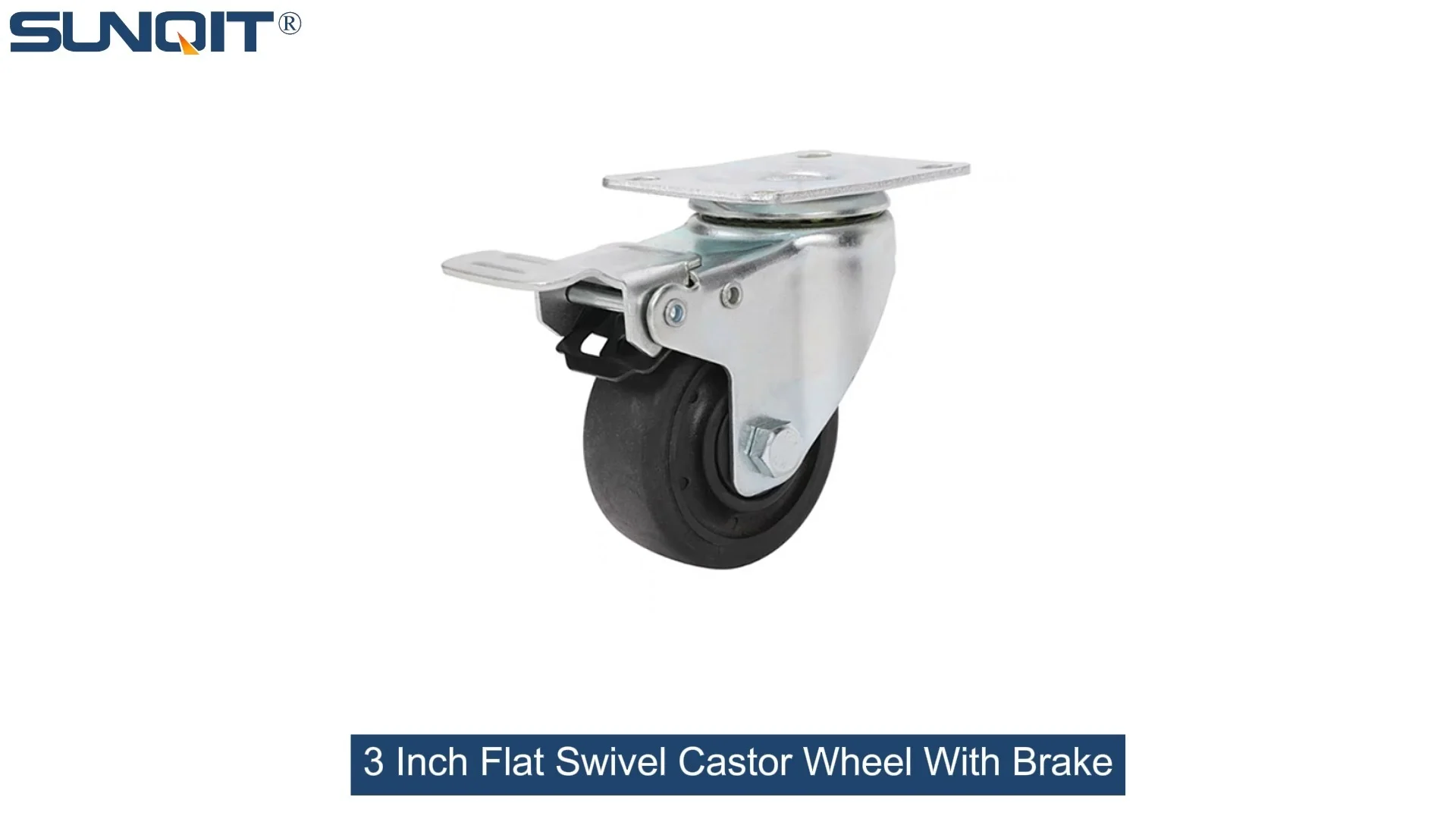
Flat Swivel Castor Wheel With Brake
Chair Casters Ball Bearing Wheels Rubber Base with brake design. Resistant to abrasion, impact and corrosion. Heavy payload can hold 70Kgs per pcs,which can make it works at a stable and smooth status.
The Hidden Risk in Every Move: Static and the Need for Protected Mobility
Picture this: It's a Tuesday morning in a bustling electronics manufacturing plant. The air hums with the low whir of machinery, and technicians in cleanroom suits move with focused precision. One technician, Maria, needs to reposition her workstation to align with a new assembly line layout. She grips the edge of the steel workbench and gives it a gentle push. As the workstation glides across the floor, a faint crackle fills the air—a static discharge. Instantly, the microchips on the bench, worth thousands of dollars, are fried. Just like that, a simple move becomes a costly mistake.
In the world of sensitive electronic assemblies—where components like microprocessors, semiconductors, and PCBs can be damaged by static charges as small as 250 volts (we're talking about a spark you might not even feel)—mobility shouldn't come with risk. That's where the anti-static flat swivel castor wheel with brake steps in. These unassuming components are the unsung heroes of electronics manufacturing, ensuring that when workstations, carts, and equipment move, they don't bring static chaos in their wake.
Why Static Matters: The Silent Saboteur of Electronic Components
Static electricity is a fact of life. It builds up when materials rub together—like the soles of shoes on a floor, or the wheels of a cart on concrete. This buildup, known as the triboelectric effect, can generate charges ranging from a few hundred to tens of thousands of volts. For most of us, a static shock is just a minor annoyance. But for electronic components, it's a death sentence.
Consider this: A typical CMOS chip can be permanently damaged by a static charge of 2,500 volts. A hard drive platter? Just 10 volts. Even charges that don't immediately destroy components can weaken them, leading to premature failure down the line—a phenomenon called "latent damage" that's impossible to detect until the product is in the customer's hands. To protect against this, the electronics industry follows strict standards like ANSI/ESD S20.20, which mandates static control measures throughout the manufacturing process. And at the heart of those measures? Equipment that moves without generating or carrying static.
Mobility in Modern Manufacturing: The Challenge of "Moving Without Breaking"
Today's electronics factories aren't static themselves. Lean manufacturing principles, just-in-time production, and frequent line reconfigurations demand flexibility. Workstations need to shift positions, material carts need to zip between assembly cells, and testing equipment needs to be wheeled to where it's needed most. But with mobility comes a problem: traditional castor wheels are often static generators. Made from non-conductive materials like standard rubber or plastic, they can build up charge as they roll, turning every move into a potential ESD hazard.
Then there's the issue of control. A workstation loaded with sensitive components can't just roll freely—it needs to stop precisely where it's needed, without drifting. And in busy environments, a cart that rolls away could damage equipment, injure workers, or—worst of all—spill its static-sensitive cargo. Brakes are essential, but not all brakes are created equal. Flimsy foot brakes that slip or fail under load put both productivity and safety at risk.
So, what's the solution? A castor wheel that combines three critical features: anti-static properties to dissipate charge, a smooth swivel mechanism for easy maneuvering, and a robust brake system that locks the wheel firmly in place. Enter the anti-static flat swivel castor wheel with brake—a small but mighty tool that turns mobility from a risk into an asset.

Inside the Anti-Static Flat Swivel Castor Wheel with Brake: Design That Protects
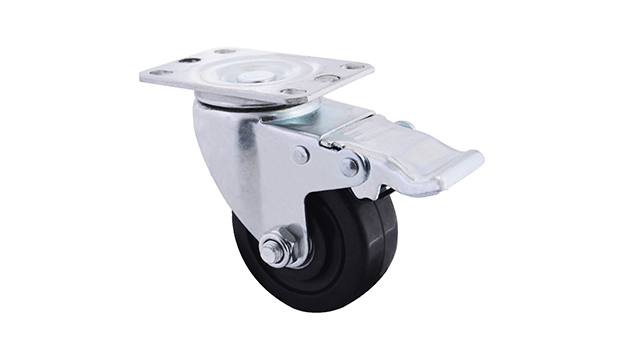
Let's break down what makes this castor wheel a game-changer for sensitive electronic assemblies. First, the "anti-static" part. These wheels are engineered with materials that conduct or dissipate static charge, rather than letting it build up. Most often, this means a static-dissipative rubber tread infused with conductive carbon black or metallic additives. The result? A surface resistance between 10^6 and 10^9 ohms—low enough to safely channel static charge away from the wheel and into the ground, but not so conductive that it poses an electrical shock risk to workers.
Next, the "flat swivel" design. Unlike bulky, high-profile castors, flat swivel castors sit close to the ground, lowering the center of gravity of the equipment they're attached to. This stability is crucial when moving heavy workbenches or carts loaded with delicate components—no more wobbly rides that could jostle parts loose. The swivel mechanism itself is usually mounted on a precision ball bearing raceway, allowing 360-degree rotation with minimal effort. This makes even large workstations easy to maneuver in tight spaces, reducing the strain on technicians and the risk of accidental collisions.
Then there's the brake—a feature that can't be overstated. The best anti-static castors come with a "total lock" brake system, which engages two functions at once: it locks the wheel from spinning, and it locks the swivel mechanism from rotating. This dual-action brake ensures the castor stays put, even on slightly uneven floors or when bumped. Most are operated via a large, easy-to-reach foot pedal, so technicians can engage or disengage the brake without bending down or fumbling with levers.
Rounding out the design are durable materials. The wheel core might be made from reinforced nylon or aluminum to handle heavy loads, while the mounting plate—where the castor attaches to the workstation or cart—is typically steel or aluminum for strength. Even the smallest details matter: sealed bearings prevent dust and debris from gumming up the swivel mechanism, ensuring smooth operation for years, and corrosion-resistant finishes keep the castor looking and working like new in cleanroom or humid environments.

Specifications That Matter: Key Features at a Glance
To understand how these castors perform in real-world settings, let's look at their key specifications. The table below outlines typical features of a high-quality anti-static flat swivel castor wheel with brake, designed for use in ESD-protected areas (EPAs):
| Feature | Typical Specification | Why It Matters |
|---|---|---|
| Wheel Diameter | 3–5 inches (76–127 mm) | Smaller diameters (3–4 inches) offer lower profiles for stability; larger diameters (5 inches) roll more easily over uneven floors. |
| Load Capacity | 150–300 lbs per castor | Supports heavy workstations, including those with built-in tools, monitors, and material bins. |
| Static Dissipative Rating | 10^6–10^9 ohms (per ANSI/ESD S20.20) | Ensures charge is safely dissipated without creating electrical hazards. |
| Wheel Material | Static-dissipative rubber (with conductive additives) | Combines grip, durability, and ESD protection; won't mark or scratch floors. |
| Brake Type | Dual-lock (wheel + swivel) foot brake | Prevents both rolling and swiveling, keeping equipment stable in position. |
| Swivel Mechanism | Ball bearing raceway (360° rotation) | Allows smooth, effortless maneuvering in tight spaces. |
| Mounting Plate | Steel or aluminum (zinc-plated for corrosion resistance) | Strong, secure attachment to workstations or carts; withstands repeated use. |
Fitting into the Ecosystem: Anti-Static Castors and the ESD Workstation
An anti-static castor wheel doesn't work in isolation—it's part of a larger ESD protection system, starting with the ESD workstation itself. ESD workstations are designed to ground static charges at every point: conductive work surfaces, wrist straps for operators, and flooring that dissipates charge. Adding anti-static castors ensures that the workstation itself doesn't become a floating static generator. When the castors roll, they channel any built-up charge through their conductive tread, into the mounting plate, and down to the workstation's grounding system (or directly to the floor, if the workstation is grounded via its frame).
This integration is critical for compliance with standards like ANSI/ESD S20.20, which requires that all conductive or dissipative elements in an EPA be bonded and grounded. A workstation with non-ESD castors could act as an insulator, trapping charge and defeating the purpose of other ESD controls. By choosing castors that are explicitly rated for ESD environments, manufacturers ensure their entire workstation meets the required safety standards.
Beyond ESD protection, these castors align perfectly with lean system principles. Lean manufacturing thrives on eliminating waste—whether it's time, space, or motion. A workstation on smooth-rolling, lockable castors can be repositioned in minutes, reducing setup time between production runs. Material carts with anti-static castors can deliver components directly to the assembly line, cutting down on walking time for workers. And because the castors are durable and low-maintenance, they minimize downtime from broken wheels or stuck brakes—keeping the production line moving and waste to a minimum.
Where These Castors Shine: Real-World Applications
Let's take a look at how anti-static flat swivel castor wheels with brakes are making a difference in real electronics manufacturing settings:
PCB Assembly Lines:
Printed circuit boards (PCBs) are the backbone of every electronic device, and they're incredibly ESD-sensitive. Assembly workstations for PCBs often need to move between soldering, testing, and inspection stations. Equipped with anti-static castors, these workstations can glide smoothly from one step to the next, with brakes locking them in place during delicate soldering or component placement. The result? Fewer damaged PCBs and a more efficient workflow.
Semiconductor Manufacturing:
In cleanrooms where microchips are fabricated, even the smallest static charge can ruin a batch. Material carts carrying silicon wafers or photomasks rely on anti-static castors to ensure charges don't build up as they're transported between cleanroom bays. The dual-lock brakes are especially critical here—any movement of a cart in a cleanroom could disrupt airflow or contaminate the environment.
Medical Device Production:
Medical electronics, like pacemakers or diagnostic equipment, demand both ESD protection and precision. Workstations for assembling these devices often hold expensive sensors and microcontrollers. Anti-static castors allow technicians to position the workstation exactly where needed during intricate assembly steps, with the confidence that the wheels won't generate static or slip unexpectedly.
Repair and Testing Labs:
Even after products leave the factory, repair and testing labs handle sensitive components. A technician repairing a smartphone motherboard, for example, might need to move their ESD-safe workbench to access tools or lighting. Anti-static castors ensure that moving the bench doesn't introduce static that could damage the already-delicate components being repaired.
Keeping Them Rolling: Maintenance Tips for Longevity
Like any piece of equipment, anti-static castors perform best with regular care. Here are a few simple maintenance tips to keep them in top shape:
Clean the Wheels Regularly:
Dust, lint, and debris can get trapped in the tread, reducing grip and conductivity. Wipe the wheels with a damp cloth (avoid harsh chemicals that could degrade the rubber) to keep them clean. For stubborn grime, use a mild soap solution.
Check the Brakes:
Test the brake pedal weekly to ensure it engages and releases smoothly. If the brake feels loose or slips when engaged, tighten the mounting bolts or replace worn brake pads. Most caster suppliers offer replacement brake components, so you don't have to buy a whole new castor if just the brake fails.
Lubricate the Swivel Mechanism:
The ball bearing raceway in the swivel head needs occasional lubrication to keep rotation smooth. Use a dry lubricant (like silicone spray) to avoid attracting dust, and wipe away excess to prevent buildup.
Inspect for Wear:
Over time, the rubber tread may wear down, reducing anti-static properties and grip. Check the tread depth monthly—if it's less than 1/8 inch, it's time to replace the wheel. Also, look for cracks or damage to the mounting plate or swivel head, which could compromise stability.
Choosing Your Partner: What to Look for in a Caster Supplier
Not all anti-static castors are created equal, and the right supplier can make all the difference. When shopping for anti-static flat swivel castor wheels with brakes, keep an eye out for these qualities:
ESD Certification:
The supplier should provide documentation proving their castors meet ANSI/ESD S20.20 or IEC 61340 standards. Look for test reports on surface resistance, charge decay, and durability.
Customization Options:
Factories have unique needs—some require larger wheels for rough floors, others need extra-heavy-duty castors for loaded workstations. A good supplier will offer a range of sizes, load capacities, and brake types to fit your specific application.
Technical Support:
If you're unsure which castor is right for your ESD workstation or lean system, the supplier should have knowledgeable staff who can guide you. They should be able to answer questions about load ratings, compatibility with your existing equipment, and installation.
Quality Materials:
Avoid suppliers who cut corners with cheap plastics or non-conductive rubber. The best castors use high-grade, static-dissipative materials and precision-engineered components to ensure reliability.
Conclusion: Mobility That Protects, Powers, and Performs
In the fast-paced world of electronics manufacturing, every detail counts. The anti-static flat swivel castor wheel with brake may seem like a small component, but it plays a huge role in protecting sensitive components, ensuring worker safety, and keeping production lines efficient. By dissipating static charge, providing smooth mobility, and locking securely in place, these castors turn the challenge of movement into an opportunity for flexibility and productivity.
So, the next time you see a workstation gliding across the factory floor or a material cart stopping perfectly in line, take a moment to appreciate the castors beneath it. They're not just wheels—they're guardians of the delicate technology that powers our world. And when it comes to protecting your most valuable assets, there's no better investment than quality anti-static castors that you can trust to move safely, smoothly, and securely.