- Company Articles
- Products and Technology
- Product knowledge
- Anti-Static Flat Swivel Castor Wheels: Essential for 3C Electronics Production

Anti-Static Flat Swivel Castor Wheels: Essential for 3C Electronics Production
Related Product
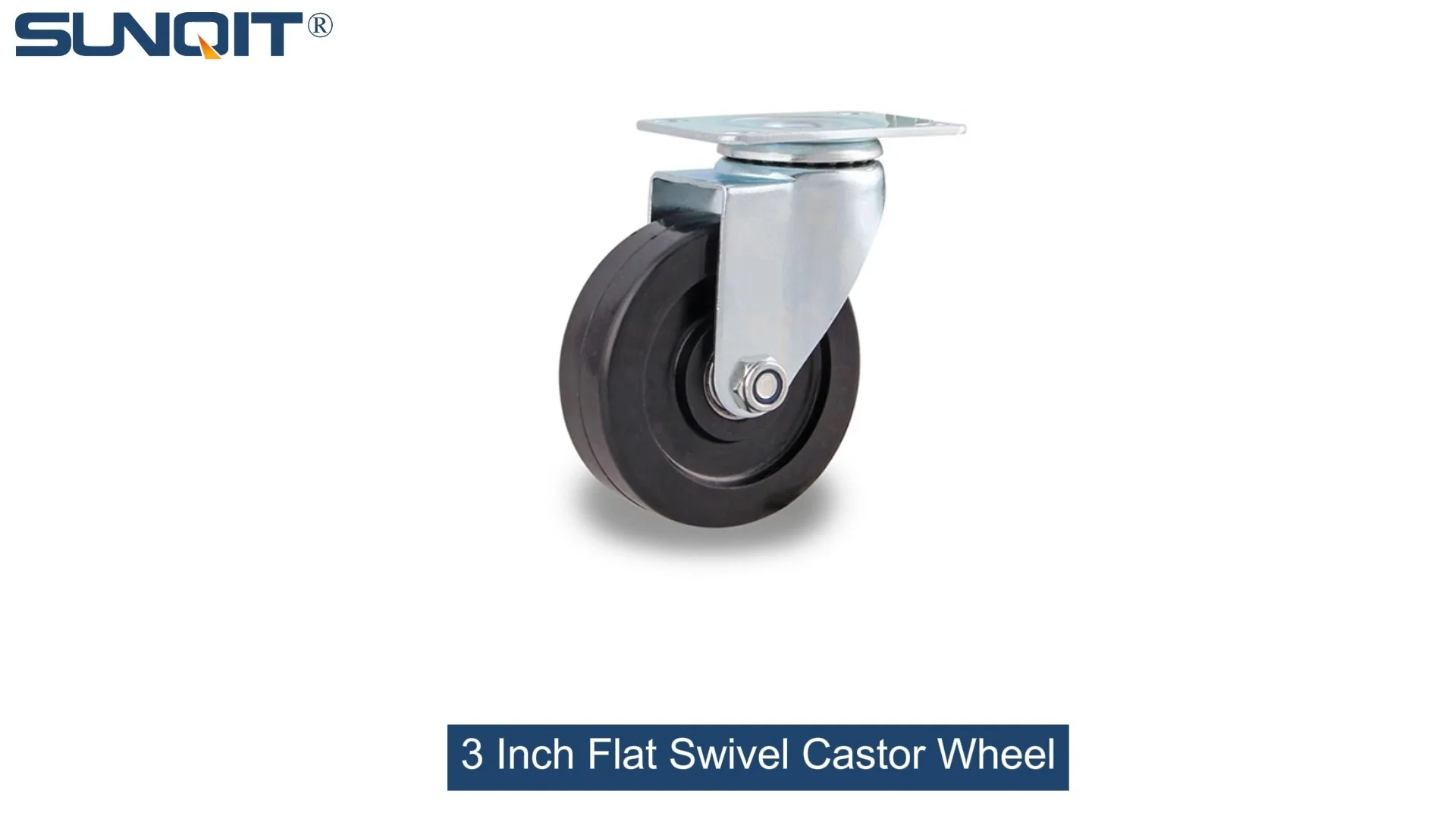
Flat Swivel Castor Wheel
Chair Casters Ball Bearing Wheels Rubber Base. Resistant to abrasion, impact and corrosion. Heavy payload can hold 70-90Kgs per pcs,which can make it works at a stable and smooth status.
Walk into any 3C electronics factory—where smartphones, laptops, and smartwatches come to life—and you'll notice a symphony of precision. Technicians huddle over workbenches, delicate circuit boards glide along roller tracks, and assembly lines hum with the rhythm of efficiency. But beneath this seamless surface lies a silent threat: static electricity. It's invisible, it's unpredictable, and it can turn a perfectly assembled microchip into a worthless piece of silicon in seconds. In an industry where even a hairline scratch or a tiny electrostatic discharge (ESD) can derail production, every component of the workspace matters—including the wheels that keep workstations and trolleys moving. That's where anti-static flat swivel castor wheels step in. More than just "wheels," they're the unsung guardians of 3C manufacturing, ensuring both mobility and protection in one critical package.
The Silent Enemy: Why Static is a Nightmare for 3C Production
Let's start with the basics: static electricity isn't just the shock you get when touching a doorknob after shuffling across carpet. In a factory setting, it's a byproduct of friction—between clothing and workbenches, between components and conveyor belts, even between a technician's gloves and a circuit board. When that static builds up, it seeks a path to discharge, and delicate 3C parts are often the easiest target. Microchips, capacitors, and semiconductors—components smaller than a grain of rice—are especially vulnerable. A single ESD event as small as 250 volts can damage a sensitive integrated circuit, and most people can't even feel a shock until it reaches 3,000 volts. By the time a technician notices a problem, the damage is done: faulty products, costly rework, or worse, products that pass quality checks but fail months later in a customer's hands.
Consider this scenario: A mid-sized smartphone manufacturer recently faced a 15% defect rate in its latest model. After weeks of investigation, engineers traced the issue to static damage in the camera module assembly line. The culprit? Standard rubber casters on the mobile workbenches. As the benches were rolled across the factory floor, friction generated static, which accumulated on the workbench surface. When technicians placed camera sensors on the bench, the static discharged, frying microscopic components. The solution? Swapping out those standard casters for anti-static flat swivel castor wheels. Defect rates dropped to 2% within a week. That's the difference a well-chosen caster can make.
What Are Anti-Static Flat Swivel Castor Wheels, Anyway?
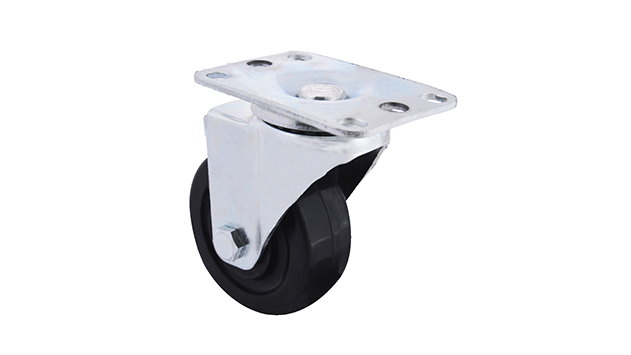
At first glance, they might look like any other caster wheel. But anti-static flat swivel castor wheels are engineered with a singular purpose: to prevent static buildup and safely channel any existing static away from sensitive electronics. Let's break down their design. The "flat" part refers to the base plate, which sits flush against the bottom of a workstation or trolley, distributing weight evenly to prevent tipping—critical when moving loaded workbenches across uneven factory floors. The "swivel" feature allows 360-degree rotation, making it easy to maneuver tight corners or reposition workstations in a snap, a must for adapting to shifting production needs in lean systems. And "anti-static"? That's where the magic happens.
These casters are made with conductive materials—often rubber or polyurethane infused with carbon black or metal particles—that act like tiny lightning rods. Instead of letting static accumulate on the workstation, the conductive material draws it down through the wheel, into the caster's metal axle, and eventually to the ground via a grounding cable or the factory's existing ESD flooring. It's a simple concept, but it's game-changing for esd workstations, where every surface (from the bench top to the wheels) must be part of a cohesive anti-static system. Think of it as a security detail for your components: the casters don't just move the workstation—they guard it, too.
Why 3C Factories Can't Afford to Skip Them: Key Features That Matter
Not all anti-static casters are created equal. For 3C production, where precision and reliability are non-negotiable, these wheels need to check several boxes. Let's dive into the features that make anti-static flat swivel castor wheels indispensable:
1. Conductivity That Won't Quit
Look for casters with a surface resistance between 10⁶ and 10⁹ ohms—a range that's low enough to discharge static but not so low that it creates a safety hazard (like a short circuit). This sweet spot ensures static is drained away slowly and safely, rather than all at once (which could still damage components). Reputable manufacturers test their casters rigorously, providing certificates to prove they meet ESD standards (like ANSI/ESD S20.20). For 3C factories, this isn't just a "nice-to-have"—it's a compliance requirement.
2. Swivel Smoothness for Lean Systems
3C production lines are dynamic. One day, a workbench might be assembling motherboards; the next, it's moved to test displays. Lean systems thrive on flexibility, and a caster that sticks or jams can throw a wrench in the entire workflow. Anti-static flat swivel casters use precision ball bearings in their swivel heads, ensuring smooth rotation even when loaded with heavy equipment (think: a workbench stacked with tools, PCBs, and testing gear). This maneuverability reduces downtime—no more struggling to push a stuck trolley—and lets teams rearrange their workspace on the fly, keeping production lines agile.
3. Flat Base Stability
Ever tried to work on a wobbly table? It's frustrating, and in 3C manufacturing, it's dangerous. A workbench that rocks back and forth increases the risk of dropping components or misaligning delicate parts. Anti-static flat swivel casters solve this with their broad, flat mounting plates. These plates distribute the workstation's weight evenly across the floor, minimizing (shaking) even when the caster is swiveling. For technicians working with tweezers or microscopes, that stability is a game-changer—it means fewer mistakes and more consistent results.
4. Durability for the Long Haul
3C factories run 24/7, and casters take a beating. They're rolled over concrete floors, exposed to oils and cleaning chemicals, and (carry) heavy loads day in and day out. Cheap casters might last a month; quality anti-static ones? They'll keep rolling for years. Look for wheels made from polyurethane or rubber compounds that resist wear, tear, and chemical damage. The swivel joints should be sealed to keep out dust and debris, ensuring they don't seize up mid-shift. When you're running a lean system, downtime for caster replacements is the last thing you need—durability isn't just about saving money; it's about keeping production on track.

Anti-Static vs. Standard Casters: A 3C Production Showdown
Still on the fence about upgrading? Let's put anti-static flat swivel castor wheels head-to-head with standard casters to see why they're worth the investment for 3C production.
| Feature | Anti-Static Flat Swivel Castor Wheels | Standard Castor Wheels | Impact on 3C Production |
|---|---|---|---|
| Static Control | Conductive materials channel static to ground (10⁶–10⁹ ohms) | Non-conductive; static builds up on wheels/workstation | Anti-static: Reduces ESD-related defects by up to 90%. Standard: Risk of costly component damage. |
| Maneuverability | 360° swivel with precision bearings; easy to pivot in tight spaces | Basic swivel (often stiff); hard to move loaded workbenches | Anti-static: Saves 15–20 minutes per shift in repositioning time. Standard: Slows down workflow, creates bottlenecks. |
| Stability | Flat base plate distributes weight; minimal during use | Narrow base; prone to tipping or wobbling with heavy loads | Anti-static: Fewer dropped components, more precise assembly. Standard: Higher risk of human error, damaged parts. |
| Durability | Chemical-resistant, sealed joints; lasts 3–5 years in high-use environments | Basic rubber/plastic; wears out in 6–12 months | Anti-static: Lower long-term costs (fewer replacements). Standard: Frequent downtime for repairs, higher maintenance bills. |

Fitting into the Bigger Picture: How They Work with ESD Workstations and Lean Systems
Anti-static flat swivel castor wheels don't operate in a vacuum—they're part of a larger ecosystem designed to protect 3C components. Think of them as the final link in an ESD protection chain. Most 3C factories already use esd workstations: benches with conductive surfaces, grounding mats, and wrist straps for technicians. But if the workstation sits on standard casters, that protection is incomplete. Static can still build up in the wheels, travel up to the bench, and discharge onto components. By swapping in anti-static casters, the entire workstation becomes grounded—from the top of the bench to the bottom of the wheels.
They're also a natural fit for lean systems, which focus on eliminating waste and maximizing efficiency. In a lean production line, workstations and trolleys need to be mobile to adapt to changing demand. Maybe today, you're assembling 500 smartphones; tomorrow, it's 300 tablets. Anti-static casters let you reconfigure the line quickly, moving workbenches closer to roller tracks or repositioning testing stations without sacrificing ESD protection. It's flexibility without compromise—exactly what lean manufacturing demands.
Take, for example, a laptop assembly plant that recently adopted a lean system. Previously, workstations were fixed, and components were moved via bulky conveyor belts. By switching to mobile esd workstations equipped with anti-static flat swivel casters, they cut down on conveyor costs and freed up floor space. Technicians could now roll their workbenches directly to the component storage area, reducing walk time by 40%. And because the casters kept the workstations grounded, ESD defects stayed below 0.5%—a win for both efficiency and quality.
From Factory Floors to Bottom Lines: Real Results with Anti-Static Casters
Numbers tell the story best. Let's look at how anti-static flat swivel castor wheels have transformed 3C production for real manufacturers:
- A Chinese smartphone OEM was struggling with a 8% defect rate in its camera module line. After installing anti-static casters on 20 workstations, defects dropped to 1.2% in three months. The savings? Over $200,000 in rework and scrap costs alone.
- A South Korean electronics supplier producing smartwatch screens switched to anti-static casters on their material trolleys. Before, static-related screen failures cost them $15,000 monthly. Post-upgrade? Failures dropped to zero, and trolley maneuverability cut material handling time by 25%.
- A European laptop manufacturer integrated anti-static casters into their lean system, allowing workstations to "follow" production demand. This reduced floor space usage by 30% and improved on-time delivery rates from 85% to 98%—all while maintaining strict ESD compliance.
These aren't outliers. In 3C manufacturing, where profit margins are tight and competition is fierce, small improvements add up. Anti-static flat swivel castor wheels might seem like a minor detail, but they deliver major returns: fewer defects, faster production, and happier technicians who can focus on building quality products instead of fixing preventable mistakes.
How to Choose the Right Anti-Static Casters for Your Factory
Ready to upgrade? Here's what to look for when selecting anti-static flat swivel castor wheels for your 3C production line:
- Check the conductivity rating: Aim for 10⁶–10⁹ ohms. Avoid anything above 10¹¹ ohms—those won't discharge static effectively.
- Consider the load capacity: Workstations and trolleys can carry 50–200 kg. Choose casters rated for 1.5x your typical load to avoid premature wear.
- Look for sealed swivel joints: Dust and debris are enemies of smooth movement. Sealed joints will keep casters rolling longer.
- Test for floor compatibility: If your factory uses conductive flooring, ensure the caster material (rubber, polyurethane) won't scratch or damage it.
- Ask for certifications: Reputable suppliers will provide ESD compliance certificates (like ANSI/ESD S20.20) and durability test reports.
And don't forget to involve your technicians. They're the ones moving these workstations daily—their input on maneuverability and stability can help you pick the best fit.
More Than Wheels: Investing in the Future of 3C Production
In the fast-paced world of 3C electronics, where innovation never stops and quality can't be compromised, anti-static flat swivel castor wheels are more than a tool—they're an investment. They protect your most valuable assets (your components), keep your production lines moving, and align with the lean, efficient systems that drive modern manufacturing. Static electricity might be silent, but the impact of these casters is anything but: fewer defects, lower costs, and a stronger bottom line.
So the next time you walk through a 3C factory, take a moment to look down. Those wheels under the workbenches? They're not just keeping things rolling—they're keeping the future of electronics on track.