- Company Articles
- Products and Technology
- Application Cases
- Applications of 3030b EU Standard Aluminum Profile in 3C Assembly Lines

Applications of 3030b EU Standard Aluminum Profile in 3C Assembly Lines
Related Product
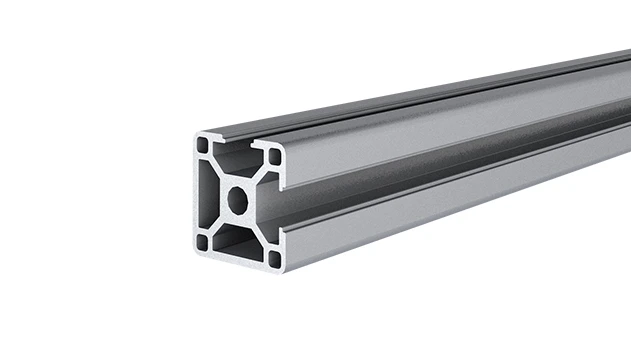
3030B EU Standard Aluminum Profile
3030 is a 3.00 x 3.00CM fractional 30 series square extrusion T-slot profile with two side open T-slots, each side with 3.00cm face, 2 side with open slot, 2 side with closed face. The profile has align-a-grooves to assist in aligning connecting profiles.
In the fast-paced world of 3C manufacturing—where smartphones, laptops, and smart home devices roll off production lines at breakneck speeds—efficiency isn't just a goal; it's the lifeblood of success. Every second saved, every motion optimized, and every tool that reduces friction in the assembly process directly translates to better product quality, faster delivery times, and happier teams on the factory floor. At the heart of this relentless pursuit of efficiency lies a seemingly unassuming component: the 3030b EU Standard Aluminum Profile. Far more than just a "piece of metal," this lightweight, versatile material has quietly revolutionized how 3C assembly lines are designed, built, and reimagined. Let's dive into why this aluminum profile has become a cornerstone of modern electronics manufacturing, and how it's shaping the future of how we build the devices we rely on daily.
Understanding the 3030b EU Standard Aluminum Profile: More Than Just Metal
Before we explore its applications, let's get to know the star of the show: the 3030b EU Standard Aluminum Profile. At first glance, it might look like a simple extruded aluminum bar, but its design is a masterclass in functional engineering. The "3030" refers to its dimensions—30mm in width and 30mm in height—making it compact enough for tight workspaces yet sturdy enough to support the demands of 3C manufacturing. The "EU Standard" tag ensures it adheres to strict quality and dimensional guidelines, meaning profiles from different suppliers can be mixed and matched without compatibility headaches—a huge plus for factories that often source components globally.
What truly sets the 3030b apart, though, is its T-slot design. Running along its length are precision-machined grooves (or "slots") that allow for easy attachment of accessories: brackets, clamps, panels, and even custom components. This isn't just a feature—it's a superpower. In 3C manufacturing, where product designs change faster than seasonal fashion trends, assembly lines can't afford to be rigid. A single smartphone model might have a production run of 6–12 months before a new version with a different chassis or button layout arrives. With traditional steel or wooden structures, reconfiguring a workbench or material rack to fit the new design could take days of welding, cutting, or drilling. With 3030b aluminum profiles? It's as simple as loosening a few bolts, sliding on new accessories, and tightening them back up. That flexibility is gold in an industry where downtime equals lost revenue.
Material-wise, the 3030b profile is typically made from 6063 aluminum alloy—known for its excellent balance of strength, lightweight properties, and corrosion resistance. This matters in 3C factories, where cleanroom environments and strict hygiene standards are common. Unlike steel, aluminum doesn't rust, so it holds up well to daily cleaning with disinfectants. It's also lightweight enough that even fully assembled workstations can be moved (with the right casters, of course) without needing heavy machinery—a boon for factories that need to shuffle layouts to accommodate new production goals.
Core Applications: How 3030b Profiles Power 3C Assembly Lines
Now, let's get practical. How exactly does the 3030b EU Standard Aluminum Profile show up on the factory floor? Its applications are as diverse as the devices being built, but three key areas stand out: workbenches, material flow systems, and custom racks. Let's break them down.
1. Workbenches: Where Precision Meets Comfort
Walk into any 3C assembly line, and the first thing you'll notice is the workbenches. These are the command centers where technicians spend hours fitting tiny screws, attaching screens, or testing circuit boards. A poorly designed workbench isn't just an annoyance—it's a productivity killer. Workers might hunch over, strain their eyes, or waste time reaching for tools that aren't within arm's reach. Enter the 3030b aluminum profile workbench: a customizable solution that puts ergonomics and efficiency front and center.
Take, for example, the "workbench e (single deck-without caster)"—a common configuration in 3C lines. Built with 3030b profiles as the frame, it can be adjusted to the perfect height for each worker (typically 750–850mm, depending on whether they're sitting or standing). The T-slots along the profile allow for easy mounting of accessories: LED task lights to illuminate tiny components, tool holders to keep screwdrivers and tweezers organized, and even ESD (Electrostatic Discharge) mats to protect sensitive electronics from static damage. Since 3030b profiles are compatible with aluminum profile accessories like end caps and rubber strips, the workbench edges can be softened to prevent scrapes, and cable management channels can be added to keep power tools and testing equipment wires from tangling into a frustrating mess.
What's most impressive, though, is how these workbenches grow with the factory. When a new device requires a larger workspace, additional 3030b sections can be bolted on to extend the bench. If a technician needs a second tier for bins of components, aluminum profile brackets can be slotted into the T-grooves to create a shelf. No welding, no sawing—just simple, tool-free adjustments. For factories running multiple shifts, this adaptability means the same workbench can be reconfigured in minutes to suit the needs of day-shift assemblers and night-shift testers.
2. Material Racks: Organizing Chaos, One Slot at a Time
In 3C manufacturing, "material flow" is everything. Components—from tiny screws and microchips to larger LCD screens and battery packs—need to move seamlessly from storage to the assembly line, and then on to quality control. Disorganized or inefficient material storage isn't just messy; it leads to delays as workers hunt for parts, and even errors when the wrong component is picked. This is where 3030b aluminum profiles shine in building material racks, like the "material rack b (3 row and 3 floor)"—a staple in many electronics factories.
A 3-row, 3-floor rack built with 3030b profiles is a study in modularity. Each shelf can be adjusted in height using T-slot brackets, so taller items (like boxes of phone cases) can sit on the bottom, while smaller bins of screws or connectors take the upper shelves. The aluminum frame is lightweight enough that the entire rack can be moved with casters (another aluminum profile accessory) if storage needs shift, but sturdy enough to hold hundreds of kilograms of components without wobbling. For delicate items like circuit boards, ESD-safe shelves can be added by attaching conductive panels to the 3030b frame—again, thanks to those handy T-slots.
But it's not just about static storage. 3030b profiles also play a role in dynamic material movement, often paired with roller tracks. Imagine a "roller track placon mount for aluminum profile flat"—a small bracket that attaches to the T-slot of a 3030b profile, allowing a roller track to be mounted along the edge of a material rack. Suddenly, boxes of components can slide smoothly from the rack directly onto a conveyor or into a technician's hands, eliminating the need to lift heavy containers. In high-volume lines, this small change reduces worker fatigue and speeds up the transfer process—two wins for productivity.
3. Roller Tracks: Keeping Components Moving Forward
If workbenches are the "brains" of the assembly line and material racks are the "closets," then roller tracks are the "arteries"—carrying components and semi-assembled devices from one station to the next. 3030b aluminum profiles serve as the backbone for these roller systems, providing a stable, adjustable framework that can be tailored to the line's specific needs.
Consider a typical smartphone assembly line. After the motherboard is installed, the partially built phone needs to move to the next station for screen attachment. A roller track, mounted on 3030b profiles, can be angled slightly downward to let gravity do the work—no motors needed. The T-slots on the 3030b frame allow for precise alignment of the track, ensuring the phone glides smoothly without jamming. If the line needs to be extended (say, to add a new testing step), additional 3030b sections and roller track segments can be bolted on in minutes. For heavier loads, like laptop chassis, steel roller tracks (such as the "40 steel roller track yellow wheel") can be attached to the aluminum frame, leveraging the best of both materials: aluminum's flexibility and steel's strength.
Roller tracks built with 3030b profiles also excel at handling different component sizes. By adjusting the spacing between the tracks using T-slot connectors, factories can switch from moving small circuit boards to larger tablet screens without rebuilding the entire system. And for stations where components need to stop (like at a workbench), simple "stop" brackets—easily attached to the 3030b frame—can be added to prevent items from sliding past.

Why 3030b Profiles Beat Traditional Materials: A Side-by-Side Comparison
To truly appreciate the impact of 3030b aluminum profiles, it helps to compare them to the materials they're replacing: wood, steel, and even older aluminum extrusions. Let's look at how they stack up in key areas that matter to 3C manufacturers.
| Feature | 3030b EU Standard Aluminum Profile | Traditional Steel | Wooden Structures |
|---|---|---|---|
| Weight | Lightweight (≈2.7kg/m for 3030b) | Heavy (≈7.8kg/m for steel of similar size) | Moderate, but prone to warping |
| Reconfigurability | Tool-free adjustments via T-slots; no welding/cutting | Requires welding or drilling; time-consuming to modify | Not reconfigurable; must be rebuilt |
| Durability | Corrosion-resistant; withstands daily use for 5+ years | Prone to rust if not painted; strong but heavy | Scratches easily; absorbs moisture; short lifespan (1–2 years) |
| Cleanroom Compatibility | Non-porous; easy to sanitize; no splinters or rust | Requires regular painting; rust flakes can contaminate products | Porous; traps dust; difficult to clean to ISO standards |
| Customization Cost | Low (accessories are off-the-shelf) | High (requires custom fabrication) | Moderate (but limited by material strength) |
| Lead Time for Changes | Minutes to hours | Days to weeks | Days (requires new wood and assembly) |
The takeaway? For 3C factories, 3030b profiles offer a rare combination of flexibility, durability, and cost-effectiveness that traditional materials can't match. Wood is cheap upfront but needs constant replacement. Steel is strong but too heavy and rigid for fast-paced reconfigurations. The 3030b profile hits the sweet spot, making it the go-to choice for forward-thinking manufacturers.
The Role of Aluminum Profile Accessories: Making the Most of 3030b
A 3030b aluminum profile is only as good as the accessories that bring it to life. Aluminum profile accessories are the unsung heroes here, turning a simple extrusion into a fully functional workstation, rack, or roller track. Let's highlight a few must-have accessories for 3C applications:
- Joints and Connectors: These are the "glue" that holds 3030b structures together. From 90° angle brackets for corners to T-connectors for adding crossbars, these accessories slide into the T-slots and lock in place with bolts. Many are made from aluminum or high-strength plastic, ensuring a secure fit without adding unnecessary weight.
- Casters: Adding casters (like "flat swivel castor wheel with brake") to a 3030b workbench or rack turns it into a mobile unit. This is invaluable for factories that need to move workstations to accommodate temporary production spikes or deep cleaning.
- Panels and Shelves: From aluminum honeycomb panels (lightweight and strong for workbench tops) to ESD-safe particleboard shelves, these accessories transform the profile into a usable surface. They're easily attached via T-slot brackets, so swapping out a damaged shelf takes minutes.
- End Caps and Rubber Strips: These small accessories add a professional, finished look to 3030b structures while also improving safety. End caps cover the open ends of profiles to prevent snags, and rubber strips line the T-slots to reduce noise when accessories are adjusted.
The beauty of these accessories is that they're standardized. A lean system supplier that specializes in 3C manufacturing can provide a one-stop shop for profiles, joints, casters, and panels—ensuring everything works together seamlessly. This reduces the hassle of sourcing from multiple vendors and minimizes the risk of compatibility issues.
Case Study: How a 3C Manufacturer Boosted Efficiency with 3030b Profiles
Let's put this all into context with a real-world example (based on common scenarios in the industry). Imagine a mid-sized electronics manufacturer producing smartwatches. Their assembly line was struggling with two main issues: rigid workbenches that couldn't adapt to new watch models, and inefficient material racks that forced workers to walk long distances to fetch components. After consulting with a lean system supplier, they decided to rebuild their line using 3030b EU Standard Aluminum Profiles.
First, they replaced their fixed steel workbenches with 3030b-based workstations. Each bench was fitted with adjustable height legs (using T-slot brackets) and modular tool holders. When a new watch model with a larger battery arrived, they simply adjusted the shelf heights and added a new ESD mat—no need for a new bench. Workers reported less back strain from the adjustable heights, and tool retrieval time dropped by 15%.
Next, they installed a series of 3-row, 3-floor material racks (material rack b) built with 3030b profiles. These racks were placed closer to the assembly line, and roller tracks (using "roller track placon mount for aluminum profile flat" brackets) were added to connect the racks to the workbenches. Components now slid directly to the workers, reducing walking time by 30%. The adjustable shelves also meant the same rack could hold both small watch bands and larger charging cradles by simply repositioning the brackets.
The results? Within three months, the factory saw a 22% increase in daily production output, a 15% reduction in errors (due to better component organization), and higher worker satisfaction scores. Best of all, when the next smartwatch model launched six months later, reconfiguring the line took just two days instead of the previous week-long shutdown. For a company operating on tight margins, that downtime savings alone justified the investment in 3030b profiles.
Choosing the Right Lean System Supplier: What to Look For
Not all 3030b aluminum profiles and accessories are created equal. To get the most out of this versatile material, it's critical to partner with a reputable lean system supplier—one that understands the unique needs of 3C manufacturing. Here are key factors to consider:
1. Quality and Certification
Look for suppliers that provide 3030b profiles certified to EU standards (EN 755-9, for example) and made from high-grade 6063 aluminum alloy. Ask for material test reports to verify strength and corrosion resistance. In 3C manufacturing, where precision is non-negotiable, even small variations in profile dimensions can cause big problems with accessory fit.
2. Range of Accessories
A good supplier should offer a comprehensive lineup of aluminum profile accessories: joints, casters, panels, roller tracks, and ESD components. The more options available, the easier it is to customize your setup. Bonus points if they offer custom fabrication for unique needs (like a special bracket for a proprietary tool).
3. Technical Support
3C assembly lines are complex, and designing a custom workstation or rack can be tricky. A supplier with in-house engineers who specialize in lean manufacturing can provide design support, helping you optimize your layout for maximum efficiency. They should also offer installation guidance or training for your team to ensure structures are built safely and correctly.
4. Lead Times and Reliability
In 3C manufacturing, delays in receiving components can derail production schedules. Choose a supplier with a track record of on-time deliveries and sufficient inventory to handle rush orders. A local or regional supplier may offer faster shipping, but don't sacrifice quality for speed.
Future Trends: 3030b Profiles in the Age of Smart Manufacturing
As 3C manufacturing marches toward Industry 4.0—with automation, IoT, and data-driven optimization becoming the norm—the role of 3030b aluminum profiles is evolving, too. Here's what to watch for:
Integration with IoT: Imagine workbenches built with 3030b profiles that have embedded sensors in their T-slots. These sensors could track usage (how often the bench is reconfigured), monitor vibration (to detect imbalances in machinery), or even measure temperature and humidity in cleanrooms. The data could then be fed into a factory management system to optimize workflows further.
3D-Printed Accessories: While standard accessories will always have their place, 3D printing could allow for on-demand production of custom brackets or connectors. A lean system supplier with in-house 3D printing capabilities could deliver unique parts in days instead of weeks, making small-batch customization feasible.
Sustainability: Aluminum is infinitely recyclable, and as factories push for greener operations, 3030b profiles will become even more attractive. Suppliers may start offering profiles made from recycled aluminum without compromising strength, helping manufacturers reduce their carbon footprint.
Final Thoughts: More Than a Profile—A Catalyst for Innovation
The 3030b EU Standard Aluminum Profile may not be the most glamorous component in a 3C factory, but its impact is undeniable. It's a tool that empowers manufacturers to be agile in a fast-changing industry, to prioritize worker comfort and safety, and to build assembly lines that can grow and adapt alongside their products. From the smallest workbench to the most complex material flow system, it's the backbone that turns chaos into order, and inefficiency into opportunity.
For 3C manufacturers looking to stay ahead of the curve, investing in 3030b profiles and partnering with a trusted lean system supplier isn't just a smart move—it's a strategic one. In a world where the next big device is always just around the corner, the ability to reimagine your assembly line in days (not months) could be the difference between leading the market and playing catch-up.
So the next time you pick up your smartphone or tablet, take a moment to appreciate the invisible hero that helped build it: a simple aluminum profile, designed with flexibility and efficiency in mind. It's proof that even the smallest innovations can have the biggest impact.