- Company Articles
- Products and Technology
- Application Cases
- Applications of 3030r EU Standard Aluminum Profile in 3C Assembly Workstations

Applications of 3030r EU Standard Aluminum Profile in 3C Assembly Workstations
Related Product
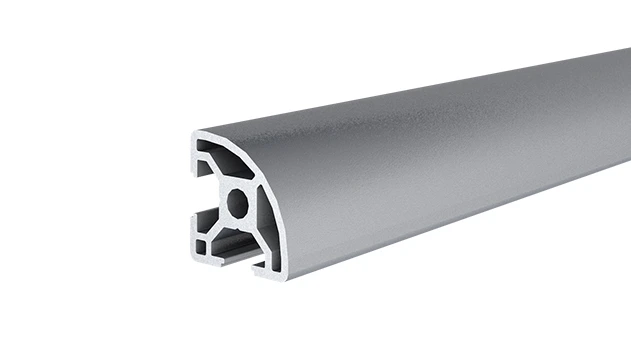
3030R EU Standard Aluminum Profile
3030R is a 3.00 x 3.00CM fractional 30 series square extrusion T-slot profile with four open T-slots, two side with 3.00cm face, the other side with round face. The profile has align-a-grooves to assist in aligning connecting profiles.
Introduction: The Heartbeat of 3C Assembly Lines
In the fast-paced world of consumer electronics—where smartphones, laptops, and wearables evolve faster than the blink of an eye—efficiency isn't just a buzzword. It's the difference between meeting tight production deadlines and falling behind in a cutthroat market. At the core of this efficiency lies the unsung hero of assembly lines: the workstation. A well-designed workstation doesn't just hold tools and components; it streamlines workflows, reduces errors, and adapts to the ever-changing needs of 3C (computers, communications, consumer electronics) manufacturing. And when it comes to building workstations that balance durability, flexibility, and precision, one material stands out: the 3030r EU Standard Aluminum Profile.
This article dives into why the 3030r aluminum profile has become a staple in 3C assembly environments, exploring its unique properties, key advantages, and real-world applications—from workbenches to ESD workstations and material racks. Whether you're a plant manager looking to upgrade your assembly line or a designer crafting the next generation of production setups, understanding how this humble aluminum extrusion profile transforms workspaces is essential.
What Is 3030r EU Standard Aluminum Profile?
Let's start with the basics: the 3030r EU Standard Aluminum Profile is a type of aluminum extrusion profile—meaning it's shaped by forcing heated aluminum through a die to create a consistent cross-section. As the name suggests, it measures 30mm by 30mm, making it a mid-sized option in the world of aluminum profiles (where sizes range from compact 20x20mm to robust 40x40mm or larger). The "EU Standard" tag ensures it meets strict European manufacturing norms for quality, dimensional accuracy, and material safety—critical for global 3C brands operating across continents.
But what sets the "r" variant apart? The "r" typically denotes a rounded edge design, which isn't just about aesthetics. In busy assembly lines, sharp edges pose a risk of (scratches) to workers or delicate components like glass phone screens. Rounded edges mitigate this, adding a layer of safety that's hard to overlook. Combine that with the inherent benefits of aluminum—lightweight yet surprisingly strong, corrosion-resistant, and infinitely recyclable—and you have a material tailor-made for dynamic manufacturing environments.
| Profile Type | Dimensions (mm) | Key Use Case | Load Capacity (Approx.) |
|---|---|---|---|
| 2020 EU Standard | 20x20 | Light-duty shelving, small tool holders | Up to 50kg per linear meter |
| 3030r EU Standard | 30x30 (rounded edges) | Workbenches, ESD workstations, material racks | Up to 150kg per linear meter |
| 4040 EU Standard | 40x40 | Heavy-duty machinery frames, large storage racks | Up to 300kg per linear meter |
As the table shows, the 3030r hits a sweet spot: it's sturdy enough to support the weight of assembly tools, circuit boards, and even small equipment, yet lightweight enough to reconfigure without heavy machinery. This balance is why it's become the go-to choice for 3C assembly workstations, where adaptability and reliability are non-negotiable.

Why 3030r Aluminum Profile Shines in 3C Assembly
3C manufacturing isn't just about putting parts together—it's about precision, speed, and protecting sensitive components from damage. Let's break down why the 3030r EU Standard Aluminum Profile addresses these needs better than many alternatives:
1. Modularity That Keeps Up with Change
In 3C, product lifecycles are shorter than ever. A factory assembling smartwatches this month might shift to fitness trackers next quarter, and that requires workstations that can evolve. The 3030r profile's modular design—paired with a wide range of aluminum profile accessories—makes reconfiguration a breeze. Need to add a shelf for new tooling? Screw in a few aluminum profile brackets. Want to lower the height of a workbench to accommodate seated assembly? Swap out the vertical 3030r legs for shorter ones. No welding, no custom fabrication—just simple, tool-free adjustments that cut downtime from days to hours.
2. ESD Protection: A Must for Sensitive Electronics
Static electricity is the silent enemy of 3C manufacturing. A single electrostatic discharge (ESD) can fry a microchip, rendering an entire smartphone motherboard useless. That's where ESD workstations come in, and the 3030r profile plays a key role here. When combined with ESD-compliant accessories—like conductive workbench surfaces or grounding clips—the aluminum frame acts as a path to dissipate static charges safely to the ground. Unlike plastic profiles, which can build up static, aluminum is naturally conductive, making it easier to integrate into ESD-safe zones without adding extra layers of complexity.
3. Lightweight Strength for Worker-Friendly Design
Assembly line workers spend hours at their stations, and heavy workbenches or racks can lead to fatigue or injury when adjustments are needed. Aluminum's high strength-to-weight ratio means a 3030r frame is 30-40% lighter than a steel frame of the same size, yet still strong enough to hold up to 150kg per linear meter. This makes it easy for two workers to move a workstation or reposition a material rack without forklifts, keeping the line agile and reducing the risk of workplace accidents.
4. Corrosion Resistance for Cleanroom Compatibility
Many 3C assembly lines operate in cleanrooms to prevent dust and contaminants from ruining sensitive components. Aluminum's natural oxide layer resists corrosion, even in environments with frequent cleaning (think alcohol wipes or disinfectants). Unlike steel, which can rust if not properly coated, 3030r profiles stay looking and performing like new for years, reducing maintenance costs and ensuring compliance with strict cleanliness standards.
Real-World Applications: How 3030r Transforms 3C Workstations
Theory is one thing, but seeing how the 3030r profile works in practice brings its value to life. Let's explore three key applications in 3C assembly lines:
1. Workbenches: The Command Center of Assembly
A typical 3C assembly workbench needs to hold tools, a computer monitor, bins of components, and the product being assembled—all while keeping the workspace organized. The 3030r profile forms the backbone of these workstations, providing a stable frame that can be customized to fit specific tasks. For example, a smartphone assembly workbench might feature a 3030r frame with a plywood or ESD laminate top, mounted on adjustable legs (using aluminum profile accessories like height-adjustable feet) to suit workers of different heights. On one side, a vertical 3030r extension holds a tool rail with screwdrivers and tweezers; on the other, a small shelf for component bins. Cable management is simplified by routing wires through the T-slots in the profile, keeping the surface clutter-free and reducing tripping hazards.
What if the line switches to assembling tablets, which require more surface area? With 3030r, it's as simple as adding an extension frame using aluminum profile connectors, then attaching a second work surface. No need to replace the entire bench—just expand it. This modularity is why workbenches built with 3030r profiles are a favorite among manufacturers aiming to maximize ROI on their equipment.
2. ESD Workstations: Protecting the Heart of Electronics
When assembling circuit boards or handling microchips, ESD workstations are non-negotiable. Here, the 3030r profile isn't just a frame—it's part of the static protection system. The aluminum extrusion profile is grounded via a conductive cable connected to the facility's earth ground, ensuring any static charge from workers or tools is safely dissipated. The work surface, often made of ESD-safe laminate, is bonded to the 3030r frame, creating a continuous path for static to flow away from sensitive components. Even accessories like caster wheels (if mobility is needed) are ESD-rated, preventing static buildup as the workstation moves across the floor.
Consider a scenario where a worker accidentally brushes against the workstation while handling a microchip. Without proper grounding, that static could damage the chip. But with a 3030r-based ESD workstation, the charge is channeled through the frame and into the ground before it reaches the component—saving costly rework and ensuring product quality.
3. Material Racks: Streamlining Component Flow
Efficient material handling is the backbone of a smooth assembly line. 3030r profiles excel at building multi-tiered material racks that keep components organized and within arm's reach. Take a "Material Rack B (3 row and 3 floor)" setup, for example—this three-tiered rack, constructed with 3030r vertical posts and horizontal beams, can hold bins of screws, connectors, and casings. The rounded edges of the 3030r profile prevent bins from getting caught or tearing, while the lightweight design makes the rack easy to move near the assembly line, reducing worker travel time to fetch parts.
For faster-moving components, adding roller tracks (another aluminum profile accessory) to the rack turns it into a gravity-fed system. Components slide down to the front as bins are emptied, ensuring a constant supply without manual restocking. And when new components are introduced, the rack can be reconfigured with additional shelves or dividers using simple brackets—no need for a custom-built rack each time.
The Power of Accessories: Making 3030r Profiles Truly Versatile
A profile is only as good as the accessories that bring it to life. The 3030r EU Standard Aluminum Profile pairs with a vast ecosystem of aluminum profile accessories, turning a simple frame into a fully functional workstation or rack. Let's highlight a few key accessories and how they enhance 3C assembly:
- Aluminum Profile Joints: These connectors (e.g., 90° aluminum profile connectors, three-way joints) allow 3030r profiles to be joined at any angle without welding. A common example is the internal rotary aluminum joint, which lets sections of the frame rotate, adding flexibility for tasks like tilting a work surface.
- Caster Wheels: For mobile workstations, caster accessories (like swivel casters with brakes) turn a static bench into one that can be moved to different parts of the line. ESD-rated casters ensure static protection isn't compromised during movement.
- Roller Tracks: Ideal for material flow, roller tracks (e.g., plastic roller track guide rails in yellow or grey) mount to 3030r frames, allowing bins or trays to glide smoothly from one station to the next. This reduces manual lifting and speeds up production.
- Workbench Accessories: From tool hooks to monitor mounts, these accessories (often clipped into the T-slots of the 3030r profile) keep tools and equipment within easy reach, minimizing worker movement and boosting efficiency.
The beauty of these accessories is their compatibility—most are designed to work with multiple EU standard profiles, so investing in a set of 3030r accessories means they can be reused if you later add 2020 or 4040 profiles to your setup. This interchangeability further reduces costs and simplifies inventory management.
Conclusion: Building the Future of 3C Assembly, One Profile at a Time
In the high-stakes world of 3C manufacturing, where every second and every component counts, the 3030r EU Standard Aluminum Profile isn't just a material choice—it's a strategic one. Its unique blend of modularity, ESD protection, lightweight strength, and compatibility with aluminum profile accessories makes it the backbone of modern assembly workstations, ESD stations, and material racks. By choosing 3030r, manufacturers gain the flexibility to adapt to new products, the reliability to protect sensitive electronics, and the efficiency to stay ahead in a competitive market.
Whether you're assembling the latest smartphone, a cutting-edge laptop, or a next-gen wearable, the 3030r profile ensures your workstation is more than just a table—it's a partner in productivity. And as the 3C industry continues to innovate, one thing is clear: the 3030r EU Standard Aluminum Profile will be right there, evolving alongside it, to build the efficient, adaptable, and safe assembly lines of tomorrow.