- Company Articles
- Products and Technology
- Application Cases
- Applications of 40 Aluminum Roller Track White in Warehouse Logistics

Applications of 40 Aluminum Roller Track White in Warehouse Logistics
Related Product
40 Aluminum Roller Track White
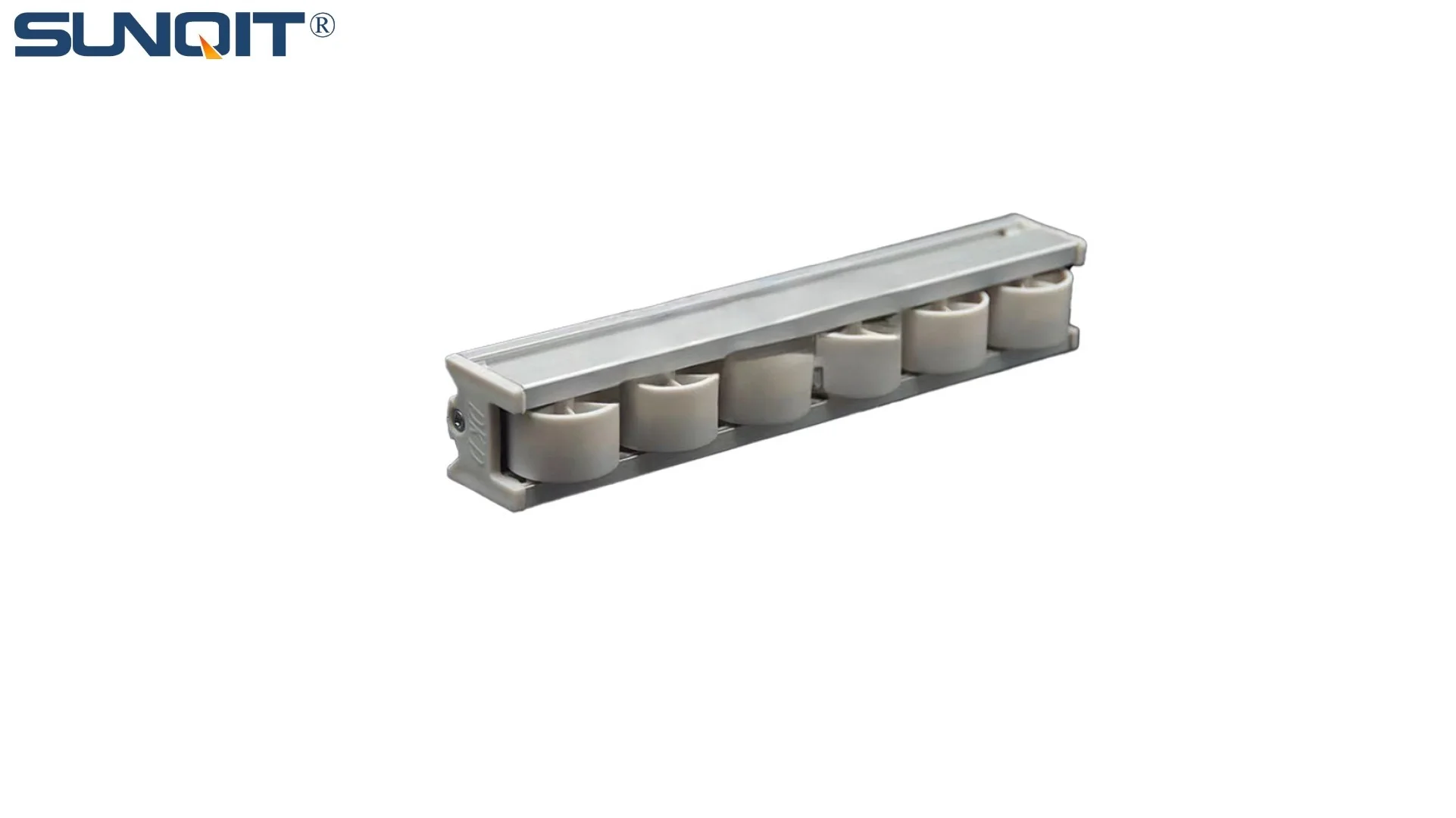
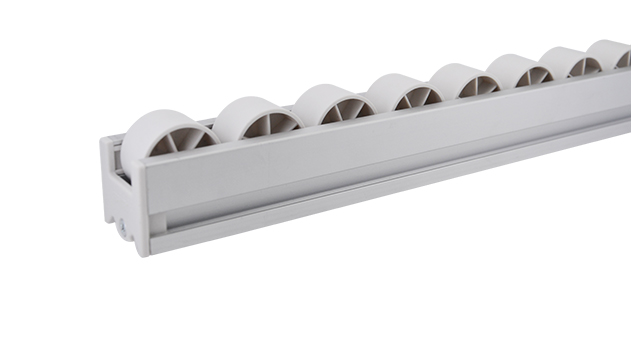
Durable and smooth-running modular roller rails. The system is fully assembled. The roller rail profile contains plastic rollers mounted on steel axles. Aluminum frame with plastic wheel make it anti corrosion,and material convey more smooth.
In the fast-paced world of supply chain management, warehouse logistics stands as the unsung hero that keeps products moving from manufacturers to customers. Every day, warehouses handle thousands of SKUs, process countless orders, and manage the delicate balance between storage efficiency and quick retrieval. Yet, despite its critical role, many warehouses still grapple with outdated systems that lead to bottlenecks: slow order picking, manual material handling errors, and inefficient space utilization. These challenges don't just eat into profits—they delay shipments, frustrate teams, and ultimately harm customer satisfaction. That's where modern material handling solutions come in, and one product that's quietly revolutionizing warehouse operations is the 40 Aluminum Roller Track White. More than just a simple conveyor component, this unassuming tool is a workhorse that streamlines workflows, reduces physical strain on workers, and turns chaotic storage areas into models of precision. Let's dive into how this versatile roller track is transforming warehouse logistics, and why it's becoming a staple for operations aiming to stay competitive in today's market.
Understanding the 40 Aluminum Roller Track White: What Makes It Unique?
Before we explore its applications, let's take a closer look at what sets the 40 Aluminum Roller Track White apart. At first glance, it might seem like just another roller track, but its design and material choices make it a standout in the crowded field of warehouse equipment. Let's break down its key features:
- Aluminum Construction : The track is built from high-grade aluminum, a material prized for its rare combination of lightness and strength. Unlike heavy steel tracks that require extra effort to install and reconfigure, aluminum keeps the track lightweight—making it easy to mount, adjust, or relocate as warehouse needs change. Yet, don't let its lightness fool you: aluminum is surprisingly durable, resistant to rust and corrosion, and capable of supporting consistent loads without bending or warping over time. This makes it ideal for both indoor and semi-outdoor warehouse environments, even in areas with temperature fluctuations or occasional moisture.
- White Finish : The bright white color isn't just for aesthetics. In busy warehouses, visibility is key to reducing errors. The white surface contrasts sharply with darker packaging, making it easier for workers to spot items, align loads, and track inventory movement. It also reflects light, brightening up workstations and reducing eye strain during long shifts. Plus, white shows dirt and debris more clearly than darker colors, prompting faster cleaning and maintaining a hygienic environment—critical for industries like food and beverage or pharmaceuticals where cleanliness is regulated.
- 40mm Standard Size : The "40" in its name refers to its width (40mm), a standard dimension that aligns with common warehouse equipment specifications. This standardization means it's compatible with a wide range of aluminum profiles, brackets, and connectors—allowing teams to build custom solutions without needing custom parts. Whether you're integrating it into a flow rack, mounting it under a workbench, or attaching it to a conveyor system, the 40mm width ensures a snug, secure fit with minimal modifications.
- Smooth Roller Mechanism : At the heart of the track are its precision-engineered rollers. Spaced evenly along the track, these rollers are designed to minimize friction, allowing even heavy loads (up to 50kg per linear meter, depending on the model) to glide smoothly with little effort. The rollers are also sealed to prevent dust and debris from jamming the mechanism, reducing maintenance needs and ensuring consistent performance day in and day out.
- Compatibility with Aluminum Profiles : One of the track's greatest strengths is its ability to work seamlessly with aluminum profiles—a staple in modern warehouse design. Aluminum profiles, with their T-slot design, allow for quick and tool-free attachment of accessories like side guides, stops, or dividers. This means the 40 Aluminum Roller Track White isn't a standalone product; it's part of a modular system that can be adapted to fit almost any workflow. Need to create a curved track? Use aluminum profile connectors. Want to add a stop at the end of the track to prevent items from sliding off? Screw a bracket into the T-slot. This flexibility makes it a favorite among warehouse managers who need solutions that can evolve with their business.
Applications in Warehouse Logistics: Where It Shines
Now that we understand its features, let's explore the practical applications of the 40 Aluminum Roller Track White in warehouse logistics. From order picking to assembly lines, this track proves its value in nearly every corner of the warehouse. Here are the key areas where it makes the biggest impact:
1. Order Picking: Speeding Up the "Needle in a Haystack" Challenge
Order picking is often cited as the most labor-intensive task in a warehouse, accounting for up to 55% of total operational costs, according to industry studies. Workers spend hours walking aisles, reaching for items, and transporting them to packing stations—time that could be better spent on higher-value tasks. The 40 Aluminum Roller Track White addresses this pain point by integrating with flow racks to create gravity-fed picking systems that bring items directly to the picker, rather than the other way around.
Here's how it works: In a typical flow rack setup, shelves are angled slightly downward, with 40 Aluminum Roller Track White mounted along the length of each shelf. Boxes or totes of products are loaded onto the track from the back (the "replenishment side") and slide forward by gravity to the picking front. As a picker removes an item from the front tote, the next tote slides into place automatically. This eliminates the need for the picker to walk to the back of the rack or reach awkwardly for items—they simply stand in one spot and pick from the continuously replenished front line.
The white color of the track enhances this process further. In busy picking zones, where multiple SKUs might be stored on adjacent racks, the bright white surface makes it easier to distinguish between lanes, reducing the risk of picking the wrong item. For example, in an e-commerce warehouse handling small electronics, a picker can quickly scan the white track to ensure they're grabbing a smartphone case from the correct lane, not a tablet case from the next shelf over. The smooth rollers also mean totes glide quietly, reducing noise in the picking area and creating a calmer work environment—something workers appreciate during long shifts.
But the benefits don't stop at speed. By reducing the need for bending, reaching, and walking, the 40 Aluminum Roller Track White also cuts down on physical strain. Warehouse workers are prone to musculoskeletal injuries from repetitive motion and heavy lifting; gravity-fed systems with roller tracks minimize these risks, leading to fewer absences and higher team morale. It's a win-win: faster order processing and happier, healthier employees.
2. Assembly Lines: Keeping Production Flowing Without Interruption
Warehouses aren't just for storage—many also house assembly lines where components are put together to create finished products. Whether it's electronics, furniture, or automotive parts, assembly requires a steady flow of materials to each workstation. Delays here can bring the entire line to a halt, costing time and money. The 40 Aluminum Roller Track White solves this by acting as a silent conveyor between workstations, ensuring components arrive exactly when and where they're needed.
Imagine a small appliance assembly line. At Station A, workers attach motors to frames; at Station B, they add wiring; at Station C, they test the final product. Without a reliable material handling system, workers at Station B might wait for frames from Station A, or waste time walking to a storage area to fetch wiring harnesses. With 40 Aluminum Roller Track White installed along the line, frames glide from Station A to B on the track, and wiring harnesses are stored in totes on overhead roller tracks that feed directly to the workstation. No more waiting, no more walking—just a continuous flow of materials.
What makes this roller track particularly useful for assembly lines is its compatibility with workbenches. Many assembly stations use aluminum profile workbenches, and the 40 Aluminum Roller Track White can be mounted directly to the bench's edge or under its surface. For example, a workbench used for assembling circuit boards might have a roller track along the back edge, holding bins of resistors, capacitors, and diodes. As a worker needs a component, they simply slide the bin forward on the track, grab what they need, and push it back—no bending to reach under the bench or fumbling with disorganized parts bins. The white track also helps keep the workspace clean; since it's easy to wipe down, spilled solder flux or dust can be quickly cleaned up, maintaining a sterile environment critical for sensitive electronics.
Another advantage in assembly settings is the track's ability to handle varying load sizes. From small plastic components (like the knobs on a toaster) to heavier metal parts (like engine brackets), the aluminum construction and smooth rollers support a wide range of weights without compromising performance. And because it's modular, the track can be extended or reconfigured as production needs change. If a new product line requires longer workstations, simply add more track sections using aluminum profile connectors—no need to replace the entire system.
3. Material Storage and Retrieval: Maximizing Space and Accessibility
Warehouses are always short on space, and making the most of every square foot is a constant challenge. Traditional storage methods—like static shelving—often waste space by requiring wide aisles for access, or make it hard to reach items stored at the back of deep shelves. The 40 Aluminum Roller Track White, when paired with flow racks, transforms static storage into dynamic, space-efficient systems that maximize vertical and horizontal space while keeping items accessible.
Flow racks, which use gravity to move items forward, are already a popular choice for high-turnover SKUs, but the addition of 40 Aluminum Roller Track White takes their efficiency to the next level. Unlike some plastic or steel roller tracks that can be noisy or prone to jamming, the aluminum version ensures smooth, quiet operation, even with heavy loads. For example, a grocery distribution center storing canned goods can use flow racks with 40 Aluminum Roller Track White to store cases of soup or vegetables. Cases are loaded from the top shelf (replenishment) and slide down to the lower shelves (picking) as needed. The white track makes it easy to see when stock is running low—if the track is visible at the front of the shelf, it's time to replenish—reducing stockouts and improving inventory accuracy.
But flow racks are just the start. The 40 Aluminum Roller Track White is also used in vertical storage systems, where items are stored on racks that extend upward, utilizing overhead space. In these setups, roller tracks are mounted on pull-out shelves, allowing workers to slide the shelf out, access the item, and push it back in—no need for ladders or forklifts for mid-level storage. This not only saves space but also makes retrieval safer; workers no longer have to climb or stretch to reach items, lowering the risk of falls or dropped products.
For warehouses dealing with fragile items—like glassware or electronics—the roller track's gentle glide is a game-changer. Unlike conveyor belts that can jostle items, the smooth-rolling motion of the track minimizes vibration, reducing the chance of damage during storage or retrieval. The white color also helps here: it's easier to spot cracks or chips in fragile items against a white background, ensuring damaged goods are caught before they're shipped to customers.
4. Packaging Stations: Streamlining the Final Step Before Shipment
Once orders are picked and assembled, they move to packaging stations—the final stop before shipping. Here, workers box items, add padding, apply labels, and prepare packages for delivery. This step is critical for ensuring products arrive intact, but it's also ripe for inefficiencies: misplaced boxes, disorganized packing materials, and manual lifting of heavy items can slow things down. The 40 Aluminum Roller Track White brings order to packaging stations by organizing materials and simplifying the movement of packages through the process.
Consider a typical packaging station: a workbench with piles of boxes, rolls of tape, bubble wrap, and labels scattered across the surface. A worker picks up an order, searches for the right box size, struggles to cut bubble wrap, and then lifts the packed box to the shipping conveyor. With 40 Aluminum Roller Track White, this chaos becomes calm. Mounted along the sides of the workbench, roller tracks can hold stacks of pre-sized boxes, which slide forward as needed. A separate track above the bench holds rolls of tape and bubble wrap, keeping them within arm's reach but out of the way. Once packed, the box is placed on a roller track that feeds directly to the shipping scale or conveyor—no more lifting heavy packages onto high surfaces.
The white color of the track is especially useful in packaging, where accuracy is key. Labels with barcodes or shipping addresses are easier to scan against a white background, reducing errors in address verification. For example, a worker applying a label to a brown cardboard box can quickly check that the zip code is correct by holding it up to the white track, which contrasts with the label's black text. This simple visual check reduces the risk of misdeliveries, which are costly to correct and frustrating for customers.
Another benefit in packaging is the track's adaptability to different package sizes. From small poly mailers to large, heavy boxes, the 40mm width and sturdy aluminum construction can handle the variety. For irregularly shaped items—like furniture parts or large electronics—the track's smooth rollers ensure even weight distribution, preventing packages from tipping or getting stuck. And because the track is easy to clean, packaging stations stay tidy even with the inevitable mess of tape scraps and bubble wrap bits—no more hunting for lost labels under piles of debris.
5. Returns Processing: Turning a Headache into a Streamlined Process
Returns are the bane of many warehouse operations. Unlike outbound orders, which follow a predictable path, returns are unpredictable: items come in damaged, unopened, or mislabeled, and they need to be inspected, sorted, and either restocked, repaired, or disposed of. This process is often disorganized, leading to delays in refunding customers or getting usable items back into inventory. The 40 Aluminum Roller Track White brings order to returns processing by creating dedicated sorting lanes that guide items to their next destination.
Here's how it works: A returns station is set up with multiple lanes of 40 Aluminum Roller Track White, each labeled with a destination—"Restock," "Repair," "Dispose," or "Return to Vendor." When a returned package arrives, a worker opens it, inspects the item, and places it on the appropriate lane. The item then slides down the track to a team responsible for that category. For example, a lightly used clothing item might go to the "Restock" lane, where it's steamed and returned to inventory; a damaged electronic might go to "Repair" for troubleshooting; and a defective toy might go to "Dispose" for recycling.
The white track enhances visibility here, making it easy to see which lane an item is on—critical when dealing with high volumes of returns during peak seasons (like after the holidays). The smooth rollers also mean items move quickly through the sorting process, reducing the time they sit in limbo. For warehouses that process hundreds of returns daily, this speed translates to faster refunds for customers and quicker restocking of sellable items—both of which boost customer loyalty and bottom-line profits.
Additionally, the track's modular design allows warehouses to adjust the number of lanes based on return volume. During slow periods, a few lanes might suffice; during peak returns season, extra sections of 40 Aluminum Roller Track White can be added using aluminum profile connectors, ensuring the system scales with demand. This flexibility means warehouses never have to turn away returns due to processing bottlenecks, even during their busiest times.
Comparing Traditional vs. 40 Aluminum Roller Track White: A Quick Overview
| Feature | Traditional Steel Roller Tracks | Plastic Roller Tracks | 40 Aluminum Roller Track White |
|---|---|---|---|
| Material | Heavy steel; prone to rust | Light plastic; less durable | Lightweight aluminum; corrosion-resistant |
| Weight Capacity | High, but requires sturdy mounting | Low to medium; bends under heavy loads | Medium to high; supports 30-50kg per linear meter |
| Noise Level | Noisy; metal-on-metal rolling | Quiet, but rollers wear quickly | Very quiet; smooth aluminum rollers |
| Reconfigurability | Difficult; heavy and hard to cut | Easy, but limited compatibility with accessories | Very easy; compatible with aluminum profiles and T-slot accessories |
| Visibility/Cleanliness | Dark color hides dirt; hard to clean rust | Colors fade; stains easily | Bright white color; shows dirt for easy cleaning; rust-resistant |
| Long-Term Durability | Durable but heavy; rust reduces lifespan | Low; plastic degrades in sunlight/heat | High; aluminum resists wear and corrosion |
Case Study: How a Mid-Sized E-Commerce Warehouse Cut Costs with 40 Aluminum Roller Track White
The Challenge : A mid-sized e-commerce warehouse specializing in home goods was struggling with slow order picking and high labor costs. Their 20,000 sq. ft. facility housed over 10,000 SKUs, and pickers were spending 60% of their time walking aisles to retrieve items. Returns processing was also a bottleneck, with items piling up at the returns station and taking days to sort.
The Solution : The warehouse implemented 40 Aluminum Roller Track White in two key areas: flow racks for order picking and sorting lanes for returns. They installed 12 flow rack bays with roller tracks on the picking shelves, and 8 return sorting lanes with white tracks labeled by category.
The Results : Within three months, order picking time decreased by 30%—pickers now spent less time walking and more time picking. Returns processing time dropped by 45%, as items slid quickly to the appropriate teams. Labor costs fell by 18%, and employee-reported strain injuries decreased by 25%. The warehouse manager noted, "The white track made a huge difference in accuracy—our pick error rate went from 2% to 0.5% because workers can clearly see which lane they're picking from."

Conclusion: Why 40 Aluminum Roller Track White Is a Must-Have for Modern Warehouses
In the world of warehouse logistics, efficiency isn't just a goal—it's a necessity. With customer expectations for fast shipping at an all-time high, and labor costs continuing to rise, warehouses need tools that do more with less. The 40 Aluminum Roller Track White delivers on this promise, offering a versatile, durable, and cost-effective solution to some of the biggest challenges in warehouse operations.
From speeding up order picking with gravity-fed flow racks to streamlining assembly lines and simplifying returns processing, this roller track proves that sometimes the most impactful innovations are the ones that work quietly in the background. Its aluminum construction ensures it's lightweight yet strong; its white color enhances visibility and cleanliness; and its compatibility with aluminum profiles makes it a modular solution that grows with your business.
But perhaps the greatest benefit of the 40 Aluminum Roller Track White is how it empowers warehouse teams. By reducing physical strain, minimizing errors, and creating calmer, more organized workspaces, it turns tedious tasks into manageable ones. Happy workers are productive workers, and productive workers are the key to a warehouse that doesn't just keep up with demand—but stays ahead of it.
So, whether you're running a small distribution center or a large e-commerce fulfillment hub, consider the 40 Aluminum Roller Track White. It's not just a piece of equipment—it's an investment in efficiency, safety, and the future of your operations. After all, in logistics, the difference between good and great often comes down to the tools that make the daily grind a little smoother. And when it comes to smooth, this roller track delivers in spades.