- Company Articles
- Products and Technology
- Application Cases
- Applications of 4040F EU Standard Aluminum Profile in Warehousing Shelving Systems

Applications of 4040F EU Standard Aluminum Profile in Warehousing Shelving Systems
Related Product
4040F EU Standard Aluminum Profile
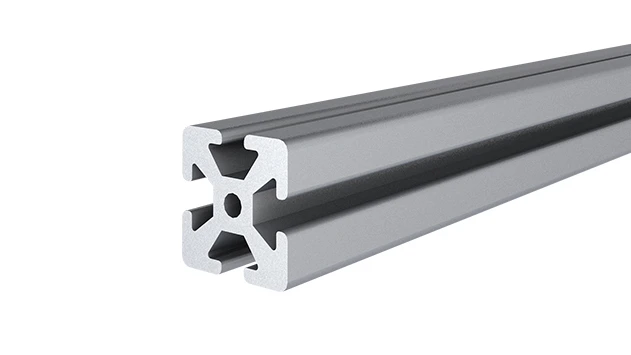
4040F is a 4.00x4.00 CM fractional 40 series square extrusion T-slot profile with four side open T-slots, each side with 4.00cm face. The profile has align-a-grooves to assist in aligning connecting profiles.
Walk into any modern warehouse, and you'll notice a silent revolution unfolding. The clunky, one-size-fits-all steel racks of the past are making way for sleeker, more adaptable solutions—ones that can keep up with the lightning-fast pace of e-commerce, just-in-time manufacturing, and ever-shifting inventory needs. At the heart of this transformation lies a humble yet powerful component: the 4040F EU Standard Aluminum Profile. It's not just a piece of metal; it's the backbone of flexible warehousing, a material that turns static storage spaces into dynamic hubs of efficiency. In this article, we'll dive deep into how this unassuming aluminum extrusion is redefining shelving systems, why it's become a favorite among warehouse managers, and how it integrates seamlessly with everything from material racks to workbenches. Let's start by understanding what makes the 4040F profile so special.
What Is the 4040F EU Standard Aluminum Profile?
First things first: let's break down the name. "4040F" refers to its dimensions—40mm in width and 40mm in height—and the "F" denotes a specific groove design (more on that later). "EU Standard" means it adheres to strict European manufacturing norms for quality, precision, and safety, ensuring consistency whether you're sourcing it in Berlin, Barcelona, or Boston. But numbers and certifications only tell part of the story. What truly sets this aluminum extrusion profile apart is its T-slot structure. Run your hand along its length, and you'll feel evenly spaced grooves (or "slots") that run the full length of the profile. These slots are like the profile's "universal connectors," allowing it to snap, bolt, or clamp onto a vast array of aluminum profile accessories—joints, brackets, casters, and even custom components—without the need for welding or drilling.
Made from high-grade aluminum alloy, the 4040F profile strikes a near-perfect balance between strength and weight. It's lighter than steel, making it easy to handle during installation, yet tough enough to support heavy loads—think stacks of cartons, industrial parts, or even machinery. And unlike steel, it's naturally resistant to corrosion, so you won't have to worry about rust eating away at your shelves in humid warehouses or cold storage facilities. This durability isn't just about longevity; it's about peace of mind. When you invest in 4040F-based systems, you're not just buying shelves—you're building infrastructure that can grow with your business.
Made from high-grade aluminum alloy, the 4040F profile strikes a near-perfect balance between strength and weight. It's lighter than steel, making it easy to handle during installation, yet tough enough to support heavy loads—think stacks of cartons, industrial parts, or even machinery. And unlike steel, it's naturally resistant to corrosion, so you won't have to worry about rust eating away at your shelves in humid warehouses or cold storage facilities. This durability isn't just about longevity; it's about peace of mind. When you invest in 4040F-based systems, you're not just buying shelves—you're building infrastructure that can grow with your business.
The Secret Sauce: T-Slots and Modularity
Let's talk about those T-slots we mentioned earlier. Imagine a profile with a continuous groove that runs along its length, shaped like a "T." This isn't just a design quirk; it's a genius engineering move. Those slots allow you to attach almost any accessory with a simple bolt or bracket. Need to add a shelf? Slide a bracket into the slot and tighten a screw. Want to mount a label holder? Snap it into place. Need to reconfigure the entire system next month? Just loosen the bolts, rearrange, and retighten. No cutting, no welding, no calling in a crew of contractors. This modularity is a game-changer for warehouses where inventory sizes, product types, and workflow needs change faster than the seasons.
The 4040F's T-slot design is particularly versatile because of its groove size and spacing. EU standards ensure the slots are precisely 8mm wide, with consistent spacing between them, so accessories from different manufacturers (think 90° aluminum profile connectors or caster wheels) work interchangeably. This interoperability means you're never locked into a single brand—you can mix and match components to fit your exact needs, whether you're building a simple material rack or a complex assembly line workstation.
The 4040F's T-slot design is particularly versatile because of its groove size and spacing. EU standards ensure the slots are precisely 8mm wide, with consistent spacing between them, so accessories from different manufacturers (think 90° aluminum profile connectors or caster wheels) work interchangeably. This interoperability means you're never locked into a single brand—you can mix and match components to fit your exact needs, whether you're building a simple material rack or a complex assembly line workstation.

Why Warehouses Are Ditching Steel for 4040F Aluminum
You might be wondering: Why not stick with steel? It's strong, right? While steel has its merits, it comes with a host of headaches for modern warehouses. Steel is heavy—installing a steel rack system often requires forklifts and extra labor, driving up costs. It's also prone to rust, especially in damp environments, which means regular maintenance (and replacement) down the line. And once it's bolted into place, it's
permanent
. Try moving a steel shelf to accommodate a sudden influx of oversized inventory, and you'll likely end up with bent frames or damaged floors.
The 4040F aluminum profile solves all these pain points. Aluminum is 30% lighter than steel, so a two-person team can assemble a full shelving unit in hours, not days. Its natural resistance to corrosion means it thrives in cold storage, humid loading docks, or even outdoor warehouses—no need for pricey anti-rust coatings. And because it's modular, you can disassemble, reconfigure, or repurpose it as your needs change. A shelf that holds small electronics today can become a rack for bulky tools tomorrow, just by swapping out a few aluminum profile accessories. It's sustainability in action, too: aluminum is 100% recyclable, so even if you eventually retire a system, the materials won't end up in a landfill.
The 4040F aluminum profile solves all these pain points. Aluminum is 30% lighter than steel, so a two-person team can assemble a full shelving unit in hours, not days. Its natural resistance to corrosion means it thrives in cold storage, humid loading docks, or even outdoor warehouses—no need for pricey anti-rust coatings. And because it's modular, you can disassemble, reconfigure, or repurpose it as your needs change. A shelf that holds small electronics today can become a rack for bulky tools tomorrow, just by swapping out a few aluminum profile accessories. It's sustainability in action, too: aluminum is 100% recyclable, so even if you eventually retire a system, the materials won't end up in a landfill.
Practical Applications: From Material Racks to Workbenches
Now, let's get concrete. How exactly is the 4040F profile used in real-world warehouses? Let's explore three key applications where it shines: material racks, workbenches, and custom storage solutions.
1. Material Racks: Organizing Inventory with Precision
Material racks are the workhorses of any warehouse—they hold the products, parts, and supplies that keep businesses running. The 4040F profile transforms these racks from static storage units into adjustable powerhouses. Take the Material Rack B (3 row and 3 floor), a popular configuration among e-commerce and manufacturing facilities. Built with 4040F frames, this rack features three horizontal rows and three vertical floors, each shelf adjustable in height thanks to the T-slot system. Need to store taller boxes? Loosen the brackets, slide the shelf up, and lock it in place. Switching to smaller items? Lower the shelves to maximize vertical space.
What makes this setup even better is how the 4040F profile pairs with roller tracks and accessories. Add plastic roller track guide rails (yellow or grey, depending on your color-coding system) to the shelves, and suddenly, loading and unloading boxes becomes a breeze—just slide them along the rollers instead of lifting. The T-slots make installing these rails a snap: no drilling, just clamp the roller track placon mounts to the profile and snap the rails into place. For warehouses dealing with fragile items, the 4040F's rigidity ensures the rack doesn't wobble, reducing the risk of spills or damage. It's no wonder managers report a 20-30% reduction in picking errors after switching to 4040F-based material racks.
What makes this setup even better is how the 4040F profile pairs with roller tracks and accessories. Add plastic roller track guide rails (yellow or grey, depending on your color-coding system) to the shelves, and suddenly, loading and unloading boxes becomes a breeze—just slide them along the rollers instead of lifting. The T-slots make installing these rails a snap: no drilling, just clamp the roller track placon mounts to the profile and snap the rails into place. For warehouses dealing with fragile items, the 4040F's rigidity ensures the rack doesn't wobble, reducing the risk of spills or damage. It's no wonder managers report a 20-30% reduction in picking errors after switching to 4040F-based material racks.
2. Workbenches: Where Productivity Meets Comfort
Warehouses aren't just about storage—they're also workspaces. Assembly lines, packing stations, and quality control checkpoints all rely on sturdy, adaptable workbenches. Enter Workbench E (single deck-without caster), a 4040F-based workstation designed for efficiency. The frame, built from 4040F profiles, provides a stable base for a wooden or aluminum honeycomb panel top, while the T-slots allow for easy attachment of tools, bins, and even small conveyors.
Imagine a packing station in an e-commerce warehouse. The operator needs a space to place orders, a bin for packaging materials, and a label printer within arm's reach. With a 4040F workbench, you can mount the printer to the side using aluminum profile brackets, attach a hanging bin to the front slot, and even add a small roller track to slide packages from the bench to a nearby cart. And because the profile is lightweight, the bench can be moved (with casters, if needed) to reconfigure the workflow as order volumes peak during holidays. Ergonomics matter too: the height of the bench can be adjusted by swapping out the leg profiles, ensuring workers of all sizes can stand comfortably, reducing fatigue and boosting productivity.
Imagine a packing station in an e-commerce warehouse. The operator needs a space to place orders, a bin for packaging materials, and a label printer within arm's reach. With a 4040F workbench, you can mount the printer to the side using aluminum profile brackets, attach a hanging bin to the front slot, and even add a small roller track to slide packages from the bench to a nearby cart. And because the profile is lightweight, the bench can be moved (with casters, if needed) to reconfigure the workflow as order volumes peak during holidays. Ergonomics matter too: the height of the bench can be adjusted by swapping out the leg profiles, ensuring workers of all sizes can stand comfortably, reducing fatigue and boosting productivity.
3. Custom Storage: Solving Unique Warehouse Challenges
Not all warehouse needs fit into standard configurations. Maybe you're storing irregularly shaped machinery parts, or you need a mobile rack that can navigate tight aisles, or you want to build a mezzanine for overflow inventory. The 4040F profile thrives in these "custom" scenarios because it's a blank canvas for innovation. For example, a automotive parts warehouse might need a rack that holds long, heavy exhaust pipes. Using 4040F profiles as vertical supports and aluminum guide rails as horizontal dividers, they can create a tiered system that keeps pipes organized and easy to access. Add swivel roller balls (1 inch or 0.5 inch, depending on pipe size) to the shelves, and workers can rotate pipes with a light push, eliminating the need for heavy lifting.
Another example: cold storage facilities. Traditional steel racks can rust in freezing, humid conditions, but 4040F aluminum profiles stay corrosion-free. Pair them with stainless steel swivel roller balls and aluminum foot bases, and you've got a storage system that's both durable and easy to clean—critical for food or pharmaceutical warehouses where hygiene is non-negotiable. The possibilities are endless, limited only by the warehouse manager's imagination (and the laws of physics, of course).
Another example: cold storage facilities. Traditional steel racks can rust in freezing, humid conditions, but 4040F aluminum profiles stay corrosion-free. Pair them with stainless steel swivel roller balls and aluminum foot bases, and you've got a storage system that's both durable and easy to clean—critical for food or pharmaceutical warehouses where hygiene is non-negotiable. The possibilities are endless, limited only by the warehouse manager's imagination (and the laws of physics, of course).
How 4040F Stacks Up Against Other Profiles: A Comparison
The 4040F isn't the only aluminum profile on the market, so how does it compare to others like the 3030, 2020, or 4080? Let's break it down in the table below:
| Profile Type | Dimensions (WxH) | Load Capacity (Per Meter) | Best For | Accessory Compatibility |
|---|---|---|---|---|
| 4040F EU Standard | 40mm x 40mm | Up to 200kg (horizontal) | Material racks, workbenches, medium-heavy storage | Most aluminum profile accessories (90° connectors, casters, roller tracks) |
| 3030 EU Standard | 30mm x 30mm | Up to 120kg (horizontal) | Light shelving, small parts storage, display racks | Limited to smaller accessories; not ideal for heavy loads |
| 2020 EU Standard | 20mm x 20mm | Up to 50kg (horizontal) | DIY projects, lightweight tool holders, small workstations | Only compatible with mini accessories; not for warehouse use |
| 4080 EU Standard | 40mm x 80mm | Up to 350kg (horizontal) | Heavy machinery storage, industrial mezzanines | Compatible with most accessories, but bulkier and costlier |
As you can see, the 4040F hits the sweet spot between strength and versatility. It's strong enough for medium-heavy loads (like the Material Rack B), yet not so bulky that it wastes space. Its 40x40mm size makes it compatible with the widest range of aluminum profile accessories, from standard brackets to specialized roller track mounts. For most warehouses, it's the Goldilocks profile—not too small, not too large, just right.
Real-World Impact: Case Studies
Case Study 1: E-Commerce Warehouse Cuts Picking Time by 25%
A mid-sized e-commerce company in the Netherlands was struggling with slow order fulfillment. Their old steel racks had fixed shelves, so pickers wasted time searching for items hidden behind taller boxes. They switched to 4040F-based Material Rack B (3 row, 3 floor) with adjustable shelves and yellow plastic roller track guide rails. Within a month, pickers reported 25% faster order times—thanks to the adjustable shelves (which organized items by size) and roller tracks (which made sliding boxes effortless). The warehouse manager noted, "We used to need overtime during peak seasons; now we're done by 5 PM. The 4040F racks paid for themselves in three months."
Case Study 2: Manufacturing Plant Improves Assembly Line Ergonomics
A automotive parts manufacturer in Germany was dealing with high worker turnover due to uncomfortable assembly stations. Their fixed-height steel workbenches forced employees to hunch or stretch, leading to fatigue and injuries. They replaced the benches with Workbench E units built from 4040F profiles, allowing height adjustments and tool mounting via T-slots. Workers could now position tools at eye level, adjust the bench height to their height, and slide parts along roller tracks built into the bench. Within six months, injury reports dropped by 40%, and employee satisfaction scores rose significantly. "It's not just about the benches," the plant supervisor said. "It's about showing our team we care about their comfort—and the 4040F profiles made that possible without breaking the bank."
Long-Term Benefits: Durability and Cost-Efficiency
When warehouse managers invest in equipment, they're thinking long-term. Will this system last? Will it adapt as the business grows? The 4040F profile answers "yes" to both. Let's talk durability first: aluminum is resistant to rust, dents, and wear, even with daily use. Unlike steel, it won't corrode if it gets wet, so it's ideal for cold storage or outdoor loading areas. And because it's lightweight, there's less stress on the floor, reducing the risk of structural damage over time.
Cost-efficiency is another win. While the upfront cost of 4040F profiles might be slightly higher than low-quality steel, the savings add up quickly. Labor costs for installation are lower (no heavy machinery needed). Maintenance costs are minimal (just a wipe-down with a damp cloth). And when you need to reconfigure, you're not buying new racks—you're repurposing the ones you have. One warehouse owner in Spain calculated that their 4040F system saved them €15,000 over five years compared to a traditional steel setup, thanks to lower installation, maintenance, and replacement costs.
Cost-efficiency is another win. While the upfront cost of 4040F profiles might be slightly higher than low-quality steel, the savings add up quickly. Labor costs for installation are lower (no heavy machinery needed). Maintenance costs are minimal (just a wipe-down with a damp cloth). And when you need to reconfigure, you're not buying new racks—you're repurposing the ones you have. One warehouse owner in Spain calculated that their 4040F system saved them €15,000 over five years compared to a traditional steel setup, thanks to lower installation, maintenance, and replacement costs.
The Future of Warehousing: Why 4040F Will Remain a Staple
The warehouse of tomorrow will be even more dynamic than today's. With the rise of automation (think robots that fetch inventory), AI-driven inventory management, and the need for 24/7 operations, flexibility and adaptability will be non-negotiable. The 4040F profile is perfectly positioned to meet these demands. Its T-slot system integrates seamlessly with sensors (for tracking inventory levels), robotic arms (for automated picking), and smart labels (for real-time updates). Imagine a future where your Material Rack B isn't just a storage unit but a connected part of your warehouse's digital ecosystem—all made possible by the 4040F's ability to support new technologies.
Sustainability is another key trend, and aluminum's recyclability makes the 4040F profile a green choice. As more companies aim for carbon neutrality, using recyclable materials in warehouse infrastructure will become a priority. And since aluminum can be melted down and reused without losing quality, your 4040F racks could one day become part of a new system, closing the loop on waste.
Sustainability is another key trend, and aluminum's recyclability makes the 4040F profile a green choice. As more companies aim for carbon neutrality, using recyclable materials in warehouse infrastructure will become a priority. And since aluminum can be melted down and reused without losing quality, your 4040F racks could one day become part of a new system, closing the loop on waste.
Final Thoughts: The 4040F Profile—More Than Just a Rack, It's a Strategy
At the end of the day, the 4040F EU Standard Aluminum Profile isn't just about building better shelves. It's about building smarter warehouses—spaces that can adapt, grow, and thrive in an unpredictable world. Whether you're running a small local warehouse or a global distribution center, this aluminum extrusion profile offers a simple truth: flexibility drives efficiency. It turns static storage into dynamic workflow solutions, reduces costs, and empowers teams to work smarter, not harder.
So, the next time you walk through a warehouse and see those sleek, silver racks with adjustable shelves and smooth-rolling tracks, take a closer look. Chances are, you're looking at the 4040F profile in action—a quiet innovator that's changing the way we store, organize, and work. It's not just metal; it's the future of warehousing. And that future starts now.
So, the next time you walk through a warehouse and see those sleek, silver racks with adjustable shelves and smooth-rolling tracks, take a closer look. Chances are, you're looking at the 4040F profile in action—a quiet innovator that's changing the way we store, organize, and work. It's not just metal; it's the future of warehousing. And that future starts now.