- Company Articles
- Products and Technology
- Application Cases
- Applications of Aluminum Workbench D in Consumer Electronics Production Lines

Applications of Aluminum Workbench D in Consumer Electronics Production Lines
Related Product
Aluminum Workbench D
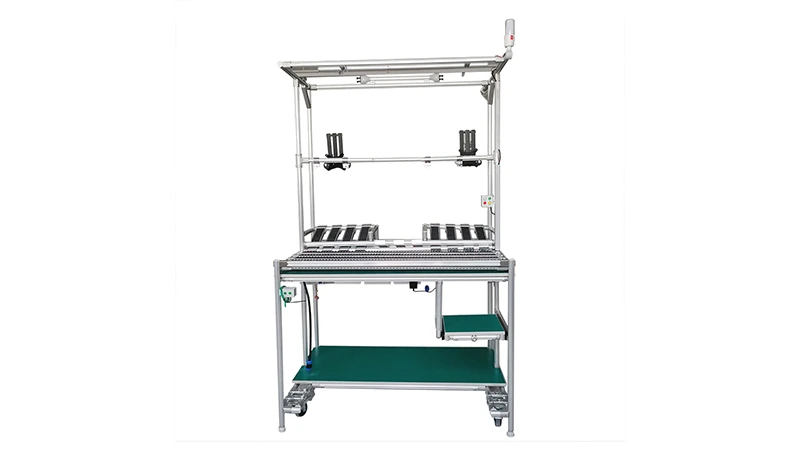
Aluminum tube workbench is more flexible and durable, compared with traditional PE/ABS coated steel tube. It is easy to assemble, anti corrosion, rust protection, and recycle use after disassemble.
The Heartbeat of Modern Electronics Manufacturing
Walk into any consumer electronics factory today, and you'll be met with a symphony of precision: robotic arms assembling microchips, workers in anti-static gear handling delicate circuit boards, and conveyor belts humming as half-finished smartphones glide toward their next phase. In this high-stakes environment—where a single static spark can ruin a $1,000 component and a delayed workflow can cost thousands in lost revenue—the tools that ground this chaos matter as much as the technology itself. Enter the Aluminum Workbench D: not just a table, but a silent workhorse that's redefining how teams build, test, and package the devices we rely on daily.
Consumer electronics production isn't just about speed; it's about balance. Factories need workspaces that are durable enough to withstand 12-hour shifts, flexible enough to adapt when a new model launches, and safe enough to protect sensitive electronics from electrostatic discharge (ESD). For years, manufacturers cobbled together solutions: heavy steel workbenches that were tough but immovable, wooden tables that warped under tool weight, or generic stations that forced workers into awkward postures. These weren't just inconveniences—they were bottlenecks. A bench that couldn't adjust to a worker's height led to fatigue; a surface that wasn't ESD-safe turned a minor static shock into a ruined batch of smartwatches; a rigid design meant reconfiguring a line for a new product took days instead of hours.
Aluminum Workbench D was born from the need to solve these pain points. Built with lightweight yet rugged aluminum profile, engineered for modularity, and designed with the unique demands of electronics manufacturing in mind, it's quickly becoming the backbone of forward-thinking production lines. Let's dive into how this unassuming piece of equipment is transforming the way consumer electronics go from blueprint to finished product.
Beyond the Surface: The Engineering of Aluminum Workbench D
At first glance, Aluminum Workbench D might look like any other workbench. But peer closer, and you'll see why it's a game-changer. Its core strength lies in its construction: aluminum profile —a material celebrated in manufacturing for its rare blend of lightness and durability. Unlike steel, which adds unnecessary weight, or plastic, which bends under heavy tools, aluminum profile strikes the perfect balance. It's strong enough to support 300kg of equipment (think soldering irons, testing gear, and stacks of component boxes) but light enough that two workers can reposition it in minutes. For factories where floor plans shift with new product launches, that portability is gold.
But aluminum profile isn't just about weight. It's about precision. The workbench's frame is built using extruded aluminum profiles with T-slots—those handy grooves running along the length of the profile that let you attach accessories without drilling or welding. Need a tool holder? Slide a bracket into the T-slot. Want to add a lamp for better visibility? Snap it into place. This modularity means Aluminum Workbench D isn't a one-size-fits-all solution; it's a blank canvas. A smartphone assembly line might outfit it with ESD-safe mats and tool hooks, while a laptop testing station could add a roller track to slide devices toward the next worker. And when the product line changes? Simply reconfigure the accessories—no need to buy a whole new bench.
Ergonomics was another non-negotiable in the design. Consumer electronics assembly often involves repetitive tasks: soldering tiny components, attaching screens, or testing buttons for responsiveness. Workers spend hours hunched over these tasks, and poor posture leads to chronic pain and lost productivity. Aluminum Workbench D addresses this with adjustable height settings (from 70cm to 90cm, catering to workers of all statures) and a smooth, flat work surface that reduces wrist strain. Some models even include tilting decks for tasks that require a better angle—think inspecting circuit boards for defects. It's a small detail, but ask any factory worker, and they'll tell you: a workbench that adapts to them instead of the other way around makes all the difference in getting through a long shift.
Then there's ESD protection—a make-or-break feature in electronics manufacturing. Static electricity is everywhere: it builds up when workers move, when plastic components rub together, even when the air is dry. Without protection, that static can discharge into a circuit board, frying sensitive semiconductors. Aluminum Workbench D mitigates this with ESD-safe materials from top to bottom: the aluminum frame itself conducts static away from components, while optional ESD mats and wrist strap connectors ensure any charge is grounded before it reaches the product. It's not just about avoiding damage; it's about consistency. When every workbench in the line meets the same ESD standards, quality control becomes easier, and the risk of costly recalls plummets.

Where Aluminum Workbench D Shines: Real-World Applications
Aluminum Workbench D isn't a niche tool reserved for one part of the production line—it's a versatile asset that adapts to every stage of making consumer electronics. Let's explore how it's being used in three critical areas: assembly, testing, and packaging.
1. Assembly Lines: Precision Meets Flexibility
The assembly line is where the magic starts—where individual components (screens, batteries, circuit boards) come together to form a device. Here, speed and precision are king, and Aluminum Workbench D excels at both. Take smartphone assembly, for example: a single line might produce 500 units per hour, with each station responsible for one task—attaching the camera module, soldering the charging port, or securing the back cover. Each task needs specific tools, and workers need to grab them in seconds.
Factories using Aluminum Workbench D have transformed these stations into organized, efficient hubs. The T-slot aluminum profiles make it easy to mount tool holders, component bins, and even small monitors displaying assembly instructions. No more rummaging through drawers for a Phillips-head screwdriver; it's right there, clipped to the bench. Need to add a new tool for a updated model? Just slide a new bracket into the T-slot—no drilling, no waiting for maintenance. This modularity cuts setup time for new products by up to 40%, according to some manufacturers.
The workbench's compatibility with roller tracks is another game-changer. In many assembly lines, partially built devices need to move from one station to the next. With a roller track attached to the edge of the bench, workers can gently push a smartphone chassis to the next worker without lifting, reducing the risk of drops and speeding up the handoff. It's a small change, but multiplied across 10 stations and 500 units, it adds up to hours saved each day.
2. Testing Stations: Protecting Sensitive Electronics
Once a device is assembled, it moves to testing—a stage where static electricity poses the biggest threat. A single electrostatic discharge can damage a device's internal components without leaving any visible marks, leading to failures down the line (think a phone that randomly shuts off after a month of use). That's why testing stations need to be ESD workstations through and through, and Aluminum Workbench D is built for this exact scenario.
At a testing station, the workbench becomes more than a surface; it's part of the ESD protection system. The aluminum frame is grounded via a conductive cable, ensuring any static buildup in the worker or tools is safely dissipated. The work surface is covered in an ESD-safe mat (resistivity between 10^6 and 10^9 ohms, per industry standards), and built-in wrist strap connectors keep workers grounded as they handle devices. Even the accessories—like the tool holders and component bins—are made from static-dissipative materials. It's a holistic approach that leaves no room for static-related mishaps.
But testing isn't just about ESD safety; it's about accuracy. Technicians need space to connect devices to testing equipment (oscilloscopes, voltage meters, software diagnostic tools) without cluttering the area. Aluminum Workbench D's spacious surface (typically 120cm x 80cm) provides room for both the device and the gear, while the T-slot profiles let them mount monitors and cable organizers to keep wires from tangling. This organization reduces errors—no more accidentally disconnecting a test lead because it was caught under a tool—and makes it easier to train new technicians, as every testing station is set up identically.
3. Packaging Lines: Streamlining the Final Step
After testing, devices move to packaging—where they're placed in boxes, paired with chargers and manuals, and readied for shipping. Here, the focus shifts to speed and consistency: ensuring every box has the right accessories, and products move quickly to avoid bottlenecks. Aluminum Workbench D adapts here, too, often outfitted with roller tracks to create a smooth flow from testing to boxing.
In packaging stations, the workbench's durability shines. Workers are constantly placing boxes (some weighing up to 5kg) on the surface, and the aluminum profile frame doesn't warp or scratch, even after years of use. The optional caster wheels (on models designed for mobility) let teams reposition the bench to align with conveyor belts, ensuring products glide from the bench to the shipping line without manual lifting. And when packaging requirements change—say, a new regulatory label needs to be added—the modular design lets factories attach label holders or barcode scanners in minutes.

Aluminum Workbench D and the Lean System : Reducing Waste, Boosting Efficiency
In modern manufacturing, the lean system isn't just a buzzword—it's a philosophy centered on eliminating waste (time, materials, effort) to create more value. Aluminum Workbench D was built with lean principles in mind, and its impact on reducing waste is tangible. Let's break down how it aligns with key lean pillars:
- Waste of Motion: Traditional workbenches often force workers to reach, bend, or twist to grab tools or components. Aluminum Workbench D's adjustable height and customizable accessory placement cut down on these unnecessary movements. A study by a leading electronics manufacturer found that workers using the adjustable-height benches reduced arm and back strain by 35%, leading to fewer breaks and higher focus.
- Waste of Waiting: When production lines need to reconfigure for new products, waiting for workbenches to be modified or replaced is a major time-drain. The modular aluminum profile design lets teams retool a station in under an hour—no need to wait for maintenance crews. One laptop manufacturer reported cutting changeover time from two days to four hours when switching from fixed steel benches to Aluminum Workbench D.
- Waste of Defects: ESD-related defects cost the electronics industry billions annually. By integrating ESD-safe features into every part of the workbench, Aluminum Workbench D drastically reduces these defects. A smartphone factory in China saw a 62% drop in static-related failures after switching to ESD-equipped Aluminum Workbench D stations.
- Waste of Inventory: Traditional benches often require dedicated storage for tools and components, leading to excess inventory (extra screws,) to avoid running out. With Aluminum Workbench D's built-in component bins and tool holders, teams can keep just the right amount of materials at each station, reducing inventory costs by up to 20%.
The result? Factories using Aluminum Workbench D report not just higher efficiency, but a culture of continuous improvement. When workbenches adapt to workers instead of the other way around, teams feel empowered to suggest tweaks—adding a new tool holder, adjusting the roller track angle—that make their jobs easier. It's a small shift, but it fosters engagement, and engaged workers are more likely to spot inefficiencies and drive innovation.
Traditional Workbenches vs. Aluminum Workbench D: A Side-by-Side Look
| Feature | Traditional Steel/Wood Workbenches | Aluminum Workbench D |
|---|---|---|
| Material | Heavy steel (prone to rust) or wood (warps, scratches) | Lightweight aluminum profile (corrosion-resistant, scratch-proof) |
| Weight | 200-300kg (immovable without machinery) | 40-60kg (easily repositioned by 2 workers; caster options for mobility) |
| ESD Protection | Limited (requires aftermarket mats; steel can conduct static unpredictably) | Built-in (grounded aluminum frame, ESD-safe surface options, wrist strap connectors) |
| Modularity | Fixed design (drilling/welding needed to add accessories) | T-slot profiles (attach/detach accessories in minutes; no tools required) |
| Ergonomics | Fixed height (one-size-fits-all) | Adjustable height (70-90cm) and tilt options |
| Cost Over Time | Lower upfront cost, but high replacement/maintenance (rust, warping, repairs) | Higher upfront cost, but 10+ year lifespan with minimal maintenance; modularity reduces need for new benches |
Case Study: How XYZ Tech Cut Costs and Boosted Output with Aluminum Workbench D
To see Aluminum Workbench D in action, let's look at XYZ Tech, a mid-sized consumer electronics manufacturer producing smartwatches and fitness trackers. Before 2023, XYZ was using a mix of steel and wooden workbenches across its 50-station assembly line. The pain points were clear: static-related defects were costing $15,000 monthly, changeover time for new models took 3 days, and workers reported high rates of wrist and back pain.
In Q1 2023, XYZ replaced 80% of its workbenches with Aluminum Workbench D, prioritizing assembly and testing stations. The results were striking:
- Static-related defects dropped by 78%, saving $11,700 monthly.
- Changeover time for new product lines fell from 3 days to 4 hours, allowing XYZ to launch a new fitness tracker model 2 weeks ahead of schedule.
- Worker-reported pain decreased by 42%, leading to a 15% drop in sick days and a 10% increase in hourly output.
- Maintenance costs plummeted—no more replacing warped wooden tops or sanding rust off steel benches.
"The biggest surprise wasn't just the efficiency gains," said Maria Gonzalez, XYZ's Production Manager. "It was how quickly the team adapted. The modularity let workers customize their stations, and that ownership made them more invested in keeping things organized. We even had workers suggesting new accessory setups—something that never happened with the old benches."
Why Aluminum Workbench D is More Than a Workbench—It's an Investment
In the fast-paced world of consumer electronics manufacturing, every tool, every process, and every minute counts. Aluminum Workbench D isn't just another piece of equipment; it's a strategic investment in efficiency, quality, and worker well-being. Its aluminum profile construction offers the durability to withstand the rigors of daily production, while its modular design ensures it can adapt as your products and processes evolve. Its ESD-safe features protect your most sensitive components, and its alignment with lean principles reduces waste and drives continuous improvement.
Whether you're assembling smartphones, testing laptops, or packaging smart home devices, Aluminum Workbench D transforms your production line from a collection of isolated stations into a cohesive, efficient ecosystem. It's a reminder that sometimes, the most impactful innovations aren't the flashy robots or cutting-edge software—they're the tools that empower your team to do their best work, day in and day out.
As consumer electronics continue to get smaller, smarter, and more complex, the need for flexible, reliable workspaces will only grow. Aluminum Workbench D isn't just keeping up with that demand; it's setting a new standard for what a workbench can—and should—be. For manufacturers ready to build the next generation of devices, it's not just a choice. It's the foundation.