- Company Articles
- Products and Technology
- Application Cases
- Applications of Aluminum Workbench D in Food Processing Equipment Manufacturing

Applications of Aluminum Workbench D in Food Processing Equipment Manufacturing
Related Product
Aluminum Workbench D
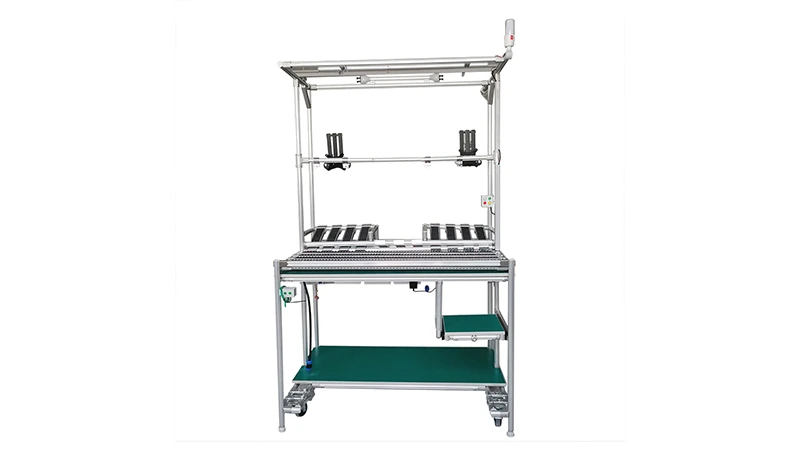
Aluminum tube workbench is more flexible and durable, compared with traditional PE/ABS coated steel tube. It is easy to assemble, anti corrosion, rust protection, and recycle use after disassemble.
Walk into any food processing plant, and you'll quickly realize the unsung heroes behind the scenes: the machines that mix, package, sort, and sanitize. From small-scale bakeries to industrial canning facilities, the reliability of food processing equipment directly impacts product quality, safety, and even consumer trust. But what about the equipment that builds those machines? That's where the manufacturing floor of food processing equipment comes into play—a space where precision, hygiene, and efficiency aren't just goals, but daily requirements. In this high-stakes environment, one tool has quietly become a cornerstone for manufacturers: the Aluminum Workbench D. Let's dive into why this unassuming workbench is transforming how food processing equipment is built, and why it's quickly becoming a must-have in factories worldwide.
What Is Aluminum Workbench D, Anyway?
Before we get into its applications, let's clarify what makes Aluminum Workbench D unique. Unlike generic workbenches cobbled together from wood or heavy steel, this is a purpose-built solution designed with the nuances of manufacturing in mind. Think of it as a blank canvas for engineers and technicians—sturdy yet lightweight, customizable yet consistent, and built to withstand the demands of a busy production floor. While specific configurations can vary, Aluminum Workbench D typically features a single, solid deck (no casters, which means stability is prioritized over mobility) and is constructed using high-grade aluminum components. But what really sets it apart isn't just the materials—it's how those materials work together to solve the unique challenges of food processing equipment manufacturing.
The Aluminum Profile Advantage: Why Material Matters
At the heart of Aluminum Workbench D is one key material: aluminum extrusion profile. If you're not familiar with aluminum extrusion, imagine pushing a soft clay through a mold to create a specific shape—except here, the "clay" is heated aluminum, and the result is a strong, lightweight profile with precise dimensions. This process isn't just for show; it's what gives the workbench its superpowers. Let's break down why aluminum profile is a game-changer in this context:
Lightweight yet surprisingly tough. Food processing equipment often involves assembling heavy components—think stainless steel mixing bowls or motorized conveyor belts. A workbench needs to support these weights without wobbling, but technicians also need to reconfigure their workspace occasionally (e.g., rearranging stations for a new product line). Aluminum profile strikes the perfect balance: it's about 1/3 the weight of steel, making the workbench easy to move when needed, but its structural integrity means it can handle loads of up to 500 kg or more, depending on the design. No more straining to shift a steel bench across the floor!
Corrosion-resistant, because hygiene can't wait. Food processing equipment manufacturing isn't just about building machines—it's about building machines that meet strict (hygiene) standards. Spills happen: lubricants, cleaning agents, even trace amounts of food-grade materials during testing. Unlike steel, which can rust if not constantly painted or treated, aluminum naturally forms a protective oxide layer that resists corrosion. Wipe it down with a disinfectant, and it's ready for the next task—no worrying about rust compromising the work surface or contaminating sensitive parts.
Customizable to the nth degree. No two food processing machines are identical. One day, a manufacturer might be assembling a compact filling machine for sauces; the next, a large-scale sorting system for fruits. Aluminum extrusion profiles come in a variety of shapes and sizes (think T-slots, channels, and angles), which means Aluminum Workbench D can be modified on the fly. Need to add a shelf for tools? Screw a bracket into the T-slot. Want to mount a monitor for digital blueprints? Attach a holder directly to the profile. This flexibility means the workbench grows with the job, rather than forcing the job to adapt to a rigid workspace.

Design Features Tailored for Food Processing Equipment Manufacturing
Aluminum Workbench D isn't just a slab of aluminum on legs—it's a thoughtfully engineered tool with features that address the specific pain points of building food processing equipment. Let's walk through some of its most impactful design elements:
A Smooth, Seamless Deck: No Gaps, No Germs
Food processing equipment must be easy to clean to prevent bacterial growth, and the same logic applies to the workbenches used to build them. Aluminum Workbench D's deck is typically made from a single piece of aluminum or a tightly joined panel, leaving no cracks or crevices where dust, grease, or debris can hide. Compare that to a wooden workbench, which can splinter and absorb liquids, or a steel bench with welded seams that trap grime. For technicians assembling parts like conveyor belts or sealing mechanisms—components that directly touch food—this level of cleanliness isn't just nice to have; it's critical to avoiding cross-contamination during testing.
Ergonomics: Keeping Technicians Comfortable (and Productive)
Manufacturing food processing equipment is detail-oriented work. Technicians might spend hours hunched over a bench, aligning gears or soldering wires. Aluminum Workbench D addresses this with adjustable height options (thanks to those aluminum profiles we mentioned earlier). Whether a technician is standing or sitting, the deck can be raised or lowered to elbow height, reducing strain on the back, neck, and shoulders. Over time, this isn't just about comfort—it's about reducing fatigue, which in turn reduces errors. When you're assembling a machine that needs to seal jars with 0.1mm precision, a tired technician is a liability. Aluminum Workbench D helps keep focus sharp.
Modularity: Building a Workspace That Grows With You
In manufacturing, change is constant. A factory might start the month building small blenders and end it prototyping a new industrial oven. Aluminum Workbench D thrives in this dynamic environment because it's modular. Need to add a side table for extra parts? Connect another aluminum profile section. Want to integrate a tool rail for hanging wrenches and screwdrivers? Slide in a compatible bracket. Even better, if the factory expands or rearranges its layout, the workbench can be disassembled and reassembled in minutes—no need to buy a whole new setup. This modularity also extends to accessories: from LED task lights to ESD (Electrostatic Discharge) mats, Aluminum Workbench D plays well with add-ons that make specific tasks easier.

Real-World Applications: How Aluminum Workbench D Shines on the Factory Floor
Enough theory—let's get practical. How exactly is Aluminum Workbench D being used in food processing equipment manufacturing? Let's explore three key stages where it makes the biggest difference: assembly, testing, and integration with material handling systems like flow racks.
Assembly: Precision Meets Productivity
Assembling food processing equipment is like solving a 3D puzzle with thousands of pieces—each part needs to fit perfectly, or the machine could malfunction (and in the food industry, malfunction often means safety risks). Aluminum Workbench D provides the stable foundation technicians need to ensure those pieces align. For example, when building a filling machine's nozzle assembly—a component that dispenses sauce into bottles with exact measurements—technicians need a flat, vibration-free surface to mount the parts. The workbench's solid aluminum deck minimizes movement, so when they tighten a bolt or calibrate a sensor, there's no "give" that could throw off alignment.
But it's not just about stability. The workbench's T-slot aluminum profiles also let technicians secure jigs and fixtures—custom tools that hold parts in place during assembly. Imagine building a conveyor belt for bread rolls: the belt needs to run straight, or the rolls will veer off and get damaged. By clamping a guide rail to the workbench's profile, technicians can ensure each roller is mounted at the exact same angle. This consistency reduces rework and speeds up production—two wins in a industry where deadlines are tight.
Testing and Quality Control: Where Accuracy Saves the Day
Once a machine is assembled, it's time to test it. This is where the stakes get even higher: a single miscalibration in a temperature sensor could lead to undercooked food, or a faulty seal could cause leaks and product waste. Aluminum Workbench D becomes a critical tool here, too. Its rigid structure ensures that testing equipment—like pressure gauges, laser alignment tools, or torque meters—stays steady, providing accurate readings. For example, when testing a pasteurization machine's pressure valves, technicians need to trust that the gauge on the workbench isn't wobbling, giving false readings. The workbench's stability eliminates that doubt.
In some cases, food processing equipment includes sensitive electronic components—think touchscreens or circuit boards that control motor speeds. Here, Aluminum Workbench D can be paired with ESD workbench features, like conductive mats or grounded aluminum surfaces, to prevent static electricity from frying delicate parts during testing. While Aluminum Workbench D itself isn't inherently an ESD workbench, its modular design makes adding these features a breeze. That adaptability is key: one day, you're testing mechanical parts; the next, you're handling electronics. The workbench keeps up.
Integration With Flow Racks: Streamlining Material Handling
No workbench exists in a vacuum. On a manufacturing floor, materials—from screws and washers to large motor housings—need to flow smoothly to where they're needed. That's where flow racks come in: tilted shelves with roller tracks that let components "flow" to the front, reducing the need for technicians to bend or reach. Aluminum Workbench D plays exceptionally well with flow racks, creating a seamless workflow. Imagine a technician assembling a packaging machine: the workbench is positioned next to a flow rack stocked with gears, belts, and fasteners. As they need a part, they simply slide it down the rack onto the workbench—no walking to a storage room, no wasted time. The workbench's height can even be aligned with the flow rack, so materials glide directly onto the deck, minimizing lifting and strain.
This integration isn't just about convenience; it's about lean manufacturing. By reducing the distance between storage and assembly, Aluminum Workbench D and flow racks cut down on "motion waste"—a common inefficiency in factories. The result? Technicians spend more time building and less time fetching, boosting overall productivity by 15-20% in some cases, according to industry reports.
| Feature | Traditional Steel Workbench | Aluminum Workbench D |
|---|---|---|
| Weight | Heavy (hard to reposition) | Lightweight (easy to move when needed) |
| Corrosion Resistance | Prone to rust (needs regular painting) | Natural oxide layer (resists rust, easy to clean) |
| Customization | Limited (welding required for modifications) | Highly modular (T-slots allow easy add-ons) |
| Ergonomics | Fixed height (one-size-fits-all) | Adjustable height (reduces technician strain) |
| Cost Over Time | Higher (replacement due to rust, repairs) | Lower (durable, minimal maintenance) |
Compliance: Meeting the Strict Standards of Food Safety
In food processing, "good enough" isn't enough. Regulatory bodies like the FDA (U.S. Food and Drug Administration) and USDA (U.S. Department of Agriculture) have strict guidelines for equipment materials, and manufacturers of that equipment must comply. Aluminum Workbench D checks all the boxes here. Aluminum itself is non-toxic and inert, meaning it won't leach chemicals into parts that come into contact with food. Its smooth surface is also easy to sanitize—no pores or cracks for bacteria to hide in—making it compliant with HACCP (Hazard Analysis and Critical Control Points) protocols. For manufacturers exporting equipment globally, this compliance is a selling point: customers can trust that the machines they buy were built on a workbench that meets the same safety standards they adhere to.
Longevity: An Investment That Pays Off
Let's talk about cost. At first glance, Aluminum Workbench D might seem pricier than a basic steel or wooden workbench. But manufacturing is about the long game. A steel bench might rust after a year in a humid factory, requiring replacement. A wooden bench could warp or get infested with pests. Aluminum Workbench D, though? With minimal maintenance—occasional cleaning, tightening of bolts—it can last 10+ years. That's a fraction of the cost of replacing cheaper workbenches every 2-3 years. Plus, its modularity means you won't need to buy a new bench when your needs change; you can just upgrade the existing one. For small manufacturers and large corporations alike, this longevity makes Aluminum Workbench D a smart investment.
Final Thoughts: Why Aluminum Workbench D Is Here to Stay
Food processing equipment manufacturing is a industry that demands excellence. Every machine built there has a direct impact on food safety, quality, and efficiency. In this context, tools like Aluminum Workbench D aren't just "nice to have"—they're essential. By combining the strength of aluminum extrusion profile, the flexibility of modular design, and the compliance needed for food safety, it's redefining what a workbench can do. Whether it's streamlining assembly, ensuring accurate testing, or integrating with flow racks for smoother material handling, Aluminum Workbench D is quietly making factories more productive, technicians more comfortable, and food processing equipment more reliable.
So the next time you enjoy a jar of pickles, a bag of chips, or a carton of juice, take a moment to appreciate the machines that made it possible. And remember: behind those machines, there's likely an Aluminum Workbench D, working just as hard to ensure your food is safe, fresh, and ready to enjoy.