- Company Articles
- Products and Technology
- Application Cases
- Applications of Aluminum Workbench D in Telecommunication Equipment Assembly

Applications of Aluminum Workbench D in Telecommunication Equipment Assembly
Related Product
Aluminum Workbench D
Aluminum tube workbench is more flexible and durable, compared with traditional PE/ABS coated steel tube. It is easy to assemble, anti corrosion, rust protection, and recycle use after disassemble.
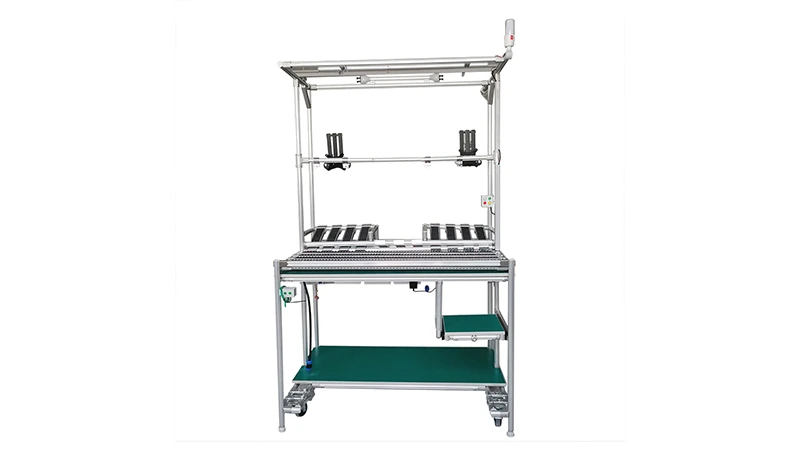
Introduction: The Backbone of Modern Telecom Assembly
In an era where 5G networks stretch across cities, IoT devices connect homes and industries, and telecom equipment shrinks in size while growing in complexity, the assembly line has never been more critical. Every router, switch, fiber optic transceiver, and base station component demands precision—down to the millimeter—and protection from invisible threats like static electricity. For manufacturers in this fast-paced sector, the workspace itself becomes a tool: a surface that doesn't just hold parts, but streamlines workflows, reduces errors, and adapts as technology evolves. Enter Aluminum Workbench D—a solution designed not just to meet these demands, but to redefine what a workbench can do in telecom assembly.
Telecom assembly isn't just about putting pieces together. It's about balancing speed with accuracy, flexibility with stability, and cost-effectiveness with long-term reliability. Traditional workbenches, often made of wood or generic steel, fall short here: they warp under heavy equipment, conduct static that fries sensitive microchips, or lock teams into rigid layouts that can't keep up with new product designs. Aluminum Workbench D, built from high-grade aluminum extrusion profile and engineered with telecom's unique challenges in mind, steps into this gap. Let's explore how this unassuming piece of equipment is becoming the unsung hero of telecom manufacturing floors.
What Sets Aluminum Workbench D Apart?
Before diving into its applications, let's unpack what makes Aluminum Workbench D more than just a table. At its core, it's a modular system built around aluminum extrusion profile—a material celebrated for its strength-to-weight ratio, corrosion resistance, and adaptability. Unlike solid steel benches that are heavy and hard to modify, or wooden ones that degrade over time, aluminum extrusion profile is lightweight yet rigid, making the workbench easy to reconfigure without sacrificing stability. This matters in telecom, where assembly lines often shift from assembling small IoT sensors one month to larger 5G base station components the next.
But Aluminum Workbench D isn't just about the material. It's the details: the ESD (Electrostatic Discharge) safe surface that prevents static buildup from damaging circuit boards, the pre-drilled T-slots that let teams add accessories like tool holders or cable management clips in minutes, and the single-deck design (without casters, though compatible with caster accessories if mobility is needed) that keeps the bench steady during precision tasks. It's a workbench designed to grow with a business, not against it.
Key Features at a Glance
| Feature | Benefit for Telecom Assembly |
|---|---|
| Aluminum Extrusion Profile Construction | Lightweight yet rigid; resists corrosion and warping, ideal for clean, long-term use. |
| ESD-Safe Work Surface | Protects sensitive components (e.g., PCBs, microchips) from static damage, reducing costly rework. |
| Modular T-Slot Design | Quickly add shelves, bins, or flow rack attachments to organize tools and parts within arm's reach. |
| Single-Deck, No-Caster Base | Stable platform for precision tasks like soldering or component testing; compatible with casters for future mobility. |
| Aluminum Profile Accessories Compatibility | Customize with side guides, roller tracks, or cable management systems to fit unique assembly needs. |

Applications in Telecom Equipment Assembly: Where Aluminum Workbench D Shines
Telecom equipment assembly is a multi-stage process, each with its own demands. Let's walk through the key stages and see how Aluminum Workbench D integrates seamlessly into each, becoming more than a work surface—an extension of the team's expertise.
1. PCB Assembly: Precision at the Micro Level
Printed Circuit Boards (PCBs) are the brains of telecom devices, packed with tiny capacitors, resistors, and microprocessors. Assembling them requires a steady hand and a surface that won't introduce errors. Aluminum Workbench D's flat, rigid top—crafted from aluminum extrusion profile—eliminates wobble, ensuring that when a technician places a 0.5mm surface-mount component, it lands exactly where it needs to. The ESD-safe coating is equally critical here: even a small static discharge can fry a $500 chip, turning a productive hour into a costly mistake. With Aluminum Workbench D, static is grounded away from the board, giving assemblers peace of mind to focus on precision.
But it's the little things that make a difference. The T-slots along the edges let teams attach magnetic tool holders, keeping tweezers, soldering irons, and magnifying glasses within arm's reach. Add a small flow rack attachment (using compatible aluminum profile accessories) to hold PCB trays, and suddenly, the bench becomes a mini assembly line: pick a board from the flow rack, place it on the ESD surface, solder components, and slide it to the next station—all without wasted movement. For high-volume PCB production, this translates to fewer dropped tools, faster cycle times, and happier technicians.
2. Component Testing: Stability Meets Versatility
After assembly, telecom components undergo rigorous testing: signal strength checks for transceivers, thermal stress tests for routers, and connectivity trials for IoT modules. These tests often require clamping devices, probe stations, or testing equipment that can weigh 50 pounds or more. Aluminum Workbench D's aluminum extrusion profile frame handles this weight effortlessly, with no flexing that could throw off test results. Unlike wooden benches that might warp under heavy gear, the aluminum structure maintains its flatness over years, ensuring consistent test conditions.
What about versatility? A single telecom manufacturer might test 10 different product models in a day, each requiring unique setups. With Aluminum Workbench D, swapping out a clamp for a probe holder takes seconds—thanks to the T-slot system and aluminum profile accessories like quick-release brackets. Need to route test cables cleanly? Attach cable management clips to the bench's edges, keeping wires from tangling or getting snagged during tests. It's a workspace that adapts to the test, not the other way around.
3. Cable Harness Assembly: Taming the Tangles
Telecom devices, especially base stations and data center switches, rely on intricate cable harnesses—bundles of wires color-coded, stripped, and crimped to connect components. Assembling these harnesses is a tedious task, with technicians often juggling dozens of wires at once. A disorganized workspace here leads to crossed wires, incorrect crimps, and hours of troubleshooting later. Aluminum Workbench D addresses this with its modular design: add a vertical aluminum guide rail along the back to hold wire spools, use T-slots to mount cable organizers, or attach a small flow rack to hold crimping tools and heat-shrink tubing. Suddenly, the chaos of wires becomes a system: pull a wire from the spool, measure it against the bench's built-in ruler, strip it, crimp it, and tuck it into the organizer—all in a smooth, linear motion.
The ESD surface plays a role here, too. Even cables can generate static as they're pulled and stripped; grounding them through the bench prevents accidental damage to connectors. For teams assembling hundreds of harnesses daily, this level of organization cuts down on rework and turns a once-frustrating task into a streamlined process.
4. Final Integration: Bringing It All Together
The final stage of telecom assembly is where components—PCBs, cable harnesses, casings, and power supplies—come together into a finished product. This stage demands space: room to lay out all parts, align casings without scratching them, and secure components with screws or adhesives. Aluminum Workbench D's single-deck design (typically 1200mm x 600mm, though customizable) offers ample surface area, while its clean, flat top ensures casings sit evenly during assembly. Need extra space for tools? Add a detachable side shelf using aluminum profile accessories—no drilling or permanent modifications required.
For larger devices, like small cell base stations, teams often need to rotate the product during assembly. While Aluminum Workbench D doesn't come with casters, its compatibility with caster accessories means teams can add lockable wheels when mobility is needed, then remove them for stability during final tightening. It's this flexibility that makes the bench a staple in facilities where product sizes vary widely.

Why Telecom Manufacturers Choose Aluminum Workbench D Over Traditional Options
To truly understand Aluminum Workbench D's impact, it helps to compare it to the alternatives. Let's break down why telecom teams are swapping out old workbenches for this aluminum extrusion profile solution.
Wooden Workbenches: A Fading Relic
Wooden benches are cheap upfront, but they're a liability in telecom. They absorb moisture, warping over time and creating uneven surfaces that throw off precision work. They can't be grounded for ESD protection, leaving components vulnerable to static. And when they get scratched or stained (a common issue with adhesives or lubricants), they're hard to repair. For a manufacturer building $10,000 routers, a $200 wooden bench ends up costing far more in rework and replacements.
Generic Steel Benches: Strong, But Static-Prone
Steel is strong, but it's heavy—making reconfiguration nearly impossible. Worse, it conducts static electricity, turning the bench itself into a risk for sensitive parts. While some steel benches claim ESD protection, the coating often wears off after months of use, leaving teams with an expensive paperweight. Steel also rusts, a problem in humid assembly environments or cleanrooms where corrosion could contaminate components.
Aluminum Workbench D: The Best of All Worlds
Aluminum extrusion profile solves these issues. It's lightweight enough to move (with casters) but rigid enough to support heavy equipment. Its natural resistance to corrosion means it thrives in any environment, from dusty warehouses to climate-controlled cleanrooms. The ESD coating is integrated into the surface, not just painted on, ensuring it lasts for years. And because it's modular, teams can add, remove, or reposition accessories as needs change—no need to buy a whole new bench when a product line updates.
Mark, a production supervisor at a mid-sized telecom manufacturer, puts it this way: "We used to replace wooden benches every 2-3 years because they'd warp or get too beat up. Steel ones were too heavy to rearrange when we launched a new product. With Aluminum Workbench D, we've had the same benches for 5 years, and they still look new. We just swap out accessories—add a flow rack here, a cable management bar there—and we're ready for whatever comes next."
Complementary Solutions: Aluminum Workbench D and the Wider Lean System
A workbench doesn't exist in isolation. In telecom assembly, it's part of a larger ecosystem of tools designed to create lean, efficient workflows. Aluminum Workbench D plays well with others, integrating seamlessly with complementary solutions like flow racks and ESD workstations to create a cohesive assembly line.
Flow Racks: Keeping Parts Moving
Flow racks—with their inclined shelves and roller tracks—are a staple in lean manufacturing, ensuring parts move from storage to assembly without manual lifting. Aluminum Workbench D, with its T-slot design, connects directly to flow rack systems using aluminum profile accessories. Imagine a PCB assembly station: a flow rack mounted to the bench's side holds trays of capacitors, resistors, and ICs, rolling them forward as the front tray empties. Assemblers never have to reach across the bench or walk to a storage area—parts are always within arm's reach. This cuts down on wasted motion, a key driver of inefficiency in assembly lines.
ESD Workstations: A Unified Static-Protection Zone
While Aluminum Workbench D has its own ESD surface, telecom facilities often pair it with dedicated ESD workstations for tasks like component storage or final testing. The bench's aluminum extrusion profile frame can be grounded to the same system as these workstations, creating a unified static-protection zone. This consistency is critical for compliance with industry standards like ANSI/ESD S20.20, which requires facilities to maintain a controlled electrostatic environment.
Real-World Impact: A Case Study
Let's put this all into context with a hypothetical (but realistic) example. Consider "TelecomTech," a manufacturer of 5G small cell base stations. Before adopting Aluminum Workbench D, their assembly line struggled with three issues: static damage to PCBs, inefficient tool organization, and difficulty reconfiguring workspaces for new product models.
Static damage alone cost them $40,000 annually in replaced components. Technicians wasted 15 minutes per shift searching for tools, and reconfiguring wooden benches for new base station designs took 8 hours of downtime. After switching to Aluminum Workbench D, here's what changed:
- Static damage dropped by 90%: The ESD surface eliminated nearly all static-related failures, saving $36,000 annually.
- Tool search time vanished: Magnetic tool holders and T-slot accessories kept tools organized and accessible, adding 2 hours of productive work per technician per week.
- Reconfiguration time cut to 30 minutes: Modular aluminum profile accessories let teams add shelves, flow racks, or side tables in minutes, not hours.
For TelecomTech, the investment in Aluminum Workbench D paid for itself in under 6 months. And beyond the numbers, technicians reported higher job satisfaction—no more struggling with wobbly surfaces or disorganized tools. As one technician put it: "I used to dread PCB assembly because the bench was never level, and I was always worried about zapping a chip. Now, I can focus on the work, not the workspace."
Conclusion: More Than a Workbench—A Partner in Telecom Innovation
In the world of telecom equipment assembly, where every second and every component counts, Aluminum Workbench D stands out as more than just a piece of furniture. It's a tool that adapts to the industry's ever-changing needs: precise enough for microchips, durable enough for heavy equipment, and flexible enough to grow with new technologies. Built from aluminum extrusion profile and designed with ESD safety, modularity, and ergonomics in mind, it's a workspace that doesn't just keep up with telecom innovation—it enables it.
For manufacturers looking to stay competitive in a market driven by speed, precision, and reliability, the choice is clear: invest in tools that work as hard as your team. Aluminum Workbench D isn't just a workbench. It's a commitment to better workflows, fewer errors, and a future-ready assembly line. And in telecom, that's not just an advantage—it's essential.