- Company Articles
- Products and Technology
- Application Cases
- Applications of Duplex Aluminum Pipe Joint in Medical Equipment Manufacturing

Applications of Duplex Aluminum Pipe Joint in Medical Equipment Manufacturing
Related Product
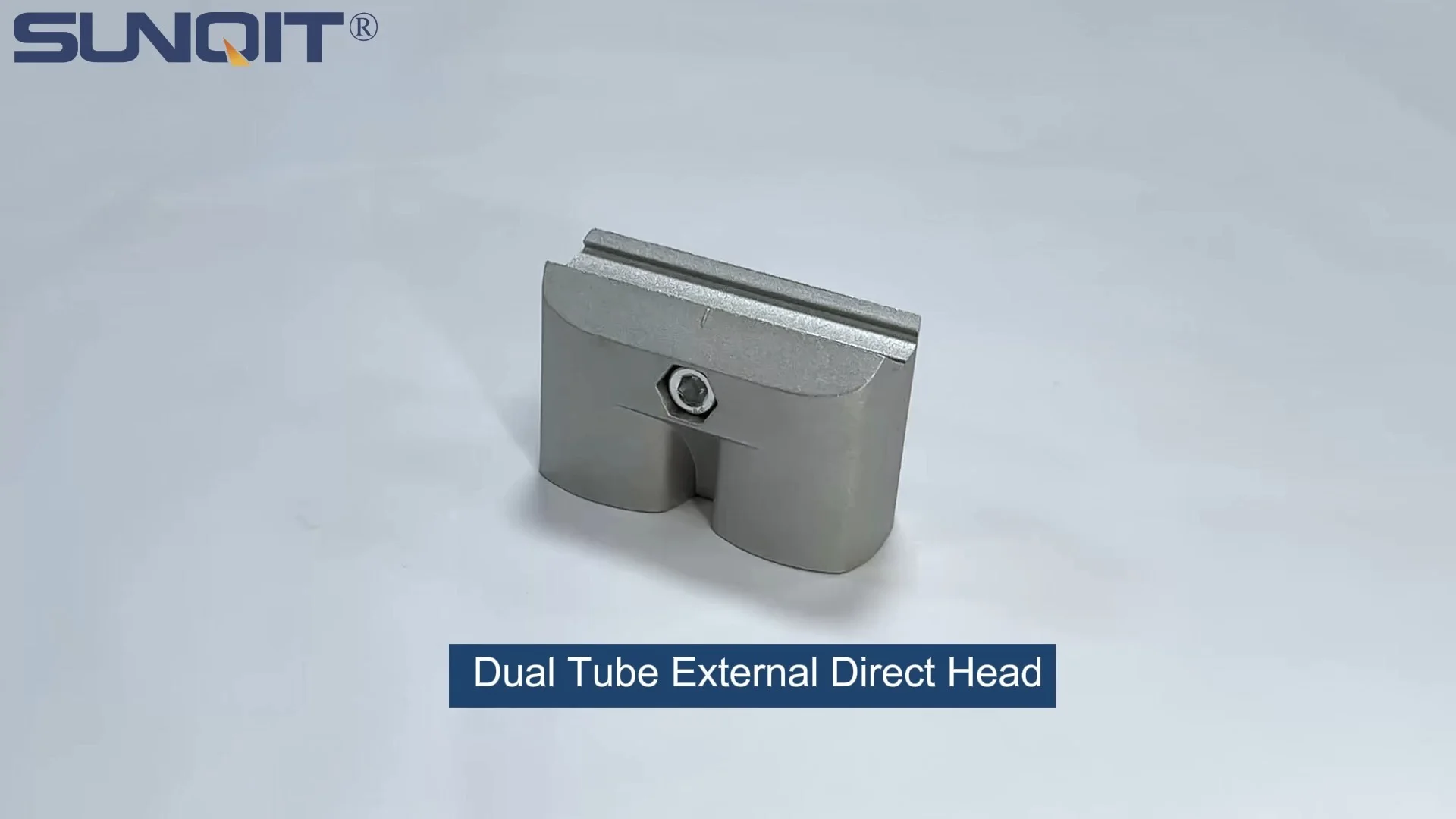
Duplex Aluminum Pipe Joint
Duplex Aluminum pipe joint used for one pcs 28pcs aluminum pipe and one pcs of 28mm duplex pipe connection in straight angle.
In the world of medical equipment manufacturing, precision isn't just a goal—it's a necessity. Every scalpel, MRI machine component, and diagnostic device carries the weight of patient safety, regulatory compliance, and the relentless pace of technological advancement. Today's manufacturers face a unique set of challenges: balancing strict hygiene standards with the need for flexible production lines, adapting to rapid design changes driven by medical innovation, and ensuring that every tool and workstation meets the highest benchmarks for durability and reliability. Amidst these demands, one component has quietly emerged as a cornerstone of modern medical manufacturing: the duplex aluminum pipe joint. Far more than a simple connector, this unassuming piece of hardware is redefining how medical equipment is designed, assembled, and maintained. Let's explore why it's become indispensable, and how it's shaping the future of the industry.
Understanding Duplex Aluminum Pipe Joints: A Closer Look
Before diving into their applications, it's helpful to understand what makes duplex aluminum pipe joints unique. At their core, these joints are engineered to connect aluminum pipes and profiles into stable, modular structures—think workbenches, racks, or assembly lines. But what sets them apart is their "duplex" design: a dual-layer construction that combines the lightweight properties of aluminum with enhanced strength and corrosion resistance. Unlike traditional steel joints, which are heavy and prone to rust, or plastic joints that lack durability, duplex aluminum pipe joints strike a balance that's particularly valuable in medical settings.
Made from high-grade aluminum alloys, these joints are precision-machined to ensure a tight, secure fit with compatible aluminum profiles. Their modular nature means they can be easily assembled, disassembled, and reconfigured without welding or specialized tools— a game-changer for manufacturers who need to adapt quickly to new product designs or production demands. Additionally, their smooth, non-porous surfaces are easy to clean and sanitize, a critical feature in environments where contamination risks are zero-tolerance.
Key Applications in Medical Equipment Manufacturing
The versatility of duplex aluminum pipe joints makes them suitable for a wide range of uses in medical manufacturing. Below are some of the most impactful applications, where their unique properties directly address industry pain points.
Custom Workbenches for Precision Assembly
Medical device assembly often requires workspaces tailored to specific tasks—whether it's assembling tiny surgical instruments or testing large imaging components. Here, duplex aluminum pipe joints shine. By combining these joints with aluminum profiles, manufacturers can build custom workbenches that adapt to the exact needs of their workflow. For example, a workbench for assembling pacemaker components might include adjustable height settings, integrated lighting, and tool holders—all secured using duplex joints that ensure stability without adding unnecessary weight.
What makes these workbenches stand out is their adaptability. If a new device design requires a wider workspace or additional shelving, the joints can be loosened, and the aluminum profiles repositioned in minutes. This flexibility reduces downtime and eliminates the need to invest in entirely new workstations, a significant cost-saver for manufacturers operating on tight budgets. Moreover, the aluminum construction is resistant to the harsh disinfectants used in medical facilities, ensuring the workbench remains functional and compliant over time.
ESD Workstations for Sensitive Component Handling
Electrostatic discharge (ESD) is a silent threat in medical manufacturing. Even a small static charge can damage delicate electronics in devices like defibrillators, insulin pumps, or diagnostic sensors, compromising their performance and safety. ESD workstations are designed to mitigate this risk by grounding static electricity, and duplex aluminum pipe joints play a crucial role in their construction.
Aluminum is a natural conductor, making it ideal for ESD applications. When used in conjunction with ESD-safe tabletop materials and grounding straps, duplex aluminum pipe joints create a continuous path for static to dissipate, protecting sensitive components during assembly and testing. Unlike plastic joints, which can insulate and trap static, aluminum joints ensure that the entire workstation—from the frame to the tools—remains grounded. This level of protection is non-negotiable for manufacturers adhering to standards like ANSI/ESD S20.20, which governs electrostatic control in electronics manufacturing.
Beyond functionality, these ESD workstations benefit from the same modularity as standard workbenches. If a production line shifts to handling larger components, the frame can be extended using additional aluminum profiles and duplex joints, all while maintaining ESD compliance. This adaptability ensures that manufacturers don't have to choose between safety and flexibility.
Lean System Integration: Streamlining Production Flows
In an industry where efficiency directly impacts patient access to life-saving equipment, lean manufacturing principles have become increasingly important. Lean systems focus on minimizing waste, optimizing workflow, and maximizing value—goals that align perfectly with the capabilities of duplex aluminum pipe joints. By integrating these joints into lean production setups, manufacturers can create modular assembly lines, material racks, and conveyance systems that adapt to real-time workflow needs.
Consider a typical lean scenario: a manufacturer producing surgical tools needs to reduce the time between component delivery and final assembly. Using duplex aluminum pipe joints, they might design a flow rack system where parts are stored at waist height, eliminating unnecessary bending or reaching. The joints allow the rack to be customized with dividers, label holders, and even roller tracks (another key component in lean systems) to ensure parts flow smoothly to the assembly line. If production volumes increase, additional sections can be added without disrupting the existing setup.
Similarly, in cellular manufacturing—where teams work on self-contained production units—duplex aluminum joints enable the creation of compact, mobile workstations that can be rearranged to optimize team collaboration. This flexibility reduces bottlenecks and ensures that each cell can adapt to changes in product mix or demand, a critical advantage in an industry where product cycles are getting shorter.
Modular Material Racks and Turnover Trolleys
Behind every successful medical device is a well-organized supply chain. From raw materials like aluminum profiles to finished components, the way materials are stored and transported within a facility directly impacts efficiency and hygiene. Duplex aluminum pipe joints excel here, too, by enabling the construction of modular material racks and turnover trolleys that meet the unique demands of medical manufacturing.
Take, for example, a material rack used to store sterile packaging materials. Traditional wooden racks are porous and difficult to sanitize, while steel racks are heavy and prone to rust if not properly maintained. A rack built with duplex aluminum pipe joints and aluminum profiles, however, is lightweight enough to be moved (with the addition of casters) yet sturdy enough to support heavy loads. Its smooth surfaces can be wiped down with hospital-grade disinfectants without degradation, and its modular design allows for adjustable shelving to accommodate packages of varying sizes.
Turnover trolleys, used to transport components between production stages, benefit similarly. By using duplex joints, manufacturers can design trolleys with custom features like lockable drawers, fold-down sides, or ESD-safe surfaces—all while keeping the overall weight low enough for easy maneuvering. In cleanroom environments, where air flow and contamination control are critical, the open-frame design of these trolleys (enabled by the joints' strength-to-weight ratio) minimizes air resistance and reduces the risk of particle buildup.

Comparative Analysis: Duplex Aluminum vs. Traditional Joint Systems
| Feature | Traditional Steel Joints | Plastic Joints | Duplex Aluminum Pipe Joints |
|---|---|---|---|
| Material Composition | Mild steel or stainless steel | Polypropylene or nylon | High-grade aluminum alloy (dual-layer construction) |
| Weight (per unit) | Heavy (300-500g) | Light (50-100g) | Moderate (150-250g) |
| Assembly Time (avg. for 10 joints) | 60-90 minutes (requires welding/tools) | 15-20 minutes (snap-fit, limited durability) | 20-30 minutes (tool-free, reusable) |
| Corrosion Resistance | Low (prone to rust; stainless steel better but costly) | High (resistant to chemicals, but UV-sensitive) | Very high (resistant to disinfectants, salt, and moisture) |
| ESD Compatibility | Possible with coatings (adds cost) | Poor (insulating; can generate static) | Excellent (natural conductivity; no additional coatings needed) |
| Hygiene Compliance | Low (porous welds trap bacteria) | Moderate (smooth but prone to scratches) | High (non-porous, easy to sanitize with autoclaving compatible) |
| Long-term Durability | 5-8 years (with maintenance) | 2-3 years (prone to wear/breakage) | 10+ years (resistant to fatigue, reusable) |
The table above highlights why duplex aluminum pipe joints are increasingly preferred in medical manufacturing. Their balance of weight, durability, and adaptability addresses the industry's unique needs more effectively than traditional alternatives, making them a smart investment for long-term efficiency.

Beyond Functionality: Compliance, Sustainability, and Cost Efficiency
While functionality is key, duplex aluminum pipe joints offer benefits that extend beyond the production floor. For medical manufacturers, regulatory compliance is a constant concern, and these joints are designed to meet the strictest standards. Aluminum is inherently non-toxic and non-reactive, making it compliant with FDA regulations for materials used in medical device manufacturing (21 CFR Part 177). Its resistance to corrosion also ensures that joints won't degrade when exposed to the harsh cleaning agents required by ISO 13485, the international standard for medical device quality management systems.
Sustainability is another growing priority, and aluminum's recyclability makes duplex joints an eco-friendly choice. Unlike plastic joints, which often end up in landfills after use, or steel joints that require energy-intensive recycling processes, aluminum can be recycled repeatedly without losing quality. This aligns with the industry's push toward greener manufacturing practices, helping companies reduce their carbon footprint while meeting corporate social responsibility goals.
Cost efficiency, too, is a major advantage. While the upfront cost of duplex aluminum pipe joints may be higher than plastic alternatives, their durability and reusability lead to lower long-term expenses. A single joint can be disassembled and repurposed multiple times as production needs change, eliminating the need to purchase new components for every workflow adjustment. Additionally, their lightweight design reduces shipping and handling costs, and their low maintenance requirements (no painting, rust treatment, or replacement due to breakage) further drive down total cost of ownership.

Future Outlook: Innovations in Duplex Aluminum Pipe Joint Technology
As medical technology continues to evolve, so too will the demands placed on manufacturing tools and components. Duplex aluminum pipe joints are no exception, and ongoing innovations are set to make them even more valuable in the years ahead. One area of focus is the integration of smart technology: imagine joints embedded with sensors that monitor tension, wear, or temperature, providing real-time data to maintenance teams and preventing unexpected failures. This could be particularly useful in critical assembly lines where downtime is costly.
Another trend is the development of specialized coatings for enhanced functionality. For example, antimicrobial coatings could be applied to joint surfaces to further reduce contamination risks in sterile environments, while conductive coatings might improve ESD performance for next-generation microelectronics. Additionally, advances in 3D printing may allow for custom joint designs tailored to unique medical device manufacturing needs—such as joints with built-in cable management for automated assembly systems.
Perhaps most exciting is the potential for duplex aluminum pipe joints to support the growth of personalized medicine. As medical devices become more tailored to individual patients, manufacturing lines will need to be even more flexible. Duplex joints, with their ability to quickly reconfigure workstations and assembly lines, will be instrumental in enabling small-batch, high-precision production runs that were once cost-prohibitive.
Conclusion: A Foundation for Next-Generation Medical Manufacturing
In the fast-paced world of medical equipment manufacturing, success hinges on the ability to balance precision, compliance, and adaptability. Duplex aluminum pipe joints may not be the most glamorous component in the process, but they are undoubtedly one of the most critical. By offering a unique combination of strength, flexibility, and hygiene, they're helping manufacturers build the workbenches, ESD workstations, and lean systems that produce the life-saving devices of tomorrow.
As we look ahead, it's clear that the role of duplex aluminum pipe joints will only grow. Whether through smart sensor integration, advanced coatings, or 3D-printed customization, these unassuming connectors are poised to remain at the forefront of medical manufacturing innovation. For manufacturers, investing in duplex aluminum pipe joints isn't just about upgrading equipment—it's about future-proofing their operations, ensuring they can meet the challenges of tomorrow while delivering the precision and reliability patients deserve today.