- Company Articles
- Products and Technology
- Product knowledge
- Applications of External Straight Aluminum Joints in Telecommunication Equipment

Applications of External Straight Aluminum Joints in Telecommunication Equipment
Related Product
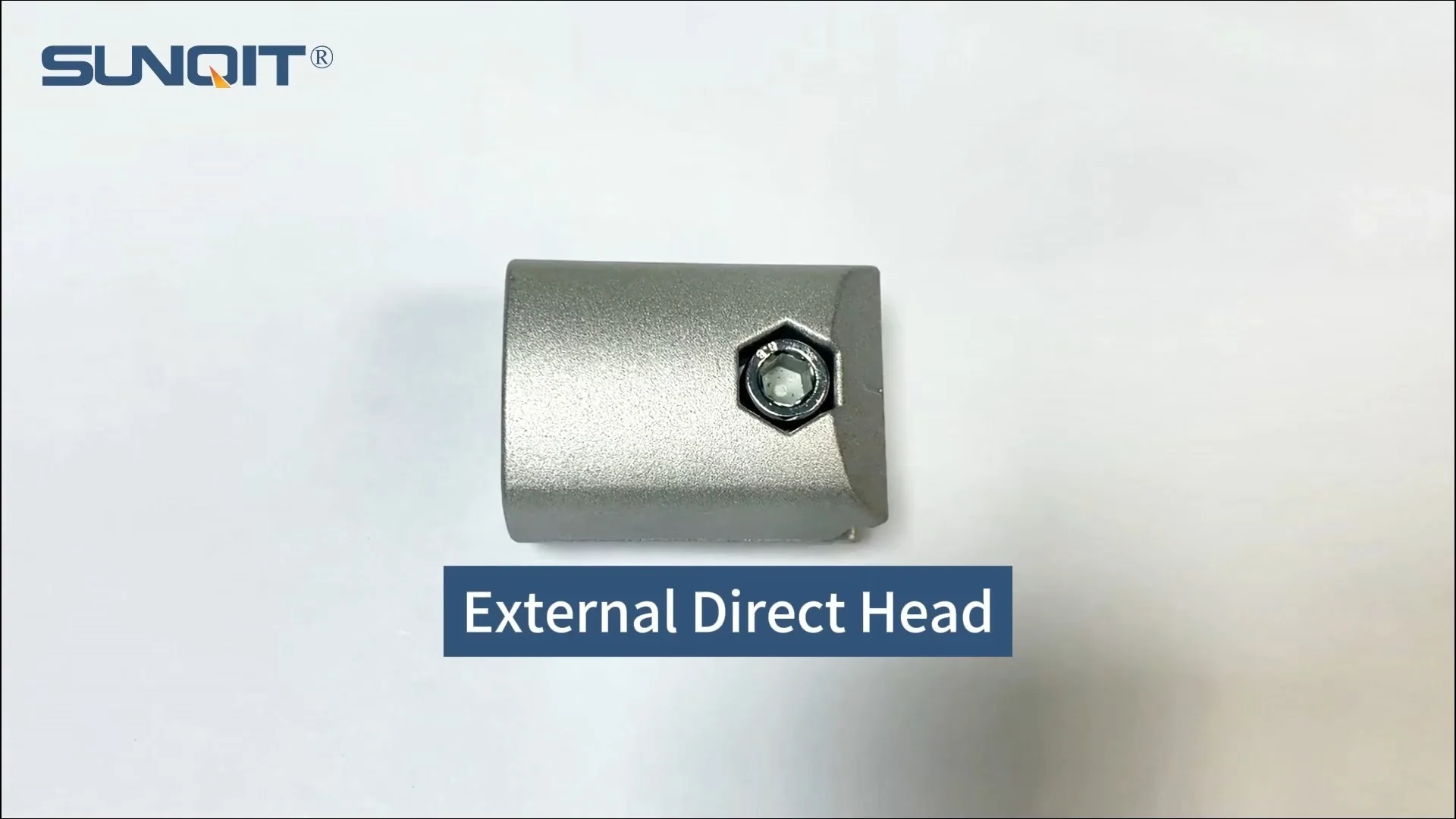
External Straight Aluminum Joint
Aluminum pipe joint outside connection used for two pcs 28pcs aluminum pipe connection in straight angle,it connects two pcs pipe from outside.
In the fast-paced world of telecommunication, where 5G rollouts, fiber-optic networks, and smart devices demand ever-more sophisticated infrastructure, the manufacturing of telecom equipment has become a high-stakes balancing act. Precision, efficiency, and adaptability aren't just buzzwords here—they're the backbone of keeping networks running smoothly, connecting billions of people worldwide. But behind every router, base station, and transceiver lies a production floor where the right tools and systems can make or break a company's ability to meet deadlines and maintain quality. Enter the unsung heroes of modern manufacturing: modular components like aluminum lean pipe, aluminum profile, and the critical connectors that hold them all together. Among these, external straight aluminum joints stand out as quiet game-changers, offering a blend of strength, flexibility, and simplicity that's tailor-made for the unique challenges of telecom equipment production.
Telecom equipment manufacturing isn't just about assembling circuit boards and soldering wires. It involves handling delicate components that are sensitive to static, organizing inventory across shifting production lines, and adapting workspaces to new product designs—sometimes within weeks. Traditional manufacturing setups, with their rigid steel frames and welded structures, often struggle to keep up. They're heavy, hard to reconfigure, and prone to rust in humid factory environments. That's where lean systems come into play, emphasizing waste reduction and continuous improvement. And at the heart of these lean systems are components that can be easily adjusted, reused, and repurposed—components like external straight aluminum joints.
The Backbone of Modern Manufacturing: Lean Systems and Aluminum Components
Before diving into the specifics of external straight aluminum joints, it's important to understand the ecosystem they operate in: lean manufacturing systems. Lean systems are all about creating value by eliminating waste—whether that's wasted time, materials, or space. In telecom manufacturing, where product cycles are short and customization is key, lean principles translate to workspaces that can evolve with demand. This is where aluminum lean pipe and aluminum profile shine. Unlike traditional steel, aluminum is lightweight yet surprisingly strong, resistant to corrosion, and easy to work with. It's the ideal material for building everything from workbenches to material racks, but none of these structures would be possible without reliable joints.
Aluminum profile, with its T-slot design, has revolutionized modular construction. These extruded aluminum beams feature grooves along their length, allowing accessories like brackets, shelves, and panels to be attached without drilling or welding. But to connect the profiles themselves—whether in straight lines, angles, or complex configurations—you need joints that can handle the load while maintaining the system's modularity. External straight aluminum joints are designed for exactly this purpose: creating secure, straight-line connections between aluminum pipes or profiles, forming the skeleton of production workstations, conveyor systems, and storage solutions.
What makes aluminum such a standout material in this context? For one, its weight-to-strength ratio is unmatched. A typical aluminum lean pipe weighs 30% less than a steel pipe of the same dimensions, making it easier for workers to handle during assembly or reconfiguration. This reduces fatigue and lowers the risk of workplace injuries—critical in factories where employees spend hours on their feet. Additionally, aluminum's natural resistance to rust and corrosion means it holds up in the humid conditions often found in electronics manufacturing facilities, where air conditioning and moisture control are essential for protecting sensitive components. And because aluminum is recyclable, it aligns with the sustainability goals many telecom companies are now prioritizing, reducing the environmental impact of production setups.
Understanding External Straight Aluminum Joints: Design and Functionality
At first glance, an external straight aluminum joint might seem like a simple piece of hardware, but its design is the result of careful engineering. These joints are typically made from high-grade aluminum alloy—often 6061-T6, known for its excellent strength and machinability. They're designed to fit snugly around the exterior of aluminum pipes or profiles, creating a rigid connection that can withstand the vibrations and weight of daily manufacturing use. Unlike internal joints, which fit inside the pipe, external straight joints clamp around the outside, distributing pressure evenly and reducing the risk of damaging the pipe's interior (critical for applications involving cables or fluid lines).
The basic design of an external straight aluminum joint consists of two main parts: a clamping mechanism and a connecting body. The clamping mechanism usually involves screws or bolts that, when tightened, compress the joint around the aluminum pipe, creating a friction fit. Some joints feature rubber or plastic inserts to enhance grip and prevent slippage, while others use serrated edges to bite into the pipe's surface. The connecting body, on the other hand, is the part that links two pipes in a straight line. It might be a simple cylindrical sleeve for two identical pipes or a stepped design to connect pipes of different diameters—common in telecom setups where smaller pipes support tools and larger ones form the main structure.
One of the key advantages of external straight aluminum joints is their ease of assembly. Unlike welded connections, which require skilled labor and specialized equipment, these joints can be installed with basic hand tools—usually an Allen wrench or a socket set. This not only speeds up the initial setup of production lines but also makes reconfiguration a breeze. If a telecom manufacturer needs to expand a workbench or adjust the height of a material rack to accommodate a new product, workers can simply loosen the joint screws, reposition the pipes, and retighten. No cutting, no welding, no waiting for materials to cool. This flexibility is a game-changer in an industry where production layouts can change as often as quarterly.
Key Features of External Straight Aluminum Joints
- Lightweight yet Durable: Aluminum alloy construction keeps weight low while maintaining tensile strength, supporting loads up to 50kg per joint in some models.
- Corrosion Resistance: Natural oxide layer on aluminum prevents rust, making joints suitable for humid or cleanroom environments.
- Tool-Free Adjustment: Most models use hand-tightened screws, allowing for quick repositioning without power tools.
- Compatibility: Designed to work with standard aluminum lean pipe (typically 28mm or 30mm diameter) and T-slot aluminum profiles (2020, 3030, 4040 series).
- Low Maintenance: No painting or coating required; simply wipe clean to maintain appearance and functionality.

Application 1: Custom Workbenches for Precision Equipment Assembly
Walk into any telecom manufacturing facility, and you'll find workbenches at the center of the action. These are where technicians assemble base station modules, test router components, and inspect fiber-optic transceivers—tasks that require precision, stability, and organization. A poorly designed workbench can slow down production, increase errors, and even damage sensitive parts. External straight aluminum joints play a starring role in building workbenches that meet the unique demands of telecom assembly.
Consider the typical workflow at a workbench: a technician needs a flat, stable surface to place a circuit board, access to tools (screwdrivers, soldering irons) within arm's reach, and storage for small components like resistors or capacitors. They might also need to connect ESD (electrostatic discharge) mats to prevent static electricity from frying delicate semiconductors. A modular workbench built with aluminum profile and external straight aluminum joints can accommodate all of this—and more.
Let's break down how this works. The frame of the workbench is constructed using aluminum profiles (often 4040 or 3030 series for stability). External straight aluminum joints connect the vertical legs to the horizontal beams, forming a rectangular base. Additional joints are used to add shelves above or below the main work surface, providing storage for tools or component bins. Since the joints allow for easy adjustment, the height of the workbench can be tailored to individual technicians—critical for ergonomics, as workers of different heights will use the same station. For example, a 40-inch tall workbench might be ideal for a standing technician, while a 36-inch version works better for someone seated.
But the customization doesn't stop there. T-slot aluminum profiles allow for accessories like tool holders, cable management clips, and monitor arms to be attached directly to the frame. External straight joints can even be used to extend the workbench horizontally, adding extra surface area when needed for larger projects (like assembling a 5G antenna array). When the product line switches to a smaller device, the extra sections can be removed and repurposed elsewhere in the factory—no waste, no new materials needed.
ESD workbench requirements add another layer of complexity. Telecom components like integrated circuits (ICs) are highly sensitive to static, which can build up on work surfaces and discharge through the components, causing permanent damage. ESD-safe workbenches must have conductive surfaces and grounding systems. Aluminum, being a conductor, is naturally ESD-friendly. By using external straight aluminum joints to connect the frame, the entire structure can be grounded via a single cable, ensuring static is safely dissipated. This eliminates the need for separate grounding straps for each component, simplifying setup and reducing the risk of human error.
| Feature | Traditional Steel Workbench | Modular Aluminum Workbench (with External Straight Joints) |
|---|---|---|
| Weight | Heavy (100-150kg) | Lightweight (40-60kg) |
| Reconfiguration Time | Days (requires welding/cutting) | Hours (tool-free adjustment) |
| ESD Compatibility | Requires additional conductive mats | Naturally conductive (groundable frame) |
| Corrosion Resistance | Prone to rust (needs painting) | Corrosion-resistant (no coating needed) |
| Cost Over Time | High (replacement needed every 3-5 years) | Low (reusable components, 10+ year lifespan) |

Application 2: Material Racks and Storage Solutions for Dynamic Inventory
In telecom manufacturing, inventory management is a logistical puzzle. Components range from tiny surface-mount resistors (smaller than a grain of rice) to large antenna housings (over 6 feet long). These parts need to be stored in a way that's accessible, organized, and protected from damage. Material racks are the unsung organizers of the factory floor, and external straight aluminum joints make them smarter, more adaptable, and longer-lasting than ever before.
Consider Material Rack B, a common setup in telecom facilities: a 3-row, 3-floor rack used to store component bins, PCBs, and subassemblies. Traditional steel racks are sturdy but fixed—once welded, the shelf heights can't be changed. If a new component is taller than expected, you either need to buy a new rack or leave empty space above shorter items, wasting vertical storage. With aluminum profile and external straight aluminum joints, Material Rack B becomes a dynamic system. Each shelf is supported by aluminum beams connected to vertical posts via external straight joints. To adjust the height, simply loosen the joint screws, slide the beams up or down, and retighten. This means a shelf that once held 2-inch tall component bins can be raised to accommodate 6-inch antenna modules in minutes.
But the benefits go beyond adjustability. Aluminum's lightweight nature makes the racks easier to move, even when loaded. This is critical for facilities that use "5S" principles (sort, set in order, shine, standardize, sustain) to keep work areas clutter-free. If a production line needs to expand, the material rack can be disassembled, moved to a new location, and reassembled—all without heavy machinery. External straight joints ensure that the rack maintains its stability even after multiple moves, unlike bolted steel racks, which can loosen over time.
Another advantage is compatibility with accessories like roller tracks. Many telecom components are transported in plastic bins or on pallets, and adding roller tracks to material racks allows these bins to slide smoothly, reducing the effort needed to retrieve items. Roller tracks, often made of aluminum or plastic, can be attached to the rack shelves using external straight joints and specialized brackets. For example, plastic roller track guide rails (yellow or grey, depending on static sensitivity) can be mounted along the edge of a shelf, turning it into a mini conveyor for component bins. This not only speeds up access but also reduces the risk of dropping or damaging parts during handling.
Stainless steel swivel roller balls are another popular accessory in telecom storage. These 1-inch or 0.5-inch balls are embedded in a plate, allowing items to be rotated or moved in any direction with minimal friction—perfect for maneuvering large, heavy equipment like base station enclosures. By using external straight aluminum joints to mount these roller ball plates to the ends of material racks, workers can easily transfer items from the rack to a nearby workbench or trolley, streamlining the flow of materials through the production line.

Application 3: Conveyor and Roller Track Systems for Seamless Material Flow
In a busy telecom factory, the movement of materials between workstations can make or break production efficiency. Components need to travel from the inventory room to the assembly bench, then to testing, and finally to packaging—all without delays or damage. Conveyor systems are the arteries of this process, and roller track systems, in particular, are ideal for handling lightweight to medium-weight items like circuit boards, cable harnesses, and small enclosures. External straight aluminum joints are critical for building these roller tracks, ensuring they're aligned, stable, and adaptable to changing production needs.
Roller tracks consist of parallel rails with rotating rollers, allowing items to slide along via gravity or manual push. In telecom manufacturing, they're often used to connect workbenches in a U-shape or linear layout, creating a continuous flow. The rails themselves are typically made of aluminum (for lightweight durability) or plastic (for ESD safety), and they need to be mounted to a frame that keeps them level and spaced evenly. This is where external straight aluminum joints come in: connecting the aluminum profile frame, securing the roller tracks, and ensuring the entire system can be adjusted as needed.
For example, aluminum guide rail A and B—common profiles used in roller track systems—feature grooves that hold the roller axles in place. To mount these rails to the supporting frame, technicians use roller track placon mounts, which are brackets that attach to the T-slots of aluminum profiles. External straight aluminum joints connect the vertical support posts to the horizontal beams of the frame, ensuring the structure is square and stable. If the production line needs to be reconfigured—say, to add a new testing station—the roller track can be extended by adding more aluminum profile sections and joints, with minimal downtime.
ESD protection is again a key consideration here. Many telecom components are sensitive to static, so roller tracks often use ESD-safe materials like black ESD wheels or grey plastic guide rails. The aluminum frame, connected via external straight joints, can be grounded to dissipate any static buildup, protecting components as they slide along the track. This integration of ESD safety into the conveyor system itself reduces the need for separate static-control measures, simplifying the production process and lowering the risk of costly component failures.
Another common use case is "flow racks," which use inclined roller tracks to allow gravity to move items from the back to the front. In telecom manufacturing, flow racks are often used for kitting—organizing all the components needed for a specific product (e.g., a router) into a single bin that flows to the assembly station. External straight aluminum joints are used to adjust the angle of the roller tracks (typically 5-10 degrees) to control the speed of the bins, ensuring they don't slide too quickly and damage components. They also allow the flow rack to be expanded vertically or horizontally as product lines grow, making it a scalable solution for growing facilities.
Case Study: A Telecom OEM's Transformation with Aluminum Joints
To put these applications into perspective, let's look at a hypothetical but realistic case study of a mid-sized telecom OEM (original equipment manufacturer) specializing in 5G small cells. Prior to adopting modular aluminum systems, the company relied on welded steel workbenches and fixed steel material racks. Their production line was struggling with three main issues: long reconfiguration times when switching product models, high worker fatigue from moving heavy steel components, and frequent static damage to ICs.
The turning point came when the company decided to launch a new line of small cells, requiring a complete redesign of their assembly area. Instead of investing in new steel infrastructure, they opted for a lean system built with aluminum profile, aluminum lean pipe, and external straight aluminum joints. Over the course of a weekend, their production team disassembled the old steel workbenches and replaced them with modular aluminum workbenches. Each workbench featured adjustable heights, integrated ESD mats, and tool holders mounted via T-slot accessories. Material racks were replaced with adjustable aluminum racks, and roller tracks were added to connect the racks to the assembly stations.
The results were striking. Reconfiguration time for switching between product models dropped from 2 days to 4 hours, as workers could simply adjust the workbench shelves and reposition the roller tracks using external straight joints. Worker fatigue decreased significantly, with reported back pain incidents falling by 60% due to the lighter aluminum structures. Most importantly, static damage to components dropped by 85%, thanks to the grounded aluminum frames and ESD-compatible roller tracks. The company estimates that the initial investment in modular aluminum systems paid for itself within 18 months, through reduced downtime, fewer component failures, and lower labor costs.
Perhaps the most unexpected benefit was the boost in employee morale. Technicians reported feeling more in control of their workspaces, as they could adjust their workbenches to their preferred height or add custom tool holders using leftover aluminum profile and joints. This sense of ownership led to small but impactful improvements—like adding cable management clips to reduce clutter, or repositioning shelves to keep frequently used tools closer. In a lean manufacturing context, these employee-driven optimizations are gold, as they lead to continuous improvement without top-down mandates.
Benefits Beyond Assembly: Durability, Sustainability, and Cost-Efficiency
While the flexibility and modularity of external straight aluminum joints are their most obvious advantages, their long-term benefits are equally compelling. In telecom manufacturing, where margins can be tight and competition fierce, these benefits translate directly to the bottom line.
Durability and Low Maintenance
Aluminum's natural resistance to corrosion means that external straight joints require virtually no maintenance. Unlike steel joints, which need regular painting or coating to prevent rust, aluminum joints can withstand years of exposure to humidity, cleaning chemicals, and temperature fluctuations without degradation. This is especially valuable in cleanrooms or facilities with strict hygiene standards, where downtime for maintenance can be costly. Even in dusty environments, a quick wipe with a damp cloth is enough to keep the joints functioning smoothly.
The mechanical design of the joints also contributes to their longevity. Most models use stainless steel screws or bolts, which won't rust or seize over time. The clamping mechanism distributes pressure evenly across the aluminum pipe or profile, preventing deformation even with repeated adjustments. This means a well-maintained external straight aluminum joint can last for decades, outliving multiple product cycles and providing consistent performance year after year.
Sustainability and Environmental Impact
In an era where corporate sustainability is no longer optional, aluminum's recyclability is a major advantage. Aluminum can be recycled indefinitely without losing quality, and recycling it requires just 5% of the energy needed to produce new aluminum. When a modular system built with external straight aluminum joints reaches the end of its useful life, the aluminum components can be melted down and reused—unlike welded steel, which is often sent to landfills or requires energy-intensive recycling processes.
Additionally, the modular nature of these systems reduces waste from the start. Instead of cutting steel to fixed lengths (resulting in scrap), aluminum profiles and pipes can be purchased in standard sizes and cut to length as needed, with leftover pieces used for smaller projects like tool holders or test fixtures. External straight joints allow for these smaller pieces to be connected into functional structures, minimizing material waste. For telecom companies aiming to reduce their carbon footprint, this is a tangible way to make manufacturing more sustainable.
Total Cost of Ownership
At first glance, aluminum components and external straight joints may have a higher upfront cost than basic steel alternatives. However, their total cost of ownership (TCO) is significantly lower over time. Consider a typical workbench: a steel workbench might cost $500, but it can't be reconfigured and will need replacement in 5 years. A modular aluminum workbench with external straight joints might cost $800, but it can be reconfigured dozens of times, adapted to new products, and last 15+ years. When you factor in the cost of downtime for reconfiguration, replacement steel workbenches, and component failures due to poor ergonomics or static damage, the aluminum system quickly becomes the more economical choice.
For larger facilities with hundreds of workbenches and material racks, the savings add up exponentially. A telecom OEM with 50 workstations could save hundreds of thousands of dollars over a decade by choosing modular aluminum systems with external straight joints—funds that can be reinvested in R&D or expanding production capacity.
Challenges and Best Practices for Using External Straight Aluminum Joints
While external straight aluminum joints offer numerous benefits, they're not without their challenges. Understanding these potential pitfalls and following best practices can ensure that your modular system performs optimally for years to come.
Common Challenges
- Over-Tightening: One of the most common mistakes is over-tightening the joint screws. Aluminum is a softer metal than steel, and excessive force can strip the threads or deform the pipe. Most manufacturers recommend tightening screws until snug, then adding a quarter-turn—no more.
- Compatibility Issues: Not all aluminum pipes or profiles are created equal. External straight joints are designed for specific pipe diameters (e.g., 28mm) or profile series (e.g., 4040). Using mismatched components can lead to loose connections or instability.
- Static Electricity in Dry Environments: While aluminum is conductive, in extremely dry conditions, static can still build up on the surface. Adding ESD-safe accessories like rubber mats or grounding cables is recommended for sensitive telecom components.
- Load Limits: Each joint has a maximum load rating, typically specified by the manufacturer. Exceeding this limit can cause the joint to fail, leading to collapsed shelves or damaged equipment.
Best Practices for Assembly and Maintenance
- Use the Right Tools: Always use the recommended tool for joint screws—usually a hex key (Allen wrench) of the correct size. Avoid using power tools, which can easily over-tighten.
- Inspect Regularly: Check joints monthly for loose screws, signs of deformation, or corrosion. Tighten any loose screws and replace damaged joints immediately.
- Train Staff: Ensure all workers who assemble or reconfigure modular systems are trained on proper joint usage, including load limits and torque specifications.
- Label Components: Mark aluminum profiles with their length and joint positions during initial assembly. This makes reconfiguration faster and reduces errors.
- Store Spare Parts: Keep a stock of extra joints, screws, and profiles on hand. This minimizes downtime if a component is damaged or lost.
By addressing these challenges and following best practices, telecom manufacturers can maximize the lifespan and performance of their modular aluminum systems, ensuring they continue to deliver value for years to come.
Future Trends: Integrating External Straight Aluminum Joints with Industry 4.0
As the manufacturing industry moves toward Industry 4.0—smart factories with interconnected systems and IoT (Internet of Things) devices—external straight aluminum joints are poised to play an even greater role. These joints, and the modular systems they enable, provide the flexibility needed to integrate new technologies without overhauling existing infrastructure.
One emerging trend is the integration of sensors into modular workbenches and material racks. For example, weight sensors mounted under shelf brackets can track inventory levels in real time, alerting managers when component bins are running low. Temperature and humidity sensors can monitor environmental conditions, ensuring sensitive telecom components are stored within safe ranges. These sensors can be easily attached to aluminum profiles using T-slot accessories, with wiring routed through the profiles themselves—all made possible by the modularity of external straight aluminum joints.
Another trend is the use of 3D printing to create custom joint accessories. While the joints themselves are mass-produced, 3D printers can create specialized brackets, cable management clips, or tool holders tailored to unique telecom components. These custom parts can be attached to the aluminum frame using external straight joints, allowing for even greater customization without the cost of tooling for mass production.
Advanced aluminum alloys are also on the horizon. New formulations, such as aluminum-lithium alloys, offer even higher strength-to-weight ratios, making modular systems even lighter and more durable. This could open up new applications, such as mobile workstations that can be easily moved between production lines or temporary assembly areas.
Finally, the rise of collaborative robots (cobots) in telecom manufacturing is driving demand for flexible workspaces. Cobots work alongside human technicians, performing repetitive tasks like screw driving or component placement. Modular workbenches with external straight aluminum joints can be quickly reconfigured to accommodate cobot arms, with aluminum profiles providing a stable mounting surface for the robot's base. This human-robot collaboration increases productivity while maintaining the adaptability needed for changing product lines.
Conclusion: The Quiet Revolution in Telecom Manufacturing
In the high-pressure world of telecommunication equipment manufacturing, where innovation and efficiency are critical, external straight aluminum joints may not grab headlines—but they're quietly revolutionizing how products are made. These simple yet ingenious connectors enable the modular, adaptable workspaces that telecom OEMs need to stay competitive in a rapidly evolving industry. From custom workbenches that reduce ergonomic strain to dynamic material racks that adapt to shifting inventory, external straight aluminum joints are the unsung heroes of lean manufacturing systems.
Their benefits—lightweight durability, easy reconfiguration, ESD compatibility, and long-term cost savings—make them an essential component of modern telecom production lines. As the industry continues to embrace 5G, IoT, and Industry 4.0, the demand for flexible, sustainable manufacturing solutions will only grow. External straight aluminum joints, with their ability to integrate with new technologies and adapt to changing needs, are well-positioned to meet this demand.
For telecom manufacturers looking to improve efficiency, reduce costs, and future-proof their operations, the message is clear: invest in modular aluminum systems with external straight aluminum joints. They're not just a tool for today's production lines—they're an investment in tomorrow's innovations. After all, in a world where connectivity is everything, the systems that build that connectivity should be just as reliable, adaptable, and forward-thinking as the networks themselves.