- Company Articles
- Products and Technology
- Application Cases
- Applications of Flat Swivel Castor Wheels in 3C Electronics Manufacturing

Applications of Flat Swivel Castor Wheels in 3C Electronics Manufacturing
Related Product
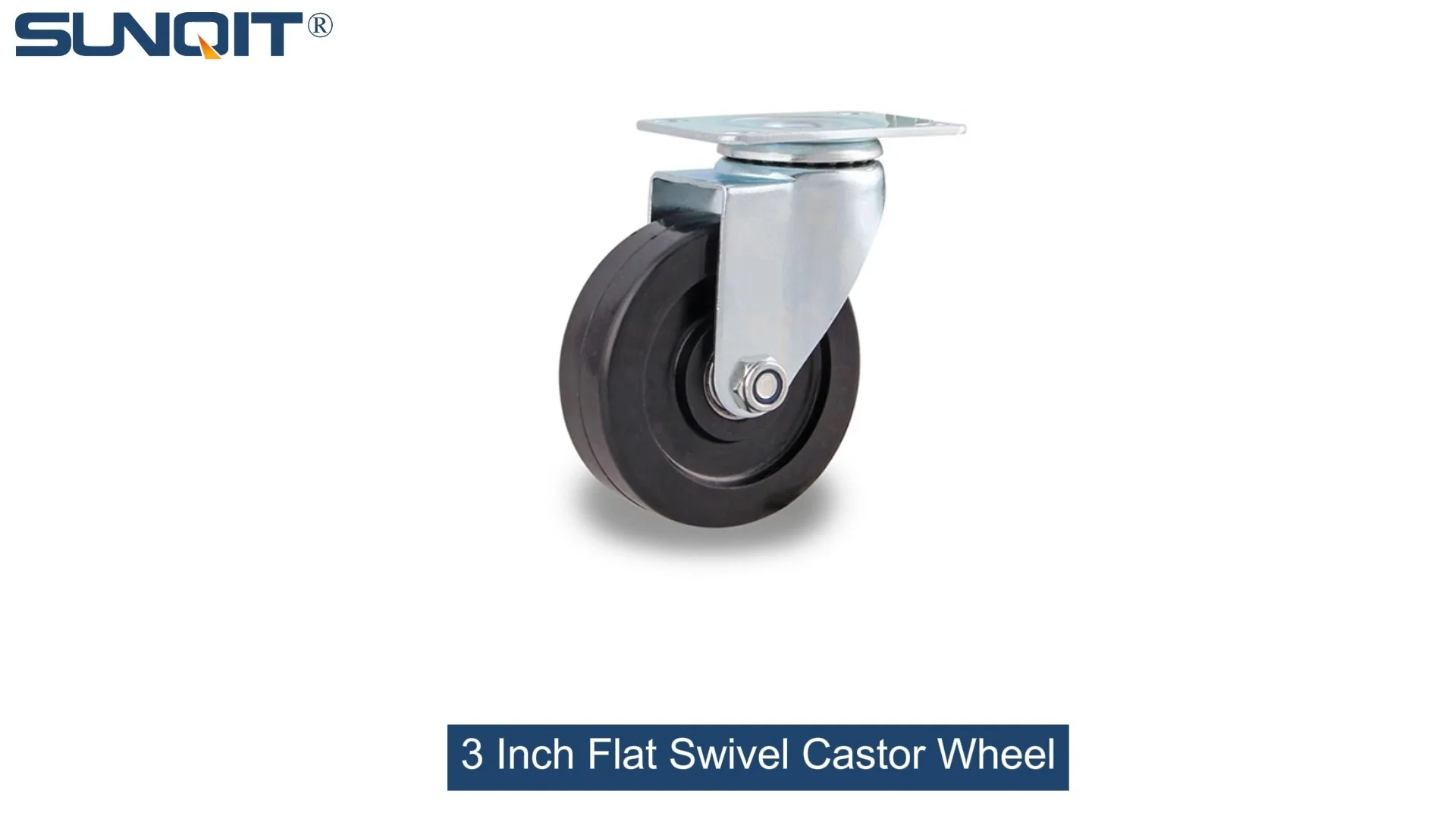
Flat Swivel Castor Wheel
Chair Casters Ball Bearing Wheels Rubber Base. Resistant to abrasion, impact and corrosion. Heavy payload can hold 70-90Kgs per pcs,which can make it works at a stable and smooth status.
In the high-speed world of 3C (Computers, Communication, and Consumer Electronics) manufacturing, where precision, agility, and efficiency are non-negotiable, every component of the production ecosystem plays a critical role. From the tiniest microchip to the largest assembly line workstation, each element must align with the industry's demands for rapid production cycles, flexible workflows, and minimal waste. Among these unsung heroes are flat swivel castor wheels—small yet mighty components that quietly power the mobility and adaptability of modern manufacturing setups. In this article, we'll explore how these unassuming wheels have become indispensable in 3C production, supporting everything from modular workbenches to lean material handling systems, and why their design and functionality make them a cornerstone of efficient, human-centric manufacturing.
Understanding Flat Swivel Castor Wheels: Design and Functionality
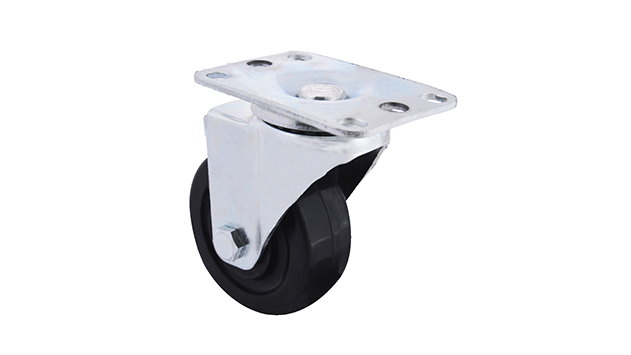
Before diving into their applications, let's take a closer look at what makes flat swivel castor wheels unique. Unlike fixed or rigid castors, which restrict movement to a single direction, swivel castors are engineered to rotate 360 degrees, allowing equipment to maneuver smoothly in any direction. The "flat" designation refers to their mounting style: a flat plate that attaches directly to the bottom of workbenches, trolleys, or racks, ensuring stability and a low profile—critical for maintaining the ergonomic height of work surfaces and preventing tipping in tight spaces.
Key features of flat swivel castor wheels tailored for 3C manufacturing include:
- Precision-engineered wheels: Typically made from polyurethane, rubber, or nylon, these materials offer a balance of durability, quiet operation, and floor protection. Polyurethane wheels, for example, are non-marking (preventing scratches on factory floors), shock-absorbent (to protect sensitive electronics), and resistant to oils and chemicals common in manufacturing environments.
- Integrated brakes: Many models, such as the flat swivel castor wheel with brake , include a locking mechanism that secures the wheel in place once positioned. This is vital for stability during assembly or testing, where even minor movement could compromise precision work.
- Load capacity: Designed to support varying weights, from lightweight tool carts to heavy-duty workbenches loaded with assembly equipment. 3C manufacturers often opt for castors rated for 100–300 kg per wheel, ensuring they can handle the weight of PCBs, testing gear, and operator tools.
- Smooth rotation: High-quality ball bearings or roller bearings reduce friction, allowing for effortless movement even when loaded. This minimizes operator strain and ensures equipment can be repositioned with minimal effort.
These features collectively address the 3C industry's unique challenges: the need for mobility without sacrificing stability, protection for sensitive components, and adaptability to ever-changing production demands. Now, let's explore how these castors transform day-to-day operations across key areas of 3C manufacturing.
Application 1: Modular Workstations—Flexibility at the Heart of Assembly Lines
In 3C assembly, where product lines shift frequently (e.g., from smartphone to tablet production), modular workbenches are the backbone of agile manufacturing. These workstations must adapt quickly to new layouts, operator preferences, and production volumes—and flat swivel castor wheels make this adaptability possible.
Consider a typical 3C assembly line: operators stand at workbenches equipped with tools, component bins, and testing devices, assembling circuit boards or attaching screens to device frames. When a new product model is introduced, the line may need to be reconfigured to accommodate different part sizes or assembly steps. Without mobile workbenches, this process could take hours: teams would need to disassemble fixed stations, move heavy equipment manually, and reinstall everything—a recipe for downtime and operator fatigue.
With flat swivel castors, the scenario changes dramatically. Each workbench is mounted on four castors (often with two or four brakes for stability). When reconfiguration is needed, operators simply unlock the brakes, glide the workbench into its new position, and lock the brakes again. The entire process takes minutes, not hours, allowing production to resume quickly. This flexibility also supports ergonomic adjustments: operators of different heights can tweak their workstation's position to reduce strain, or shift tools closer at hand, boosting comfort and productivity.
Take, for example, a workbench used for PCB soldering. The workbench holds a soldering iron, a magnifying lamp, and bins of resistors and capacitors. With flat swivel castors, the operator can pivot the workbench to face a colleague for collaboration, roll it closer to a parts trolley when restocking, or reposition it to align with a new conveyor line. The brakes ensure the workbench stays steady during soldering, where a shaky hand or a moving surface could ruin a delicate connection.
Application 2: Turnover Trolleys and Material Racks—Streamlining Component Flow
In 3C manufacturing, the efficient movement of materials—from raw components (like microchips and wiring harnesses) to semi-finished products (such as partially assembled displays)—is critical to maintaining production (rhythm). This is where turnover trolley and rack systems, paired with flat swivel castor wheels, shine. Turnover trolleys are lightweight, open-frame carts designed to transport small to medium-sized components between stations, while material racks store bulk items or finished goods. Both rely on castors to navigate the often-crowded factory floor, where space is at a premium and paths between assembly lines are narrow.
Flat swivel castors address two key challenges in material handling for 3C production:
- Precision navigation: Factory floors are rarely straight paths. Trolleys must weave around stationary machinery, avoid pedestrian traffic, and fit through doorways or between workbenches. Swivel castors allow operators to make tight turns and adjust direction on the fly, reducing the risk of collisions with fragile components (e.g., glass smartphone screens) or delays caused by getting stuck in corners.
- Shock absorption: Many 3C components, such as PCBs with surface-mount technology (SMT) chips, are sensitive to vibration. A bumpy ride in a trolley with rigid or low-quality castors could dislodge components or damage solder joints. Flat swivel castors with polyurethane wheels absorb shocks, ensuring components arrive at their destination intact.
| Castor Type | Wheel Material | Load Capacity (per wheel) | Brake Type | Best For |
|---|---|---|---|---|
| Light-duty flat swivel | Nylon | 50–100 kg | Foot brake (single wheel lock) | Small parts trolleys (screws, connectors) |
| Medium-duty flat swivel with brake | Polyurethane | 100–200 kg | Dual-lock (wheel + swivel lock) | PCB assembly trolleys, testing equipment carts |
| Heavy-duty flat swivel | Rubber | 200–300 kg | Total-lock (locks wheel rotation and swivel) | Material racks with bulk components (e.g., batteries, displays) |
Table 1: Comparison of flat swivel castor wheels for turnover trolleys and material racks in 3C manufacturing.
For instance, a medium-duty trolley with flat swivel castor wheels with brake might transport a stack of PCBs from the SMT line to the inspection station. The operator loads the PCBs onto the trolley, unlocks the castors, and maneuvers through the factory using the swivel function to navigate around a sudden bottleneck. Upon reaching the inspection area, they engage the dual-lock brakes: one lock secures the wheel from rolling, and a second locks the swivel mechanism, preventing the trolley from shifting during unloading. This level of control ensures the PCBs remain stable and undamaged, even when handled by multiple operators across shifts.

Application 3: Lean Manufacturing Systems—Supporting Waste Reduction and Adaptability
The 3C industry's relentless pursuit of efficiency has made lean system principles—focused on minimizing waste, optimizing flow, and empowering employees—ubiquitous in factories worldwide. Lean manufacturing relies on adaptability: the ability to adjust production in real time to meet demand, reduce idle time, and eliminate non-value-added activities. Flat swivel castor wheels are a natural fit for this philosophy, as they enable the mobility and flexibility needed to implement lean practices like just-in-time (JIT) production, 5S workplace organization, and continuous improvement.
Here's how flat swivel castors support lean goals:
- Just-in-Time (JIT) material delivery: JIT requires materials to arrive at the assembly line exactly when needed, reducing inventory storage waste. With mobile trolleys and racks on swivel castors, suppliers or in-plant material handlers can deliver components directly to operators as they're needed, rather than stockpiling parts in advance. This "milk run" system cuts down on excess inventory and frees up floor space.
- 5S and workplace organization: The 5S methodology (Sort, Set in Order, Shine, Standardize, Sustain) emphasizes a clutter-free, organized workspace. Flat swivel castors make it easy to "set in order" by allowing tools, workbenches, and trolleys to be positioned precisely where they're needed. At the end of a shift, operators can quickly roll equipment back to designated storage areas, keeping floors clear and reducing trip hazards.
- Quick changeovers: 3C manufacturers often produce multiple product variants (e.g., different smartphone models) on the same line. Flat swivel castors enable rapid reconfiguration of workstations, allowing teams to switch from assembling Model A to Model B in minutes rather than hours. For example, a testing station mounted on castors can be moved to a new line, while a tool cart with specialized jigs for Model B can be rolled in to replace the previous setup.
Consider a lean-focused 3C factory producing smartwatches. During peak demand for a new model, the production line runs 24/7. When demand shifts to a limited-edition variant with a different strap connector, the team needs to retool quickly. Workbenches on flat swivel castors are rearranged to accommodate the new assembly steps, while material trolleys with swivel castors deliver the new strap components directly to each operator. The entire changeover takes less than an hour, minimizing downtime and keeping the line aligned with customer demand—all made possible by the mobility of castor-equipped equipment.

Challenges and Considerations: Choosing the Right Flat Swivel Castor for 3C Manufacturing
While flat swivel castor wheels offer numerous benefits, selecting the right model requires careful consideration of factory conditions and operational needs. Here are key factors 3C manufacturers should evaluate:
- Floor type: Smooth concrete or epoxy floors work well with most wheel materials, but uneven or grated floors may require larger wheels (e.g., 100–125 mm diameter) for better traction and stability.
- Environmental hazards: Factories using cleaning chemicals or coolants need castors with chemical-resistant wheels and seals to prevent bearing corrosion.
- Noise levels: In facilities with strict noise regulations (common near office areas or R&D labs), rubber or polyurethane wheels are preferred over metal, as they reduce rolling noise by up to 50%.
- Ergonomics: Castors should require minimal force to move. Low-friction bearings and lightweight designs reduce operator fatigue, especially during frequent repositioning of workbenches or trolleys.
Conclusion: The Unsung Engine of Agile 3C Manufacturing
In the fast-paced world of 3C electronics, where innovation and efficiency are measured in seconds and millimeters, flat swivel castor wheels may seem like small players. But their impact is anything but minor. By enabling the mobility of workbenches, the precision of material handling, and the adaptability of lean systems, these wheels empower manufacturers to respond quickly to market changes, reduce waste, and create safer, more ergonomic workspaces for their teams. Whether it's a workbench gliding into place for a new assembly task, a turnover trolley delivering components just in time, or a lean system reconfiguring to meet demand, flat swivel castor wheels are the quiet force driving the industry forward.
As 3C manufacturing continues to evolve—with trends like smart factories, automation, and personalized production—one thing remains clear: the need for flexible, mobile, and human-centric equipment will only grow. And in that future, flat swivel castor wheels will continue to play a vital role, proving that even the smallest components can make the biggest difference in building the technology that connects our world.