- Company Articles
- Products and Technology
- Application Cases
- Applications of Free Flow Chain Conveyors in Automotive Parts Assembly

Applications of Free Flow Chain Conveyors in Automotive Parts Assembly
Related Product
Free Flow Chain Conveyor
The free flow conveyor system uses a free flow chain that can increase the speed of the tooling board that supports the products. This can improve the efficiency and quality of the production process, as well as reduce the wear and tear of the system.
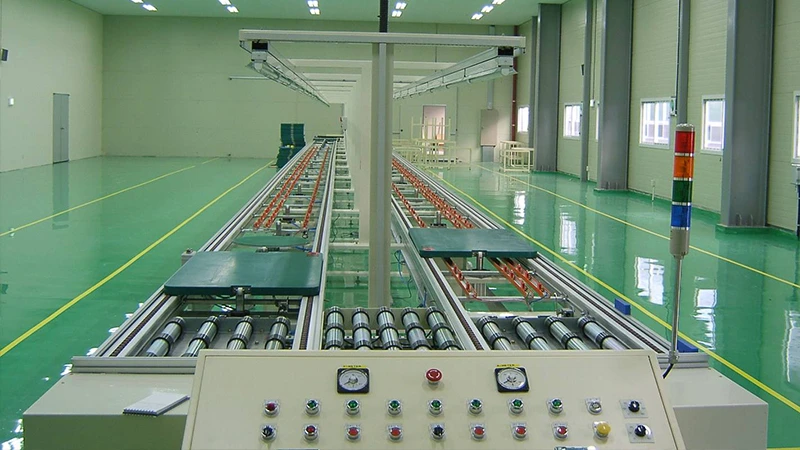
In the heart of every automotive manufacturing plant, where precision meets pace, there's an unsung hero working tirelessly behind the scenes: the free flow chain conveyor. These unassuming systems are the backbone of assembly lines, quietly ensuring that everything from engine components to dashboard panels moves seamlessly from one workstation to the next. In an industry where a single delay can ripple through an entire production schedule, the role of free flow chain conveyors isn't just functional—it's transformative. Let's dive into how these systems are reshaping automotive parts assembly, driving efficiency, and aligning with the lean principles that keep modern manufacturing competitive.
Key Features That Make Free Flow Chain Conveyors Indispensable
At first glance, a free flow chain conveyor might look like a simple series of interconnected metal links, but its design is a masterclass in industrial engineering. Unlike rigid belt conveyors or bulkier roller systems, free flow chain conveyors use a series of precision-machined chain links with integrated rollers, allowing parts to glide along the track with minimal friction. This design isn't just about smooth movement—it's about adaptability. Whether transporting lightweight plastic components or heavy metal brackets, these conveyors can be tailored to handle loads ranging from a few pounds to several hundred, making them versatile enough for nearly every stage of automotive assembly.
One of the standout features is their modularity, often built using aluminum profiles and compatible with a range of aluminum profile accessories. This means manufacturers aren't locked into a one-size-fits-all setup. Need to reroute the conveyor to accommodate a new workbench? Add a curve to navigate around a machine? With aluminum profile connectors and adjustable brackets, reconfiguring the system is as simple as loosening a few bolts and repositioning the sections. This flexibility is a game-changer in an industry where production lines are constantly evolving to meet new vehicle designs or shifting demand.
Speed control is another critical advantage. Free flow chain conveyors can be fine-tuned to match the rhythm of the assembly line, ensuring parts arrive at workstations exactly when workers need them—no earlier, no later. This precision reduces the risk of parts piling up (wasting valuable floor space) or running short (slowing down workers). For example, in a transmission assembly area, where each gear must be aligned with pinpoint accuracy, the conveyor can slow to a near-stop, giving technicians the time they need to fit components without rushing. In contrast, when moving completed subassemblies to the next stage, it can ramp up speed to keep the line flowing.
Integrating with Lean Systems: More Than Just Movement, It's About Efficiency
Modern automotive manufacturing lives and breathes lean principles—eliminating waste, optimizing flow, and continuous improvement. Free flow chain conveyors aren't just tools for moving parts; they're active participants in lean system implementation. Let's break down how they align with core lean goals:
Waste Reduction (Muda)
Waste in manufacturing comes in many forms: overproduction, waiting, unnecessary transportation, and defects, to name a few. Free flow chain conveyors tackle several of these head-on. By ensuring a steady, predictable flow of parts, they eliminate "waiting" waste—workers no longer stand idle because a component is stuck in transit. They also reduce "transportation" waste by creating direct, efficient paths between workstations, cutting down on the need for forklifts or manual cart transfers (which are slower and more error-prone).
Consider the assembly of a car's braking system. Each caliper, rotor, and brake pad needs to be delivered to a specific workbench where they're assembled into a complete unit. Without a free flow conveyor, parts might be stored in bins at the end of the line, requiring workers to walk back and forth to retrieve them—a classic example of "motion" waste. With the conveyor, parts are delivered right to the workbench, letting workers focus on assembly, not fetching. Over a full shift, those saved steps add up to hours of reclaimed productivity.
Continuous Flow (Heijunka)
Lean systems thrive on continuous flow—the idea that production should move steadily, without abrupt stops or starts. Free flow chain conveyors excel here by acting as a "pulse" for the assembly line. Because they can be synchronized with upstream and downstream processes (e.g., parts feeding into the line and finished subassemblies exiting), they prevent bottlenecks. For instance, if the dashboard assembly station is running 10 minutes behind, the conveyor can slow the delivery of dashboard frames until the station catches up, preventing a backlog that could disrupt the entire line.
This balance is especially critical in mixed-model production, where a single line might assemble parts for multiple vehicle models. A free flow chain conveyor, with its adjustable speed and modular track, can seamlessly switch between transporting components for a compact sedan and a larger SUV, ensuring neither model's production is prioritized at the expense of the other. It's lean in action: meeting customer demand without overproducing or creating waste.
Real-World Applications: Where Free Flow Chain Conveyors Shine
To truly understand the impact of free flow chain conveyors, let's look at their day-to-day role in key stages of automotive parts assembly. These examples highlight how they're not just moving parts—they're enhancing precision, safety, and worker satisfaction.
Engine Component Transfer: Precision in Motion
The engine is the "heart" of a vehicle, and assembling it requires handling hundreds of delicate parts, from pistons and crankshafts to gaskets and sensors. Even a minor jolt during transport could damage these components, leading to costly defects. Free flow chain conveyors, with their gentle, vibration-free movement, are ideal for this task. Imagine a line where cylinder heads are transported from the machining area to the assembly workbench. The conveyor glides the heads along, each secured in a custom fixture, ensuring they arrive perfectly aligned for workers to install valves and camshafts. No shaking, no sliding, no risk of misalignment—just smooth, reliable delivery.
What's more, the conveyor can be integrated with sensors that track each component's progress. If a cylinder head is detected as defective (e.g., a crack in the casting), the conveyor can automatically divert it to a separate inspection station, preventing it from reaching the assembly line and causing rework. This level of quality control is hard to achieve with manual transport, where defects might go unnoticed until the final inspection.
Dashboard and Interior Assembly: Ergonomics and Speed
Assembling a car's interior is a mix of precision and aesthetics. Dashboards, for example, must have wiring harnesses, airbags, infotainment systems, and trim pieces installed with perfect alignment—even a millimeter off can lead to gaps or squeaks in the finished vehicle. Here, free flow chain conveyors shine by positioning parts at ergonomic heights, reducing strain on workers. Instead of bending over a table or reaching up to a high shelf, technicians can stand at a workbench with the dashboard at waist level, fed directly by the conveyor.
Another advantage is the ability to synchronize the conveyor with robotic assistance. In some plants, robots handle the initial installation of heavy components (like the infotainment screen), then pass the dashboard to the conveyor, which carries it to a human worker for final trim and quality checks. This human-robot collaboration, made possible by the conveyor's steady movement, speeds up production while ensuring the "human touch" where it matters most.
Brake and Suspension Parts: Heavy-Duty Reliability
Not all automotive parts are delicate—brake calipers, suspension arms, and steering knuckles are heavy, often weighing 20 pounds or more. Transporting these manually is not only slow but also a safety risk for workers (strains, drops, etc.). Free flow chain conveyors, built with robust materials like stainless steel pipe series and reinforced aluminum profiles, are designed to handle these heavy loads with ease. Their chain links and rollers distribute weight evenly, preventing sagging or track damage even under constant use.
In a suspension assembly line, for example, a free flow conveyor might transport shock absorbers from the testing area to the final installation workbench. Each shock is mounted on a pallet that locks into the conveyor's track, ensuring it stays upright and secure during transport. Workers at the bench can then unload the shocks, attach them to the suspension frame, and send the completed assembly back onto the conveyor for the next stage. It's a seamless loop that minimizes manual lifting and keeps the line moving.
Free Flow Chain Conveyors vs. Roller Conveyors: Which Fits Your Line?
While free flow chain conveyors are stars in many automotive settings, they're not the only option. Roller conveyors, with their series of rotating rollers, are another common choice. So when should you choose one over the other? Let's break it down with a quick comparison:
| Feature | Free Flow Chain Conveyor | Roller Conveyor |
|---|---|---|
| Design | Interconnected chain links with integrated rollers; parts glide along the chain. | Parallel rollers mounted on a frame; parts roll over individual rollers. |
| Load Capacity | Handles heavier loads (up to 500+ lbs per linear foot) due to chain distribution. | Moderate loads (typically 100–300 lbs per linear foot); heavier loads may require reinforced rollers. |
| Speed Flexibility | Highly adjustable; can slow to a crawl or speed up quickly with variable speed drives. | Speed is often fixed or limited; incline/decline setups rely on gravity, which is less controllable. |
| Maintenance Needs | Requires regular lubrication of chain links; occasional replacement of worn rollers. | Rollers may need cleaning (to prevent jamming with debris); bearings can wear out over time. |
| Best For | Heavy loads, delicate parts (low vibration), mixed-model production, lean system integration. | Light to moderate loads, straight-line transport, gravity-fed systems (e.g., sorting stations). |
For most automotive assembly lines, free flow chain conveyors edge out roller conveyors in versatility and performance—especially when aligning with lean system goals. Their ability to handle heavy loads, adapt to variable speeds, and integrate with modular aluminum profiles makes them a smarter long-term investment, even if the upfront cost is slightly higher.
Benefits Beyond the Line: Why Manufacturers Keep Choosing Free Flow
Beyond the technical specs, free flow chain conveyors deliver tangible benefits that bottom-line-focused manufacturers can't ignore. Let's explore a few:
Increased Productivity, Reduced Labor Costs
By automating part transport and reducing manual handling, these conveyors let workers focus on what they do best: assembling high-quality components. A study by the Manufacturing Technology Insights found that plants using free flow chain conveyors reported a 15–20% increase in assembly line throughput, largely due to reduced downtime and faster part delivery. Over time, this translates to lower labor costs—fewer workers needed for transport; more for value-added tasks like quality control or complex assembly.
Improved Safety and Ergonomics
Manual material handling is one of the leading causes of workplace injuries in manufacturing, from back strains to crushed fingers. Free flow chain conveyors eliminate much of this risk by keeping heavy or awkward parts on the track, not in workers' hands. Additionally, their adjustable height (thanks to aluminum profile supports) ensures workbenches and conveyor lines are positioned at ergonomic levels, reducing fatigue and long-term repetitive strain injuries. Safer workers are happier, more productive, and less likely to take time off—all wins for manufacturers.
Scalability for Growing Demand
Automotive production isn't static. When a new model launches or demand spikes, manufacturers need to scale up quickly. Free flow chain conveyors, built with modular aluminum profile accessories, make scaling a breeze. Need to add 20 feet to the line? Simply order additional track sections and connect them with aluminum profile connectors. Want to add a branch line to feed parts from a new supplier? The conveyor's modular design allows for easy splits and merges. This scalability means manufacturers don't have to replace entire systems as they grow—they can expand incrementally, saving time and money.
Maintaining Your Conveyor: Tips for Longevity
Like any industrial equipment, free flow chain conveyors need regular care to perform at their best. The good news? With proper maintenance, they can last 10+ years, making them a durable investment. Here are a few key tips:
- Lubricate the Chain Regularly: The chain links and rollers rely on proper lubrication to reduce friction and prevent wear. Use a high-quality industrial lubricant (check the manufacturer's recommendations) and schedule lubrication based on usage—heavier loads or faster speeds may require more frequent applications.
- Inspect Rollers and Links Weekly: Walk the length of the conveyor to check for stuck rollers, bent links, or debris (like loose bolts or plastic shavings) that could jam the system. replace worn or damaged parts immediately—small issues can escalate into major breakdowns if ignored.
- Clean the Track Monthly: Wipe down the track and chain to remove dust, oil buildup, or coolant (common in automotive plants). A clean system runs smoother and reduces the risk of parts slipping or sticking.
- Tighten Connections: Vibrations from constant use can loosen bolts and aluminum profile connectors. Periodically check all brackets, supports, and joint connections, tightening as needed to prevent misalignment.
Many manufacturers also invest in predictive maintenance tools, like vibration sensors or thermal cameras, to monitor conveyor health in real time. These tools can detect early signs of wear (e.g., a roller bearing heating up) before they cause downtime—a smart move for critical assembly lines.
Looking Ahead: The Future of Free Flow Chain Conveyors
As automotive manufacturing evolves—with electric vehicles, autonomous systems, and smarter factories leading the way—free flow chain conveyors are evolving too. Here are a few trends to watch:
IoT Integration for Smart Monitoring
Imagine a conveyor that can "talk" to your plant's management system, alerting you when a roller is wearing thin or the chain needs lubrication. That's the future with IoT (Internet of Things) integration. Sensors embedded in the conveyor track can collect data on speed, load, temperature, and vibration, sending real-time alerts to maintenance teams. This predictive approach reduces unplanned downtime and keeps the line running smoother than ever.
Eco-Friendly Materials
Sustainability is becoming a priority for automotive manufacturers, and conveyor systems are no exception. Look for future designs using recycled aluminum profiles, biodegradable lubricants, and energy-efficient motors to reduce carbon footprints. Some suppliers are even experimenting with solar-powered conveyor drives for low-speed, light-load applications—proof that efficiency and sustainability can go hand in hand.
Advanced Modularity with 3D-Printed Parts
While aluminum profile accessories already offer great flexibility, 3D printing could take modularity to the next level. Custom brackets, fixtures, or even lightweight chain links could be printed on-site, allowing manufacturers to adapt the conveyor to unique part shapes or production needs in hours, not weeks. This on-demand manufacturing of accessories would make the conveyor even more responsive to changing assembly line requirements.
Conclusion: The Backbone of Modern Automotive Assembly
In the fast-paced world of automotive manufacturing, where every second and every part counts, free flow chain conveyors aren't just tools—they're partners in progress. From their smooth, adaptable movement to their seamless integration with lean systems, these conveyors are quietly driving efficiency, safety, and scalability in plants around the world. Whether transporting delicate dashboard components or heavy suspension parts, they ensure that assembly lines run like well-oiled machines (pun intended).
As automotive technology advances, one thing is clear: the role of free flow chain conveyors will only grow. With IoT integration, eco-friendly designs, and ever-more-modular aluminum profile accessories, they're poised to be at the forefront of the next generation of manufacturing. For manufacturers looking to stay competitive, investing in a free flow chain conveyor system isn't just a choice—it's a step toward building the smarter, faster, and more efficient assembly lines of tomorrow.